
How to Know If a VC Actually Read Your Pitch Deck

You can tell if a VC actually read your pitch deck by using a document-tracking platform that logs every open, records time spent on each slide, and sends you a real-time notification the moment an investor clicks your link. Without that infrastructure, you are guessing, and guessing wrong costs you the follow-up timing that converts cold interest into a meeting.
The Problem with Sending a PDF Attachment
Most founders still send their pitch deck as an email attachment. The moment you hit send, you lose all visibility. You do not know whether the email was opened, whether the attachment was downloaded, or whether a partner at the firm spent three seconds on your cover slide and moved on. This blind spot is one of the most damaging patterns in early-stage fundraising.
The follow-up email you send two weeks later, asking "Did you get a chance to look at my deck?", signals uncertainty and a lack of process. A founder who knows precisely when a VC read their deck and which slides they lingered on can time a follow-up with surgical precision.
How Pitch Deck Tracking Technology Works
A modern pitch deck sharing tool replaces the attachment with a unique, trackable link. When the investor opens that link, the platform records:
- Open time and date: exactly when the deck was opened
- Time on each slide: how many seconds the investor spent per page
- Total session duration: whether they read two pages or all sixteen
- Device and location: desktop versus mobile, and a rough geographic location
- Repeat visits: whether they came back and looked again
This is not intrusive surveillance. It is the same analytics any website uses to understand visitor behaviour. The data is anonymous to the investor and transparent to the founder.
If you want to understand the full toolkit available to you, start with our complete investor sharing guide.
What the Data Actually Tells You
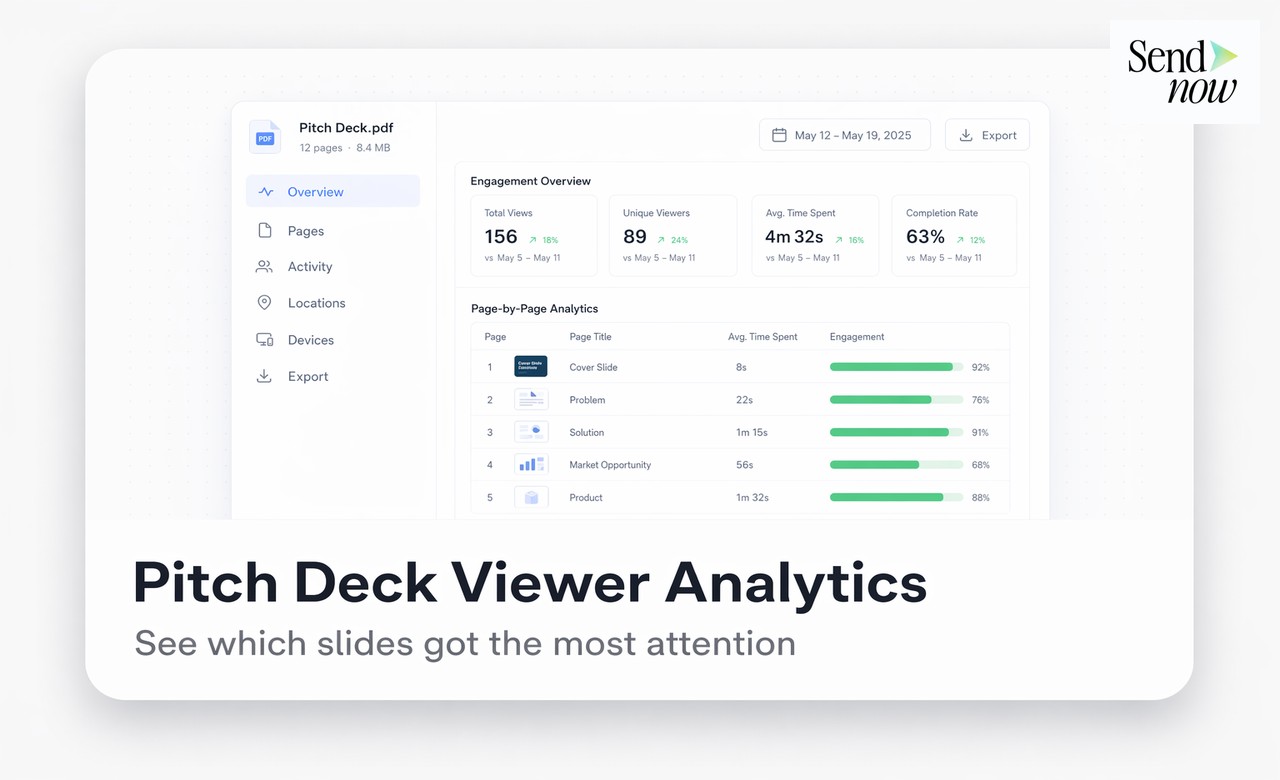
The raw numbers only matter when you know how to read them. Here is a practical interpretation guide:
High time on financials slide (slide 8+): The investor is doing the maths. They are interested enough to stress-test your numbers. This is a strong buying signal. Follow up within 24 hours.
Low time overall (under 90 seconds): They either did not like the hook in the first two slides, or they have too many decks in their queue. Consider rewriting your problem and solution slides.
Multiple return visits: This is one of the strongest signals you will encounter. A VC who opens your deck three times over a week is showing it to partners. This is the moment to request a meeting proactively.

High time on team slide: The investor is running due diligence on your backgrounds. Make sure your LinkedIn profiles are polished and your bios are up to date.
Zero time on most slides: The deck was forwarded and opened by an associate doing a quick scan. Do not over-invest in this lead yet.
Real-Time Notifications Change Your Follow-Up Game
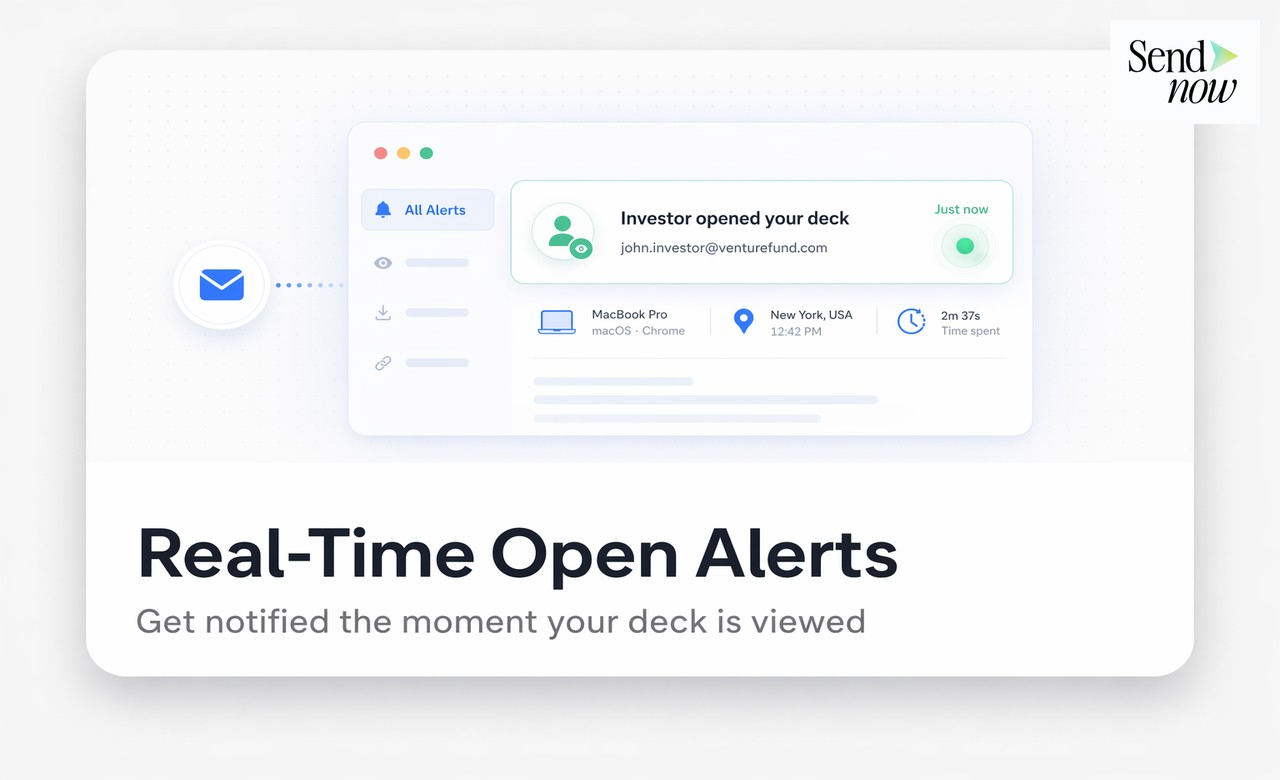
The moment a VC opens your deck, SendNow sends you a push or email notification. This creates a follow-up window that most founders miss entirely. Research consistently shows that the probability of a response drops sharply after 24 hours. Knowing the exact moment of intent, the open event, lets you reply while you are top of mind.
A practical follow-up template after a strong open looks like this:
"Hi [Name], just wanted to follow up on the deck I sent across on [date]. Happy to answer any questions or set up a brief call if you would like to dig into the model. My calendar is open this week."
That message lands when the investor is actively engaged with your materials. That timing is not luck. It is data.
For a deeper look at all the metrics you can track across your investor pipeline, see our guide on tracking VC investor engagement.
Which Tools Let You Track Pitch Deck Opens
The clearest options in 2026 are:
SendNow: Real-time open notifications, page-level time analytics, screenshot blocking, GDPR-compliant EU hosting, and AES-256 encryption. Built specifically for founders sharing sensitive documents. The best option for EU fundraises.
DocSend: The established category leader with strong analytics, though US-hosted and expensive for early-stage teams. Lacks screenshot prevention.
Attach.io: A lightweight option with basic link tracking. Limited analytics depth and no EU data residency.
PDF attachments or Google Drive: No tracking whatsoever. Avoid for investor outreach.
For a full breakdown of how these tools compare, see our article on the best pitch deck sharing tools for founders.

How to Set Up Deck Tracking in Under Five Minutes
- Create a free SendNow account at sendnow.live
- Upload your pitch deck as a PDF
- Generate a tracked share link with notifications enabled
- Set an expiry date if you want to control access windows
- Send the link in your outreach email instead of an attachment
- Check the analytics dashboard after each send for engagement signals
The setup is genuinely fast, and the first time you see a real-time notification appear as a top VC opens your deck, the value becomes immediately obvious.
Stop Guessing and Start Knowing
Not knowing whether a VC read your deck is a solvable problem. The technology exists, it is affordable, and for EU founders it is available with full GDPR compliance. The founders who use tracked links consistently outperform those who rely on email gut-feel, because they follow up at the right moment with the right context.
Start your free SendNow trial and never wonder "did they actually read it?" again.
Frequently Asked Questions
Can you tell if a VC opened your pitch deck email? You can track whether an email was opened if your email client supports read receipts, but that does not tell you whether the attachment was opened. A dedicated pitch deck tracking tool gives you far more precise data, including slide-by-slide time and repeat visits.
What does it mean if a VC spends a long time on your deck? Extended time on a deck generally indicates genuine interest. Pay particular attention to time spent on financial and team slides, as these signal that the investor is conducting substantive due diligence.
Is it ethical to track when a VC reads your pitch deck? Yes. Sending a trackable link is legally and ethically equivalent to a website tracking page views. The data is anonymised from the investor's perspective and you are simply analysing engagement with your own document.
What should I do immediately after a VC opens my deck? Wait until you have reviewed the analytics (ideally after they have finished reading), then send a short, friendly follow-up email within 24 hours referencing the conversation context rather than explicitly mentioning the tracking.
How many times does a VC typically read a pitch deck before responding? There is no universal figure, but multiple visits, especially within 24 to 48 hours, strongly correlate with a VC sharing the deck with partners internally. Three or more visits in a short window is typically a signal worth acting on.
What is the best free tool to track if a VC read my pitch deck? SendNow offers a 24-hour free trial with open notifications and basic analytics (files expire after 24 hours unless upgraded). It is GDPR compliant and US-hosted, making it the best free option for European founders.
Can a VC tell that I am tracking them when they open my deck? They may be aware if they use a tool like DocSend themselves and recognise the link format. In practice, most investors expect tracked links and do not object to them.
What should I do if a VC never opens my deck? If your link has not been opened after five to seven business days, send a brief follow-up email. If it remains unopened after two follow-ups, move on and revisit the lead in the next funding cycle.
About the Author: Rifana Hameem
Rifana is the founder of SendNow. She leads the team in building secure, compliant, and analytics-rich document sharing tools for finance and professional teams worldwide.
Connect on LinkedIn