Private Equity Due Diligence: Documents to Prepare

Private Equity Due Diligence: Documents to Prepare
Private equity due diligence documents fall into five core categories: financial records, legal agreements, cap table and ownership structure, operational data, and compliance documentation. Getting these right before an investor begins their review shortens the process significantly, signals organisational maturity, and reduces the risk of deal-breaking surprises. This guide covers every document category, explains what PE investors look for, and shows how to manage the process securely.
Why Document Preparation Determines Deal Pace
PE investors run simultaneous processes across multiple targets. The faster and more clearly a management team can satisfy information requests, the more confidence it builds. Conversely, poorly organised document rooms, missing financial schedules, or inconsistent cap table records create doubt and extend timelines. In competitive auction processes, that delay can cost you the preferred bidder.
Strong preparation also protects the seller. When documents are organised, version-controlled, and access-gated, management retains control over who sees what and when — a meaningful advantage when multiple parties are in parallel diligence.
For a broader introduction to virtual data rooms in deal processes, read our Complete Guide to Virtual Data Rooms.
Category 1: Financial Documents
Financial due diligence is the core of any PE review. Prepare the following:
- Audited financial statements — three years minimum, five preferred
- Management accounts — monthly, for the current and prior financial year
- Financial model — revenue build, cost structure, EBITDA bridge, and working capital schedule
- Revenue by customer and product — concentration analysis
- Debt schedule — outstanding facilities, covenants, and maturity profile
- Cash flow statements — actuals versus budget for the last 24 months
- Tax returns and correspondence with revenue authorities
- Any quality-of-earnings report already commissioned
Investors will cross-reference audited accounts against management accounts. Unexplained variances draw scrutiny, so prepare a reconciliation note in advance.
Category 2: Legal Documents
| Document Type | What Investors Check |
|---|---|
| Articles of association | Shareholder rights, transfer restrictions |
| Shareholder agreements | Tag/drag provisions, preference shares |
| Employment contracts (key management) | Notice periods, non-competes, change-of-control clauses |
| Material customer contracts | Renewal terms, assignment clauses, termination rights |
| Supplier agreements | Concentration risk, exclusivity provisions |
| IP ownership and licences | Chain of title, third-party licences |
| Litigation and disputes | Outstanding claims, settlement history |
| Regulatory licences | Validity, renewal schedule, geographic scope |
Ensure all contracts are current and that any amendments are attached to the parent agreement. Unsigned drafts should be clearly labelled.

Category 3: Cap Table and Ownership Structure
The cap table is usually reviewed early, as it defines who has decision-making authority and what the economic waterfall looks like on exit. Include:
- Fully diluted cap table — common shares, preference shares, options, warrants, convertible notes
- Option pool details — vesting schedules, exercise prices, number of outstanding grants
- Previous investment rounds — term sheets, subscription agreements, side letters
- Any existing drag-along or tag-along provisions
- Shareholder register — current and historical
Discrepancies between the cap table and the articles of association are a common source of delay. Reconcile these before the room opens.
Category 4: Operational and Commercial Documents
PE investors want evidence that the business is operationally sound and that growth assumptions are defensible:
- Customer contracts and MRR/ARR schedules (for SaaS or recurring revenue businesses)
- Sales pipeline and CRM data
- Churn analysis and cohort data
- Pricing history and current rate cards
- Key supplier contracts and dependencies
- Organisational chart and headcount by function
- Technology stack overview and any third-party software dependencies
- IT security policies — particularly relevant under GDPR for EU targets
Category 5: Compliance and Regulatory Documents
For EU-based companies, compliance documentation is increasingly scrutinised:
- GDPR documentation — privacy policy, data processing register, DPO details where applicable
- AML and KYC policies (for financial services targets)
- Environmental, Social, and Governance (ESG) disclosures
- Health and safety records
- Insurance certificates — types, coverage limits, renewal dates
- Board minutes for the last three years
How to Organise Documents in a Virtual Data Room
The standard folder structure for a PE due diligence room mirrors the categories above:
- Financial
- Legal
- Cap Table and Equity
- Commercial and Operational
- People and HR
- Technology
- Compliance and Regulatory
- Management Presentations
Each top-level folder should have sub-folders by year or document type. Numbering folders (01 Financial, 02 Legal) forces alphabetical ordering that keeps the room navigable as the document count grows.
Controlling Access and Tracking Investor Engagement
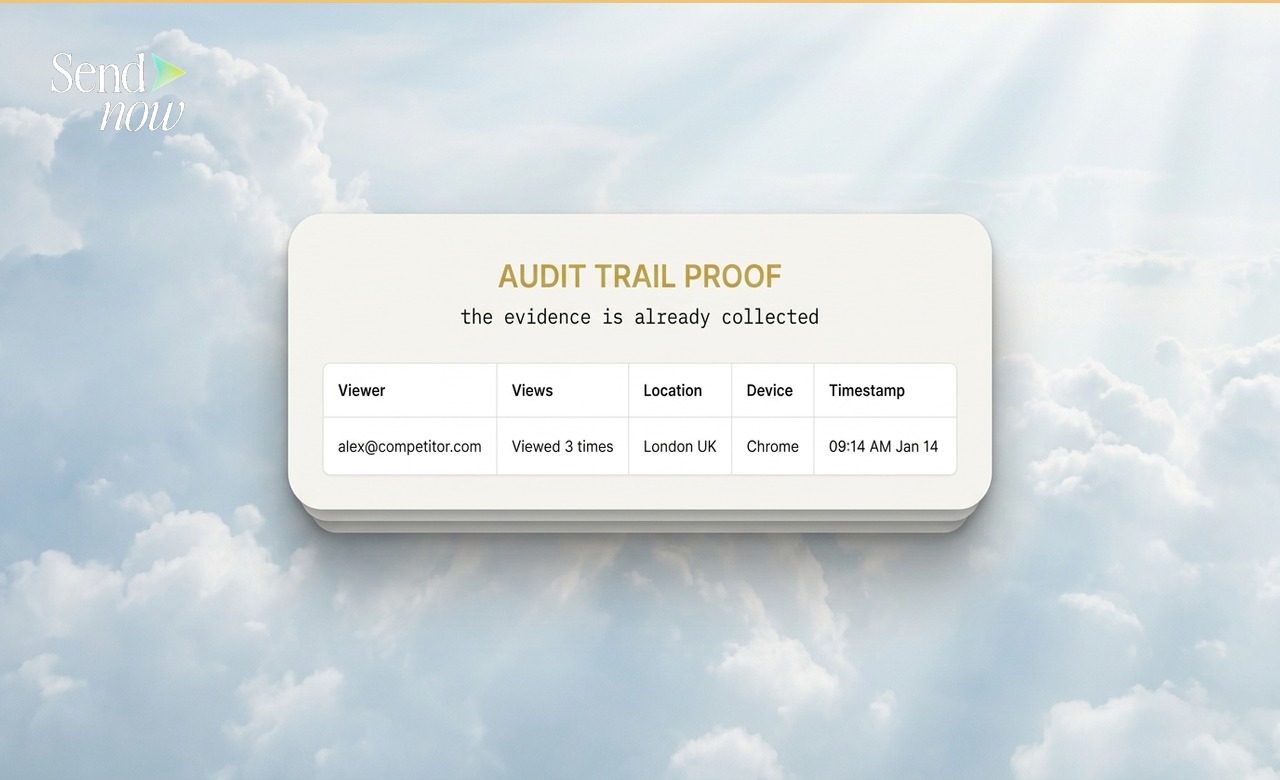
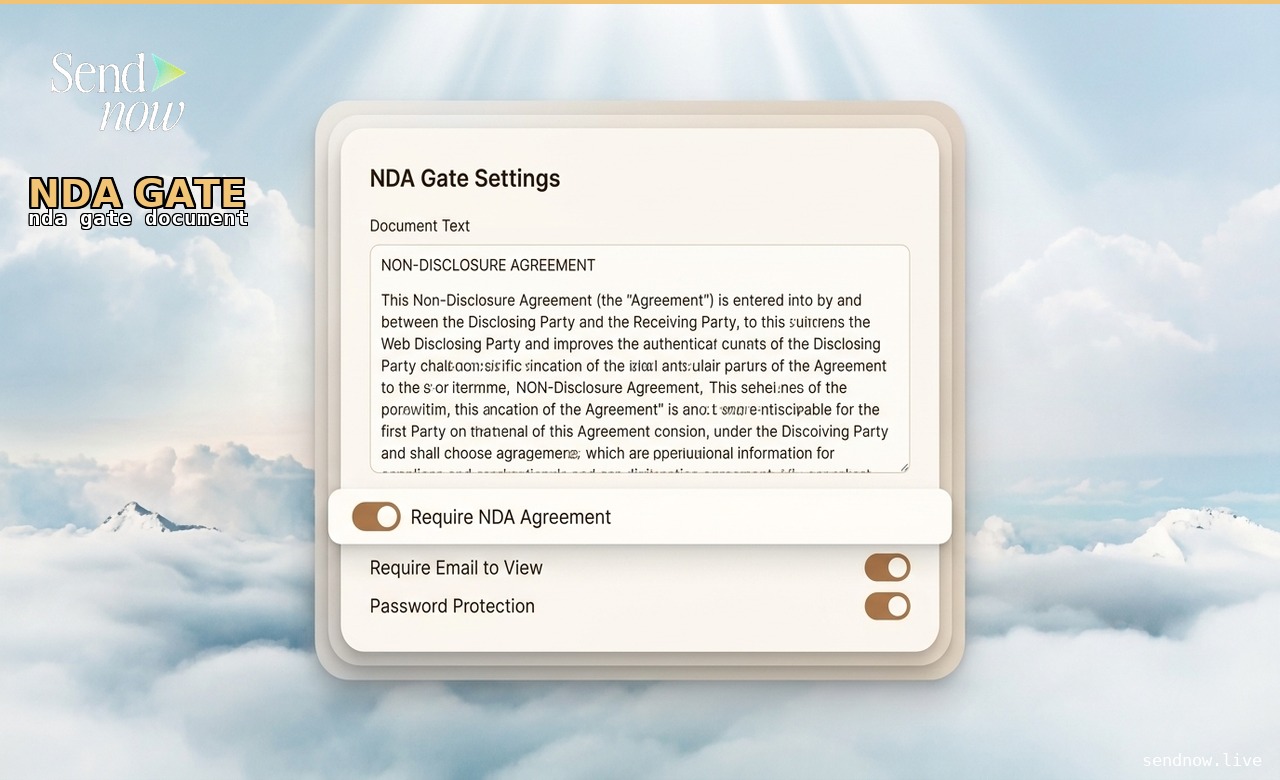
A secure virtual data room with NDA gating ensures that no investor sees a single document before signing a confidentiality agreement. After access is granted, per-document analytics reveal which materials are drawing the most attention — useful intelligence before management presentations.
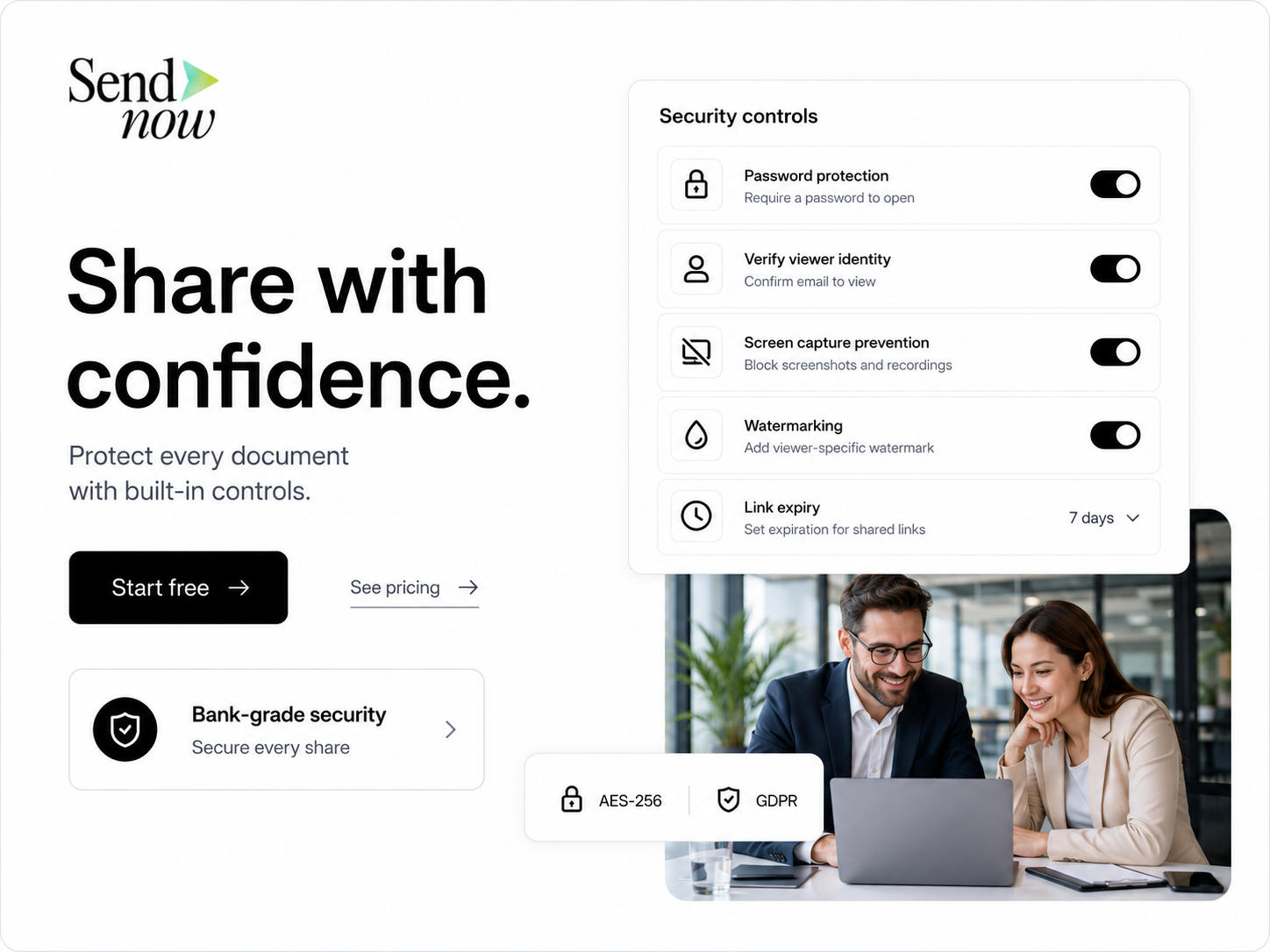
SendNow provides AES-256 encryption, GDPR-compliant EU data residency, and real-time document tracking at the page level. You can see which investor group has reviewed the financial model, how long they spent on the cap table, and whether they have returned. That engagement data informs when to accelerate a party and when to apply pressure.
For guidance on sharing your Confidential Information Memorandum securely, see How to Share a CIM Securely. For a comprehensive due diligence document checklist, see our M&A Due Diligence Document Checklist.
Start Building Your Investor-Ready Data Room
SendNow makes it straightforward to build a secure, GDPR-compliant PE due diligence room with NDA gating, folder-level permissions, and real-time investor analytics — all from a single dashboard.
Start your free trial at sendnow.live
Frequently Asked Questions
1. What documents are required for private equity due diligence? The core categories are audited financials, legal agreements, cap table and equity structure, commercial and operational data, and compliance documentation. Most PE investors also request a management presentation and financial model.
2. How long does PE due diligence take? Typical timelines range from four to twelve weeks, depending on deal complexity and how quickly the target can respond to information requests. Well-organised document rooms significantly reduce this timeline.
3. What is a virtual data room and why is it used in PE deals? A virtual data room is a secure online environment for sharing confidential documents with investors. It provides NDA gating, access controls, and document analytics — replacing physical data rooms and generic cloud folders.
4. What does GDPR mean for PE due diligence in the EU? For EU-based targets, any data room must comply with GDPR. This means storing data within the EU, having a Data Processing Agreement with the platform provider, and ensuring personal data (such as employee records) is shared only with authorised parties.
5. How should I structure a PE due diligence data room? Use numbered top-level folders matching the due diligence categories: Financial, Legal, Cap Table, Commercial, People, Technology, Compliance. Sub-folder by year or document type for navigability.
6. Can I control which investors see which documents? Yes. With SendNow, you can set folder-level and document-level permissions per investor group, so strategic buyers and financial buyers can receive different information sets within the same room.
7. What is an NDA gate in a data room? An NDA gate requires a prospective investor to sign a non-disclosure agreement before gaining access to any documents. SendNow enforces this at the link level, so no content is visible until the NDA is executed.
8. How do I know which investors are most engaged in diligence? SendNow provides real-time analytics showing time-on-document, page-level engagement, and return visits per investor group. Teams use this data to identify the most serious bidders and time follow-up conversations accordingly.
About the Author: Rifana Hameem
Rifana is the founder of SendNow. She leads the team in building secure, compliant, and analytics-rich document sharing tools for finance and professional teams worldwide.
Connect on LinkedIn