
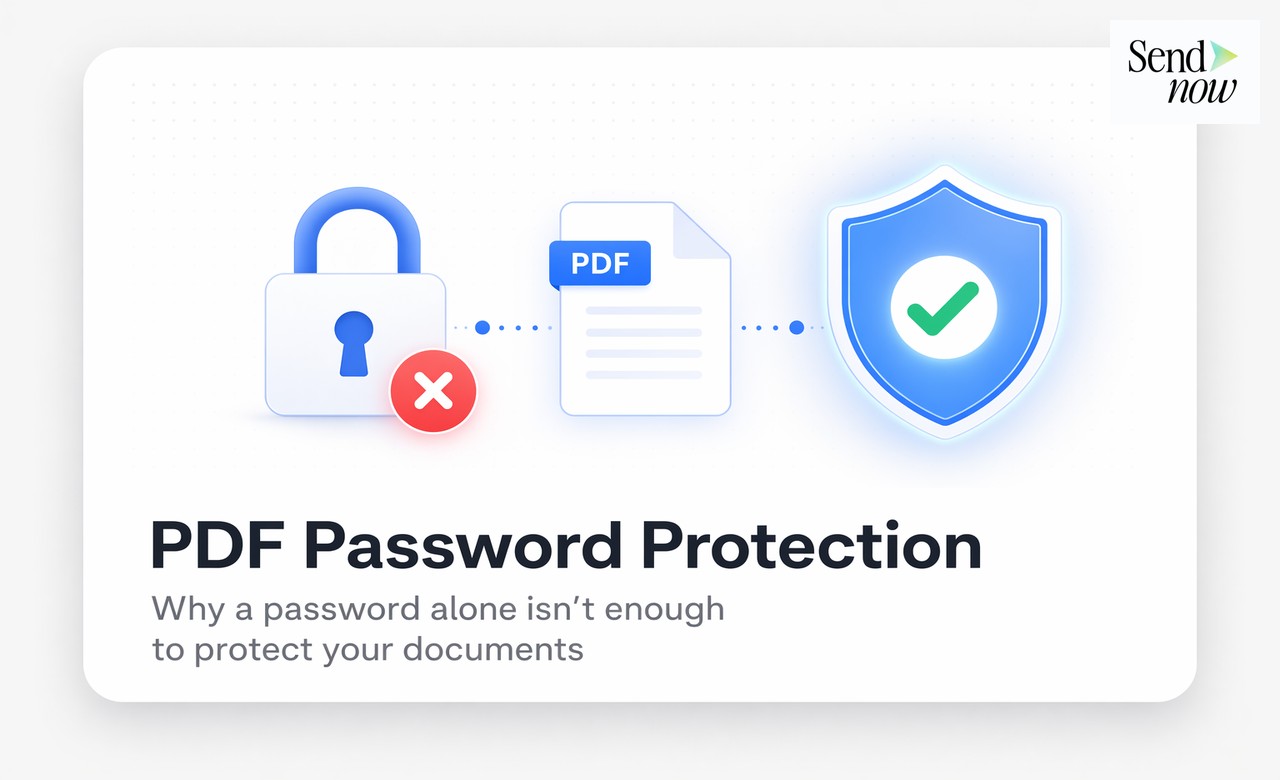
How to Password Protect a PDF (And Why It's Not Enough)
Published on April 24, 2026
TLDR
PDF passwords are easy to add but provide surprisingly weak protection. They can be forwarded, screenshot, and cracked — and they give you zero visibility into who actually opened your document. Financial professionals increasingly rely on link-based sharing platforms that add expiry, revocation, email verification, and real-time analytics on top of basic encryption.
Table of Contents
- What PDF Passwords Actually Do
- How to Add a Password to a PDF
- 5 Limitations of PDF Password Protection
- What Finance Teams Use Instead
- PDF Password vs Link-Based Sharing
- Which Option Fits Your Use Case
- FAQs
What PDF Passwords Actually Do
When you add a password to a PDF, you are doing one of two things. An open password (also called a document open password or user password) requires the recipient to type a password before they can view the file. An owner password (permissions password) restricts actions like printing, copying, or editing — but does not stop the file from opening.
Both use encryption at the file level. Adobe Acrobat applies AES-128 or AES-256 encryption depending on your compatibility settings. When the recipient enters the correct password, the PDF is decrypted locally on their device and rendered in their viewer.
That last detail matters: once the file is decrypted and opened, the PDF sits unprotected in memory and on screen. The password was only ever a gate, not a persistent guard.
How to Add a Password to a PDF
Adobe Acrobat Pro is the most common method. Open your PDF, go to File > Protect Using Password, choose whether to restrict viewing or editing, set your password, and save. Acrobat applies AES-256 encryption and is compatible with most viewers.
Mac Preview offers a quick built-in option. Open your PDF, go to File > Export as PDF, click the Security Options button, check the box to require a password to open, set your password, and export.
Microsoft Word lets you add a password before converting to PDF. Go to File > Save As, choose PDF format, click Options, and check the box to encrypt the document with a password.
Free online tools like Smallpdf, ILovePDF, and PDF2Go provide browser-based password protection. These are convenient for occasional use, but uploading confidential financial documents to a third-party server carries its own risks and may violate GDPR data residency requirements depending on where those servers sit.
5 Limitations of PDF Password Protection
1. Forwarding is trivially easy. Once your client has the password and the file, they can forward both to anyone. You have no control over where the document goes after it leaves your inbox.
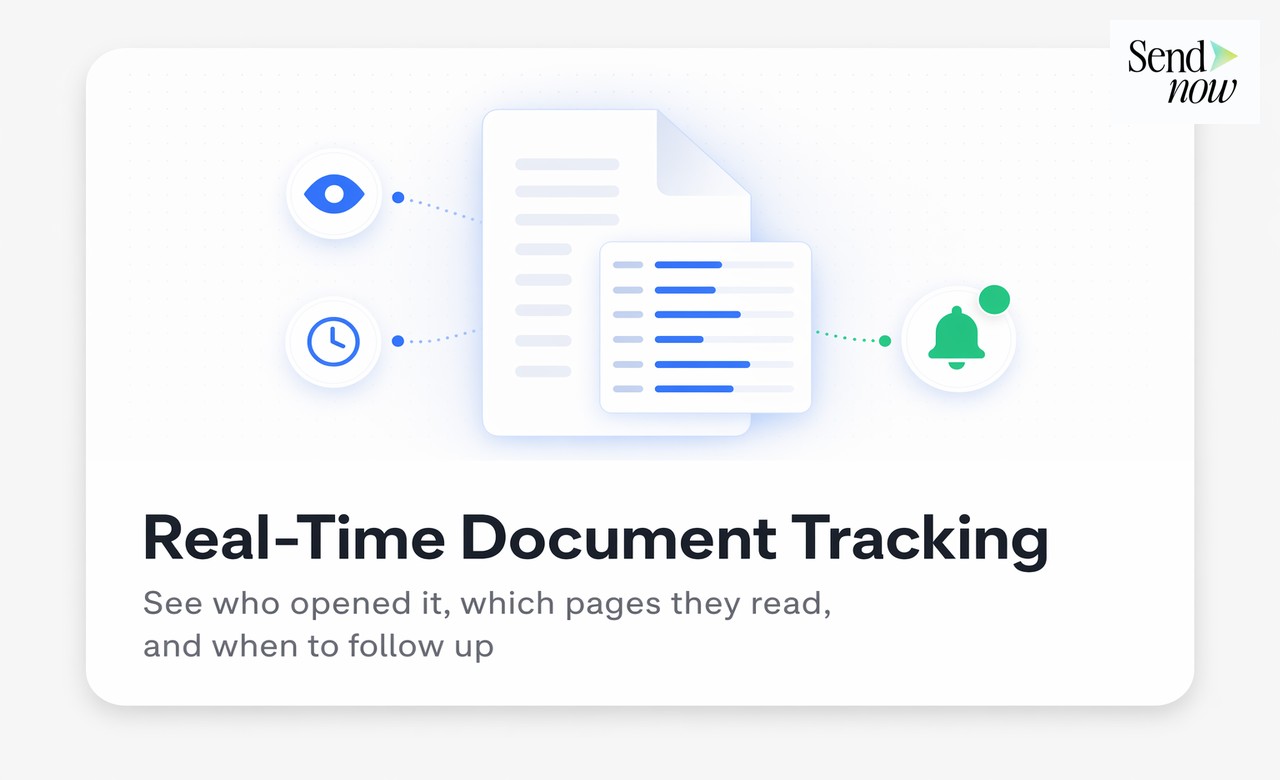
2. You have zero visibility. A password-protected PDF gives you no data on whether the recipient opened it, which pages they read, or how long they spent on each section. In deal-making, that information is strategically valuable.
3. Screenshots bypass all protection. No PDF password stops a recipient from taking a screenshot of every page. Dynamic watermarking — where the viewer's name or IP address is burned into the document in real time — is the only practical deterrent.
4. There is no expiry. Once you send the file and the password, the recipient keeps access indefinitely. If a deal falls through or an NDA is violated, you cannot revoke access to a file that already lives on their device.
5. Passwords are crackable. Tools like Hashcat and John the Ripper can attack PDF passwords. Older Acrobat compatibility modes using RC4 encryption are particularly vulnerable. AES-256 is far stronger, but a weak password defeats strong encryption instantly.
What Finance Teams Use Instead
Finance teams handling pitch decks, term sheets, financial models, and board packs increasingly use link-based document sharing platforms. Rather than attaching a file to an email, they upload the document once and share a secure, trackable link.
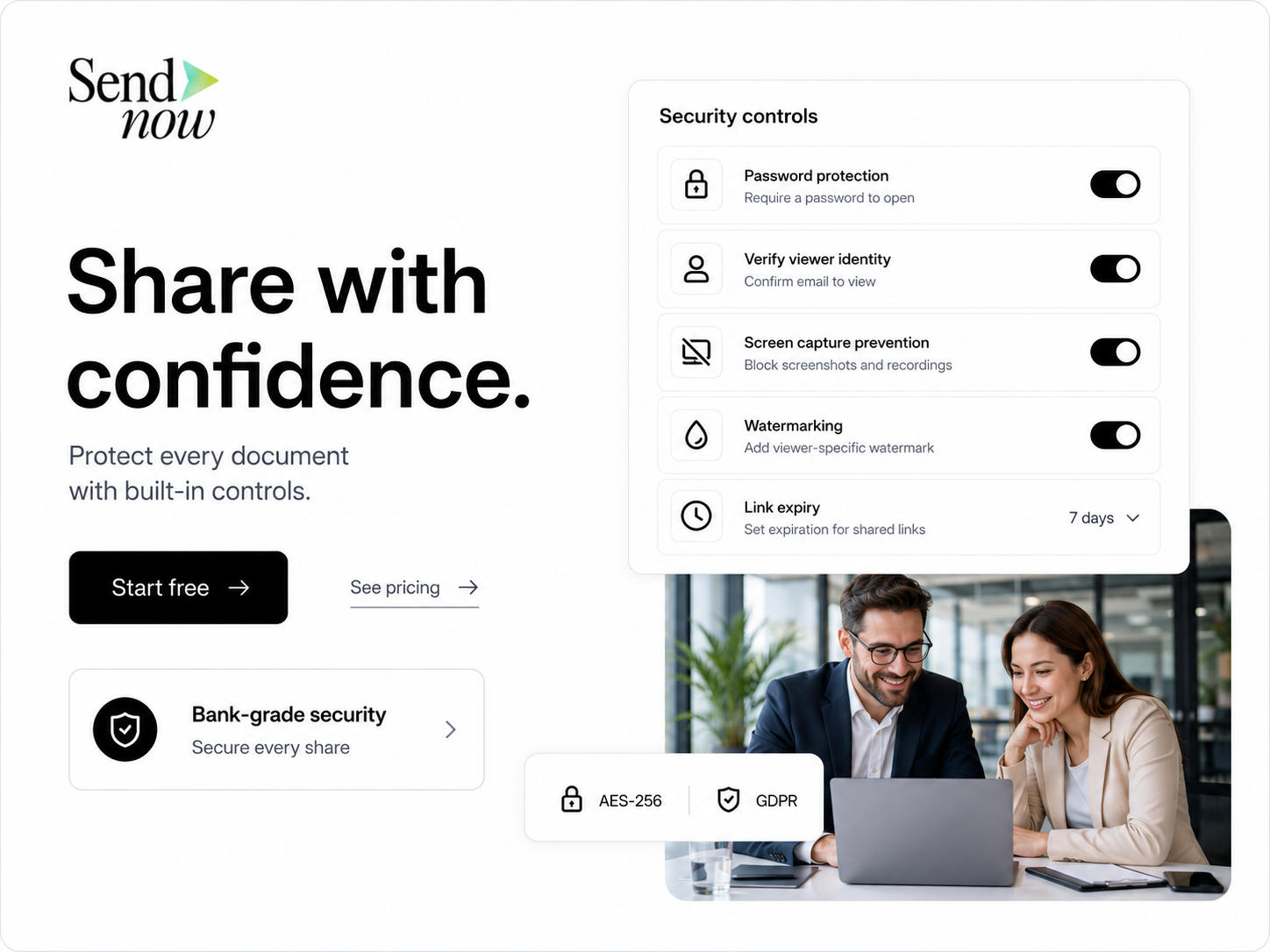
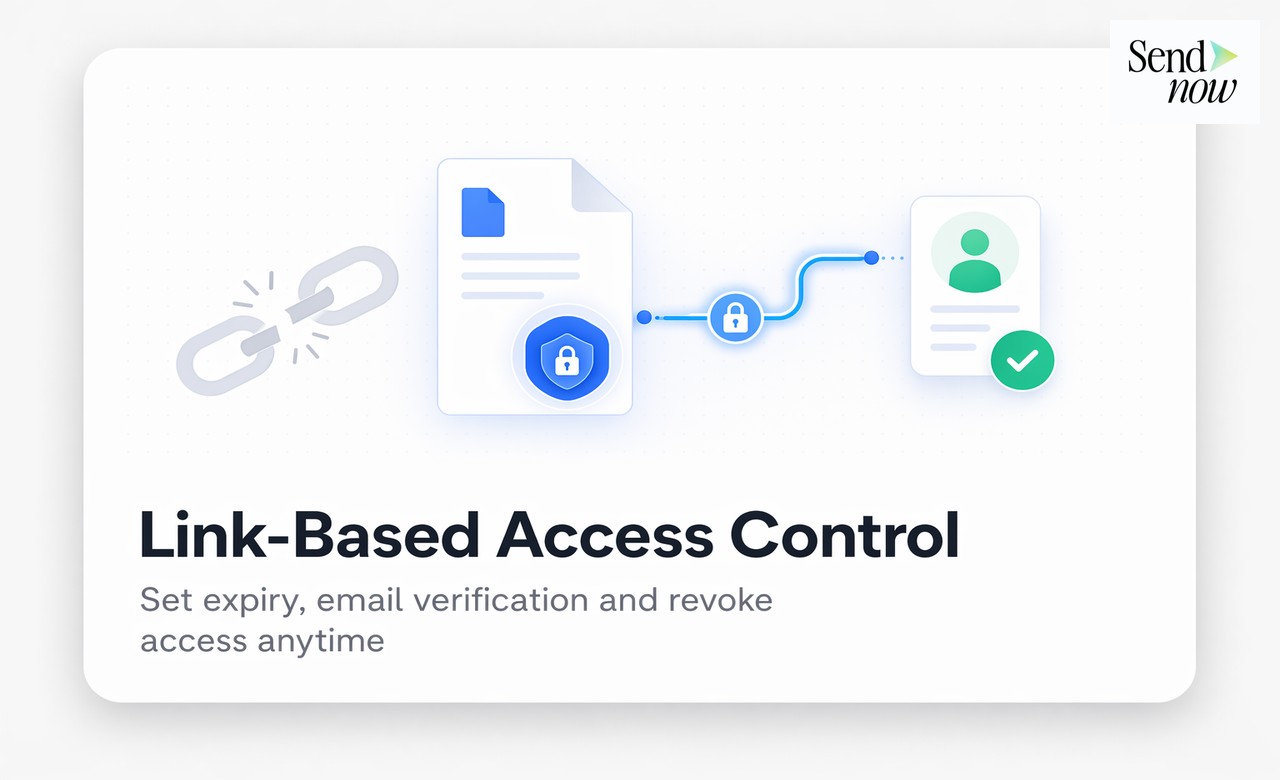
SendNow is built for exactly this workflow. Every document shared through SendNow can be protected with a password, email verification, NDA gating, and a download block — all simultaneously. You can set the link to expire after 7 days or after a single view. If a deal falls through, you revoke the link with one click and the document becomes inaccessible immediately, even to someone who already bookmarked the URL.
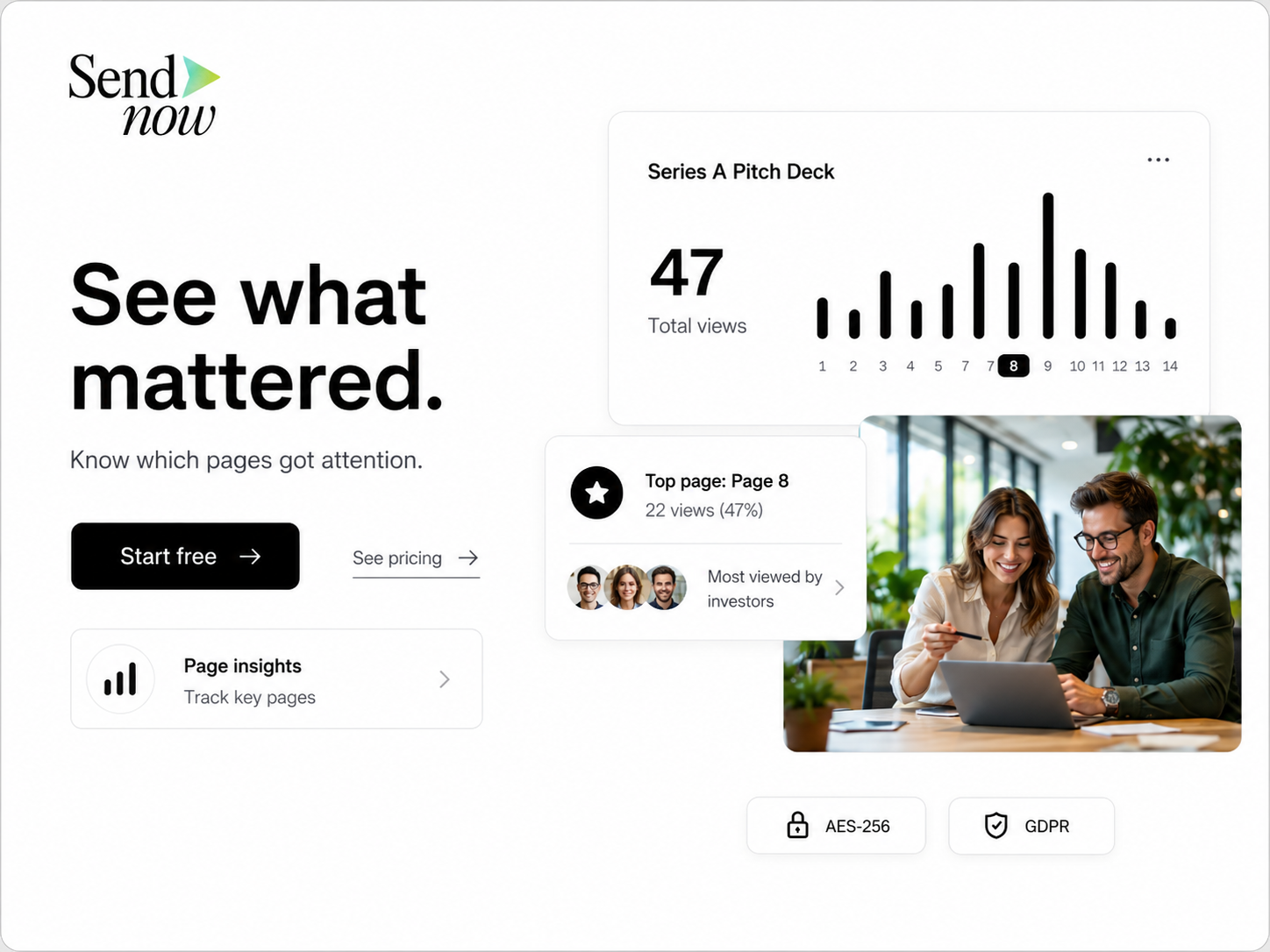
Critically, you also get page-by-page analytics. You see which pages each viewer spent time on, when they returned, and whether they shared the link. That data shapes your follow-up conversations in ways a PDF password never could.
PDF Password vs Link-Based Sharing
| Feature | PDF Password | Link-Based Sharing (e.g. SendNow) |
|---|---|---|
| Encryption | AES-256 (if set correctly) | AES-256 in transit and at rest |
| Access control after send | None | Revoke anytime |
| Expiry | None | Custom (days, views, date) |
| Email verification | None | Yes |
| NDA gating | None | Yes |
| Download blocking | None | Yes |
| Screenshot protection | None | Dynamic watermark |
| Forwarding control | None | Link-level, not file-level |
| Open notifications | None | Real-time Slack or email alert |
| Page analytics | None | Per-page time and heatmap |
| GDPR compliance | Varies by tool | Built-in, EU data residency |
Which Option Fits Your Use Case
Use a PDF password when you are sharing low-sensitivity documents internally, distributing marketing materials where a password is a light formality, or when your recipient explicitly requires a standard PDF file and cannot use a link.
Use link-based sharing when you are sending any document where you need to know it was actually read, when the content is confidential financial data, when GDPR compliance matters, or when you need the ability to revoke access after the fact.
For financial professionals operating under EU regulatory frameworks, the answer is almost always the latter. A PDF password satisfies a checkbox. Link-based sharing with AES-256 encryption, email verification, audit trails, and revocation satisfies a compliance requirement.
Start with a free SendNow account at sendnow.live and share your next document the right way.
FAQs
Q1: Is PDF password protection the same as encryption? A password-protected PDF is encrypted, but only while the password has not been entered. Once the recipient opens the file, it decrypts locally on their device. The encryption protects the file in transit, not while it is being read.
Q2: Can PDF passwords be cracked? Yes. Older PDF encryption standards using RC4 are straightforward to crack with freely available tools. Even AES-256 encryption falls quickly if the password is short or simple. A strong, random password reduces — but does not eliminate — this risk.
Q3: Does GDPR apply to PDF sharing? GDPR applies to any personal data contained in the document and to the method of transfer. Uploading PDFs to free online tools whose servers sit outside the EU may violate data residency requirements. Link-based platforms that specify EU data storage provide a cleaner compliance position.
Q4: Can I stop someone from forwarding a password-protected PDF? No. Once the recipient has the file and the password, you have no technical means to prevent forwarding. Link-based sharing addresses this by making the link — not the file — the access mechanism, and by allowing you to revoke the link at any time.
Q5: What is dynamic watermarking? Dynamic watermarking embeds the viewer's identifying information (name, email, IP address, or timestamp) into each page of the document in real time when it is opened. It deters screenshot leaks because any shared image can be traced back to the specific viewer.
Q6: Is SendNow GDPR compliant? Yes. SendNow uses AES-256 encryption, stores data on AWS infrastructure with EU region options, and provides full audit trails that satisfy GDPR accountability requirements for document sharing.
Q7: Can I set a PDF to expire after one view? Not with a native PDF password. Link-based platforms like SendNow support expiry by view count, by date, or by both simultaneously. After the limit is reached, the link stops working automatically.
Q8: What is the difference between an open password and an owner password in a PDF? An open password requires the viewer to authenticate before the file opens. An owner password restricts actions like printing, copying, or editing but does not prevent the file from opening. Both can coexist in the same PDF.