
How M&A Teams Use Document Rooms to Win Deals Faster
Published on April 24, 2026
How M&A Teams Use Document Rooms to Win Deals Faster
#TLDR: M&A deals move on information. The faster buyers can review documents and the more clearly sellers can track engagement, the faster deals close. A secure document room replaces email threads, USB drives, and shared folder chaos with a single controlled environment that every party can access on their own terms.
Table of Contents
- How M&A Teams Shared Documents Historically
- What a Secure Document Room Changes
- Folder Structure for M&A Due Diligence
- Access Control Across Buyer, Seller, and Advisors
- Tracking Buyer Engagement During Due Diligence
- Closing Faster with Document Room Analytics
How M&A Teams Shared Documents Historically
Before secure document rooms became standard, M&A due diligence operated through a collection of workarounds: email attachments with no version control, shared cloud folders with permissions set once and never audited, USB drives handed to advisors in conference rooms, and physical data rooms where buyers flew in to review printed documents under supervised conditions.
Each method introduced friction. Email attachments created multiple uncontrolled copies of sensitive financial data. Shared folders gave access that could not be revoked once granted. Physical rooms required coordination, travel, and supervision that added weeks to timelines.
The consequence was that buyers moved slowly through diligence, sellers had no visibility into engagement, and deals stalled or collapsed on information gaps that nobody could diagnose quickly enough to fix.
What a Secure Document Room Changes
A secure document room centralizes everything into a single environment that every party accesses through a controlled link. The seller uploads documents once. Every authorized party views documents through a browser-based viewer. No files are downloaded to local devices unless the seller explicitly permits it.
The structural change this creates for M&A processes is significant. Sellers gain complete visibility into which documents buyers have reviewed, which sections are receiving repeat attention, and which materials have not been opened. This information guides deal management: when a buyer has spent significant time on a specific section, the sell-side advisor can initiate a targeted follow-up conversation from a position of knowledge rather than guesswork.
Buyers benefit from an organized, searchable document environment that mirrors the structure of a professional due diligence request list. Legal counsel, financial advisors, and management teams can work in parallel without collision.
Folder Structure for M&A Due Diligence
The folder structure of an M&A document room follows the categories in a standard due diligence request list. A well-organized room reduces buyer confusion and accelerates the review process.
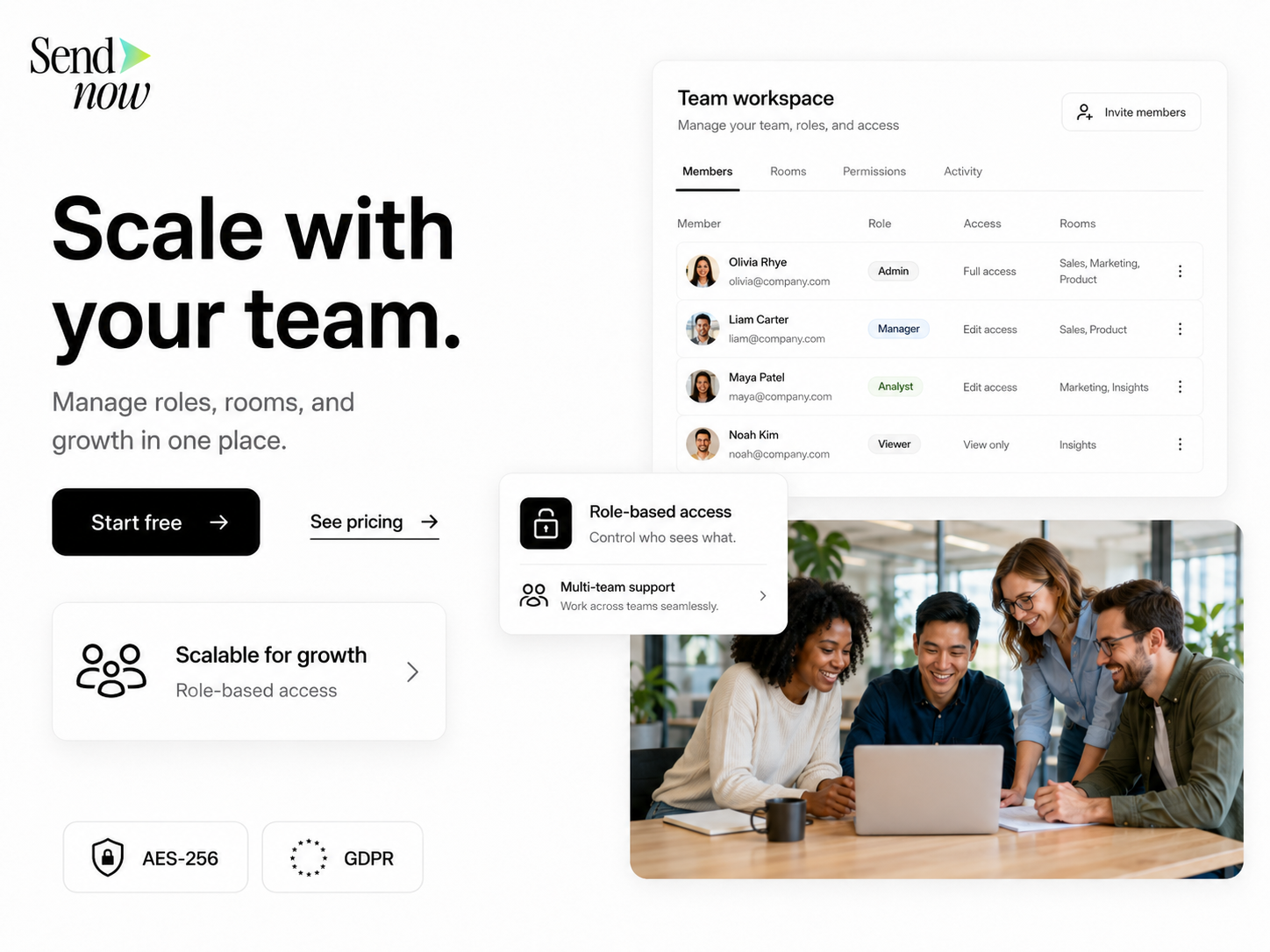
A standard structure includes:
- 01 - Target Overview: Executive summary, business description, market position, organizational chart
- 02 - Financials: Historical P&L, balance sheets, cash flow statements, management accounts, projections
- 03 - Legal: Articles of incorporation, shareholder agreements, cap table, litigation register
- 04 - Intellectual Property: Patent filings, trademarks, software licenses, proprietary technology documentation
- 05 - Human Resources: Key management bios, employment contracts, option pool details, org structure
- 06 - Contracts: Material customer contracts, supplier agreements, lease agreements, key vendor terms
- 07 - Regulatory and Compliance: Licenses, permits, GDPR compliance documentation, audit reports
Each folder should have a completion status visible to the deal team so advisors can prioritize uploads and communicate realistic timelines to buyers.
Access Control Across Buyer, Seller, and Advisors
An M&A document room typically serves four to six distinct parties with different information needs and different access rights.
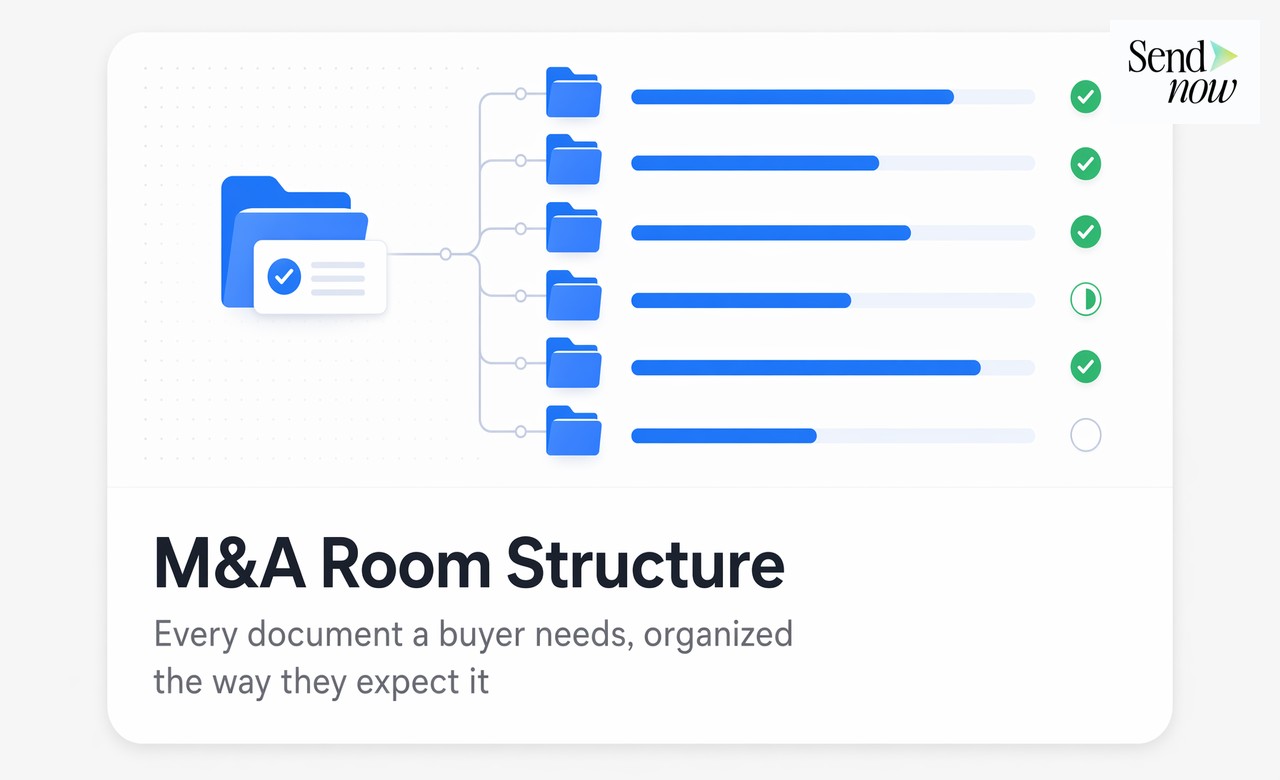
The sell-side management team needs full access to all sections for population and review. The financial advisor needs access to financials and the overview but not necessarily legal or HR sensitive documents. Buy-side counsel needs access to the legal and contracts sections. The financial buyer's analyst team needs full access for modeling purposes. Management team members who are being retained may need restricted access that excludes valuation and deal terms.
A well-configured document room handles each of these access levels with user group permissions. Each group sees only the sections assigned to them. Attempts to access restricted folders are logged. The audit trail records every view, every download attempt, and every NDA acceptance.
When a new buyer enters the process, access is provisioned in minutes. When a buyer exits, access is revoked instantly without affecting any other party's access or any document in the room.
Tracking Buyer Engagement During Due Diligence
Engagement analytics are the feature that separates a secure document room from a shared folder. In an M&A context, these analytics provide the sell-side team with actionable intelligence throughout the process.
Key metrics that deal teams monitor include:
- Time spent per section: A buyer spending extended time on financial projections signals detailed modeling work underway. This is a positive deal signal.
- Page-by-page attention: Identifying which specific pages within a financial model or legal agreement are receiving repeat views helps advisors anticipate questions before they are raised.
- Return visits: A buyer returning to the room multiple times over a short period indicates active internal review. A buyer who has not returned in five days may be losing momentum or encountering internal obstacles.
- NDA and access log: Every access event is timestamped and attributed to a named user, creating a complete audit trail for the transaction record.
Closing Faster with Document Room Analytics
The connection between document room analytics and deal velocity is direct. Sellers who monitor engagement can prioritize their follow-up efforts on buyers who are actively reviewing, accelerate document uploads for sections that are generating questions, and identify disengaged buyers early enough to either re-engage or deprioritize them.
| Activity | Without Document Room | With Document Room |
|---|---|---|
| Document distribution | Email batches, multiple versions | Single room, always current |
| Buyer engagement visibility | None | Page-level analytics, return visit tracking |
| Access revocation | Manual, often missed | Instant, per user |
| NDA tracking | Spreadsheet or email | Logged per viewer, timestamped |
| Multi-party collaboration | Separate email threads | Concurrent access with audit trails |
| Time to first full document review | 2 to 4 weeks typical | 3 to 7 days for organized rooms |
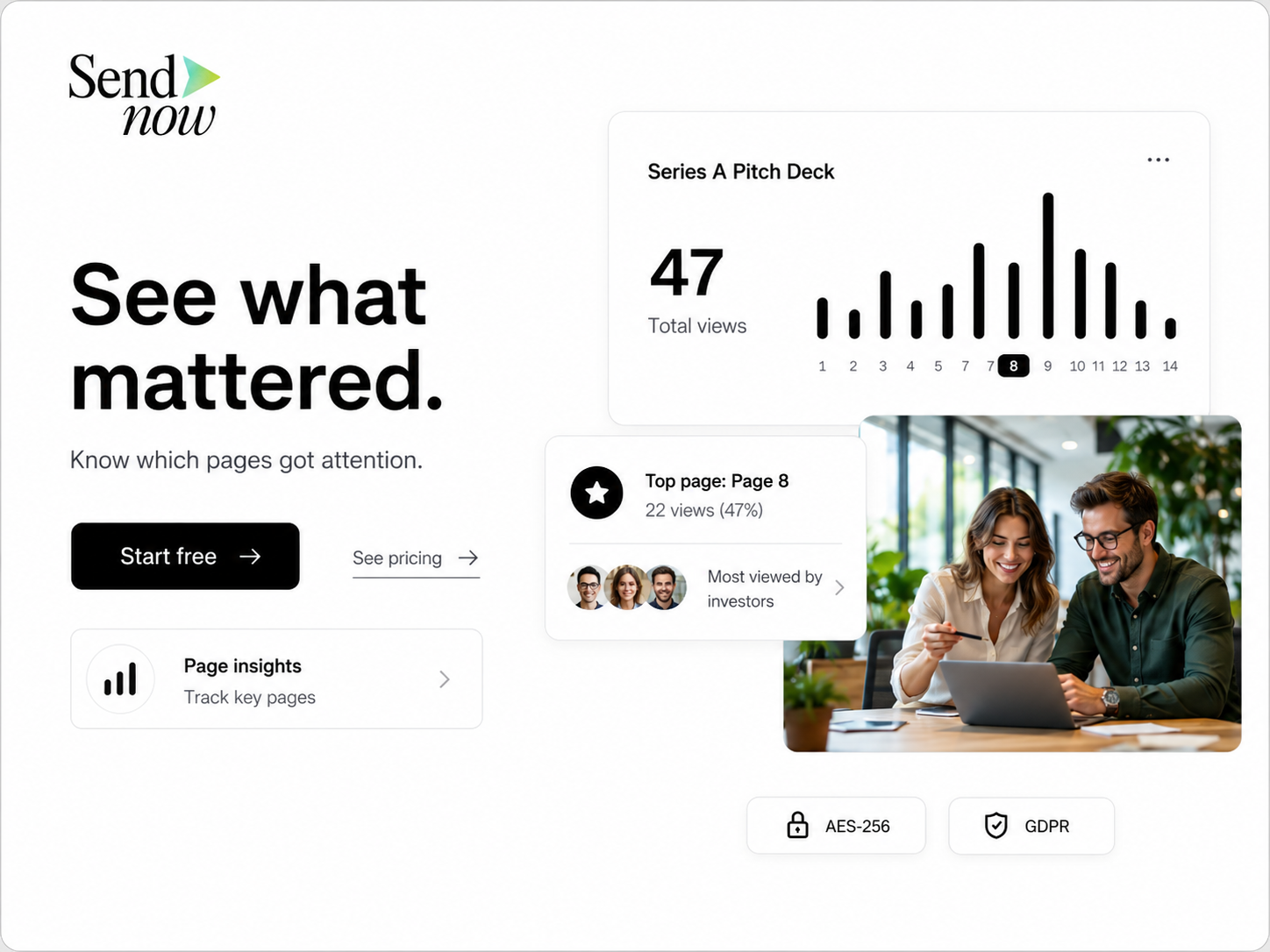
SendNow supports M&A document rooms with page-by-page analytics, NDA gating, per-user access control, and download blocking on confidential financial materials. Teams can set up a complete room structure and begin sharing with buyers the same day.
Set up your M&A document room today. Start at sendnow.live
Frequently Asked Questions
What is a data room in M&A? A data room in M&A is a secure environment where the seller organizes and shares confidential documents with potential buyers during due diligence. Modern data rooms are cloud-based and include access controls, analytics, and audit trails.
When should an M&A data room be opened? A data room should be populated and organized before management presentations begin. Buyers who receive a well-prepared room at the start of diligence complete their review faster and submit more informed bids.
What documents go in an M&A data room? Standard M&A data rooms contain financial statements, legal documentation, IP records, HR information, customer and supplier contracts, and regulatory compliance materials organized into a clear folder structure.
Who has access to an M&A data room? Access is controlled by the sell-side team. Different access levels are granted to financial advisors, legal counsel, management teams, and buyer groups. Each party sees only the sections they are authorized to review.
How do you track buyer engagement in a data room? Modern data rooms provide analytics showing which documents were opened, which pages received the most time, and how many times each user returned. This helps sell-side teams prioritize follow-up.
How long does an M&A data room stay active? Data rooms typically remain active through deal signing and may be archived post-close for compliance purposes. Most platforms allow indefinite access with the ability to revoke at any point.
Can multiple buyers access the same data room simultaneously? Yes. Permission groups allow multiple buyers to access the same room without seeing each other's identity or activity. Each party's audit trail is tracked independently.
Is an M&A data room GDPR compliant? GDPR compliance depends on the platform. Compliant platforms offer EU data residency, data processing agreements, and access logging that supports GDPR accountability obligations. Verify this before onboarding any EU-based personal data.
Written by Alex Carter. Alex covers document security, deal workflows, and GDPR compliance for financial professionals using SendNow.