
Virtual Data Room for Startups: Set One Up in Under an Hour
Published on April 24, 2026
Virtual Data Room for Startups: Set One Up in Under an Hour
#TLDR: Most startup data rooms fail not because of missing documents but because of poor structure, inconsistent access control, and a presentation that signals operational chaos to an investor conducting due diligence. This guide shows you how to build a clean, investor-ready data room in under an hour, what to put in it, how to tier access by deal stage, and what mistakes to avoid.
Table of Contents
- Why Startups Need a Data Room for Fundraising
- What Investors Expect to Find in a Data Room
- Step-by-Step Setup in Under an Hour with SendNow
- Essential Document Categories for Seed and Series A
- Access Control for Investor Stages
- Common Startup Data Room Mistakes to Avoid
- Comparison: Data Room Options for Startups
- FAQs
Why Startups Need a Data Room for Fundraising {#why-data-room}
A virtual data room is a controlled, organized repository of documents that investors review during due diligence. For founders, it serves two purposes simultaneously: it provides investors with the information they need to make a decision, and it signals that your company is organized, transparent, and ready to close.
Investors see hundreds of decks a year. Founders who respond to a due diligence request with a well-structured data room distinguish themselves from those who send a collection of Dropbox links, Google Drive folders, and email attachments over several days. The operational impression is immediate and lasting.
For EU-based startups, data rooms also carry a compliance dimension. GDPR applies to any personal data included in documents shared with third parties. A properly configured data room with access controls, audit logging, and defined retention periods is a better-structured approach to GDPR compliance than ad-hoc file sharing.
What Investors Expect to Find in a Data Room {#investor-expectations}
The contents of a data room vary by stage but the structure investors expect is largely consistent. At seed stage, investors understand that some materials are still being developed. At Series A and beyond, incomplete materials send a signal that due diligence preparation was not prioritized.
A general investor expectation across both stages includes: a current pitch deck, a financial model with assumptions, evidence of traction (revenue data, user metrics, or LOIs), a cap table, key legal documents (incorporation, IP assignments, existing shareholder agreements), and information about the founding team.
What investors are actually looking for is not just the documents themselves but the story they tell together. A financial model that contradicts the deck, a cap table that shows unexpected dilution, or incorporation documents with unresolved issues will all generate follow-up questions and slow down the process. The data room is a first impression at the information level.
Step-by-Step Setup in Under an Hour with SendNow {#setup-guide}
Setting up a data room on SendNow takes approximately 45 minutes for a founder who has documents already prepared.
Minutes 0-10: Account setup and workspace creation. Create a SendNow account, enable two-factor authentication, and set up a workspace named for your company and round (e.g., "Acme Seed Round 2026"). Enable custom domain if your branding requires it.
Minutes 10-25: Create your folder structure. Build the six core folders described in the next section. Name them clearly and consistently. Investors should be able to navigate without a guide.
Minutes 25-40: Upload documents. Upload current versions of all documents. For any document that is not yet complete, include a placeholder file with a note on expected completion date. This is better than an empty folder which investors may interpret as missing information.
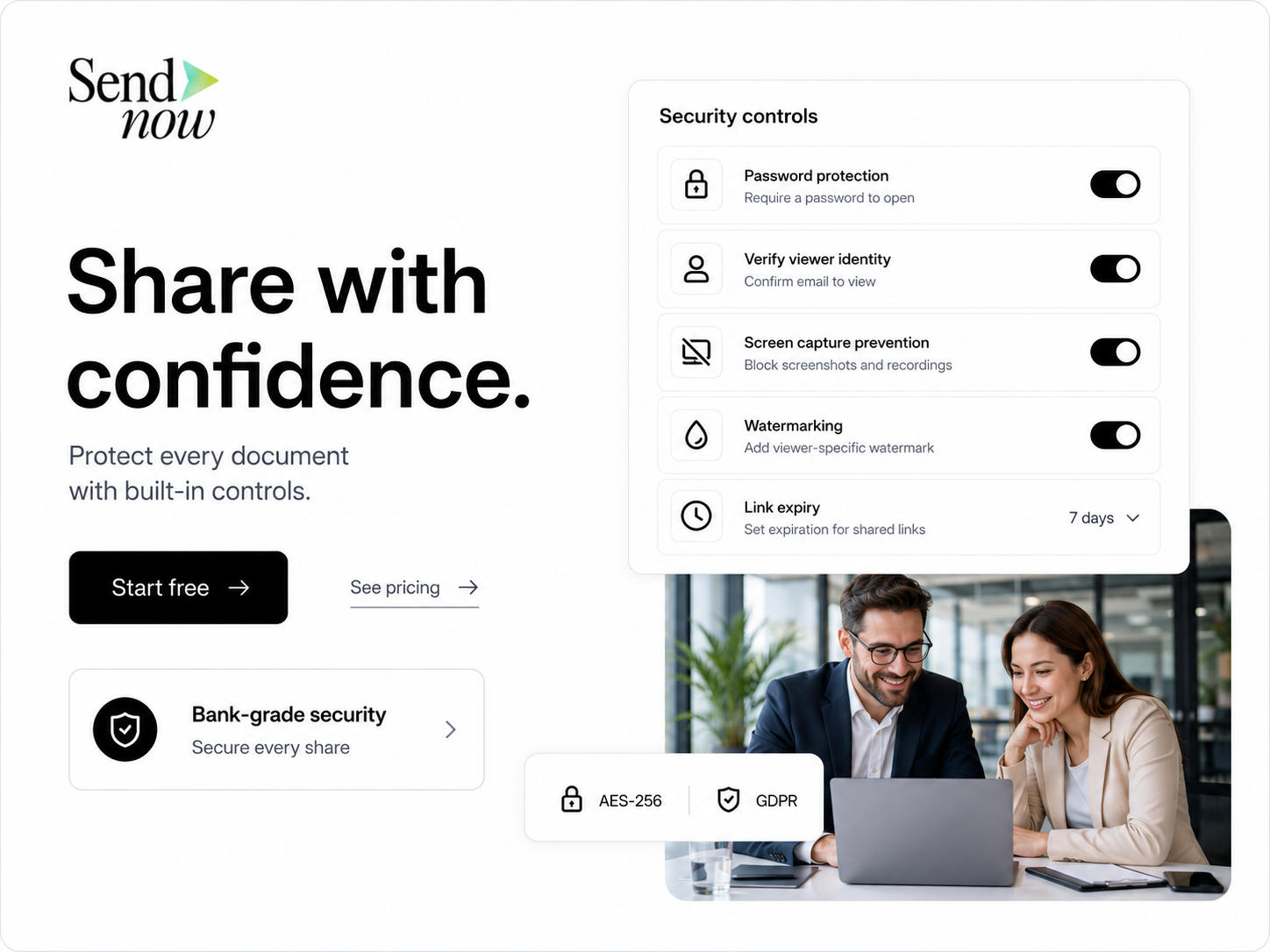
Minutes 40-50: Configure access controls. Set up two access tiers: an introductory tier for early-stage conversations and a full due diligence tier. Apply NDA gating to the full tier. Test both links before sharing.
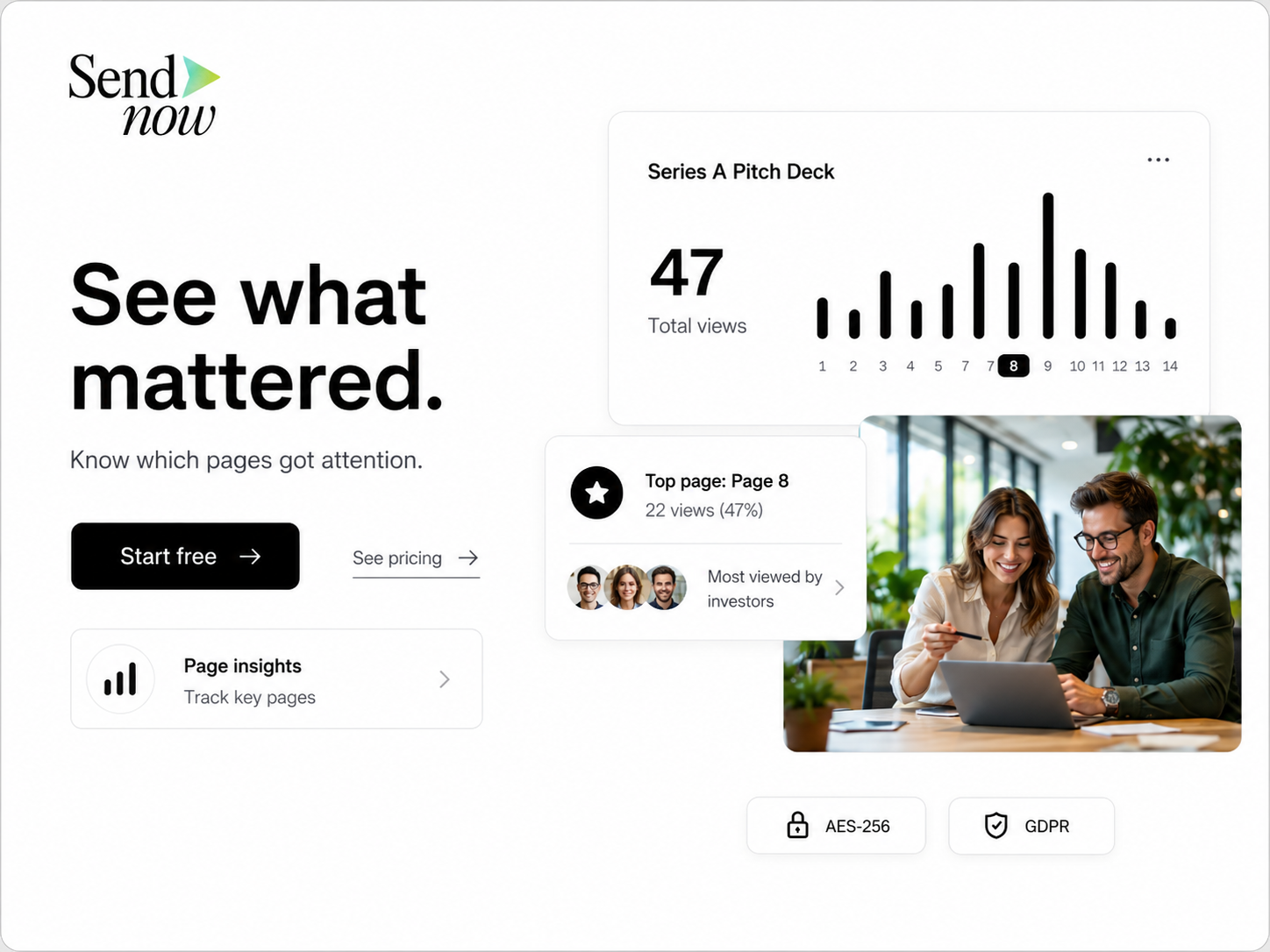
Minutes 50-60: Review and test. Open both links in a private browser window and confirm the experience from the investor's perspective. Check that all documents load, that the NDA gate works correctly on the full tier, and that the folder labels are clear.
Essential Document Categories for Seed and Series A {#document-categories}
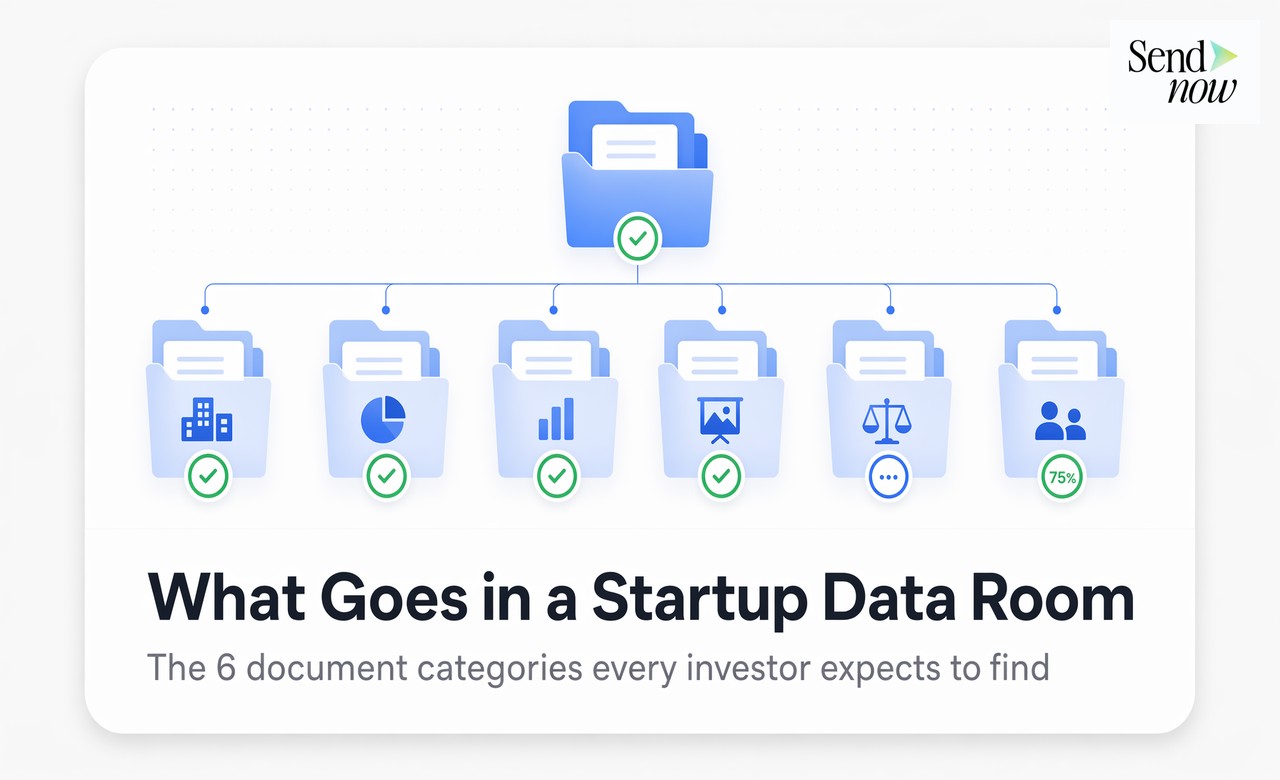
Six document categories form the core of any startup data room:
1. Company Overview. Current pitch deck, one-page executive summary, and any relevant press coverage or analyst mentions.
2. Financials. Financial model (with a visible assumptions tab), historical P&L if applicable, current MRR or ARR data, burn rate, and runway calculation.
3. Cap Table. Current cap table showing all shareholders, option pool, and any convertible notes or SAFEs outstanding. Capitalization summary in PDF format alongside the underlying spreadsheet.
4. Legal. Certificate of incorporation, shareholder agreements, IP assignment agreements for all founders, any existing investor rights agreements, and employment contracts for key personnel.
5. Product. Product roadmap, key metrics dashboard, demo video or interactive demo link, and any technical architecture overview relevant for technical investors.
6. Team. Founder bios with relevant experience, LinkedIn profiles, and any advisory board composition.
At Series A, add customer evidence (anonymized case studies or reference letters), a detailed market analysis, and any regulatory or compliance certifications relevant to your industry.
Access Control for Investor Stages {#access-control}
Not all investors at all stages need the same level of access. Sharing full financial models and cap tables with someone who has attended a single intro call creates unnecessary risk.
A two-tier structure works well for most fundraising processes:
Introductory tier: Pitch deck, executive summary, team bios. No NDA required. Accessible from the first conversation. This tier is for building interest, not due diligence.
Due diligence tier: All six document categories. NDA gating enabled with your firm's confidentiality agreement. Accessible only after a term sheet conversation or a clear signal of serious intent.
SendNow supports both tiers within the same workspace, with separate links and separate audit logs for each. When an investor moves from introductory to due diligence tier, you have a logged record of the exact moment and the NDA they signed.
Common Startup Data Room Mistakes to Avoid {#mistakes}
Outdated documents. A financial model dated six months ago tells an investor that you are either not tracking your finances or that you prepared this data room in a hurry. Update documents before sharing, especially financials and cap tables.
No version control. If you upload a revised model, label it clearly (v2, date) rather than overwriting the original. Investors taking notes on v1 will be confused by changes to a document they believe is the same file.
Over-sharing at the wrong stage. Sharing your full cap table and IP agreements before an NDA is in place creates real legal and commercial risk. Use access tiers.
Missing the human layer. A data room is a tool, not a replacement for conversation. Use document open notifications to know when an investor has reviewed your materials and follow up promptly. The best data room in the world loses to a founder who follows up at the right moment.
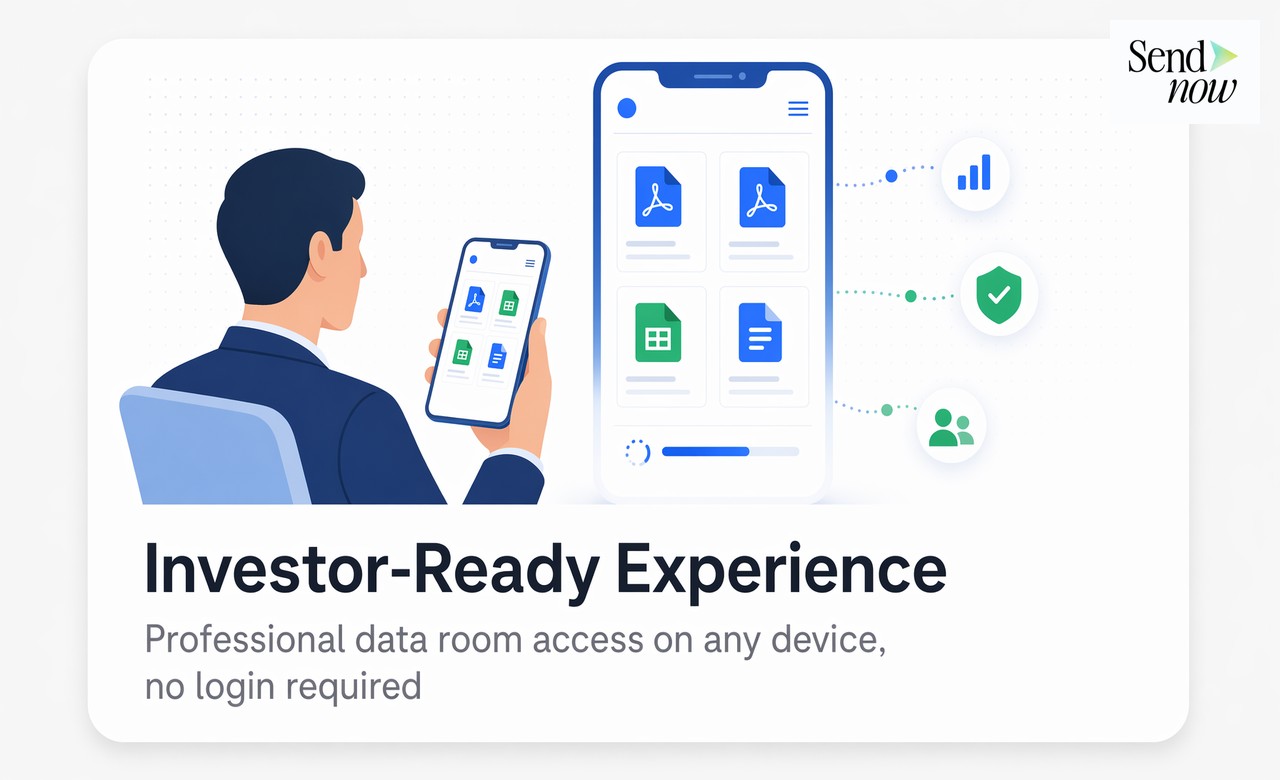
No mobile optimization. Investors review data rooms on phones during commutes. Documents that require a desktop to navigate create friction. SendNow renders documents cleanly on mobile with no download required.
Comparison: Data Room Options for Startups {#comparison}
| Platform | Setup Time | NDA Gating | Audit Logs | Access Tiers | Investor Mobile UX | Cost |
|---|---|---|---|---|---|---|
| Google Drive | 30 min | No | No | Folder-level only | Adequate | Free |
| Dropbox | 30 min | No | Limited | Folder-level only | Adequate | Low |
| Dedicated VDR (legacy) | Days + IT | Yes | Yes | Yes | Poor | High |
| SendNow | Under 1 hour | Yes | Yes | Yes | Excellent | Low |
FAQs {#faqs}
1. Do I need a data room for a seed round? At pre-seed, a well-organized shared folder may be sufficient. By seed round, a proper data room signals preparation and protects your information better than an open shared drive.
2. Should I use an NDA for all investor conversations? NDA gating is appropriate for detailed financial and legal materials. Early-stage pitch decks are typically shared without an NDA since requiring one before a first meeting creates unnecessary friction.
3. How do I know when an investor has reviewed my materials? Document open notifications give you a real-time alert when a link is opened, along with page-level detail showing which documents were reviewed and for how long.
4. What file formats should I use in the data room? PDFs are preferred for final documents as they prevent easy editing and render consistently across devices. Spreadsheets should be included as both PDF and native format where investors may want to run their own analysis.
5. Can I revoke access after a deal falls through? Yes. SendNow link revocation allows you to instantly disable access for any specific investor without affecting other users' access.
6. How do I handle investors who ask for documents not yet in the room? Add a placeholder document in the relevant folder explaining the expected availability date. This is more professional than a blank folder and manages expectations proactively.
7. What happens to the data room after the round closes? Archive the round-specific room with a locked access log. Keep materials available for post-close due diligence by acquirers or for future rounds that reference historical information.
8. Is it safe to include personal data about team members in a data room? Under GDPR, any personal data shared with third parties should have a legal basis. Investor due diligence typically qualifies under legitimate interests, but consult your legal counsel and include only information directly relevant to the investment decision.
<script type="application/ld+json"> }, { "@type": "Question", "name": "Should I use an NDA for all investor conversations?", "acceptedAnswer": { "@type": "Answer", "text": "NDA gating is appropriate for detailed financial and legal materials. Early-stage pitch decks are typically shared without an NDA since requiring one before a first meeting creates unnecessary friction." } }, { "@type": "Question", "name": "How do I know when an investor has reviewed my materials?", "acceptedAnswer": { "@type": "Answer", "text": "Document open notifications give you a real-time alert when a link is opened, along with page-level detail showing which documents were reviewed and for how long." } }, { "@type": "Question", "name": "What file formats should I use in the data room?", "acceptedAnswer": { "@type": "Answer", "text": "PDFs are preferred for final documents as they prevent easy editing and render consistently across devices. Spreadsheets should be included as both PDF and native format where investors may want to run their own analysis." } }, { "@type": "Question", "name": "Can I revoke access after a deal falls through?", "acceptedAnswer": { "@type": "Answer", "text": "Yes. SendNow link revocation allows you to instantly disable access for any specific investor without affecting other users' access." } }, { "@type": "Question", "name": "How do I handle investors who ask for documents not yet in the room?", "acceptedAnswer": { "@type": "Answer", "text": "Add a placeholder document in the relevant folder explaining the expected availability date. This is more professional than a blank folder and manages expectations proactively." } }, { "@type": "Question", "name": "What happens to the data room after the round closes?", "acceptedAnswer": { "@type": "Answer", "text": "Archive the round-specific room with a locked access log. Keep materials available for post-close due diligence by acquirers or for future rounds that reference historical information." } }, { "@type": "Question", "name": "Is it safe to include personal data about team members in a data room?", "acceptedAnswer": { "@type": "Answer", "text": "Under GDPR, any personal data shared with third parties should have a legal basis. Investor due diligence typically qualifies under legitimate interests, but consult your legal counsel and include only information directly relevant to the investment decision." } } ] } </script>
Set up your investor data room in under an hour. Start free at sendnow.live and give investors a professional, secure experience from day one.
Written by Alex Carter. Alex covers document security, compliance, and secure sharing workflows for financial and legal professionals across the EU.