
What Is a Virtual Data Room and Do You Actually Need One?
Published on April 24, 2026
TLDR
A virtual data room is a secure online repository used to share and manage confidential documents during high-stakes transactions like M&A, fundraising, and IPOs. Traditional VDRs are powerful but expensive and complex — many finance teams are finding that lighter deal room tools cover 80% of their use cases at a fraction of the cost. Understanding the difference saves you weeks of procurement time and thousands in unnecessary licensing fees.
Table of Contents
- What a VDR Is vs Dropbox or Google Drive
- Who Uses Virtual Data Rooms
- Key Features of a VDR
- VDR vs Email vs Microsite
- When You Need a Full VDR vs a Lighter Solution
- How to Set One Up Fast
- FAQs
What a VDR Is vs Dropbox or Google Drive
A virtual data room and a cloud storage drive both store documents online and allow multiple people to access them. The similarity ends there.
Dropbox and Google Drive are designed for collaboration and convenience. They lack granular permission controls, have no NDA enforcement, produce no investor-grade audit trails, and offer no deal-specific workflows. Sharing a Dropbox link to a prospective acquirer is the file-sharing equivalent of leaving your front door open.
A virtual data room is built for adversarial contexts — situations where you are sharing confidential documents with counterparties who have competing interests. The defining characteristics are:
- Granular permissions. You control who sees which folder, which file, and whether they can print or download. Permissions change in real time.
- Audit trail. Every action — who opened what, for how long, and when — is logged and exportable. This trail has legal weight in due diligence disputes.
- NDA enforcement. Users must accept an NDA before gaining access to any document.
- Q&A module. Buyers submit questions through the platform; sellers respond in a controlled environment that keeps all communications auditable.
- Watermarking. Documents display the viewer's name and access details, deterring leaks.
Who Uses Virtual Data Rooms
M&A teams are the primary users. Sellers use VDRs to share financial statements, customer contracts, IP documentation, and regulatory filings with potential buyers during due diligence. Buyers use them to conduct structured reviews before signing.
Investment bankers and private equity firms manage multiple deal processes simultaneously, each with its own VDR containing hundreds or thousands of documents organized by workstream.
CFOs and legal counsel in fundraising rounds share cap tables, board minutes, financial projections, and investor agreements with institutional investors through VDRs.
Biotech and pharma companies use VDRs for FDA submissions, licensing negotiations, and clinical trial data sharing with partners who require auditable access.
Real estate firms use VDRs for property portfolio transactions where multiple parties — lenders, buyers, legal teams — need simultaneous controlled access.
Key Features of a VDR
A production-grade virtual data room includes:
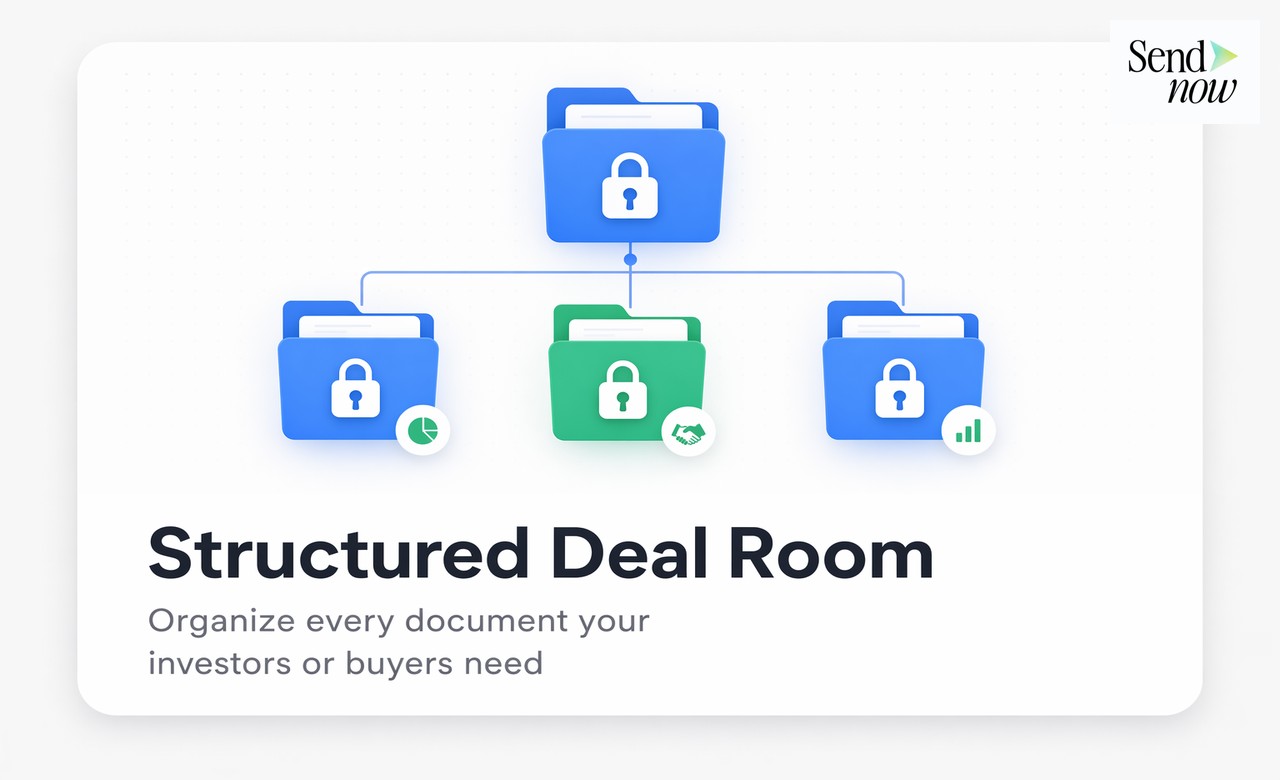
Document management. Bulk upload, auto-numbering, version control, and a logical folder hierarchy that mirrors your deal structure. Buyers navigate thousands of documents without getting lost.
Permission matrix. Role-based access at the folder and document level. A junior analyst from the buy-side sees the operating summaries; the CFO sees the financials; legal sees the contracts. Each role is set independently.
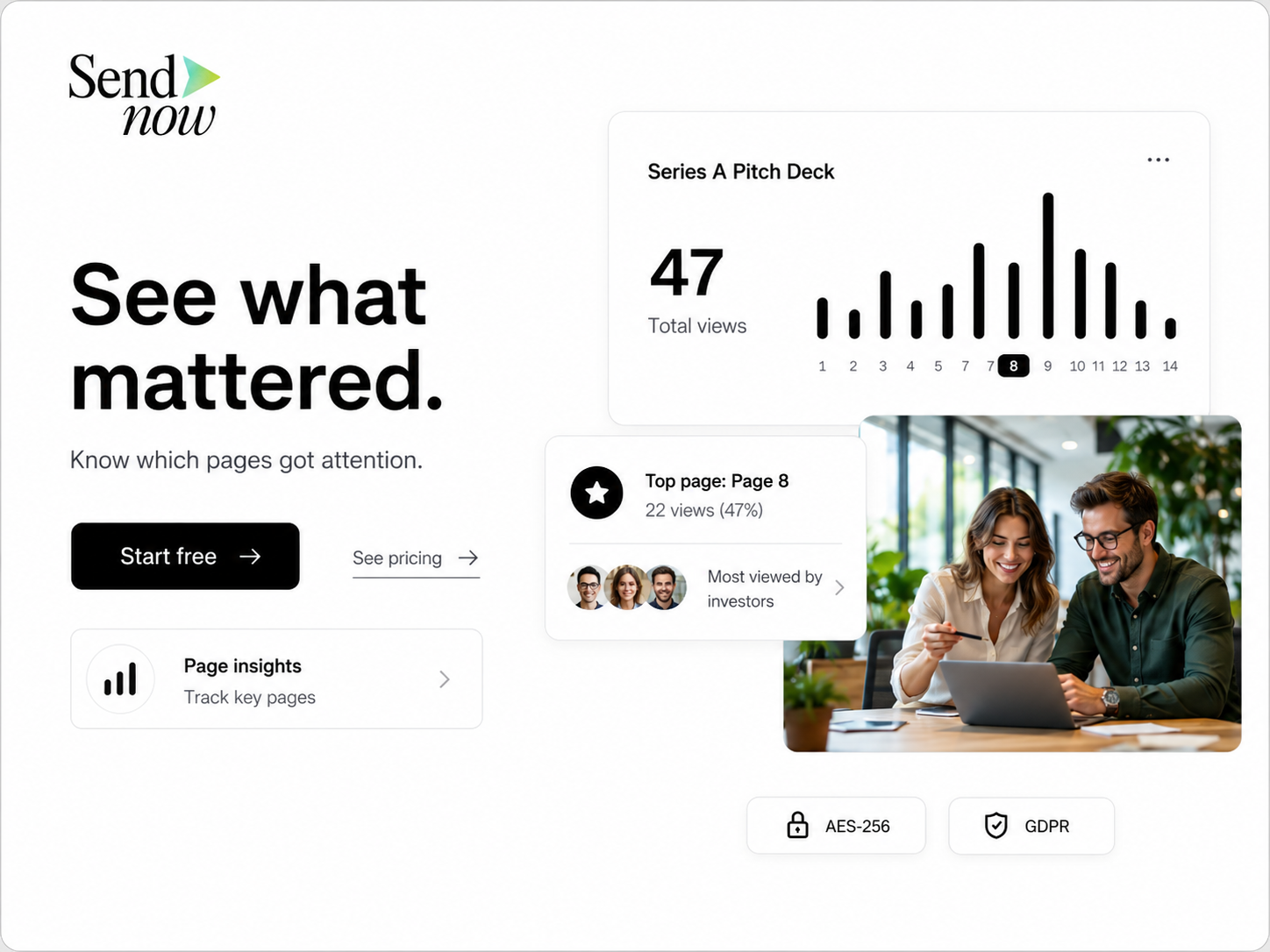
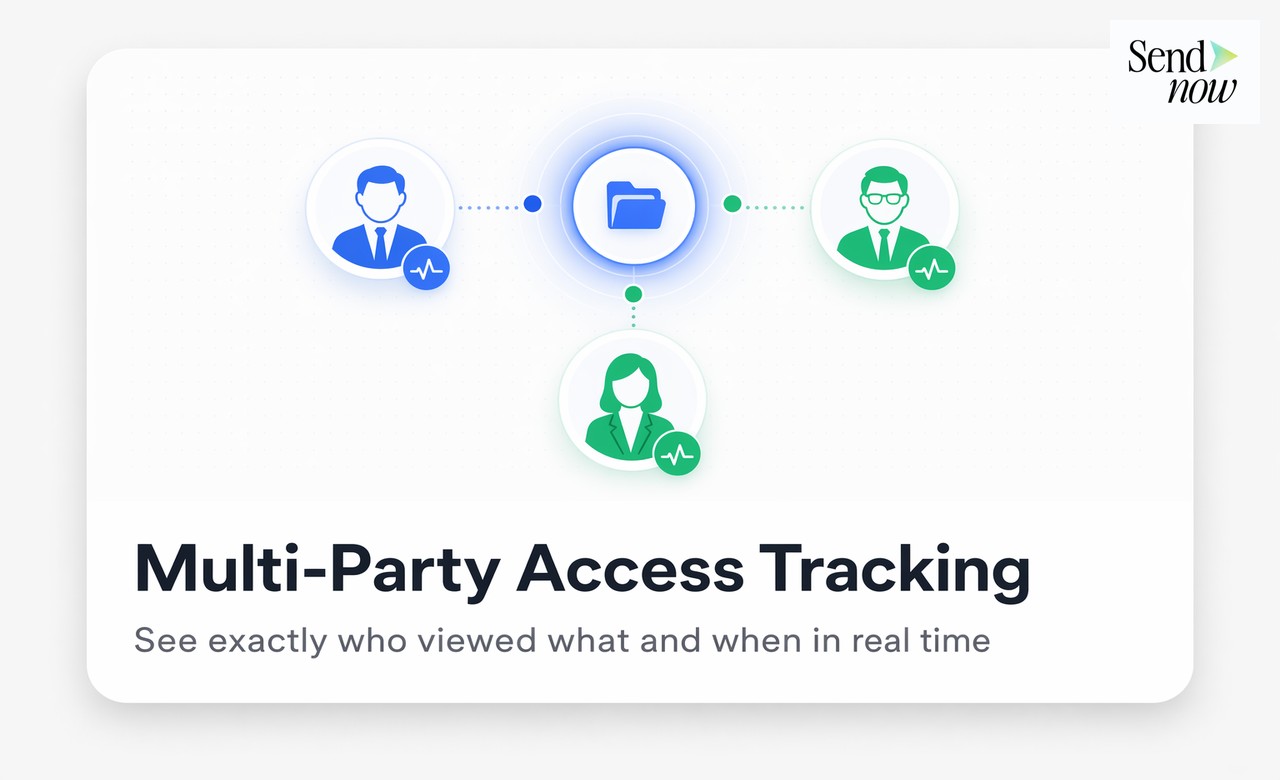
Activity analytics. Time-stamped logs showing exactly which documents each user accessed, for how long, and from what location. These analytics tell the sell-side team which areas of interest are generating the most scrutiny.
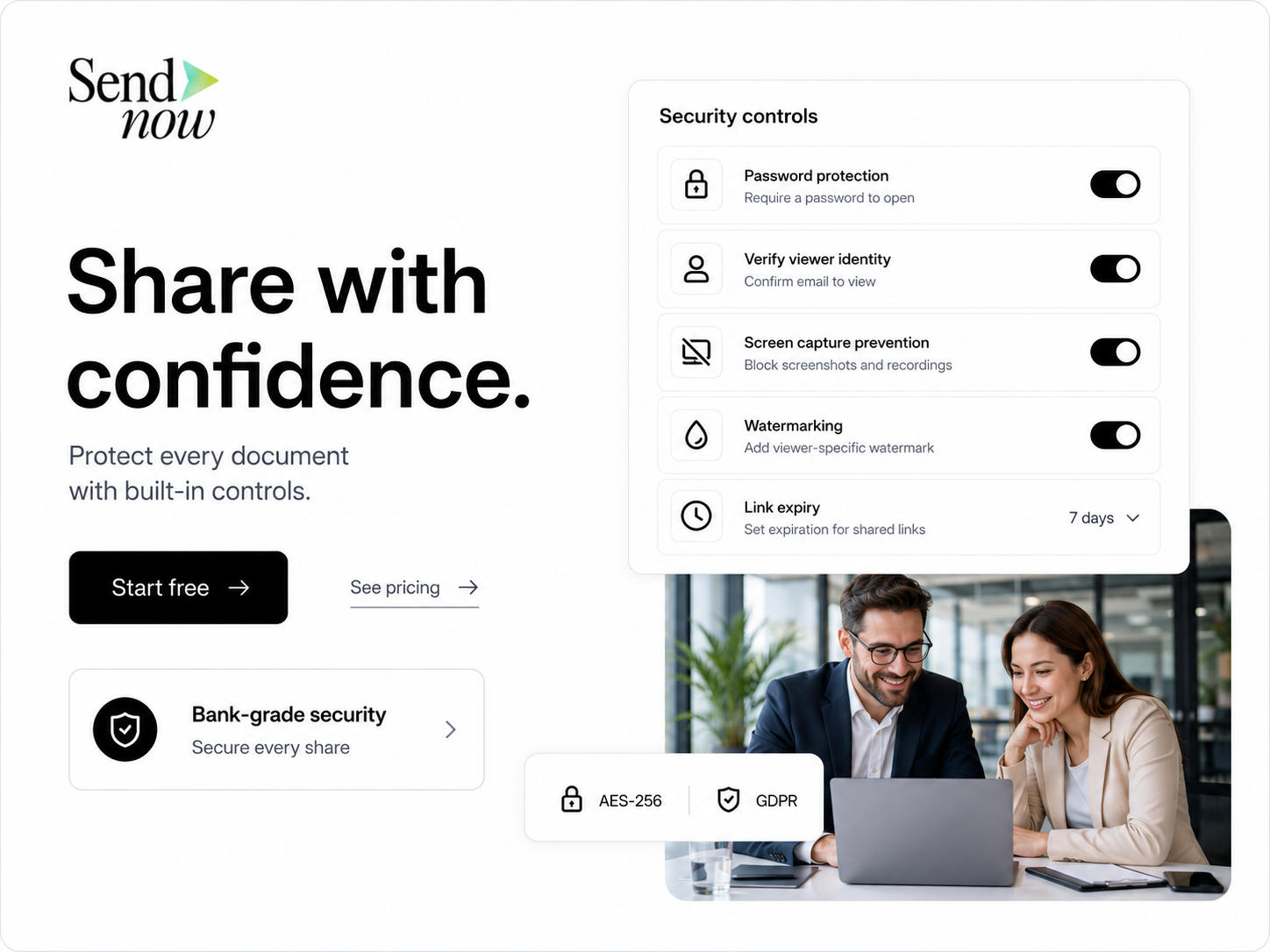
Secure viewer. Documents render inside a protected viewer that blocks downloads, printing, and screenshots. Dynamic watermarks display the viewer's identity on every page.
Q&A management. Structured question submission, routing to the correct SME, and published answers visible to all parties within a defined group.
GDPR and SOC 2 compliance. Enterprise VDRs provide data processing agreements, EU data residency, encryption at rest and in transit, and regular penetration testing.
VDR vs Email vs Microsite
| Feature | Email Attachment | Microsite (e.g. SendNow) | Full VDR |
|---|---|---|---|
| Secure access control | None | Yes | Yes |
| NDA enforcement | None | Yes | Yes |
| Per-document analytics | None | Yes | Yes |
| Audit trail | None | Yes | Full legal-grade |
| Q&A module | None | No | Yes |
| Folder hierarchy | None | Single collection | Deep hierarchy |
| Setup time | Minutes | Minutes | Days to weeks |
| Pricing | Free | Low monthly | $500-$5,000+/month |
| GDPR compliance | Varies | Yes | Yes |
| Best for | Internal drafts | Single deal, fundraise | M&A, IPO, large-scale due diligence |
When You Need a Full VDR vs a Lighter Solution
You need a full VDR when:
- You are running a formal M&A process with multiple bidders conducting parallel due diligence
- Your legal team requires an exportable, court-admissible audit trail
- You are managing thousands of documents across multiple workstreams
- Your deal requires a structured Q&A process with multiple subject matter experts
A lighter tool like SendNow covers your needs when:
- You are sharing a pitch deck, financial model, and term sheet with a single investor or buyer
- You need NDA gating, email verification, download blocking, and page-level analytics
- You want to set up a branded deal room in under ten minutes
- You do not need a formal Q&A module or deep multi-folder hierarchy
Many finance teams run their early-stage fundraising and initial buy-side diligence through SendNow before graduating to a full VDR only when a deal reaches exclusivity and formal due diligence begins. This approach saves thousands in VDR licensing for the 60-70% of processes that never reach that stage.
How to Set One Up Fast
For a full VDR, the fastest path is through providers like Datasite, Intralinks, or Ansarada. Expect 1-3 days for provisioning, security setup, and user onboarding. Budget $1,000-$5,000 per month depending on storage and user count.
For a lightweight deal room that handles most real-world fundraising and deal-sharing needs, the process takes minutes. With SendNow, you upload your documents, organize them under a single branded microsite link, apply NDA gating and email verification, and share the link. Analytics start flowing the moment the first investor opens it.
Start at sendnow.live and have your first secure deal room live before your next investor call.
FAQs
Q1: What is the main purpose of a virtual data room? A virtual data room provides a secure, controlled environment for sharing confidential documents during transactions like M&A, fundraising, and IPOs. Its defining feature over regular cloud storage is granular access control combined with a legally admissible audit trail.
Q2: How much does a virtual data room cost? Enterprise VDRs from providers like Datasite or Intralinks typically cost between $1,000 and $5,000 per month, sometimes charged per page or per GB. Lightweight deal room tools can start under $100 per month and cover most early-stage deal needs.
Q3: Is Google Drive a virtual data room? No. Google Drive lacks NDA enforcement, granular permissions at the document level, activity audit trails, and deal-specific workflows. It is a collaboration tool, not a transaction platform.
Q4: Can a VDR be used for fundraising? Yes. Founders and CFOs use VDRs — or lighter deal room tools — to share pitch decks, cap tables, financials, and board minutes with institutional investors during due diligence.
Q5: What happens to a VDR after a deal closes? Most organizations archive the VDR for a defined retention period as required by their jurisdiction. Some providers convert the active room to a lower-cost archive tier. The audit trail remains accessible for legal and compliance purposes.
Q6: What is the difference between a VDR and a data room? The terms are used interchangeably. "Data room" originally referred to a physical room where buyers reviewed printed documents. "Virtual data room" replaced this with a secure online environment. Today, "data room" almost always means the virtual version.
Q7: Do I need a VDR for a Series A fundraise? Not necessarily. Many Series A processes run through a lightweight deal room with NDA gating, analytics, and branded document sharing. A full VDR becomes valuable when multiple institutional investors conduct formal parallel due diligence simultaneously.
Q8: Are virtual data rooms GDPR compliant? Reputable VDR providers and deal room tools offer GDPR-compliant data processing agreements, EU data residency options, and encryption at rest and in transit. Always confirm the data residency option before sharing EU-regulated personal data.