Document Tracking vs Email Read Receipts: Which Is More Reliable?

Document Tracking vs Email Read Receipts: Which Is More Reliable?
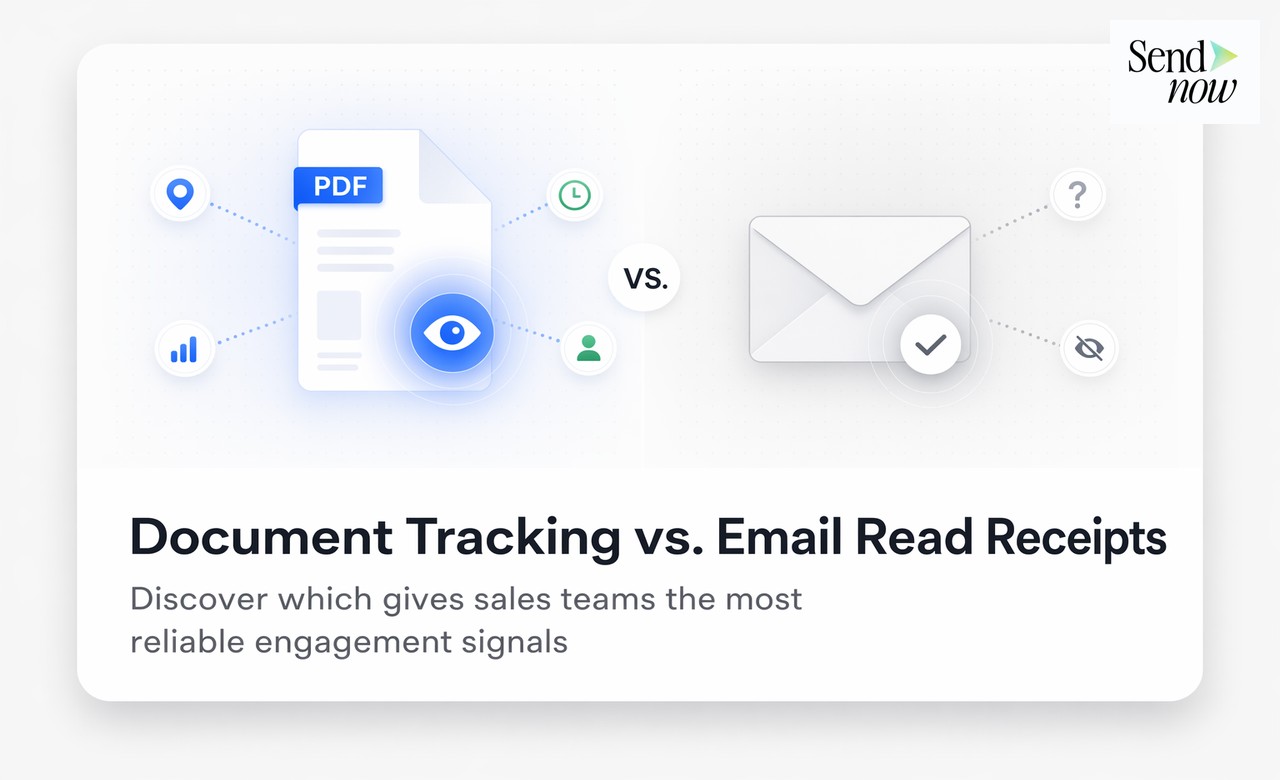
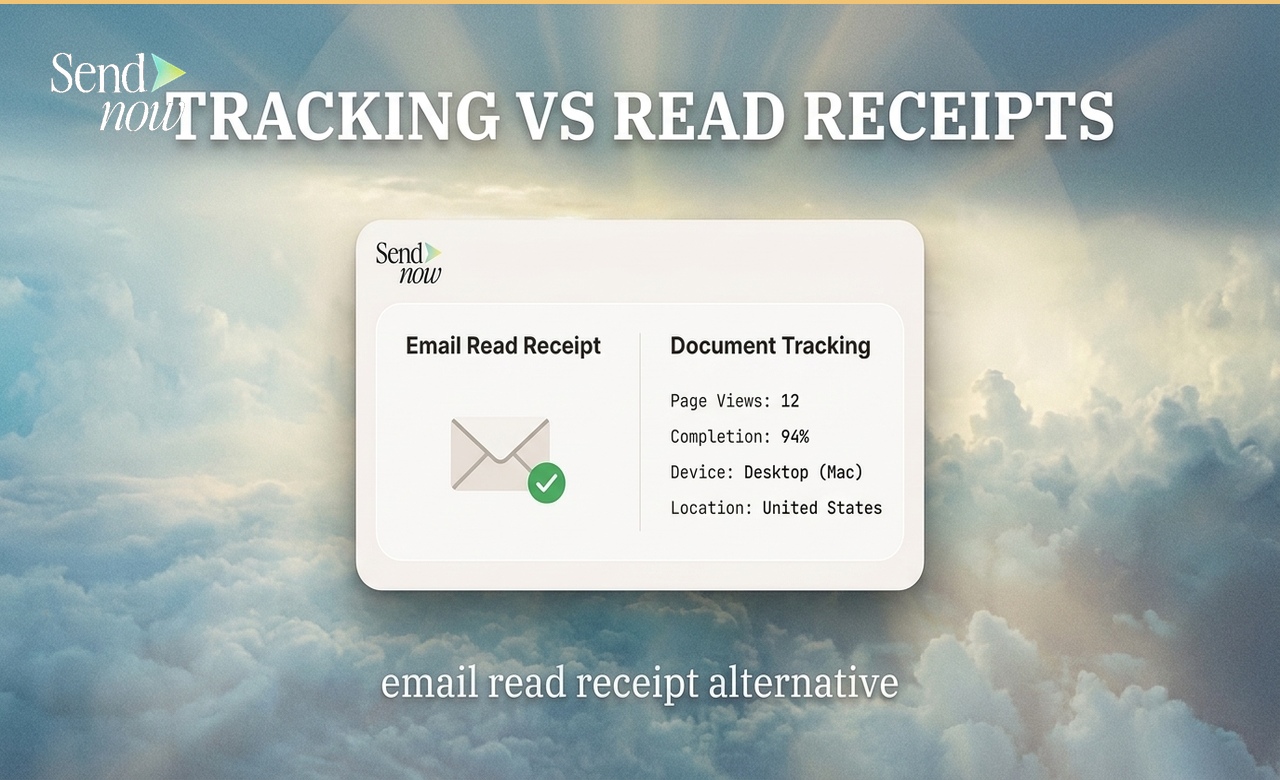
Document tracking is significantly more reliable than email read receipts for professional document sharing. Email read receipts can be blocked, declined, or simply ignored by the recipient's email client — and even when they work, they only confirm the email was opened, not the attached file. Document tracking records whether the actual document was opened, how long it was read, and which pages received genuine attention.
What Email Read Receipts Actually Tell You
Email read receipts were designed to confirm message delivery and opening in email systems. When you request a read receipt in Gmail, Outlook, or another client, you are asking the recipient's email software to send you a confirmation when the message is opened.
The problems are well-documented:
Recipients can decline. Most professional email clients present a prompt asking whether to send the receipt. Many recipients — particularly in finance and legal contexts — decline this by default or have their firm's IT policy configured to block receipts automatically.
Receipts confirm email opens, not document opens. Even when a receipt is returned, it only tells you that the email was opened. Your attached PDF may sit in the downloads folder indefinitely without being read.
Receipts do not track engagement. There is no concept of "page two" or "four minutes spent" in an email read receipt. You receive a timestamp and nothing more.
HTML tracking pixels are unreliable. Some senders embed tracking pixels in email bodies as a receipt workaround. Modern email clients — including Gmail and Outlook — now block remote image loading by default, making pixel-based tracking increasingly ineffective.
What Document Tracking Tells You
Document tracking works at the content layer, not the delivery layer. When a recipient opens a tracked document link, the analytics engine records every meaningful interaction:
- Confirmed document open — not just an email open
- Time on document — how many minutes they spent reading
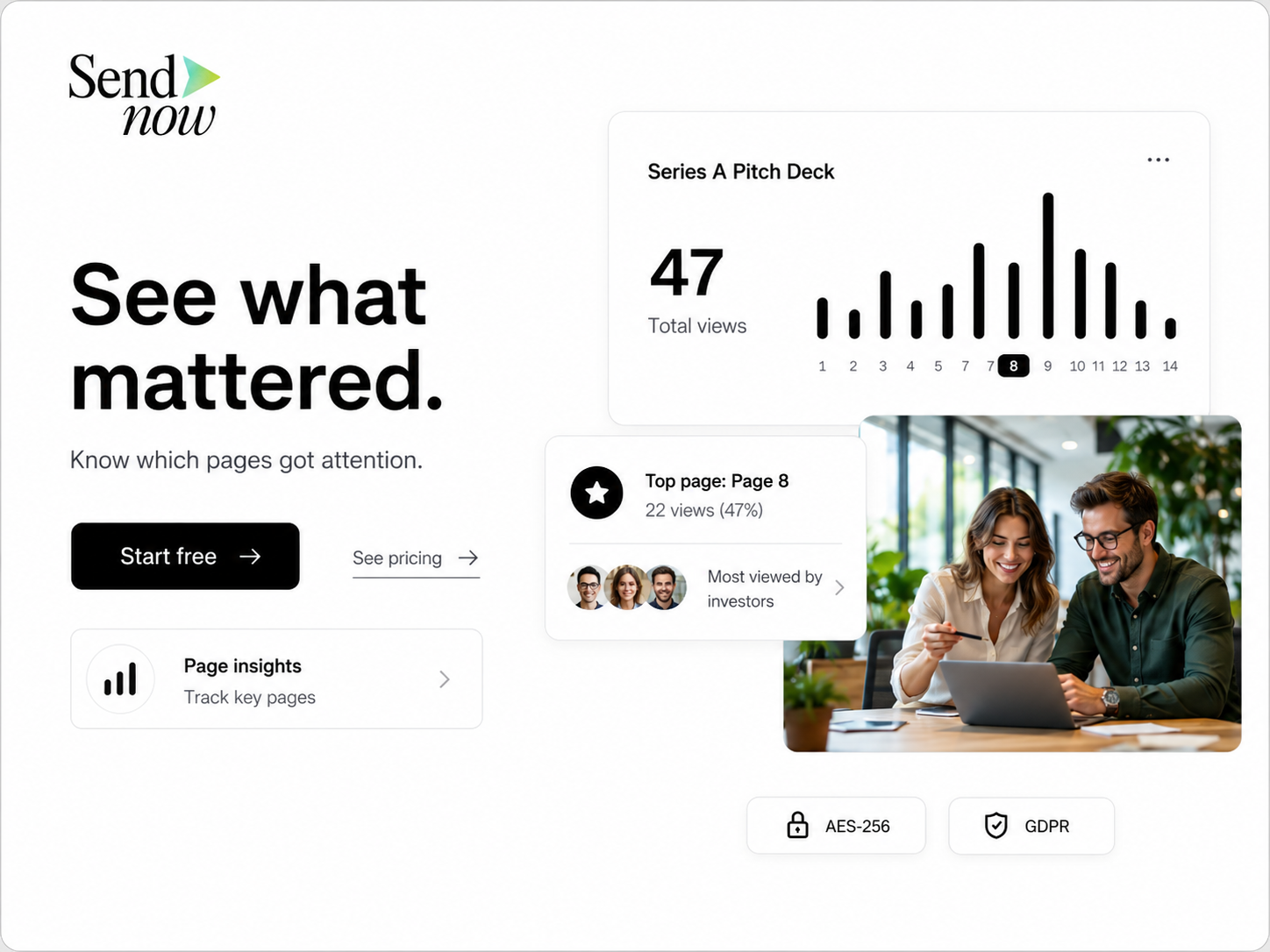
- Page-level dwell time — seconds per page across the full document
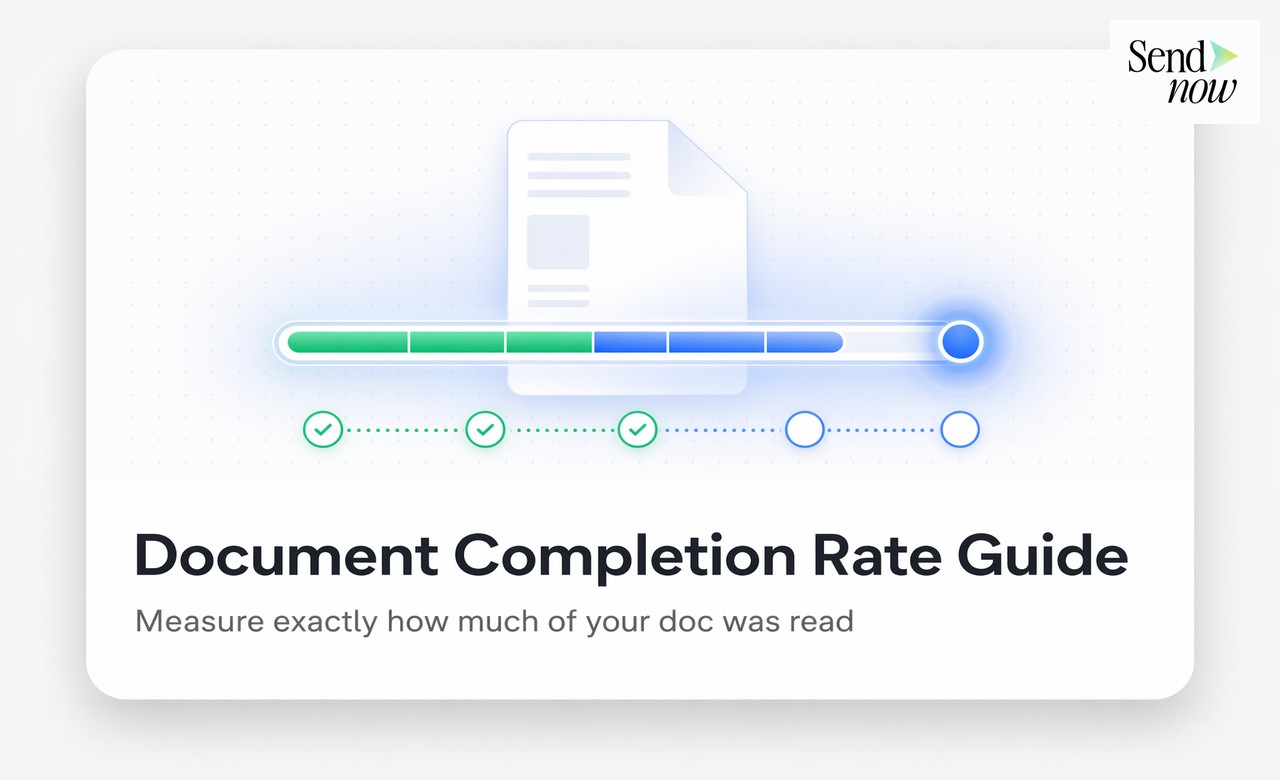
- Completion rate — what percentage of the document was reached
- Viewer identity — name and email, if verification is enabled
- Device and location — desktop vs mobile, country, city
- Return visits — every subsequent session with its own analytics
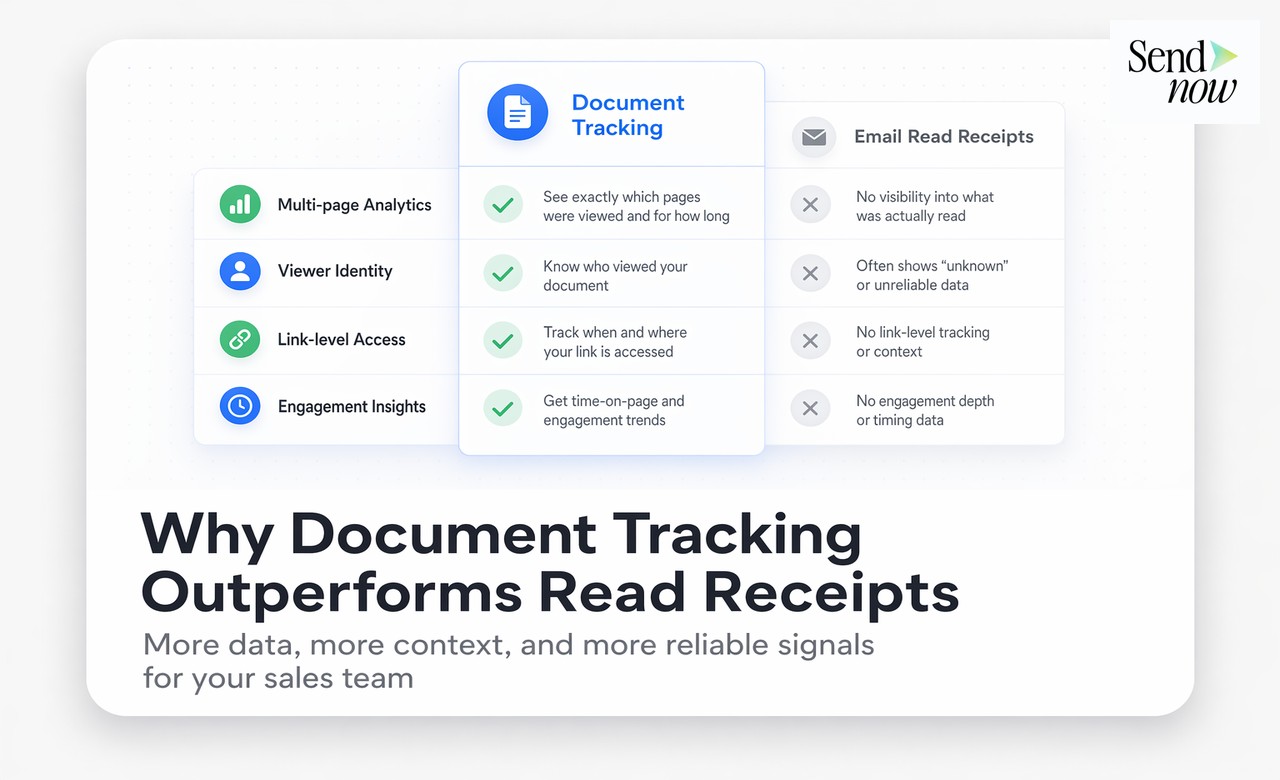
The difference in information quality is not incremental — it is categorical. Email read receipts tell you that a delivery event occurred. Document tracking tells you whether the content was actually consumed.
Side-by-Side Comparison
| Criterion | Email Read Receipt | Document Tracking |
|---|---|---|
| Confirms email opened | Yes | No (different layer) |
| Confirms document opened | No | Yes |
| Page-level analytics | No | Yes |
| Time on document | No | Yes |
| Completion rate | No | Yes |
| Viewer identity | No | Yes (with email gate) |
| Return visit tracking | No | Yes |
| Recipient can block | Yes (often) | No |
| GDPR-compliant option | Varies | Yes (SendNow) |
| Works on all email clients | No | Yes |
Why Finance Professionals Are Moving Away From Read Receipts
For finance teams, the inadequacy of email read receipts has practical consequences:
Deals stall because follow-ups are mistimed. Without reliable open data, advisers follow up on fixed schedules rather than on engagement signals. The result is either premature contact (before the document was read) or delayed contact (well after interest peaked).
Proposals are sent into a void. Without document engagement data, there is no feedback loop to improve pitch decks, reports, or term sheets. You cannot know that clients consistently close proposals after page three unless you have page-level data.
Compliance cannot be evidenced. For regulated finance firms that need to demonstrate clients read specific disclosures or risk documents, email read receipts are not an auditable record. Document tracking with viewer verification provides a proper evidence trail.
The Case for Document Tracking as a Read Receipt Alternative
Document tracking is not a replacement for email tracking in the email-delivery sense — it is a superior alternative for the job that read receipts were supposed to do: confirm that your content was received and read.
By sharing documents as links rather than attachments, you gain:
- Reliability — tracking cannot be blocked by the recipient's email client
- Depth — page analytics, completion rates, and return visits
- Identity — named viewer attribution via email verification
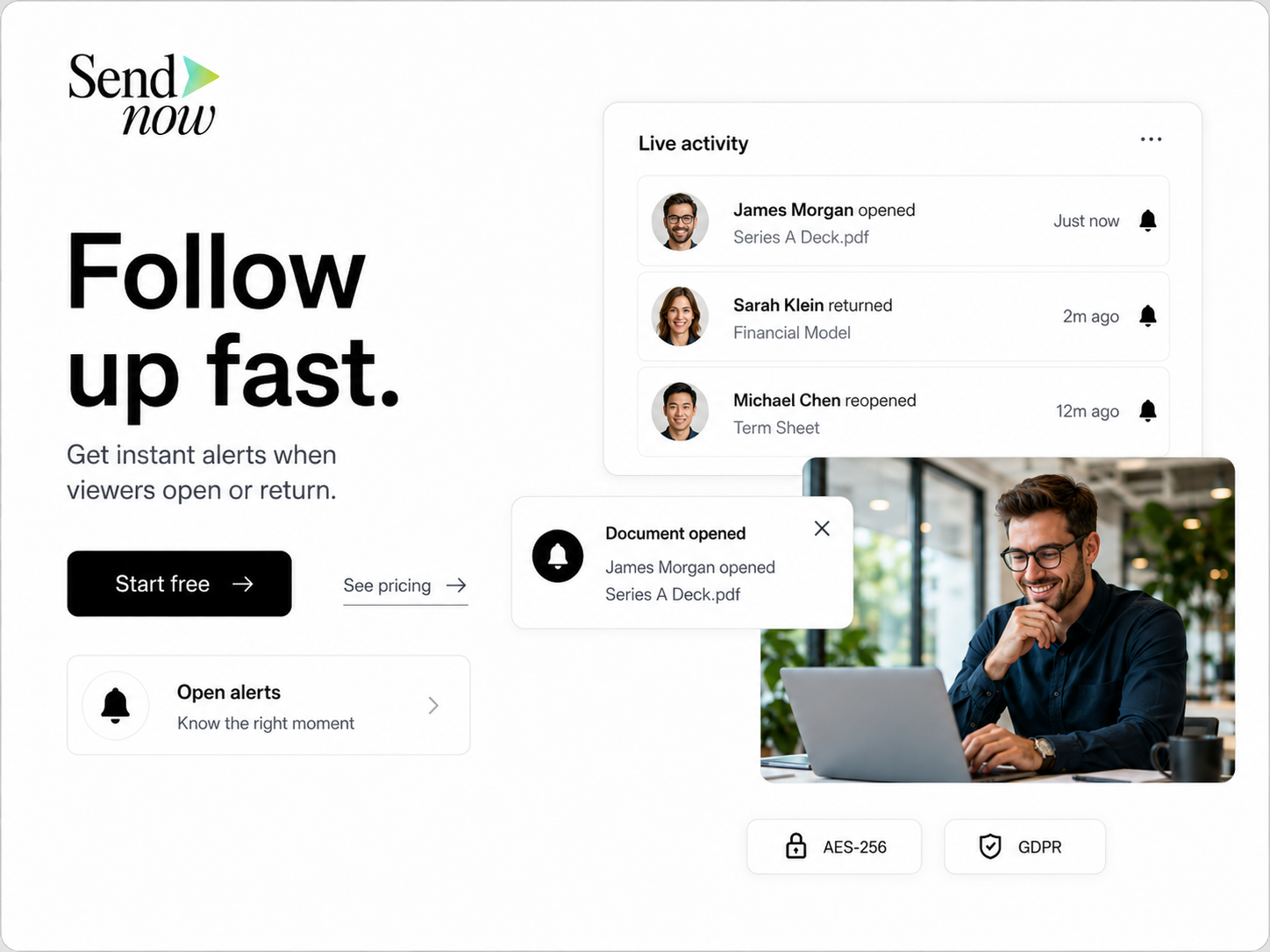
- Timeliness — real-time alerts rather than delayed receipt confirmations
For EU-based finance teams, the GDPR compliance of the tracking platform matters. SendNow operates with EU data residency, AES-256 encryption, and full GDPR compliance — making it an appropriate choice for financial services firms that must adhere to strict data governance requirements.
Setting Up Document Tracking in Place of Read Receipts
Switching from email attachments to tracked links is straightforward:
- Upload your PDF to sendnow.live
- Generate a trackable link
- Paste the link into your email body instead of attaching the file
- Enable open notifications to receive real-time alerts
Your recipient experience is nearly identical — they click a link and view a professional document in their browser. Your experience is transformed: instead of a receipt that may or may not arrive, you receive a complete engagement report.
When Read Receipts Might Still Be Useful
Email read receipts retain value in one narrow context: confirming internal email delivery within a single organisation using a unified email system (such as an Exchange server). In that setting, receipts can be system-generated rather than recipient-controlled, making them more reliable.
For external communications — sharing proposals, reports, contracts, and presentations with clients, counterparties, and prospects — document tracking is the better tool in every material respect.
See the complete guide to PDF tracking for a full overview of document analytics, and how to know if someone opened your PDF for a practical setup walkthrough.
FAQs
Q: Are email read receipts reliable? A: Not reliably. Recipients can decline or block them, and many professional email clients do so by default. Even when they work, they only confirm an email was opened — not whether the attachment was read.
Q: What is a good alternative to email read receipts? A: Document tracking platforms like SendNow. They confirm actual document opens, provide page-level analytics, and cannot be blocked by the recipient.
Q: Can document tracking tell me if someone read my PDF attachment? A: Not if you send it as an attachment. You need to share the document as a trackable link. Once you do, you receive full engagement analytics.
Q: Do recipients know their document engagement is being tracked? A: Yes. The email verification step and the platform's terms inform recipients that interactions are logged. SendNow includes appropriate viewer disclosures.
Q: Is document tracking more accurate than email tracking pixels? A: Yes. Email tracking pixels are blocked by most modern email clients. Document tracking occurs in a browser-based viewer and cannot be suppressed at the email layer.
Q: Can I use document tracking for compliance documentation? A: Yes. With email verification enabled, document tracking provides a timestamped, viewer-attributed record of who read a document and for how long — suitable for compliance audit trails.
Q: Is document tracking legal in the EU? A: Yes, when conducted with proper disclosure and on a GDPR-compliant platform. SendNow meets these requirements.
Q: What happens to my email workflow if I switch to tracked links? A: Very little changes. You copy a link from SendNow and paste it into your email instead of attaching a file. Recipients click the link and view the document in their browser.
SendNow offers a free trial — no credit card required. Start at sendnow.live.
About the Author: Rifana Hameem
Rifana is the founder of SendNow. She leads the team in building secure, compliant, and analytics-rich document sharing tools for finance and professional teams worldwide.
Connect on LinkedIn