Document Intelligence for Sales: Close Deals With Engagement Data

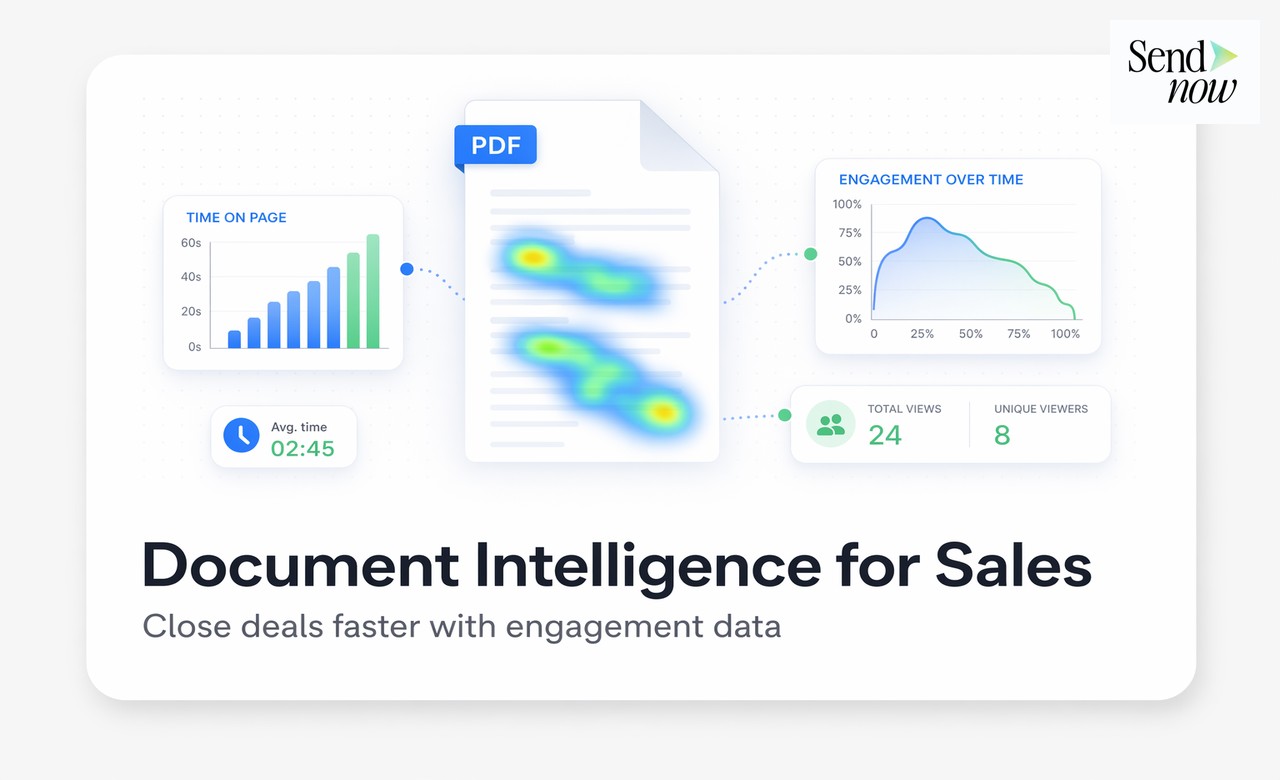
Document intelligence is the practice of using behavioural data from shared documents to understand buyer intent and time sales activity more precisely. Instead of guessing when a prospect is interested, document intelligence gives you the data: which pages they spent the most time on, how many times they returned, whether they forwarded the document to a colleague, and at what point they stopped reading. This complete guide explains how sales teams can use document intelligence to shorten sales cycles, improve follow-up timing, and close more deals.
What Document Intelligence Actually Is
The term "document intelligence" covers a spectrum of capability. At the basic level, it means knowing when a recipient opened a document you sent. At the advanced level, it means having a scored engagement profile for each prospect based on their entire history with your materials, and receiving real-time alerts that prompt you to act at the precise moment interest is highest.
Most B2B sales teams are somewhere in the middle. They use a proposal tool or document platform that tells them a prospect viewed a link, but they lack the depth of data to differentiate between a five-second glance and a thirty-minute deep read. That difference matters enormously for how and when you follow up.
The most useful document intelligence signals for sales teams are:
- Time spent per page. A prospect who spends eight minutes on your pricing page is materially different from one who spent thirty seconds.
- Return visits. A prospect who returns to a proposal three times over two days is actively evaluating. One who opened it once and never came back is not.
- Completion rate. A prospect who read 94% of your proposal is far closer to a decision than one who read 40%.
- Section focus. If a prospect skips your executive summary but spends significant time on case studies and implementation timelines, they are likely past the awareness stage.
- Forwarding behaviour. If your document was viewed by three different people with different email addresses, it has reached the buying committee.
Why Traditional Sales Follow-Up Is Broken
The standard sales follow-up sequence was designed before engagement data existed. You sent a proposal, waited three to five business days, and then sent a "just checking in" email. This sequence has two fundamental problems.
First, the timing is arbitrary. You follow up on day three regardless of whether the prospect is actively engaged or has not opened the document at all. You cannot know which scenario you are in.
Second, the message is generic. "Just checking in" conveys no value and signals that you have no insight into where the prospect is in their evaluation. It treats all prospects identically and, as a result, converts very few of them.
Document intelligence solves both problems. It tells you exactly when to follow up (when the prospect is actively engaged) and gives you specific, personalised context to reference in your outreach (the pages they focused on, the questions they have likely arrived at).
The Four Engagement Signals That Drive Better Follow-Up
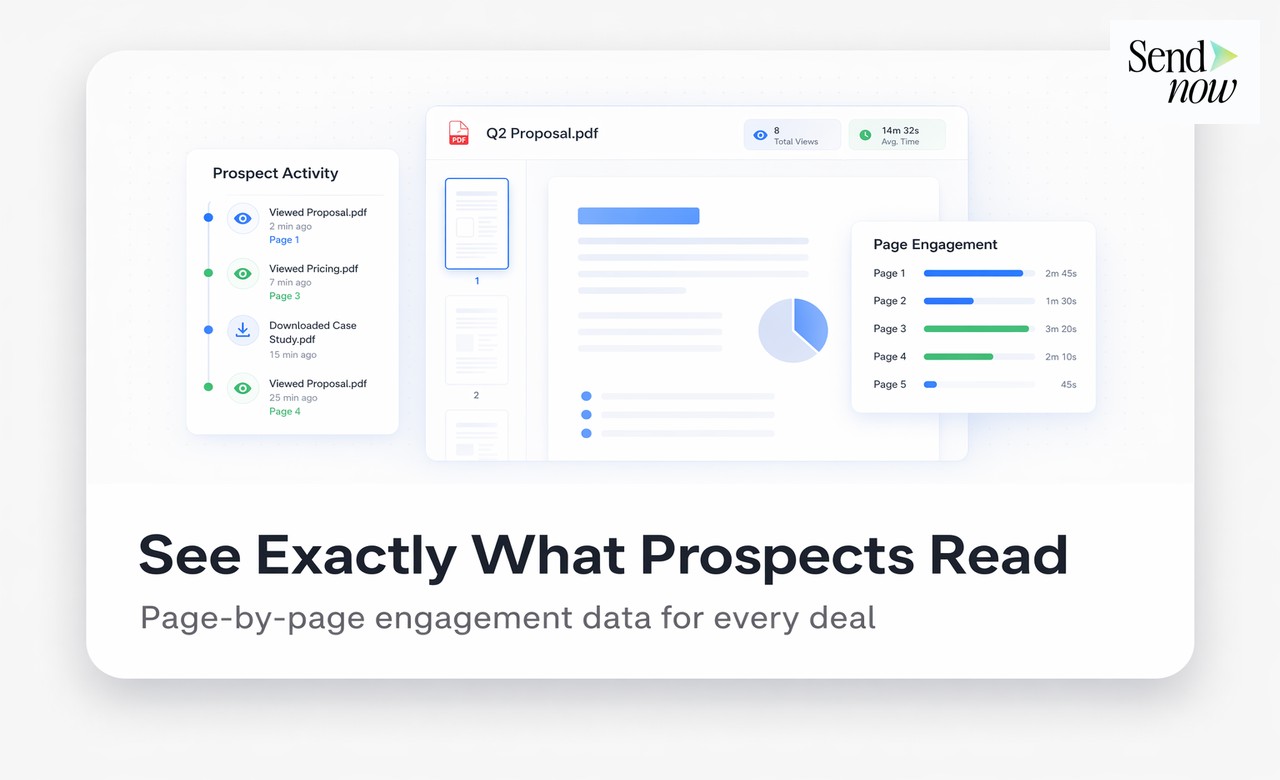
Signal 1: The first open. When a prospect opens your proposal for the first time, it is a confirmation that they received it and found it worth opening. This is not yet a strong buying signal, but it is an opportunity to send a warm, brief confirmation: "Just saw you've had a chance to look at the proposal. Happy to answer any questions."
Signal 2: The return visit. A prospect who returns to your proposal on a second or third occasion is actively re-evaluating. This is your strongest prompt to reach out. They are comparing you with alternatives, building an internal case, or preparing questions. Reach out within minutes of a return visit notification.
Signal 3: Deep engagement on specific sections. If analytics show a prospect spent disproportionate time on your ROI or pricing section, open your follow-up conversation there. Reference their likely question directly: "I noticed the financials section tends to generate questions. Would it help to walk through the numbers together?"
Signal 4: New viewers joining. When a second or third email address accesses your document, the buying committee is involved. Adjust your follow-up strategy: move from champion to multi-threader, and make sure your proposal speaks to each stakeholder's concerns.
Building an Engagement-Led Sales Process
An engagement-led sales process uses document intelligence at every stage of the funnel.
Stage 1: Qualification. Use document intelligence to separate genuinely interested prospects from polite respondents. A prospect who has not opened your materials after four business days is telling you something. Prioritise those who have.
Stage 2: Proposal delivery. Send proposals through a platform that provides engagement data from the moment the link is opened. Configure the link to require email verification so you know exactly who is viewing.
Stage 3: Follow-up. Replace the arbitrary three-day follow-up with engagement-triggered outreach. Set notifications so that you are alerted to return visits and can respond within the hour.
Stage 4: Closing. When engagement data shows a prospect is reading deeply and returning frequently, accelerate your closing activity. Request a call, propose a contract review meeting, or offer a time-limited commercial term to help them commit.
Stage 5: Post-close. Use document intelligence data to inform your onboarding. If a client spent a long time on implementation sections during the sales process, your onboarding team should prioritise that topic.
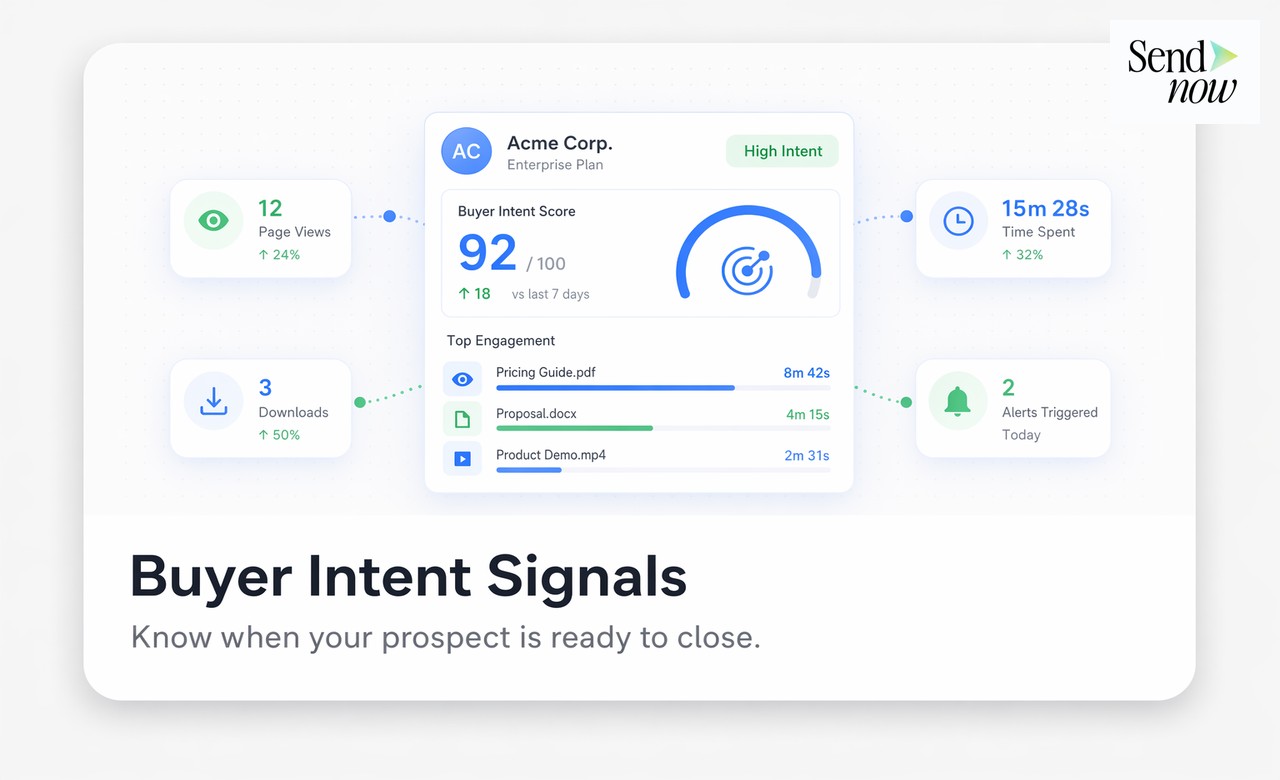
Engagement Scoring: Turning Data Into Decisions
Reviewing raw viewing data for every prospect is not scalable. Engagement scoring solves this by converting multiple signals into a single composite score that tells you, at a glance, how close each prospect is to a decision.
A basic engagement score might weight signals as follows:
| Signal | Weight |
|---|---|
| Document opened | 10 points |
| Read more than 50% of pages | 15 points |
| Return visit (each) | 20 points |
| 10+ minutes total reading time | 20 points |
| Pricing page viewed | 15 points |
| New viewer (additional email) | 20 points |
A prospect scoring above 70 is hot. One scoring between 30 and 70 is warm. Below 30 suggests low engagement. Review your hot prospects daily and warm prospects weekly.
Document Intelligence and Your CRM
Document intelligence becomes significantly more powerful when it is integrated with your CRM. Engagement events logged in your CRM create a complete activity timeline for each prospect, allowing you to:
- See engagement history alongside call notes and email history
- Trigger automated follow-up sequences based on engagement thresholds
- Report on the correlation between document engagement and deal outcomes
- Identify which sections of your proposal are most predictive of conversion
SendNow integrates with major CRM platforms via Zapier and native integrations, allowing engagement events to be pushed directly to contact and deal records.
What Good Document Intelligence Looks Like in Practice
Consider a finance advisory firm sending proposals for wealth management services. Without document intelligence, a typical follow-up sequence generates a 15% response rate on the first chase and diminishing returns thereafter.
With document intelligence:
- The adviser sends the proposal via a tracked link
- A return visit notification arrives two days later
- The adviser calls within 20 minutes, referencing the investment strategy section the prospect had spent the most time on
- The conversation is immediately relevant and specific
The result: higher response rates on first contact, shorter sales cycles, and higher conversion rates, not because the proposal improved, but because the timing and relevance of the follow-up did.
Choosing a Document Intelligence Platform
When evaluating platforms, look for:
- Page-level analytics, not just open notifications
- Real-time alerts for return visits
- Email identification for each viewer
- Engagement scoring or the ability to build your own
- CRM integration
- GDPR-compliant data processing if you work with EU clients
For a practical comparison, read Best Sales Proposal Tracking Tools in 2026 and How to Send a Business Proposal That Actually Gets Read.
Start using document intelligence today. SendNow provides page-level analytics, real-time return visit notifications, engagement scoring, and CRM-ready data for every proposal you send. Try it at sendnow.live.
Frequently Asked Questions
Q: What is the difference between document intelligence and email tracking? A: Email tracking tells you whether a recipient opened your email. Document intelligence tells you what they did with the document inside it: which pages they read, how long they spent, whether they returned, and whether they shared it with colleagues. Document intelligence provides substantially more actionable data for sales decisions.
Q: Is it legal to track how prospects engage with my proposals? A: In the EU and UK, tracking document engagement through a link-based system is generally permissible for business-to-business communications, provided you disclose the tracking in your privacy policy or terms of engagement. Individual tracking of consumers may require consent under the ePrivacy Directive. Consult your legal adviser for your specific context.
Q: Can document intelligence help with renewals, not just new sales? A: Absolutely. Sending renewal proposals through a document intelligence platform allows you to gauge a client's engagement with the renewal terms before your follow-up call. Low engagement often signals renewal risk; high engagement suggests a smooth renewal.
Q: How quickly should I follow up when I receive a return visit notification? A: Within the hour if possible, and certainly within the same business day. A prospect who has just returned to your proposal is in active evaluation mode. The faster your response, the more likely you are to catch them while the document is fresh in their mind.
Q: Does document intelligence work for complex, multi-stakeholder deals? A: It is particularly powerful in complex deals. When multiple stakeholders engage with your materials, document intelligence reveals which sections each stakeholder is focused on, allowing you to tailor your follow-up to each person's specific concerns.
Q: What if a prospect forwards my proposal to a colleague I haven't met? A: This is a buying signal. When document intelligence identifies a new email address accessing your proposal, reach out to your primary contact and ask who else is involved in the evaluation. This is the natural moment to expand your relationship with the buying committee.
Q: How do I know if my engagement score thresholds are set correctly? A: Review closed-won deals retrospectively and map their engagement scores against the timeline to close. This will show you whether your hot/warm/cold thresholds correlate with actual outcomes, and allow you to calibrate your scoring model over time.
Q: Can document intelligence replace a CRM? A: No. Document intelligence generates valuable signals that feed into a CRM, but a CRM manages the full customer relationship including calls, meetings, emails, and contract history. The two tools are complementary, not interchangeable.
About the Author: Rifana Hameem
Rifana is the founder of SendNow. She leads the team in building secure, compliant, and analytics-rich document sharing tools for finance and professional teams worldwide.
Connect on LinkedIn