
Free Virtual Data Room vs Paid: What Finance Teams Need to Know

- The global VDR market is valued at $3.2 billion in 2025 and is on track to reach $8 billion by 2034 — driven by demand from M&A, PE, and fundraising workflows.
- Free virtual data rooms typically cap storage, strip out page-level analytics, and offer minimal access controls.
- DocSend removed its permanent free plan in March 2025, leaving deal teams searching for alternatives.
- Paid VDRs offer AES-256 encryption, GDPR compliance, NDA gating, dynamic watermarks, and real-time engagement analytics that free tiers do not provide.
- SendNow offers a no-credit-card free trial with full access to professional features from day one.
Free Virtual Data Room vs Paid: What Finance Teams Need to Know
A free virtual data room sounds appealing, but finance teams running due diligence, fundraising, or M&A processes face real questions about what "free" actually delivers. This guide breaks down where free VDRs fall short, what paid tools provide, and why DocSend's March 2025 pricing change shifted the calculus for thousands of deal teams.
Introduction
The appeal of a free virtual data room is obvious. You are preparing a pitch deck, a CIM, or a due diligence package and want to share it securely without paying enterprise pricing. But the decision between free and paid is not purely a cost question.
For finance professionals — VCs reviewing term sheets, investment bankers distributing CIMs, private equity associates running competitive processes — the stakes attached to every shared document are high. A single unauthorized screenshot of a financial model, a downloaded cap table reaching the wrong party, or an NDA-ungated pitch going to a competing fund can derail a deal or expose material non-public information.
This article answers the seven most common questions finance teams ask before choosing between a free virtual data room and a paid one.
Q1: What Exactly Is a Free Virtual Data Room?
A free virtual data room is a cloud-based document sharing platform that charges nothing for a baseline tier. These range from consumer tools like Google Drive and Dropbox — repurposed for sensitive sharing — to lightweight document platforms with a free plan that carries strict limitations.
According to datarooms.org, the VDR market was valued at $2.5 billion in 2024 and is projected to reach $5.6 billion by 2029, reflecting an 18.1% CAGR. This growth has pushed more vendors to offer free entry-level tiers as user acquisition tools — but most free plans target individual users and small-scale sharing, not high-stakes financial transactions.
True virtual data rooms — the kind investment banks and PE firms use for M&A — are purpose-built with compliance frameworks, permissions management, document analytics, and audit trails. Free VDRs are typically a stripped-down version of this infrastructure, designed to convert users to paid plans rather than serve them indefinitely.
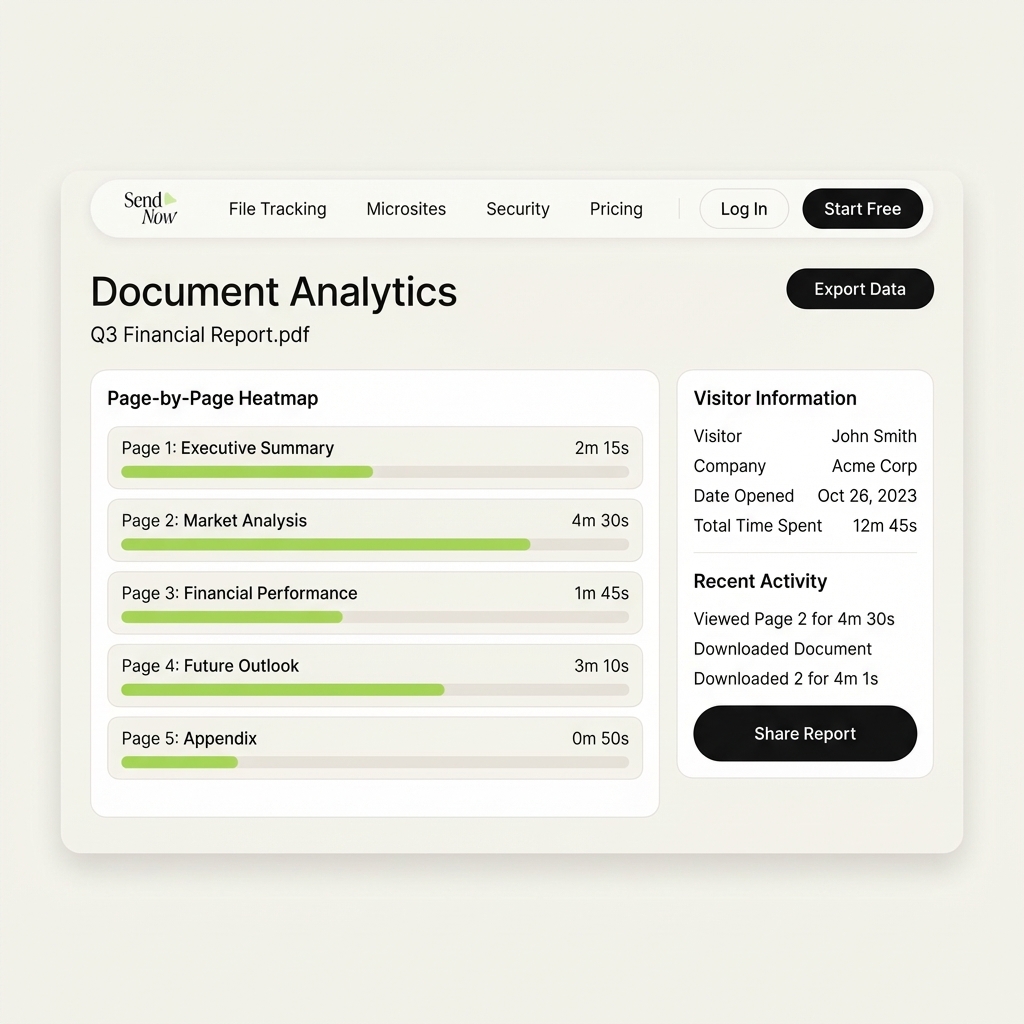
SendNow's page-by-page analytics panel shows exactly which pages of a document a recipient read, how long they spent, and on what device — a capability absent from every free VDR tier.
Q2: What Are the Key Limitations of Free Virtual Data Rooms for Finance Teams?
Free VDRs fall short in four critical areas for finance professionals.
Storage and document caps. Most free tiers cap storage at 1–5 GB and limit the number of active documents or links. A single competitive M&A process — with a 200-page CIM, financial models, legal agreements, and management presentations — easily exceeds these limits. According to DealRoom, cheap or free VDR providers are rarely the budget-friendly choice they appear to be once a deal scales.
Analytics depth. Free platforms typically offer only basic link visit counts. Professional deal management requires page-by-page analytics — knowing that an investor spent 14 minutes on your financial projections but skipped the management bios tells you more than a raw "opened" notification. iDeals VDR notes that granular, page-level analytics are almost exclusively a paid feature across the VDR market.
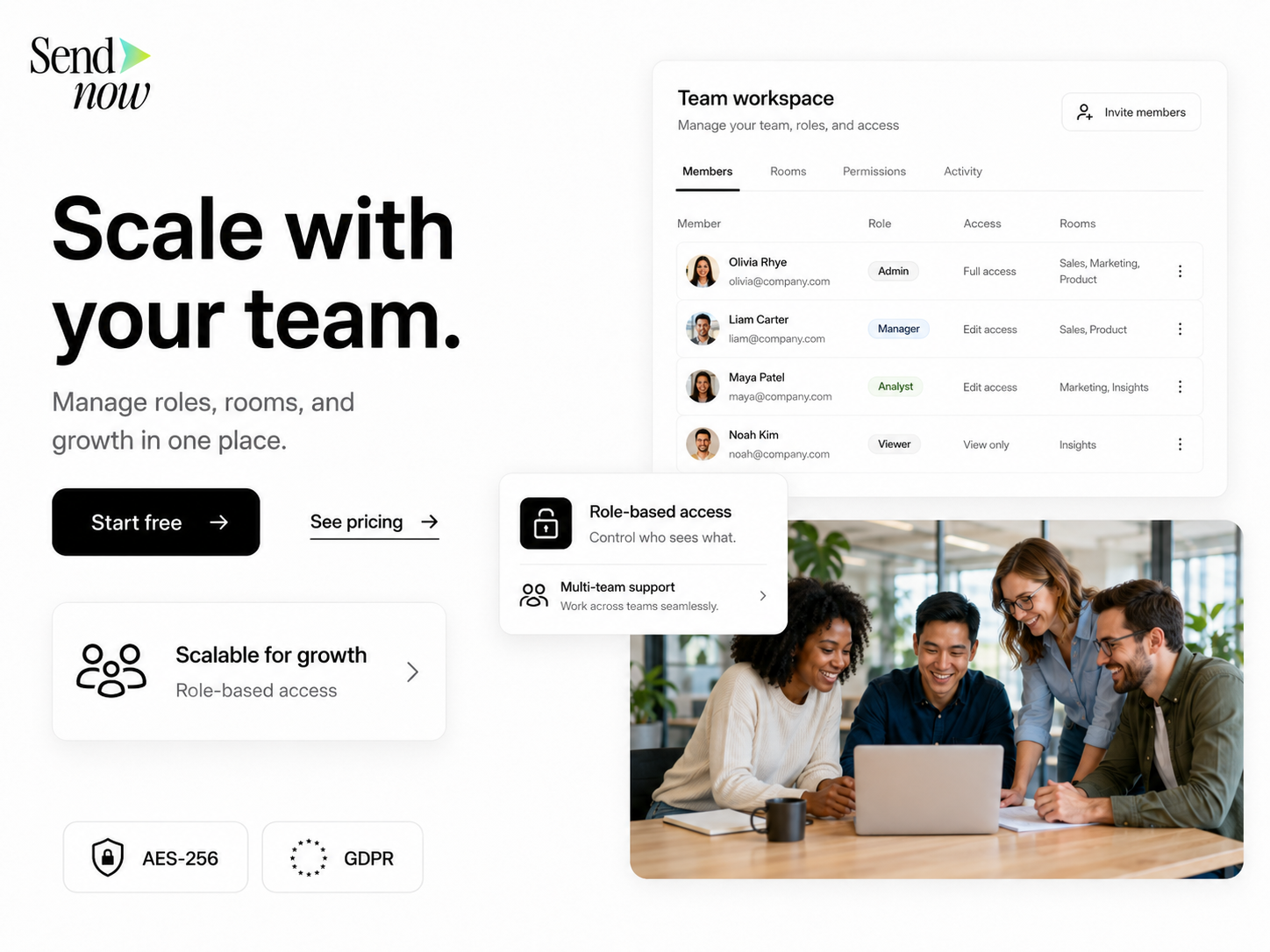
Access controls. Paid VDRs let teams set granular permissions by user, group, or document section. Free tiers rarely support role-based access controls, time-limited links, IP restrictions, or the ability to revoke access to a document already opened.
Security and compliance. According to Kiteworks, enterprise VDR security requires AES-256 encryption at rest and in transit, SOC 2 Type II certification, GDPR compliance, and complete audit logs. The IBM 2025 Cost of a Data Breach Report puts the average breach cost at $4.88 million globally and $10.22 million in the US. Reducing document security costs on a free plan is a risk transfer, not a cost saving.
Q3: Did DocSend Remove Its Free Plan, and What Does That Mean for Users?
Yes. DocSend, now owned by Dropbox, removed its permanent free plan in March 2025. Users who relied on DocSend's free tier for secure document sharing were pushed to paid plans starting at $10 per user per month for the Personal tier. The Standard tier — required for multi-file sharing, data rooms, and video analytics — runs $45 per user per month. The Advanced tier costs $150 per month for three users.
This shift left a meaningful gap for early-stage founders, boutique advisors, and solo deal teams who needed professional-grade sharing features without enterprise pricing.
According to Orangedox's DocSend pricing analysis, DocSend's per-seat model becomes expensive quickly for growing deal teams. A three-person team needing Standard features pays $135 per month — $1,620 annually — before any data room add-ons.
The removal of DocSend's free tier created direct demand for alternatives with professional-grade security and accessible pricing. SendNow's Business plan, at $33 per month for three members and 1,000 documents, covers the same use case at roughly one-quarter of the DocSend Standard cost for an equivalent team size — with deal room features, NDA gating, and AI engagement scoring included.

SendNow's live platform. Share links come with built-in analytics, expiration controls, and optional NDA gating — available from the Pro plan from $9 per month.
Q4: What Security Features Does a Paid VDR Provide That Free Options Typically Lack?
The security gap between free and paid VDRs is significant — especially for finance teams whose documents contain material non-public information, personal financial data, or deal-sensitive IP.
AES-256 encryption. The current gold standard for data at rest and in transit. Kiteworks identifies AES-256 as the baseline for any document platform used in regulated financial work.
Dynamic watermarks. Each page carries a unique watermark tied to the specific viewer's identity: their name, company, and timestamp. If a recipient screenshots a document, the watermark identifies the source — functioning as both a deterrent and a forensic tool.
Screenshot prevention. Some platforms, including SendNow, deploy browser-level controls that block standard screenshotting while a document is open in the viewer.
NDA gating. Before a recipient can access a document, they sign a non-disclosure agreement through the platform itself. This creates a documented, timestamped legal record of consent tied to the specific share link.
Audit logs. Every action — who viewed, what page, when, for how long, from what IP — is logged and exportable. In M&A, audit trails can become material evidence in valuation disputes or regulatory inquiries.
GDPR and regulatory compliance. European deal teams and any US firm with EU data subjects requires GDPR-compliant data handling. Free tiers rarely provide Data Processing Agreements or store data within required geographic boundaries. According to mnacommunity.com, the average data breach cost for law firms handling M&A now exceeds $10.22 million in the US — with reputational damage extending well beyond direct financial penalties.
Q5: When Does a Free Virtual Data Room Make Sense — and When Does It Not?
A free VDR can serve legitimate purposes:
- Internal document reviews where no external parties access sensitive data
- Early-stage founders sharing non-confidential marketing materials
- Small teams testing document sharing workflows before committing to a paid plan
- Academic or nonprofit use cases with minimal compliance requirements
A free VDR is not appropriate when:
- External investors, acquirers, or counterparties will access the documents
- The documents contain financial statements, cap tables, legal agreements, or personal data
- The deal team needs to track investor engagement or optimize follow-up timing
- Branded presentation of materials matters — branded deal rooms require paid plans
- Regulatory compliance applies (GDPR, SEC, FINRA)
According to data-rooms.org, over 89% of businesses now use cloud-based storage for confidential data — but the security standards of consumer-grade cloud storage do not map to the requirements of financial transactions. "Free" in a document platform often means monetizing through data, running on shared infrastructure, or removing the exact features that make a tool fit for professional finance.
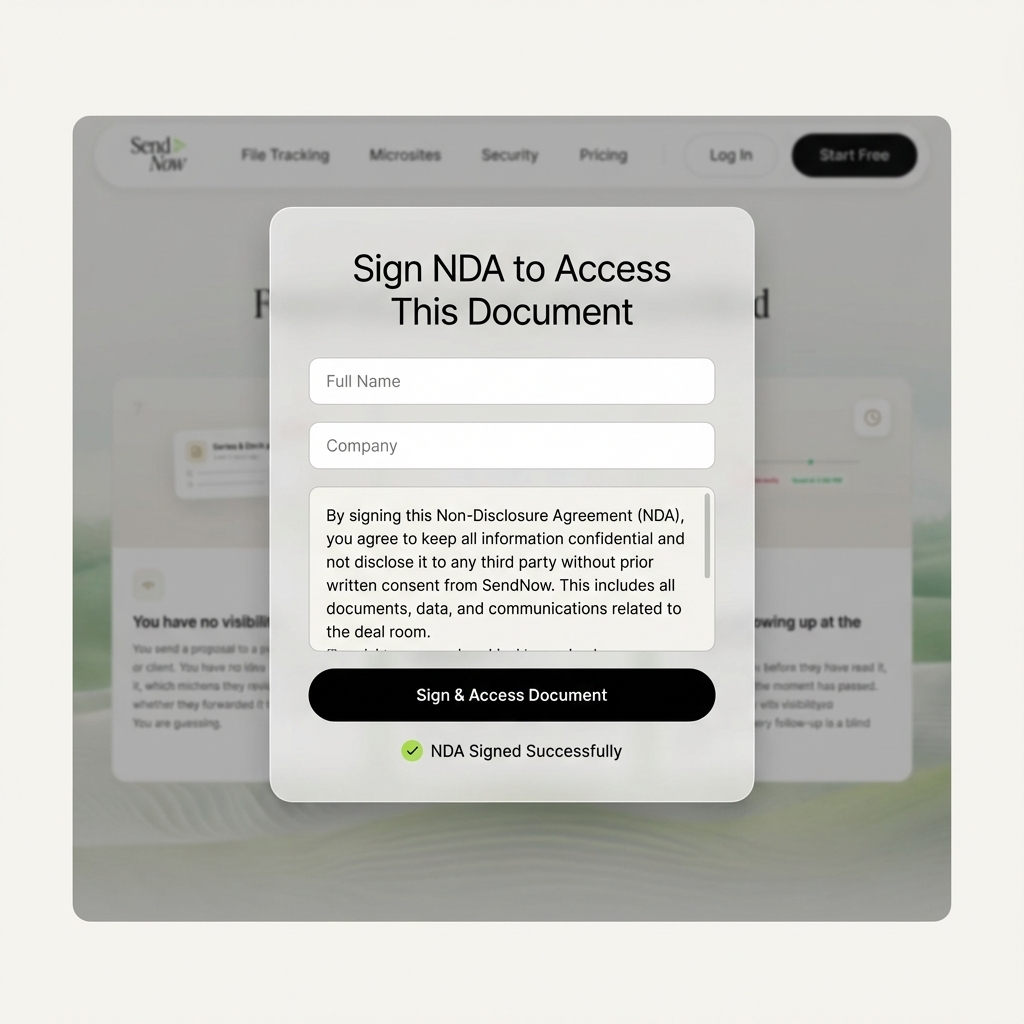
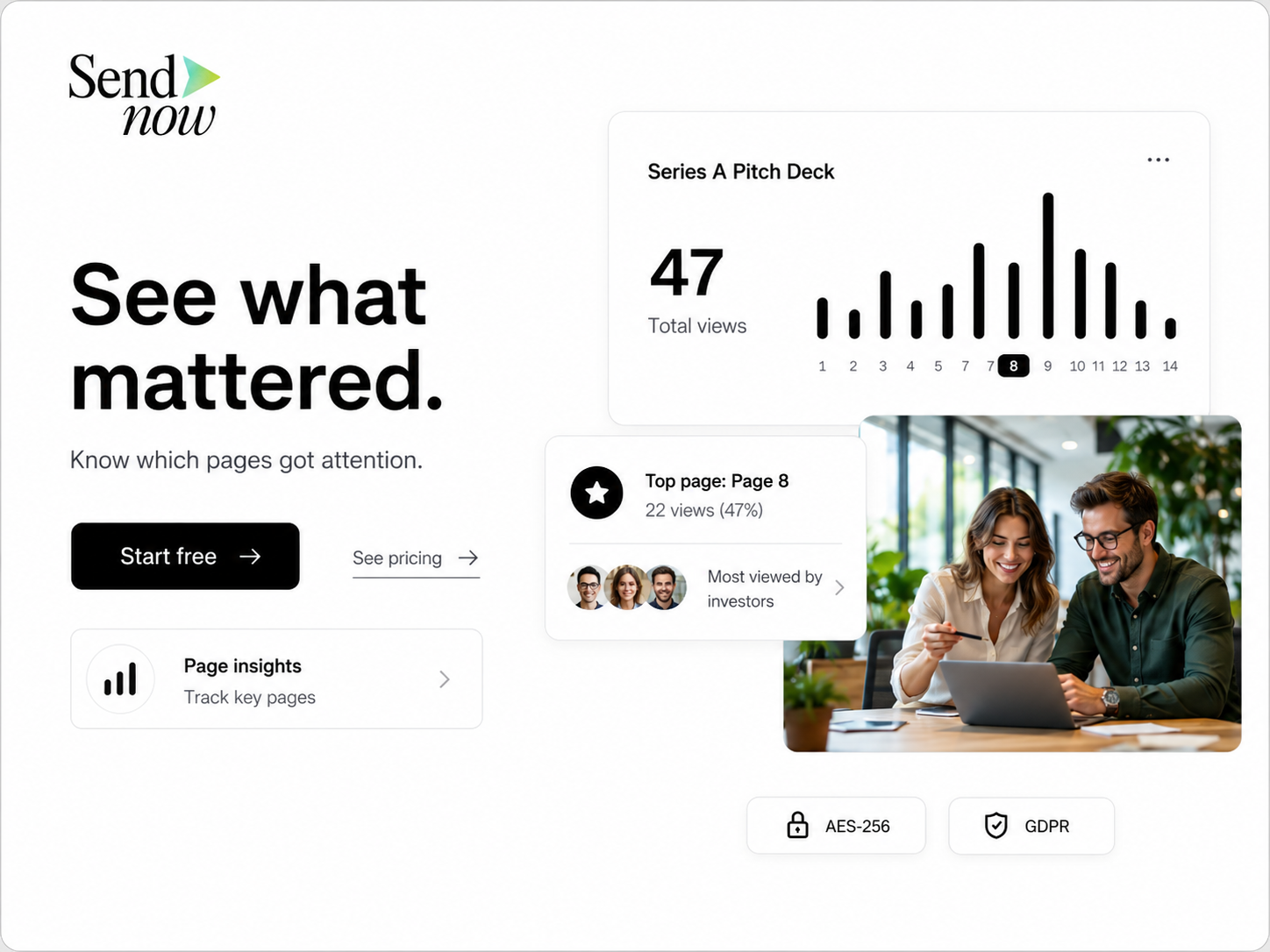
SendNow's NDA gate: before a recipient views a document, they complete a legally binding NDA flow built directly into the share link — no third-party e-signature platform required.
Q6: What Should Finance Teams Look For When Evaluating a Virtual Data Room?
The right evaluation criteria depend on the specific use case, but seven features matter most for finance professionals:
- Page-level analytics. Not just "who opened it" but what they read, how long they spent on each section, and whether they returned.
- NDA gating. The ability to require a signed NDA before a recipient can view any content.
- Dynamic watermarks and screenshot protection. Both deterrent and forensic capabilities built into the document viewer.
- Branded deal rooms. Custom domains and company branding for the document portal — critical for trust in M&A and fundraising contexts.
- Granular access controls. Time limits, IP restrictions, view-only modes, and the ability to revoke access after a document is sent.
- Real-time notifications. Instant alerts via email or Slack when a recipient opens a document or returns to a specific section.
- AES-256 encryption and GDPR compliance. Non-negotiable for any team handling regulated financial data.
According to FORDATA, the due diligence process has moved decisively away from physical document rooms, and the features that define the best platforms today center on security, analytics, and workflow speed — not just storage capacity.
When evaluating a VDR, finance teams should also check infrastructure. AWS-hosted, multi-region deployment with a clear SLA ensures the platform stays available during the critical final stages of a deal, when document access requests come at all hours.
Q7: Is There a Meaningful Free Trial for Professional VDR Software?
Yes — but "free trial" covers a wide range of experiences. Some platforms offer a 7-day trial with restricted features. Others provide access only to a sandbox environment that does not reflect the real product. The most useful free trials give full access to professional features for long enough to test a real workflow.
Drooms FLEX offers a free trial of its entry-tier plan. Most enterprise VDRs — Datasite, Intralinks, iDeals — require a sales call and quote before any trial access, making evaluation slow and friction-heavy. DocSend's permanent free plan is gone since March 2025; only free trials on paid plans remain.
SendNow offers a free trial with no credit card required. Finance teams get full access to page-by-page analytics, NDA gating, dynamic watermarks, branded deal rooms, screenshot protection, and Slack integrations before paying anything. The Pro plan starts from $9 per month after the trial, making it one of the most cost-accessible entry points to professional document analytics in the market.
For any finance team evaluating a VDR, a no-credit-card trial with full feature access is the most honest signal a vendor can send about the quality of their product.
Conclusion
The decision between a free virtual data room and a paid one is not purely about budget. It is about risk tolerance, professional presentation, and the quality of intelligence your team extracts from every shared document.
For consumer use cases and internal file sharing, free tools are fine. For any situation where a finance professional is sharing confidential financial information with external parties — investors, acquirers, LPs, counterparties — the limitations of free VDRs create real exposure.
DocSend's removal of its free plan in March 2025 confirmed what the market already knew: professional document security and analytics have a cost floor. The question is whether you meet that floor on a $9 per month plan with full features, or you pay it later — in a breach, a deal that leaks, or an investor relationship damaged by a generic share link.
SendNow gives finance teams a free trial with no credit card required to test the full platform. Start at sendnow.live and have your first secure deal room live in under five minutes.
Keep Reading
About the Author: Rifana Hameem
Rifana is the founder of SendNow. She leads the team in building secure, compliant, and analytics-rich document sharing tools for finance and professional teams worldwide.
Connect on LinkedIn