What Is a Virtual Data Room? Complete Guide for Finance Professionals

- A virtual data room (VDR) is a secure online repository for storing and sharing confidential documents during high-stakes financial transactions
- Core use cases include M&A due diligence, VC and PE fundraising, IPO preparation, debt financing, and ongoing investor reporting
- VDRs differ from consumer cloud storage by providing granular permissions, NDA gating, audit trails, and page-level document analytics
- Standard VDR security includes AES-256 encryption, dynamic watermarking, screenshot protection, and SOC 2 / ISO 27001 certification
- Pricing ranges from $9/month for modern finance-focused platforms to over $200,000/year for legacy enterprise tools
- The global VDR market reached $2.9 billion in 2024 and is forecast to hit $7.6 billion by 2033 at an 11.36% CAGR
What Is a Virtual Data Room? Complete Guide for Finance Professionals
Introduction
Every serious financial transaction begins with information. Before a private equity firm commits capital, before an investment bank completes an acquisition mandate, before a VC writes a term sheet, there is a due diligence process. At the center of that process sits a virtual data room.
The global VDR market reached $2.9 billion in 2024 and is on track to reach $7.6 billion by 2033, growing at an 11.36% CAGR according to IMARC Group. The growth reflects a straightforward reality: deal teams can no longer afford to share sensitive documents via email threads and shared drives. The consequences of a leak during an M&A process are severe, ranging from broken deals to regulatory penalties to reputational damage that follows a firm for years.
IBM's 2025 Cost of Data Breach Report put the average cost of a data breach at $4.88 million. In the context of a $50 million acquisition, a single document leak can destroy the deal entirely.
This guide answers the seven most common questions finance professionals ask about virtual data rooms, from what they are to how much they cost.
1. What Is a Virtual Data Room?
A virtual data room (VDR), also called a deal room, is a secure online repository for storing, organizing, and distributing confidential documents during high-stakes transactions. Unlike general-purpose file storage, a VDR is purpose-built for controlled access: only the parties you authorize can view specific documents, and every action they take is logged.
The concept traces its roots to physical data rooms: locked, supervised spaces where potential buyers traveled to review paper documents before an acquisition. The virtual equivalent replaced the physical room in the late 1990s, eliminating travel costs, accelerating due diligence timelines, and enabling multiple buyer groups to review materials simultaneously.
As defined by Investopedia, a VDR is "a secure online repository for document storage and distribution typically utilized during the due diligence process preceding an M&A transaction, loan syndication, or private equity and venture capital transaction."
The defining characteristics of a VDR are:
- Granular permission controls - restrict access by document, folder, user group, or time period, all from a central admin dashboard
- Full audit trails - every view, download, print, and Q&A interaction is recorded with a timestamp and IP address
- Secure document viewer - documents render inside a protected browser window with no download option unless explicitly permitted
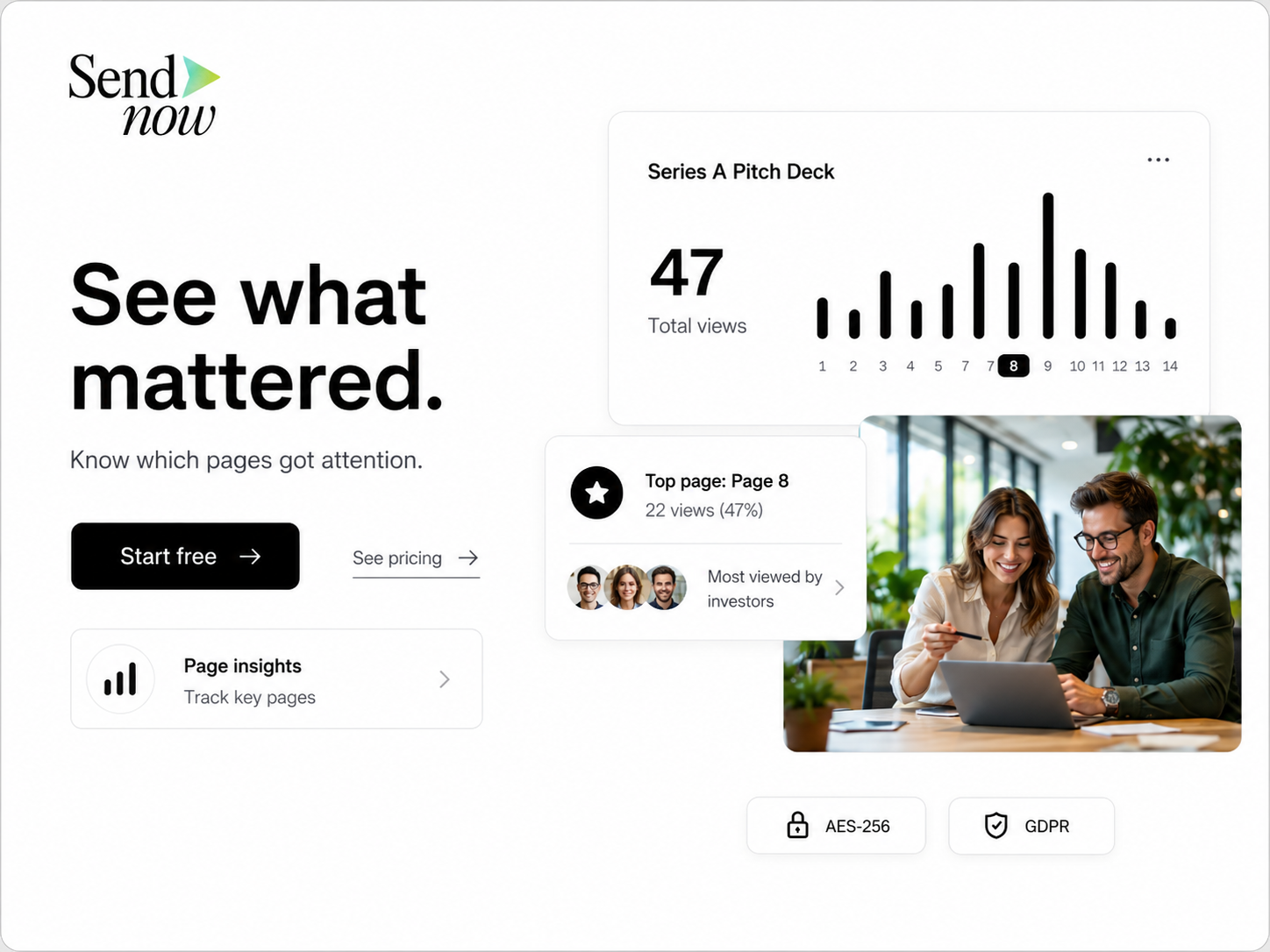
- Document analytics - see which user read which page, for how long, and in what order
- NDA gating - require every user to accept a non-disclosure agreement before entering the data room
Modern platforms add AI-powered layers on top of these fundamentals. SendNow, for example, provides AI engagement scoring that tracks interest on a page-by-page basis, giving deal teams a real-time signal of which sections of a pitch deck or confidential information memorandum generated the most attention.
2. How Does a Virtual Data Room Work?
A virtual data room operates as a permission-layered cloud environment. Here is how the process works in a typical M&A or fundraising transaction:
Step 1 - Room creation. The sell-side team or fundraising company creates the data room, uploads documents, and organizes them into folder structures: financials, legal, operations, HR, intellectual property, and customer contracts.
Step 2 - Inviting parties. The administrator generates access invitations for each external party including law firms, potential acquirers, advisors, and investors. Each party receives a unique login tied to their email address and can be assigned a different permission level.
Step 3 - Controlled access. Invited users log in through a secure portal. Documents open inside a protected online viewer. Downloading, printing, and screen capture can be disabled entirely based on the permissions the administrator configured.
Step 4 - Real-time tracking. As users engage with documents, the platform records all activity. The administrator sees who accessed what, for how long, and on which pages. This creates an indisputable audit record for legal and compliance purposes.
Step 5 - Q&A management. Buyers or investors submit questions directly inside the platform. The sell-side team routes answers to appropriate parties, maintaining a structured, auditable Q&A log that replaces ad hoc email chains.
Step 6 - Closing or archiving. Once a deal moves toward execution, the data room is archived for legal compliance. Access can be revoked instantly for any user or for all users simultaneously.
According to DFIN, "VDRs offer a number of unique benefits required when undergoing complex transactions. Strict security and control permissions ensure that each party can be given specific levels of access while keeping unauthorized personnel from accessing, manipulating, or copying highly confidential data."
3. What Is a Virtual Data Room Used for in Finance?
VDRs appear at nearly every stage of the financial transaction cycle. The primary use cases for finance professionals are:
M&A Due Diligence. The most established use case. The sell-side uploads all transaction materials for buyer review. The buy-side team and their advisors request access, conduct financial and legal review, and submit questions through the platform. According to Linden Law Partners, VDRs in M&A "are not just about file storage. They are a legal asset and a strategic instrument."
VC and PE Fundraising. Founders sharing pitch decks, financial models, and cap tables with potential investors. Limited partners reviewing fund documents and track records. General partners distributing quarterly portfolio reports to their LPs.
IPO Preparation. Companies preparing for a public offering share regulatory filings, prospectus drafts, and financial disclosures with underwriters, legal counsel, and auditors through a controlled environment.
Debt Financing and Loan Syndication. Banks, credit funds, and borrowers share credit agreements, collateral documentation, financial covenants, and borrowing base certificates.
Real Estate Transactions. Property developers and institutional investors share title documents, environmental reports, lease agreements, and rent rolls during acquisition and financing processes.
Board and Investor Reporting. Ongoing document sharing for board materials, quarterly reports, and investor updates, where a persistent, secure portal replaces email attachments and uncontrolled cloud links.
Regulatory Compliance. Regulated financial institutions maintain VDRs as an audit-ready document repository for external examiners, regulators, and legal proceedings.
Global M&A deal value reached $2 trillion in Q1 2025, up 22% year-over-year according to Deloitte. That volume of deal activity drives sustained demand for reliable, enterprise-grade document management infrastructure.
4. What Is the Difference Between a Virtual Data Room and Cloud Storage?
This is the question that comes up most often when finance professionals first evaluate platforms. Consumer cloud storage tools (Google Drive, Dropbox, Box) and virtual data rooms are built for fundamentally different security and control requirements.
Consumer platforms are optimized for easy sharing. A VDR is optimized for controlled, auditable, legally defensible document access. The critical differences are:
| Feature | Google Drive / Dropbox | Virtual Data Room |
|---|---|---|
| Access controls | Basic folder sharing | Granular per-document, per-user permissions |
| Audit trail | Limited activity log | Full timestamped record of every action |
| Document security | Can be downloaded and forwarded freely | View-only mode, watermarking, screenshot block |
| NDA enforcement | Manual, external process | Built-in NDA gate before access |
| Compliance | General cloud terms | SOC 2, ISO 27001, GDPR, HIPAA |
| Analytics | None | Page-by-page time-on-page, user heatmaps |
According to EthosData, "Dropbox was designed to make file sharing for customers easy, not secure. What a common user requires in a file storage solution is completely different from what a firm performing M&A requires."
The most consequential risk with consumer cloud tools in a deal context is uncontrolled forwarding. A shared Google Drive link can be forwarded to any third party without the sender's knowledge. A VDR access link is tied to a specific, verified email address. Only the approved user can open it. Every action is logged. Access can be revoked in seconds.
For legal and regulatory purposes, the audit trail a VDR produces is also a critical advantage. If a deal falls apart and litigation follows, the granular access logs from a VDR serve as admissible evidence. A Dropbox share history does not.
5. What Documents Go in a Virtual Data Room?
The exact document set depends on the transaction type, but the standard framework for an M&A or fundraising data room follows a consistent structure. Based on guidance from EthosData and TrustFinta:
Corporate Documents
- Certificate of incorporation and articles of association
- Shareholder agreements and voting agreements
- Minutes of all board and shareholder meetings
- Cap table showing all equity, options, warrants, and convertible instruments
Financial Documents
- Audited financial statements for the past three years
- Current year management accounts and rolling forecasts
- Tax returns and any pending tax disputes
- Revenue recognition policy and customer concentration analysis
Legal Documents
- All material contracts with customers, suppliers, and partners
- Intellectual property registrations, patents, and assignments
- Employment agreements and equity plans for key personnel
- Any pending or historical litigation, arbitration, or regulatory actions
Operations
- Organizational chart with reporting lines
- Key employee bios and compensation summaries
- Insurance policies and coverage limits
- Data protection documentation and GDPR compliance records
Sales and Commercial
- Customer pipeline and CRM export
- Churn analysis, net revenue retention, and cohort data
- Key customer case studies or references (under NDA if necessary)
According to Capwave, "a clear, simple checklist can make all the difference. It helps you build a polished, investor-ready data room that speeds up due diligence and keeps conversations moving forward."
A well-organized data room signals operational maturity to investors and acquirers. Disorganized materials, or a shared Google Drive folder with inconsistent naming, signals the opposite and can directly affect valuation outcomes.
6. How Secure Is a Virtual Data Room?
Enterprise-grade VDRs use several overlapping security layers to protect sensitive documents. The key mechanisms, as described by Kiteworks and DFIN, include:
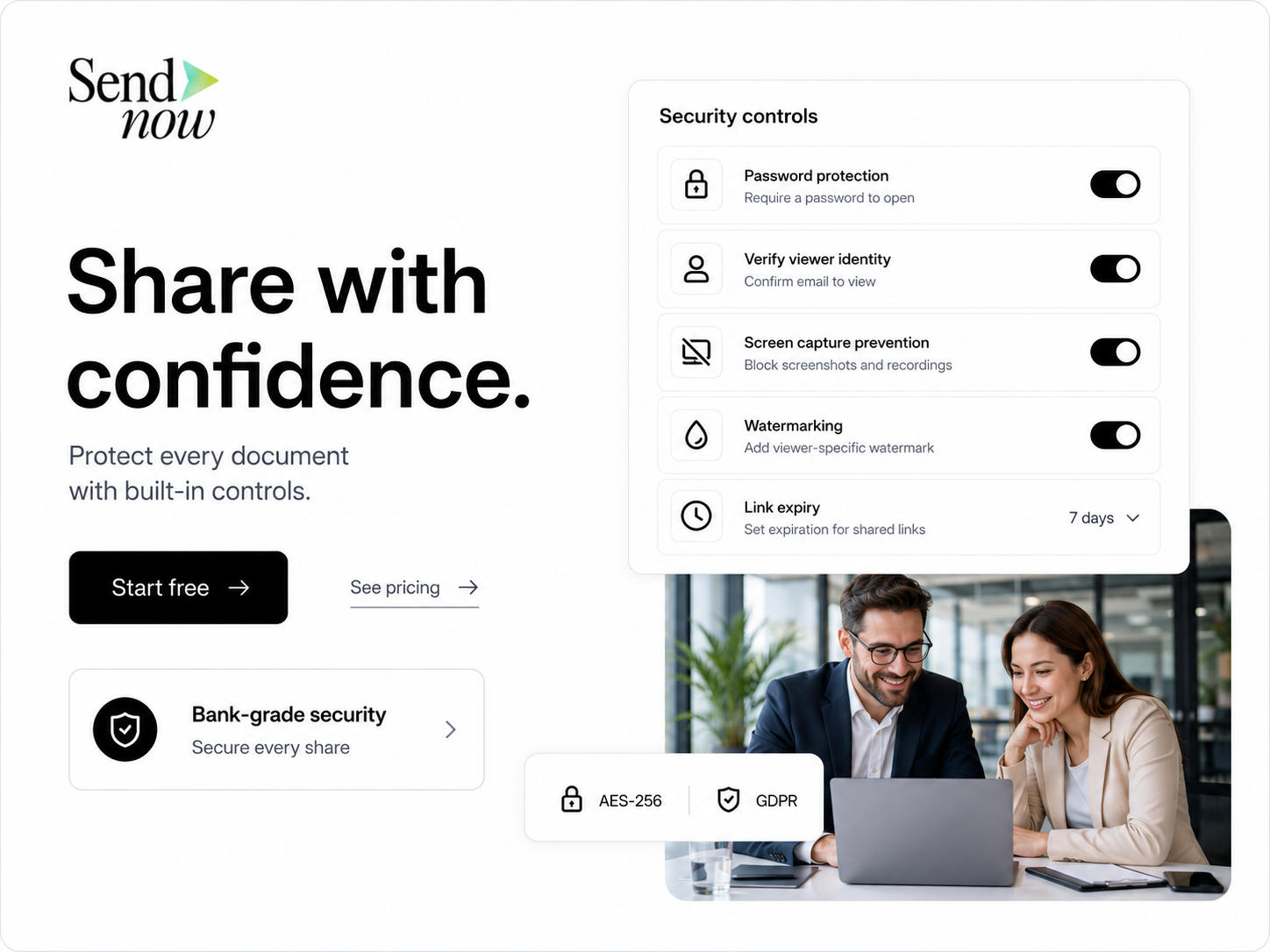
Encryption. AES-256 encryption at rest and TLS 1.2/1.3 in transit. This is the same standard used by financial institutions and government agencies worldwide.
Dynamic Watermarking. Every viewed page displays the viewer's name, email address, IP address, and timestamp as a visible or invisible watermark overlaid on the document. This deters and traces unauthorized screen captures.
Screenshot Protection. Advanced platforms detect and block common screen capture tools at the software level, adding a secondary barrier against document leakage.
Multi-Factor Authentication (MFA). Users must authenticate via a second factor, typically a time-sensitive code sent to their mobile device, before accessing the room.
Granular Access Permissions. Administrators set permissions at the individual document level: view-only, download-allowed, print-allowed, or fully restricted. Permissions update instantly and apply immediately across all active sessions.
Full Audit Logs. Every user action, including login, document view, page scroll, download attempt, and Q&A submission, is recorded with a timestamp and IP address. These logs are typically admissible in legal proceedings.
Compliance Certifications. Reputable VDRs maintain third-party certifications including SOC 2 Type II and ISO 27001. Infrastructure built on AWS or Microsoft Azure benefits from cloud-provider-level physical and logical security controls.
For finance teams that handle documents across multiple deals simultaneously, platforms that combine all of these controls in a single interface, without requiring an IT department to configure them, represent a significant advantage. SendNow provides AES-256 encryption, GDPR compliance, AWS infrastructure, screenshot protection, and dynamic watermarking starting at $9/month, making enterprise-level document security accessible regardless of deal size.
7. How Much Does a Virtual Data Room Cost?
VDR pricing varies dramatically, from $9/month to over $200,000/year, depending on the provider category, deal complexity, and user volume. The three broad tiers are:
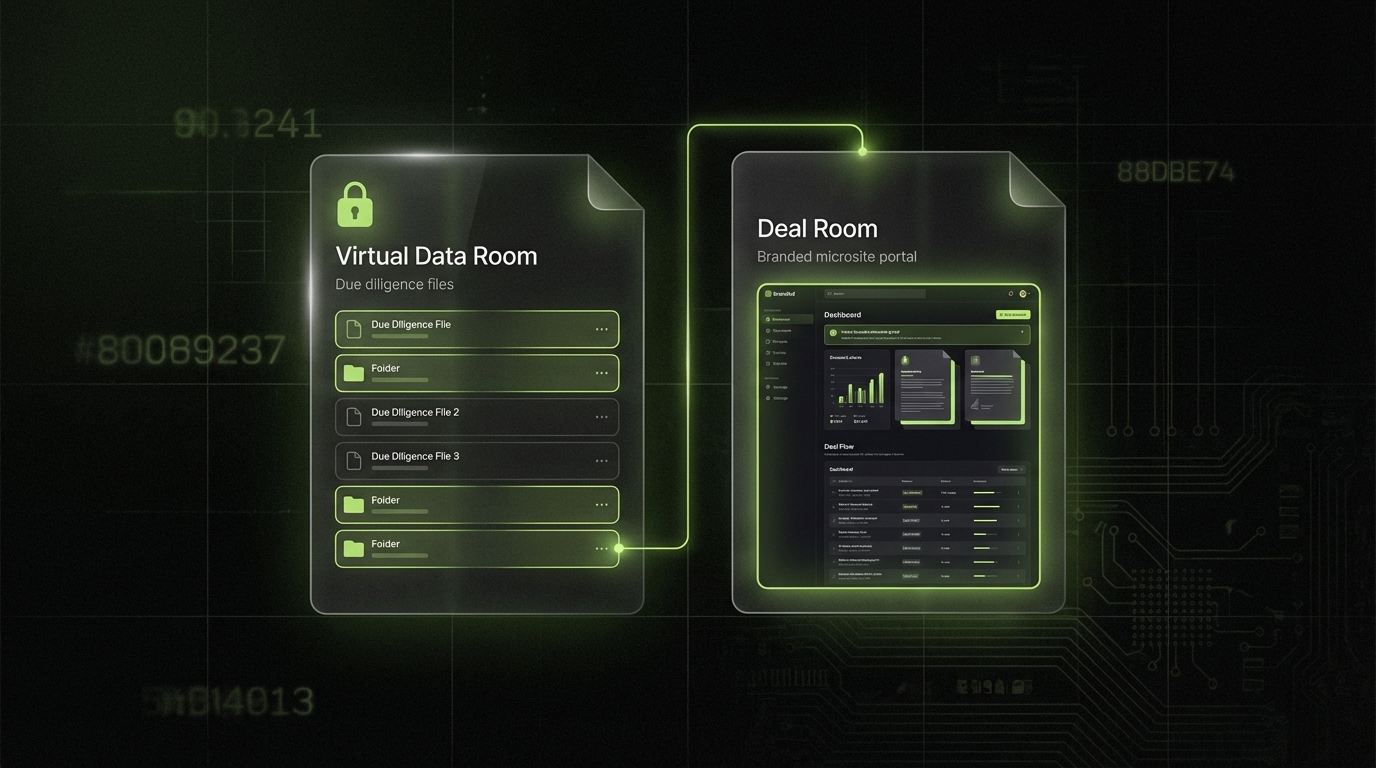
Modern Finance-Focused Platforms ($12 - $100/month) New-generation platforms offer full VDR capabilities at prices designed for regular use rather than one-time enterprise deals. SendNow starts at $9/month (Pro) and $43/month (Business), with a free trial and no credit card required. These platforms typically include page-by-page document analytics, NDA gating, branded deal rooms, screenshot protection, and AI engagement scoring.
Mid-Market VDR Platforms ($200 - $2,000/month) Platforms like iDeals, Digify, and Ansarada fall in this range. Ansarada starts at approximately $399/month according to Software Advice. These platforms add Q&A workflow management, more advanced administrator controls, and dedicated support teams. They are appropriate for larger, more complex transactions.
Legacy Enterprise Platforms ($10,000 - $200,000+/year) Intralinks and Datasite are the original enterprise VDR providers. Their pricing is typically negotiated, with per-page and per-user fees that escalate quickly. These platforms are standard on billion-dollar M&A mandates handled by bulge-bracket banks but represent significant cost for most mid-market transactions.
The total cost of a legacy VDR on a complex deal can reach six figures when overage fees for page count, user seats, and project duration accumulate. For finance professionals managing deals below $100 million, or for ongoing investor relations workflows, the pricing gap between legacy platforms and modern alternatives is difficult to justify on features alone.
A useful benchmark: the Peony.ink VDR comparison documented a price gap from $0 to over $200,000 across the providers they tested in 2026, demonstrating that cost alone is not a reliable indicator of security or functionality.
Conclusion: The Right VDR Changes How You Run Deals
A virtual data room is more than a secure folder. The best platforms give you real-time intelligence on how counterparties engage with your documents, page by page, minute by minute. That intelligence changes how you follow up, which conversations you prioritize, and ultimately how quickly deals close.
For finance professionals who handle sensitive documents regularly, the choice of VDR reflects on your professionalism as much as the quality of the documents themselves. A branded deal room signals operational sophistication. Ad hoc file sharing signals the opposite.
As deal volume continues rising, the cost of an insecure or analytically blind document process grows alongside it. The right VDR eliminates that risk entirely.
SendNow offers a full-featured free trial with no credit card required. Built specifically for finance professionals, it combines AES-256 encryption, GDPR compliance, page-by-page analytics, NDA gating, branded microsites, AI engagement scoring, and screenshot protection starting at $9/month. It is designed for deal teams that want enterprise security without enterprise pricing or enterprise complexity.
Keep Reading
- Best Virtual Data Room Providers in 2026
- A practical buyer's guide and decision framework for choosing the right data room provider in 2026 — covering pricing models, security certifications, use cases, and the key questions to ask before signing.
- Free Virtual Data Room vs Paid: What Finance Teams Need to Know
- How to Set Up a Virtual Data Room for M&A Due Diligence
- Virtual Data Room for Startups: What You Actually Need
About the Author: Rifana Hameem
Rifana is the founder of SendNow. She leads the team in building secure, compliant, and analytics-rich document sharing tools for finance and professional teams worldwide.
Connect on LinkedIn