
How to Set Up a Virtual Data Room for M&A Due Diligence

A virtual data room (VDR) is a secure, cloud-based platform for sharing confidential documents during M&A due diligence. To set one up: choose a provider with AES-256 encryption and GDPR compliance, build a standard folder structure (financials, legal, IP, HR, operations), upload documents with version control, assign granular permissions to each buyer group, and monitor engagement with page-by-page analytics. The whole setup takes 1–3 days if your documents are organized in advance.
How to Set Up a Virtual Data Room for M&A Due Diligence
A step-by-step guide to setting up a virtual data room for M&A due diligence. Learn what documents to include, how to structure your folder system, and which security features protect deal-sensitive information.
Why Every M&A Deal Needs a Dedicated Virtual Data Room
A single leaked financial model can kill an M&A deal before it closes. An outdated spreadsheet shared with the wrong party can trigger regulatory scrutiny. These are not edge cases — they are why serious deal teams treat virtual data rooms as core infrastructure, not optional software.
According to Investopedia, a virtual data room is a secure online repository used specifically for document storage and distribution during due diligence. Unlike physical data rooms — those locked offices where buyers once flew in to review paper documents — a VDR lets multiple buyers, advisors, and legal teams access and review materials simultaneously from anywhere in the world.
M&A due diligence is the most document-intensive phase of any transaction. Financial statements, corporate records, IP filings, employment agreements, customer contracts, environmental reports — the volume is enormous and the stakes are high. A well-organized VDR keeps a deal on track. A poorly run one adds weeks to the timeline and raises red flags with buyers.
This guide walks through exactly how to set up a virtual data room for M&A due diligence, from choosing a provider to sharing the link with your first buyer.
What is a Virtual Data Room and How Does It Work in M&A?

A virtual data room is a cloud-hosted secure environment for sharing, storing, and controlling access to sensitive documents. In the M&A context, it replaces the physical "data room" model that was standard until the early 2000s.
According to MNA Community, a VDR in M&A serves three core functions: a centralized document hub, a collaboration environment for multiple buyer groups, and a security control layer that protects against unauthorized access or leaks.
In practice, here is how a VDR works across a deal:
- The seller (or their advisors) uploads all relevant documents into the VDR and organizes them into a structured folder index.
- Buyer groups receive invitations with specific access permissions — some buyers may only see financials; others access everything.
- Buyers and their due diligence teams log in, review documents, and submit questions through an integrated Q&A module.
- The seller's team answers questions and uploads additional documents as the process advances.
- Both sides track engagement — which documents were opened, which pages were read, and how much time each reviewer spent on specific sections.
Modern VDRs go well beyond file hosting. Platforms like SendNow add page-by-page analytics, real-time open notifications, AI engagement scoring, and NDA gating — giving sell-side advisors genuine intelligence about buyer interest throughout the deal.
What Documents Go in a Virtual Data Room for M&A Due Diligence?
The standard due diligence checklist for M&A covers seven major categories. According to EthosData and datarooms.org, a well-populated VDR typically includes the following.
1. Corporate and Legal
- Articles of incorporation, bylaws, and shareholder agreements
- Board and shareholder meeting minutes (last 3–5 years)
- Existing NDAs and non-compete agreements
- Litigation history and pending legal matters
- Regulatory licenses and permits
2. Financial
- Audited financial statements (last 3–5 years)
- Monthly and quarterly management accounts
- Financial model and forward projections
- Tax returns and compliance records
- Debt schedules and credit agreements
3. Intellectual Property
- Patent, trademark, and copyright registrations
- Ownership agreements for proprietary technology
- Software licenses (inbound and outbound)
- IP transfer and assignment agreements
4. Contracts and Customers
- Top customer contracts (anonymized where appropriate)
- Material supplier and vendor agreements
- Revenue breakdown by customer segment
5. Human Resources
- Organizational chart
- Key employee agreements and equity documentation
- Benefits and compensation structures
- Executive offer letters and equity grants
6. Operations
- Real estate leases and facility agreements
- Insurance policies
- IT infrastructure documentation
- Environmental assessments (for relevant industries)
7. Environmental, Social and Compliance
- Regulatory filings and compliance certifications
- GDPR and data privacy documentation
- SOC 2 or ISO 27001 reports if applicable
Not every document needs to go in on day one. Many deal teams adopt a tiered approach — core materials available to all qualified buyers upfront, then sensitive contracts (customer names, IP details) released only to the lead bidder after LOI signing.

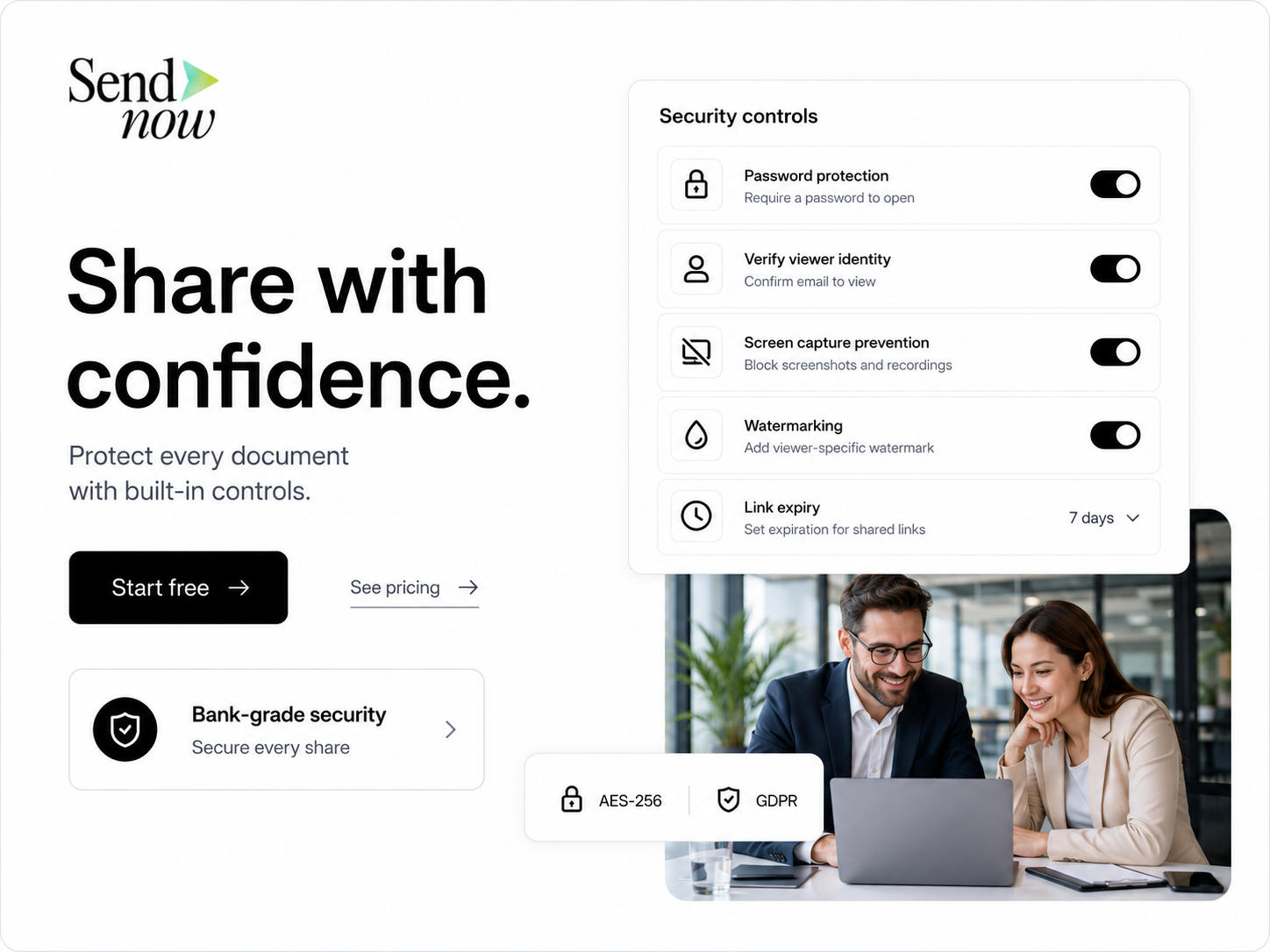
SendNow's deal room setup panel lets you build tiered folder access and configure NDA gating before sending the first link.
How to Set Up a Virtual Data Room Step by Step
Setting up a VDR for M&A due diligence is a structured process. Most deal teams have a data room ready to share within 24–72 hours if documents are already organized. Here is the step-by-step approach, synthesized from guidance by ShareVault and ShareFile.
Step 1: Choose Your VDR Provider
Select a platform with AES-256 encryption, GDPR compliance, granular permission controls, and document analytics. Avoid generic cloud storage tools (more on why in the next section).
Step 2: Build Your Folder Index
Create a numbered, standardized folder structure before uploading any files. A common index:
Keep Reading
- What Is a Virtual Data Room? Complete Guide for Finance Professionals
- M&A Due Diligence Checklist: The Full 2026 Guide
- Private Equity Deal Room Best Practices for 2026
- Best data room software compared across features, pricing, and security for finance teams in 2026. Find the right VDR for M&A, fundraising, or due diligence — with transparent pricing starting at $9/month.
About the Author: Rifana Hameem
Rifana is the founder of SendNow. She leads the team in building secure, compliant, and analytics-rich document sharing tools for finance and professional teams worldwide.
Connect on LinkedIn