
M&A Due Diligence Checklist: The Full 2026 Guide

M&A Due Diligence Checklist: The Full 2026 Guide
An M&A due diligence checklist organizes the full scope of investigation buyers conduct between signing a letter of intent and committing to an acquisition, covering financial, legal, operational, and technical risk across every material area of the target business. This guide provides a complete 2026 category-by-category checklist, a full document request list, expert analysis of deal-killing red flags, and best practices for secure document management.
TLDR: An M&A due diligence checklist covers 12 core workstreams: corporate/organizational, financial, tax, legal, intellectual property, human resources, technology, cybersecurity, customers/revenue, regulatory, insurance, and real estate. Due diligence typically takes 6-12 weeks after LOI signing. The most common deal-killers are financial irregularities, change-of-control clauses in material contracts, unassigned IP, and undisclosed litigation. This guide gives you the full checklist and a secure document management framework for 2026 transactions.
Introduction
No M&A deal closes without due diligence. Between the letter of intent and the purchase agreement, the buyer has one job: verify everything. Confirm the financials match the pitch. Find the liabilities the seller did not volunteer. Understand the contracts that survive the transaction and the ones that terminate on change of control.
Most M&A guides focus heavily on financial diligence. That matters - but as Acquisition Stars notes, the issues that kill deals or cost buyers hundreds of thousands of dollars post-closing are often legal: a contract that terminates on change of control, IP that was never properly assigned, or an employment agreement with a six-figure severance trigger buried in the schedule.
An M&A due diligence checklist is the tool that prevents those surprises. It organizes the buyer's investigation into trackable workstreams, ensures nothing falls through the cracks, and provides the audit trail that protects the deal and both parties after close.
This 2026 guide covers all 12 categories of M&A due diligence, the documents you need in each workstream, the red flags that kill deals, the difference between buy-side and sell-side diligence, and how modern deal teams manage document flow securely from LOI to close.
What is an M&A due diligence checklist?
An M&A due diligence checklist is a structured document request list that organizes the investigation a buyer (or their advisors) conducts before closing a merger or acquisition. It directs the target company to provide specific documents, data, and representations across every material area of the business.
The checklist serves multiple functions:
- It creates a comprehensive scope of investigation so nothing is missed
- It gives the seller a clear request list so document collection can proceed in parallel workstreams
- It provides the transaction record that legal teams reference when drafting reps and warranties in the purchase agreement
- It generates the findings that support deal pricing, earn-out structures, or requests for price adjustments
According to Bloomberg Law, a standard M&A due diligence document checklist covers general corporate matters, financial statements, tax records, material contracts, employee data, IP, real estate, and regulatory compliance. The checklist typically accompanies a formal document request letter sent to the seller shortly after LOI signing, and responses flow into a virtual data room (VDR) organized by workstream.
As DFIN notes, "organization is important for both sides" in the due diligence phase. Without a well-structured checklist and a disciplined process, the diligence window extends, re-trade risk rises, and deals that should close often do not.
What are the main categories on an M&A due diligence checklist?
A comprehensive M&A due diligence checklist covers 12 core categories. Below is a full category-by-category breakdown for 2026 transactions:
1. Corporate and Organizational
- Articles of incorporation, bylaws, and all amendments
- Board minutes and resolutions (past 3-5 years)
- Shareholder agreements, voting agreements, and rights of first refusal
- Capitalization table (fully diluted) with all equity, options, warrants, and convertibles
- Organizational chart of all legal entities and subsidiaries
- Foreign qualifications and registered agent information
2. Financial
- Audited financial statements for the past 3 fiscal years (income statement, balance sheet, cash flow)
- Most recent interim financial statements (monthly or quarterly)
- Management accounts and board-level financial reporting packages
- Revenue by product, customer, geography, and channel
- Accounts receivable aging schedule and bad debt history
- Working capital analysis and normalized EBITDA bridge
- Capital expenditure history and forecast
- Debt schedule with terms, covenants, and maturity dates
3. Tax
- Federal, state, and local tax returns for the past 3 years
- Any open tax audits, disputes, or notices from tax authorities
- Transfer pricing policies for companies with international operations
- Net operating loss (NOL) carryforwards and any Section 382 limitations
- Sales tax compliance history and open exposure
4. Legal and Litigation
- All pending, threatened, or settled litigation in the past 5 years
- Material contracts (customer, vendor, licensing, distribution, and partnership agreements)
- Change-of-control clauses in all material contracts
- Third-party consents required to complete the transaction
- IP assignment and work-for-hire agreements
- Regulatory correspondence, government investigations, or consent orders
5. Intellectual Property
- Full IP inventory: patents (granted and pending), trademarks, copyrights, trade secrets
- IP assignment agreements for all founders, employees, and contractors
- Open source software inventory and license compliance
- Third-party IP licenses (inbound and outbound)
- Domain name registrations and social media accounts
6. Human Resources
- Full employee roster with titles, compensation, start dates, and location
- Employment agreements for all executives and key employees
- Severance, change-of-control, and retention agreements
- Benefit plans (health, retirement, equity) and funding status
- Employee handbook, policies, and HR compliance documentation
- Pending or threatened employment claims, EEOC charges, or labor disputes
- Contractor and consultant agreements with classification analysis
7. Technology and IT
- System architecture overview and infrastructure documentation
- Software development practices, code ownership, and documentation standards
- SaaS and software licenses (vendor and customer-facing)
- Data security policies, incident response plan, and breach history
- Uptime and system availability history
- Third-party integrations and API dependencies
8. Cybersecurity
- Security frameworks in use (SOC 2, ISO 27001, NIST, etc.) with current certification status
- Penetration test results from the past 12-24 months
- Vulnerability management program and patch history
- Access control policies and privileged account management
- History of data breaches, ransomware incidents, or unauthorized access events
- Cyber insurance policy terms and coverage limits
9. Customers and Revenue
- Top 20 customer list with ARR/revenue, contract start and renewal dates, and termination rights
- Customer concentration analysis (percentage of revenue from top 5 customers)
- Churn rate by cohort for SaaS or subscription businesses
- Customer contract pipeline and renewal forecast
- Net promoter scores, customer satisfaction data, or survey results

10. Regulatory and Environmental
- All material permits, licenses, and regulatory approvals
- Regulatory correspondence and any pending compliance actions
- Environmental site assessments for owned or leased real property
- OSHA records and workplace safety compliance documentation
- Industry-specific regulatory filings (FINRA, SEC, FDA, FCC, etc. as applicable)
11. Insurance
- Schedule of all insurance policies with coverage limits, premium amounts, and expiration dates
- Claims history for the past 3-5 years
- Any coverage gaps or policies with change-of-control provisions
- Directors and Officers (D&O) liability coverage details
12. Real Estate
- Schedule of all owned and leased real property
- Lease agreements with key terms (rent, term, renewal options, assignment provisions)
- Environmental reports for owned properties
- Any pending property disputes or condemnation proceedings

Deal teams use SendNow to organize M&A due diligence documents in a branded, access-controlled deal room, with full visibility into buyer engagement.
How long does M&A due diligence take?
M&A due diligence typically takes 6-12 weeks after a letter of intent (LOI) is signed. Timeline varies based on deal size, organizational complexity, and how well-prepared the seller is at the outset.
Acquisition Stars breaks down typical acquisition timelines by deal size:
- Small deals (under $10M): 3-6 months total (LOI to close), with due diligence running 4-6 weeks
- Mid-market deals ($10M-$250M): 6-9 months total, with due diligence running 6-10 weeks
- Large deals ($250M+): 9-15 months or more, with extended diligence often exceeding 12 weeks
Software Equity Group notes that in SaaS M&A, diligence moves faster when the seller has already organized their data room before the LOI is signed. "Buyers should be validating what they already know, not uncovering surprises that slow momentum or create re-trade pressure."
The key phases within the due diligence window typically run as follows:
- Weeks 1-2: Seller populates data room; buyer assigns workstream leads
- Weeks 2-4: Document review across financial, legal, technical, and operational workstreams
- Weeks 3-6: Management Q&A sessions, follow-up document requests, and site visits
- Weeks 6-10: Specialist reports (quality of earnings, tech diligence, HR assessment)
- Weeks 8-12: Legal drafting of purchase agreement using diligence findings; final confirmatory items
What documents does M&A due diligence require?
The core document request across all M&A transactions consistently includes the following across the most critical workstreams:
Financial Documents
- 3 years audited financial statements (income statement, balance sheet, cash flow)
- Trailing 12-month management accounts
- Fully diluted capitalization table
- Accounts receivable aging schedule
- Budget vs. actuals for current year
- Normalized EBITDA schedule with all adjustments documented
Legal Documents
- Certificate of incorporation, bylaws, and all amendments
- Board and stockholder minutes (3-5 years)
- All material contracts with a contracts summary matrix
- Employment and equity agreements for executives
- IP assignment agreements for all founders, employees, and contractors
- Pending litigation summary and any consent decrees
Tax Documents
- Federal and state tax returns (3 years)
- IRS or state tax authority correspondence
- Tax provision workpapers from audited financials
HR Documents
- Full employee roster and compensation schedule
- Organizational chart
- Change-of-control and severance agreements
- Employee benefit plan documents and funding statements
Technology and Security Documents
- System architecture and infrastructure overview
- Security policies and most recent penetration test report
- SaaS and software license inventory
- Incident response plan and any breach history
Well-organized sellers who upload documents to a structured data room before the LOI is signed consistently experience shorter due diligence periods and fewer re-trade events - because buyers spend their time confirming rather than searching.
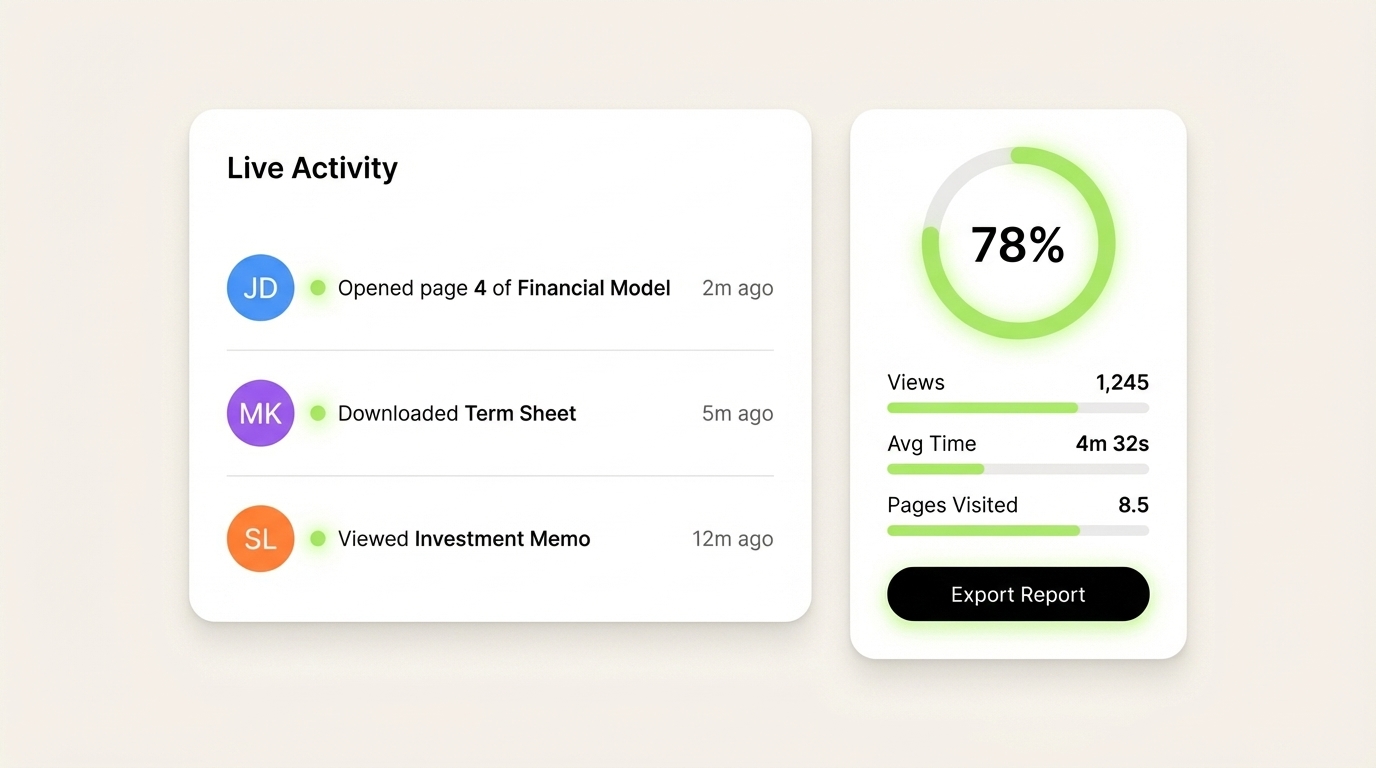
SendNow's real-time activity feed shows deal teams exactly when buyers open documents and which sections they review, giving sellers intelligence throughout the diligence process.
What are the biggest red flags in M&A due diligence?
Red flags in due diligence either kill deals outright or force price reductions. According to Robbins DiMonte, the most serious categories include:
Financial Red Flags
- Revenue that cannot be reconciled to bank statements or tax returns
- Customer concentration above 25-30% in a single account with no long-term contract
- Rapidly rising accounts receivable days outstanding (DSO), suggesting collection problems
- Inconsistent or restated prior-year financial statements
- Off-balance sheet liabilities or contingent obligations not disclosed in the financials
- EBITDA adjustments that appear aggressive or lack documentary support
Legal Red Flags
- Change-of-control provisions in material customer or vendor contracts that permit termination post-close
- IP developed by founders or contractors without formal assignment agreements in place
- Ongoing or threatened litigation with material financial exposure
- Third-party consents required to complete the transaction that have not yet been secured
Operational Red Flags
- Key person dependency with no succession plan (one founder holds all customer relationships)
- Undocumented processes that make the business difficult to operate post-acquisition
- High employee turnover, especially in engineering or customer success
- Absence of documented systems, SOPs, or internal controls
Technology Red Flags
- Significant technical debt in core product infrastructure
- Unresolved security vulnerabilities or past data breaches
- Open source software components that create IP or licensing risk
- Vendor dependencies with no documented SLAs or exit provisions
HR Red Flags
- Key employees with compensation agreements that trigger large change-of-control payments at close
- Misclassified workers (employees treated as independent contractors)
- Pending EEOC claims or class actions from current or former employees
According to Brinen & Associates, failed due diligence leads to "collapsed deals, unexpected liabilities, strained relationships, and in the worst cases, post-closing litigation." The firms that avoid these outcomes are the ones that treat due diligence preparation as an ongoing discipline, not a one-time sprint triggered by an LOI.
What is the difference between buy-side and sell-side due diligence?
Buy-side due diligence is the investigation a buyer conducts on the target company. The buyer's goal is to verify representations, uncover risks, and inform deal pricing and terms. Buy-side diligence is typically conducted by the buyer's advisors: investment bankers, legal counsel, accountants, and technical specialists.
Sell-side due diligence (also called vendor due diligence, or VDD) is the investigation a seller conducts on their own business before going to market. The seller hires advisors to identify and address potential issues before buyers see them, producing a sell-side report that is shared with credible bidders during the process.
Key differences:
| Buy-Side Diligence | Sell-Side Diligence | |
|---|---|---|
| Who commissions it | Buyer | Seller |
| Purpose | Verify and de-risk the acquisition | Prepare for sale, pre-empt buyer findings |
| Timing | After LOI signing | Before going to market |
| Primary result | Informs purchase price and reps/warranties | Reduces buyer re-trade risk; compresses timeline |
Sell-side diligence is increasingly common in competitive M&A processes. When a seller produces a VDD report upfront, it signals institutional sophistication, reduces uncertainty for buyers, compresses the diligence timeline, and often supports a higher price by reducing the information asymmetry buyers use to justify discounts.
For PE-sponsored or banker-run sell-side processes, a sell-side quality of earnings (QoE) report paired with a structured VDD data room has become close to standard practice in mid-market transactions.
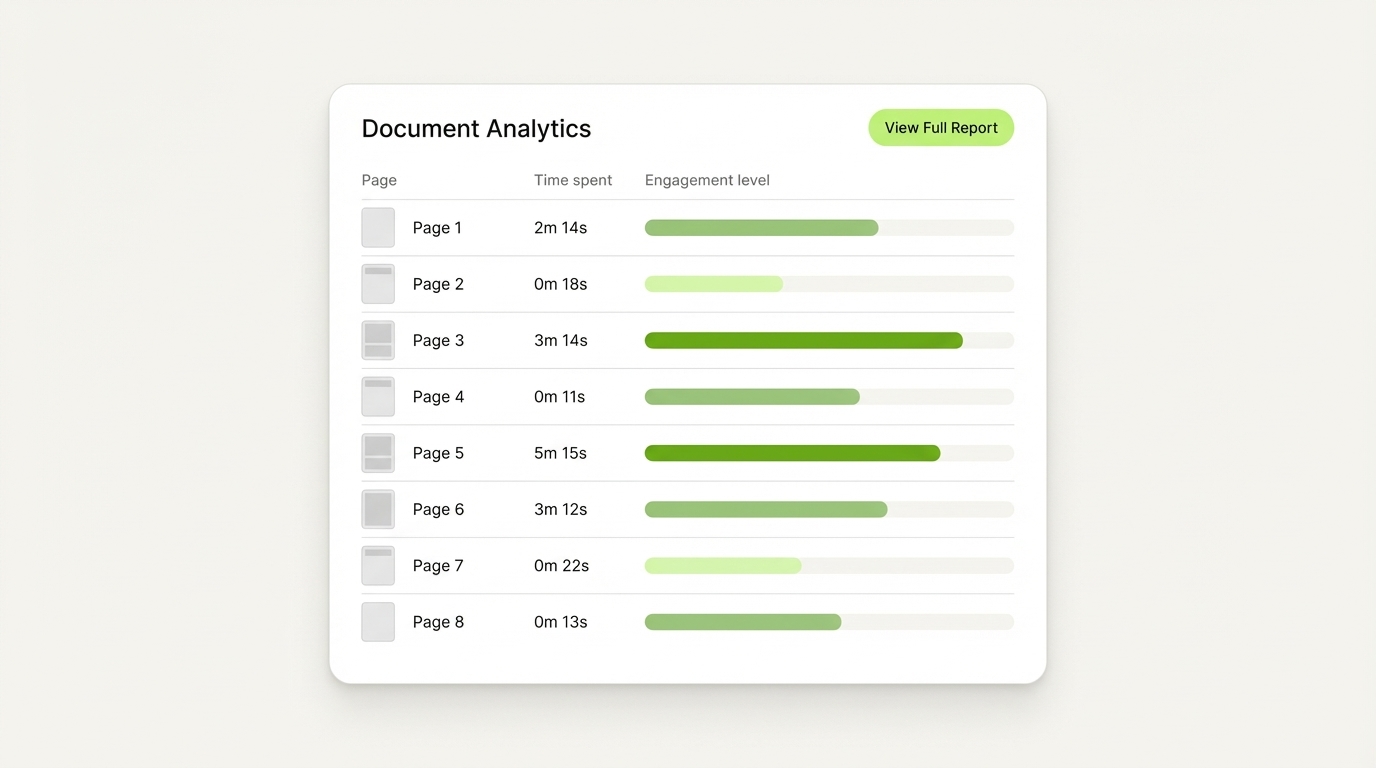
With SendNow's page-level engagement tracking, sell-side advisors can see exactly which sections of a VDD report each bidder spends the most time reviewing, informing their follow-up strategy in real time.
How do deal teams manage M&A due diligence documents securely?
Document security in M&A is not optional. The materials shared during due diligence include audited financials, customer contracts, employee compensation data, and detailed IP inventories. A single leak can derail a deal, expose a public company to insider trading liability, or damage customer and employee relationships before close.
The standard approach uses a virtual data room (VDR) to centralize document sharing. A well-run deal room has:
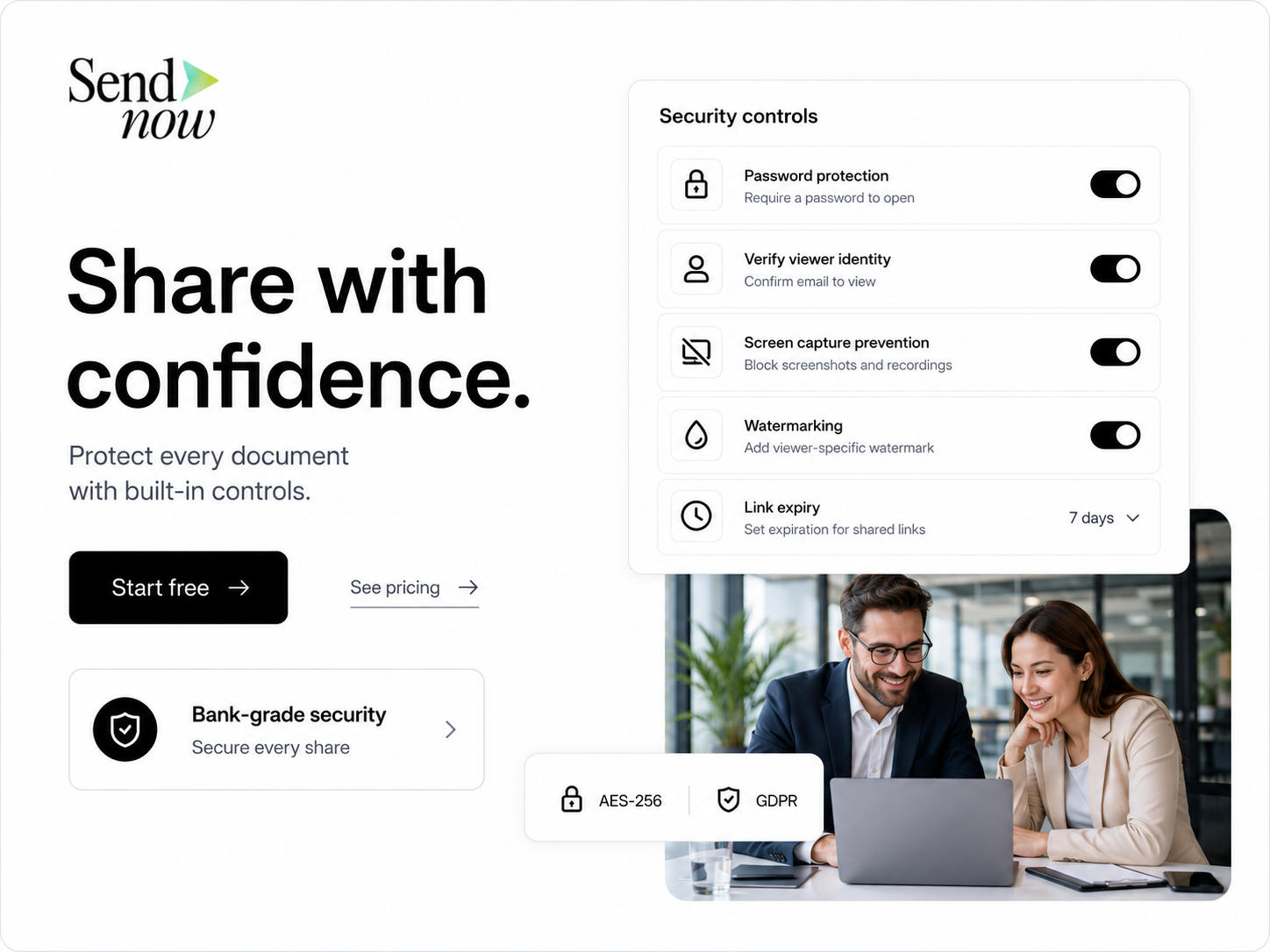
Granular access controls: Each party (buyer, their counsel, their financial advisor) sees only the documents relevant to their workstream. Segment access from the first upload.
Dynamic watermarks: Every page of every document carries the viewer's name, organization, and timestamp. This deters leaks and provides forensic evidence if data surfaces outside the process.
Screenshot protection: For the most sensitive materials (financial performance data, customer contracts), screenshot-blocking prevents digital or physical capture of confidential data.
Full audit trails: Complete logs of who accessed which document, when, and for how long. This creates a clear record of disclosure that is valuable in post-close disputes about what the buyer had access to before signing.
Real-time notifications: Sellers and their advisors benefit from knowing when buyers open key documents. The moment a buyer's team starts reviewing the quality of earnings report or the customer contract schedule, the sell-side team can prepare for the follow-up questions that typically arrive within 24-48 hours.
SendNow is purpose-built for this workflow, designed specifically for financial professionals managing sensitive deal documents. It combines NDA gating, page-by-page analytics, real-time open notifications, dynamic watermarks, and screenshot protection in a single branded deal room. Built on AES-256 encryption and AWS infrastructure with GDPR compliance, SendNow gives investment bankers, PE deal teams, and M&A advisors the security controls the process demands. The Business plan starts at $43/month for Business of three, making professional-grade deal security accessible without enterprise VDR licensing costs.
Conclusion
A rigorous M&A due diligence process protects buyers from post-close surprises, gives sellers the opportunity to address issues proactively, and builds the mutual trust that sustains healthy deal negotiations through signing.
Use this 2026 checklist to organize your workstreams before LOI signing, keep your data room current and well-structured, and build a clear process for managing document requests and follow-ups. The deals that close fastest and cleanest are consistently the ones where both parties treat due diligence as a collaborative information exchange rather than an adversarial investigation.
When you are ready to build your M&A deal room, SendNow provides the analytics, security controls, and branded document sharing that financial professionals use for their highest-stakes transactions. Start your free trial at sendnow.live, no credit card required.
Keep Reading
- What Is a Virtual Data Room? Complete Guide for Finance Professionals
- The complete due diligence checklist for seed and Series A startups raising a funding round. Know exactly what documents investors request, how to build your data room, and how to close faster.
- Series A Due Diligence: Document Checklist for Founders
- A complete guide to private equity due diligence: the five types PE investors run, what they examine in financials and operations, red flags that kill deals, and how to prepare your company for a successful transaction.
- Due Diligence Questionnaire: The Complete Template for Investors
About the Author: Rifana Hameem
Rifana is the founder of SendNow. She leads the team in building secure, compliant, and analytics-rich document sharing tools for finance and professional teams worldwide.
Connect on LinkedIn