The complete due diligence checklist for seed and Series A startups

- Due diligence is an investor's structured verification of everything you claim about your business
- Investors ask for financial statements, a cap table, legal documents, IP agreements, and KPI data
- A clean, pre-built data room cuts weeks off a close and signals operational maturity
- Seed and Series A diligence differ significantly in depth and document complexity
- Preparation that starts months before outreach gives you the fastest path to a signed term sheet
The complete due diligence checklist for seed and Series A startups raising a funding round. Know exactly what documents investors request, how to build your data room, and how to close faster.
Due Diligence Checklist for Startups Raising a Funding Round
Introduction
The pitch goes well. An investor sends a follow-up: "We'd love to take a closer look. Can you share your data room?"
What happens in the next 72 hours reveals more about your startup than your deck ever could.
Due diligence is where investment interest becomes investment commitment, or doesn't. Founders who prepare a structured checklist before they start raising move faster, communicate credibility, and close on better terms. Those who scramble reactively during a live deal signal operational immaturity to the very people writing the check.
This guide gives you the full due diligence checklist for seed and Series A rounds, answers the questions investors ask most frequently, and shows you how to structure your documents so your fundraise runs on your timeline, not theirs.
Table of Contents
- What Is Due Diligence for a Startup?
- What Documents Do Investors Ask For?
- What Is a Cap Table, and Why Do Investors Need It?
- How Long Does Due Diligence Take?
- What Is a Data Room, and What Belongs in One?
- What Is the Difference Between Seed and Series A Due Diligence?
- How Do You Prepare Before You Start Raising?
What Is Due Diligence for a Startup? {#what-is-due-diligence-for-a-startup}
Due diligence is an investor's systematic investigation of your company before they commit capital. It covers your financial health, legal standing, intellectual property, team background, market position, and product. The goal is to verify that the claims in your pitch are accurate, confirm that no material risks are hidden, and establish that the company is structured for investment.
According to Kruze Consulting, a CPA firm exclusively dedicated to VC-backed startups, the depth and complexity of due diligence increases sharply at each funding stage. A pre-seed process might fit in an email thread. A Series B exercise involves spreadsheets, legal reviews, customer reference calls, and accounting audits across multiple jurisdictions.
For founders, due diligence works in both directions. You prove your company is worth backing. Investors prove they are the right partners. The process builds trust, surfaces problems early, and protects both parties from surprises post-close.
What Documents Do Investors Ask For? {#what-documents-do-investors-ask-for}
The core document request list falls into six categories. The specific items within each category grow more detailed at each successive funding stage.
Financial Documents
- Income statement, balance sheet, and cash flow statement (last 3 years by month and by year)
- Financial projections (next 3 years by month)
- Bank statements reconciled with financial statements (last 6 months)
- Monthly burn rate and current runway
- Customer acquisition cost (CAC) and customer lifetime value (LTV)
- Revenue cohort data and churn analysis
- Detailed capitalization table
Legal Documents
- Articles of incorporation and current certificate of incorporation
- Bylaws and all amendments
- Board meeting minutes and shareholder resolutions
- Existing shareholder agreements, SAFEs, and convertible note documentation
- Licenses and permits relevant to your industry
- List of any pending litigation or regulatory correspondence
Cap Table and Equity
- Fully diluted cap table showing shares, options, SAFEs, and convertible notes
- Option pool size, vesting schedules, and ungranted option details
- Full history of funding rounds including valuation and terms
- List of current investors, their ownership stakes, and the type of security held
Intellectual Property
- List of all patents, trademarks, and copyrights
- IP assignment agreements signed by all founders, employees, and contractors
- Any licensing agreements or IP-related partnerships
- Pending or potential IP litigation (disclose proactively)
Founder and Team
- Professional and educational background of each founder
- Any legal or criminal history that must be disclosed
- Key employee agreements including non-compete and NDA provisions
- Projected hiring plans for the next 12 to 24 months
Business Operations
- Current technology stack documentation
- Key customer contracts and invoices
- Vendor and supplier agreements
- Insurance policies including D&O and workers' compensation
Y Combinator's Series A Diligence Checklist is one of the clearest publicly available frameworks and maps closely to what most institutional VCs request at the Series A stage.
What Is a Cap Table, and Why Do Investors Need It? {#what-is-a-cap-table}
The capitalization table is the definitive record of who owns what percentage of your company, in what form, and under what terms. It includes common shares (typically founders and employees), preferred shares (investors), stock options (team), and any outstanding convertible instruments such as SAFEs, convertible notes, or warrants.
Investors need the cap table to model what their ownership stake looks like at different entry valuations and across dilution scenarios. They also use it to identify structural problems: excessive dilution from prior rounds, unusual liquidation preferences that might disadvantage new investors, or existing investors who hold blocking rights that could complicate future financing.
According to Graphite Financial, a disorganized or inaccurate cap table is one of the most common reasons a round stalls. Common issues include unsigned SAFE agreements, missing options documentation, and informal equity promises that were never formalized. Fix these before you begin outreach. Investors who find cap table inconsistencies during diligence interpret them as a signal about how the whole company is run.
How Long Does Due Diligence Take? {#how-long-does-due-diligence-take}
Timeline varies widely by stage, firm size, and document quality.
- Angel and pre-seed rounds: 1 to 3 weeks for organized founders
- Seed rounds: 2 to 5 weeks typical
- Series A: 4 to 8 weeks; can extend to 12 weeks if issues surface
- Series B and beyond: 8 to 16 weeks with full legal, accounting, and customer diligence
Qubit Capital notes that for every 101 investment opportunities reviewed, roughly 4.8 reach the full due diligence stage and only 1 gets funded. Firms evaluating hundreds of companies a year have limited hours per deal. The faster you respond and the cleaner your data room, the less friction in the process, and the faster the investor reaches conviction.
Founders who pre-build their data rooms before launching investor outreach consistently report faster closes. The preparation signals maturity and eliminates unnecessary back-and-forth that can drag a process across multiple quarters.
What Is a Data Room, and What Belongs in One? {#what-is-a-data-room}
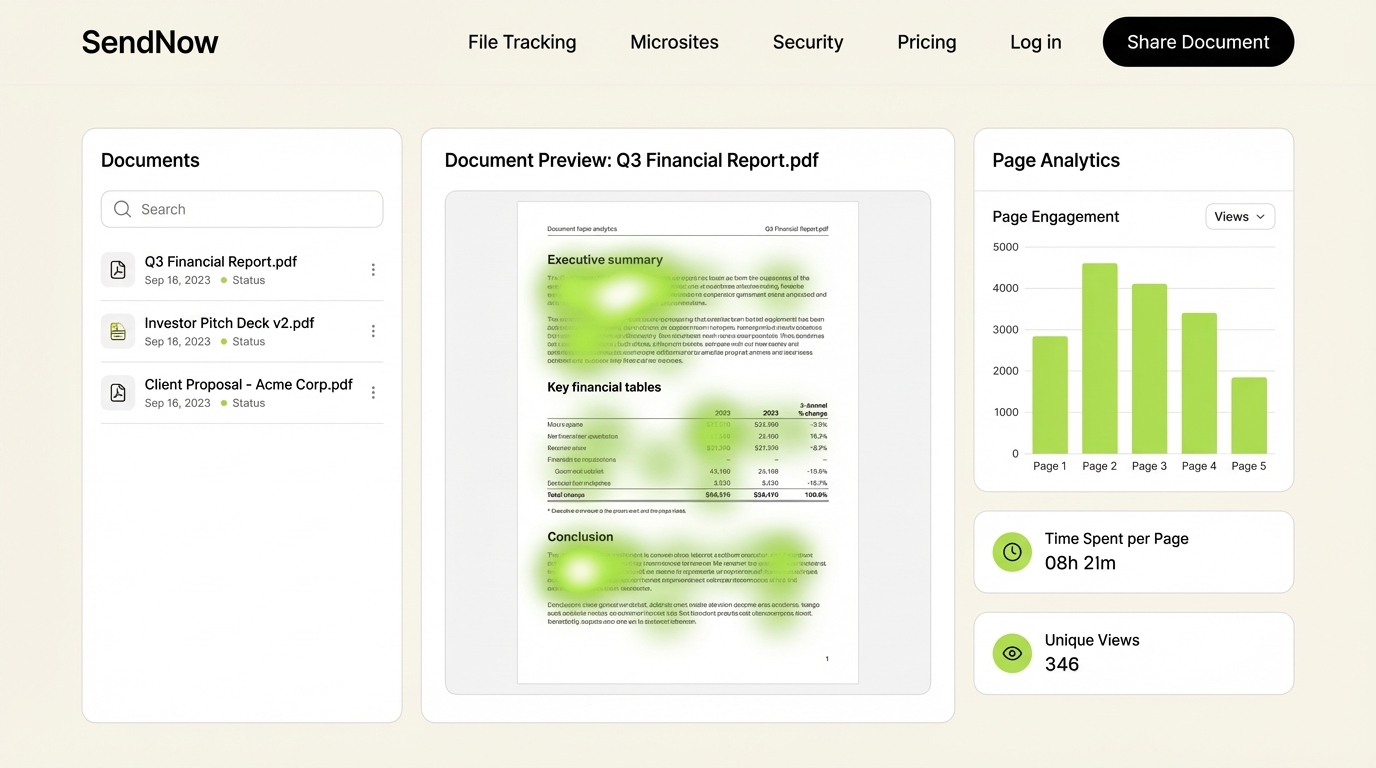
A data room is a secure, organized digital repository where you store and share the documents investors request during due diligence. The term originated in physical rooms where sensitive documents were reviewed under controlled conditions. Today, a virtual data room serves the same function: controlled access, organized content, and a clear audit trail of who reviewed what and when.
Andreessen Horowitz recommends treating the data room as a living document updated continuously as the company grows, not something assembled in a panic when an investor asks. A well-organized data room typically includes these folders:
Keep Reading
About the Author: Rifana Hameem
Rifana is the founder of SendNow. She leads the team in building secure, compliant, and analytics-rich document sharing tools for finance and professional teams worldwide.
Connect on LinkedIn