Virtual Data Room for Startups: What You Actually Need

A startup data room is a secure, organized repository of documents that investors review during due diligence. You need it ready before you receive your first serious term sheet. The core documents are: pitch deck, financial model, cap table, corporate records, and key contracts. Skip Notion and Google Drive — they have no NDA gating, no document analytics, and no audit trail. Use a purpose-built platform that gives you control and investor engagement intelligence from the moment your deck is opened.
Virtual Data Room for Startups: What You Actually Need
A practical guide for founders on what a virtual data room is, which documents to include at each funding stage, and how to set one up without overpaying for features you do not need.
The Sentence That Changes Everything
"Send over your data room and we'll start diligence."
This sentence arrives at the worst possible moment — right after your best pitch meeting, when you want to keep momentum and instead have to scramble.
According to a16z Partner Justine Moore, the data room request usually comes after a first or second investor meeting and signals genuine interest. Founders who are prepared respond in hours. Founders who are not spend days assembling documents from scattered folders, Slack threads, and half-finished financial models — and that delay communicates something before a single document is reviewed.
This guide covers exactly what you need in a startup data room, when to build it, and how to set it up so it works for you — not just for investors.
What is a Virtual Data Room for Startups?
A virtual data room for startups is a secure, access-controlled repository where founders store and share confidential business documents with prospective investors during a fundraising round.
According to Carta, a data room is a secure place to organize, store, and share confidential documents and information. The term originated in the physical world, where companies once rented locked rooms with paper documents for investors to review in person.
Today, a startup data room is digital and cloud-hosted. At its most basic level, it is a folder of key documents behind a shareable link. At the level serious investors expect, it includes:
- Access controls: You choose who sees which documents and for how long
- NDA gating: Investors agree to confidentiality terms before accessing sensitive materials
- Document analytics: You see exactly which pages each investor spent time on
- Audit trail: A timestamped log of every access event
- Branded presentation: Your data room reflects your company's identity, not a generic file interface
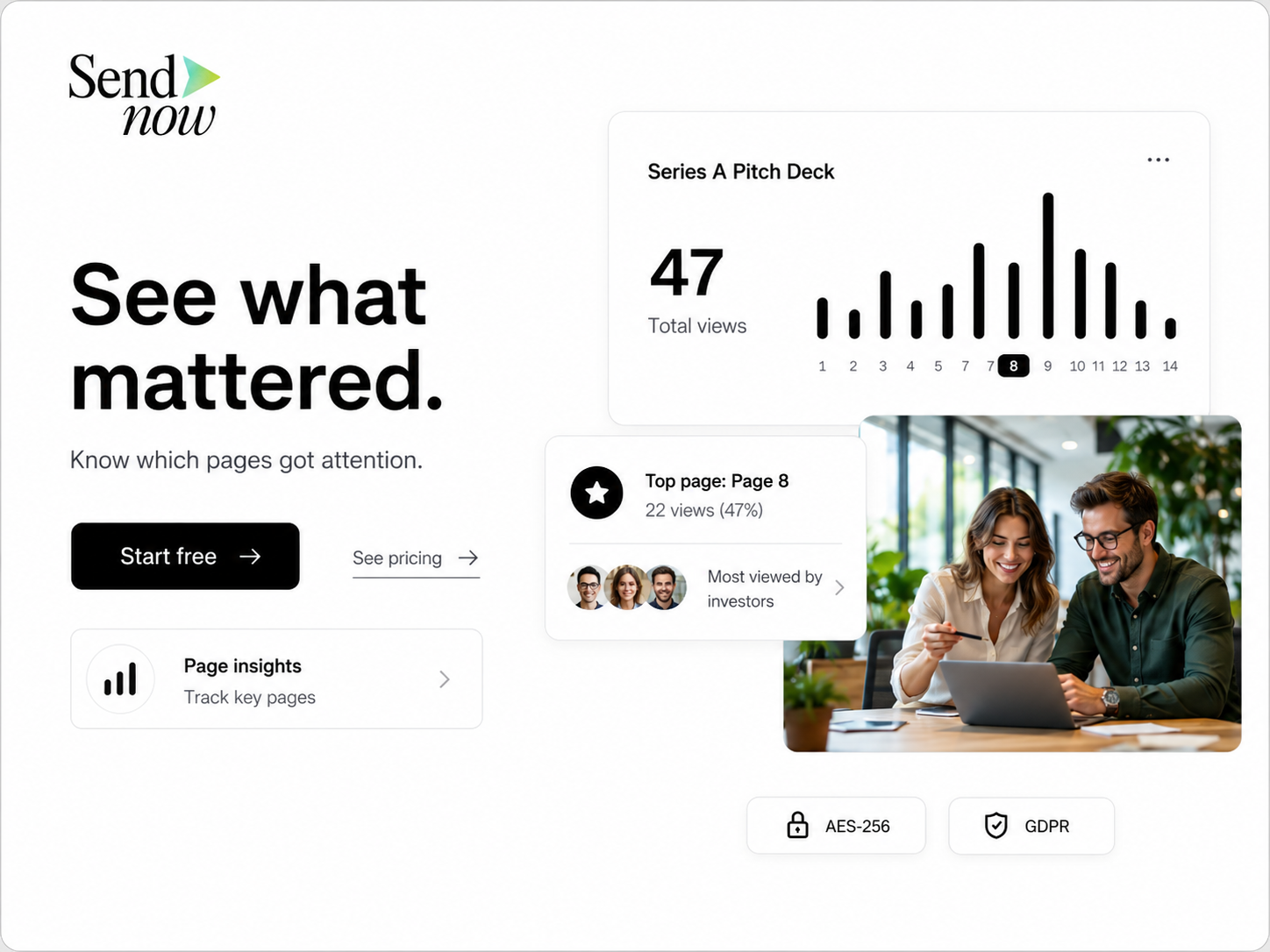
The startup data room serves a dual purpose: it organizes your company's information for due diligence, and it signals to investors that you run a professional, well-governed operation.
What Documents Should a Startup Include in Their Data Room?
Document requirements vary by funding stage. According to a16z, Forum VC, and WGU Labs, here is the standard by stage:
Pre-Seed and Seed
- Pitch deck (current version)
- One-pager or executive summary
- Financial model with 12–24 month projections
- Cap table
- Incorporation documents
- Founder bios
- Key customer letters or LOIs (if applicable)
- Product screenshots or demo video
Series A
Everything from seed, plus:
- Historical financial statements (P&L, balance sheet, cash flow — last 2+ years)
- MRR/ARR charts and cohort retention analysis
- Top 10 customer contracts (anonymized)
- Technology architecture overview
- IP documentation and assignments
- Employment agreements for key hires
- Board meeting minutes (last 12 months)
- Previous round documents (SAFEs, term sheets, investor agreements)
Series B and Beyond
Everything above, plus:
- Audited financials
- Detailed unit economics by customer segment
- Full customer list with ARR breakdown
- Regulatory certifications (SOC 2, GDPR, HIPAA where applicable)
- Insurance documentation
- Vendor contracts above material thresholds
A note from Airtree Ventures: do not include every document you have ever created. An overpopulated data room signals disorganization. Curate for signal, not volume.
When Should a Startup Create a Data Room?
The right answer is: before you need it.
Most founders build their data room reactively — after an investor asks. That creates a rushed, incomplete room that goes live during the most critical moment of the fundraise.
According to Zyner.io, the data room request is the first sentence of the deal closing phase. Responding in 24 hours versus 7 days has real consequences. Momentum in a fundraise is fragile. A week of administrative scramble gives investors time to cool, find competing opportunities, and lose the urgency they felt in the meeting.
The recommended timeline by stage:
- Pre-seed founders: Have a basic data room ready before your first investor outreach. At minimum: deck, financial model, and incorporation documents.
- Seed founders: Build the complete room 2–4 weeks before starting investor conversations.
- Series A+ founders: Your data room should be a living document, updated quarterly — not assembled from scratch each round.
Treating your data room as a permanent, maintained asset rather than a one-time fundraising task also helps with other events: acqui-hires, secondary sales, strategic partnerships, and key hire due diligence. According to Equidam, founders who maintain a standing data room close rounds up to 30% faster than those who build one on demand.
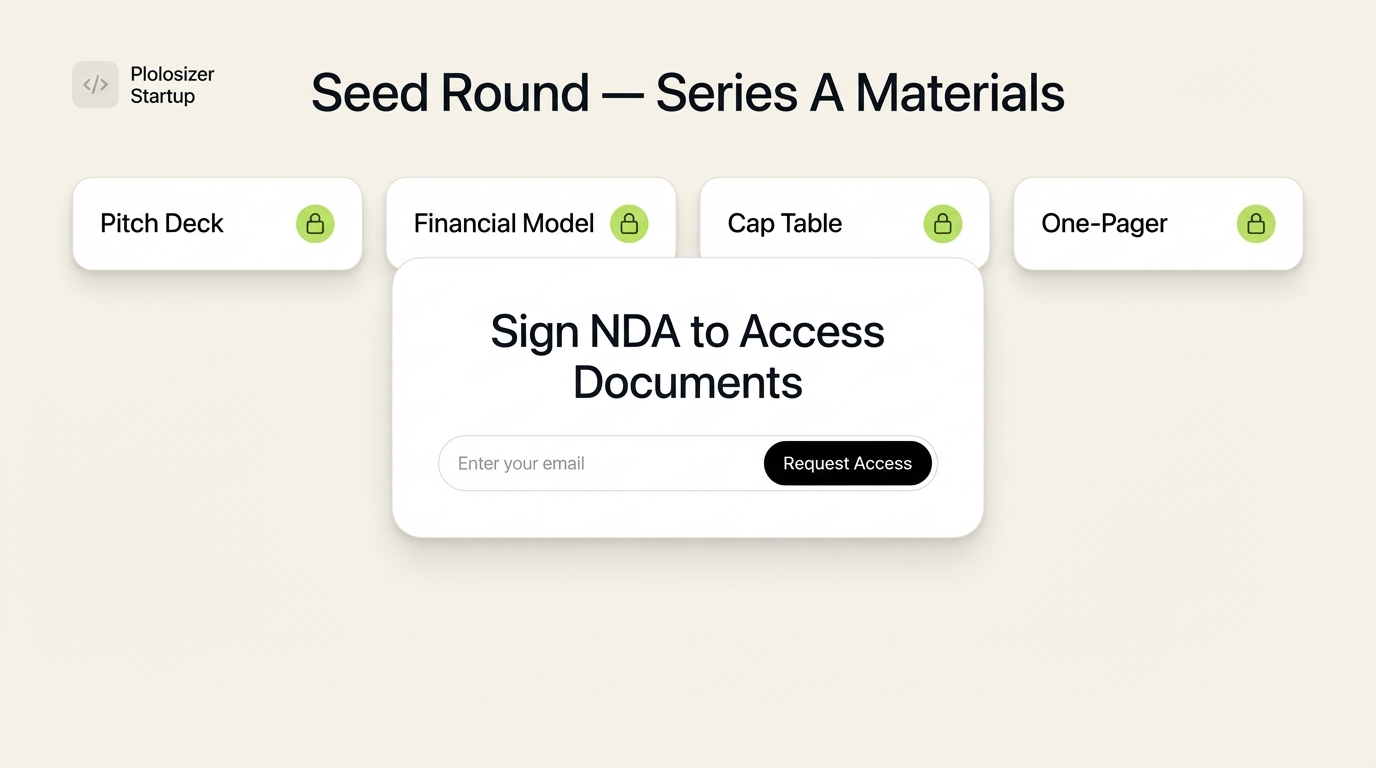
SendNow's branded microsite gives founders a professional, NDA-gated deal room that reflects their company identity — not a generic shared folder.
How is a Virtual Data Room Different from Notion or Google Drive for Startups?
Many early-stage founders use Notion pages, Google Drive folders, or Dropbox to share documents with investors. This works for casual sharing but creates real problems during formal due diligence.
According to Ellty's analysis of Notion as a data room, the fundamental limitations are:
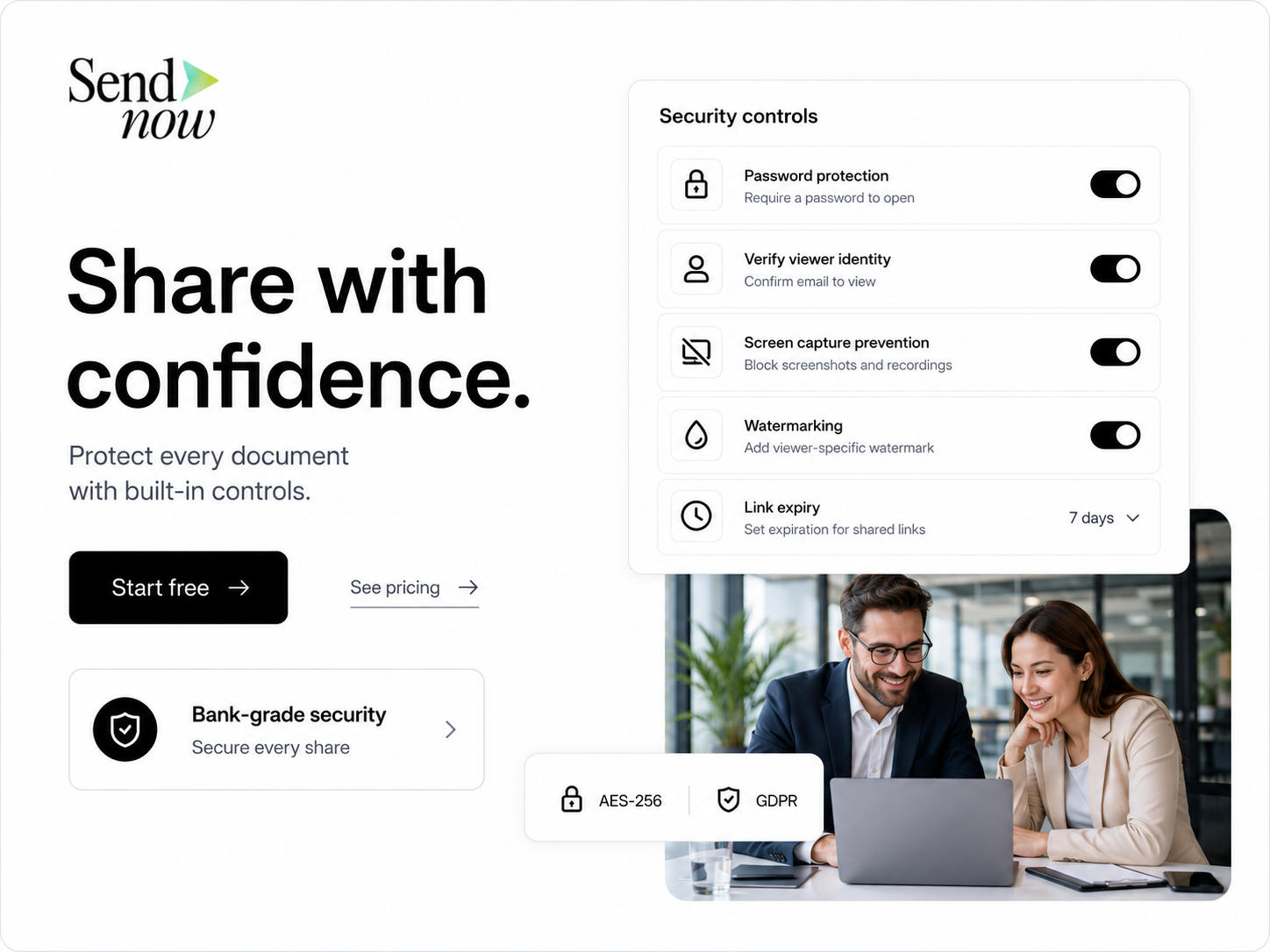
No NDA enforcement: Notion and Google Drive have no mechanism to gate access behind a signed NDA. When you share a link, the recipient can forward it to anyone — and you have no record of it.
No analytics: You have no visibility into whether an investor opened your pitch deck, which pages they spent time on, or whether they forwarded the link to their partnership. A purpose-built VDR gives you this intelligence in real time.
No watermarking: If a sensitive document leaks — a financial model, a cap table — you cannot trace how it happened or prove who saw it.
No audit trail: In a post-deal scenario or regulatory investigation, the absence of an access log is a liability.
Presentation gap: A Notion page with document links does not create the same impression as a branded, controlled deal room. Investors review dozens of companies simultaneously. A professional data room signals that you take governance seriously.
The comparison:
| Feature | VDR (e.g. SendNow) | Notion / Google Drive |
|---|---|---|
| NDA gating before access | Yes | No |
| Page-by-page document analytics | Yes | No |
| Real-time open notifications | Yes | No |
| Dynamic watermarking | Yes | No |
| Branded investor microsite | Yes | No |
| Audit trail for every access event | Yes | No |
| Access expiry and link revocation | Yes | No |
How to Organize a Startup Data Room for Investors
Organization is a signal. Investors form impressions from the structure of your data room before they read a single document.
According to Orangedox and Ellty, the best startup data rooms follow a standard folder structure:
Keep Reading
- What Is a Virtual Data Room? Complete Guide for Finance Professionals
- Series A Due Diligence: Document Checklist for Founders
- The complete due diligence checklist for seed and Series A startups raising a funding round. Know exactly what documents investors request, how to build your data room, and how to close faster.
- How to Share Your Pitch Deck with Investors Securely
- Free Virtual Data Room vs Paid: What Finance Teams Need to Know
About the Author: Rifana Hameem
Rifana is the founder of SendNow. She leads the team in building secure, compliant, and analytics-rich document sharing tools for finance and professional teams worldwide.
Connect on LinkedIn