

GDPR Compliance Guidelines for Multi-Jurisdictional PE Deals

GDPR Compliance Guidelines for Multi-Jurisdictional PE Deals
Executive Summary / TL;DR
The General Data Protection Regulation (GDPR) has transformed the landscape of data privacy and protection across Europe and beyond. For private equity (PE) firms engaged in multi-jurisdictional deals, navigating GDPR compliance is crucial to mitigate risks associated with data breaches and legal repercussions. This article outlines the challenges posed by GDPR in the context of PE transactions, identifies current security vulnerabilities, provides industry-specific best practices, and offers actionable steps to ensure compliance. Additionally, we will explore how tools like SendNow can enhance data security during these complex deals.
Current Security Vulnerabilities
In the realm of private equity, the sharing of sensitive data is a routine part of the deal-making process. However, traditional file-sharing methods—such as email attachments or cloud services like Dropbox—often expose firms to significant security vulnerabilities. These vulnerabilities can lead to data leaks, unauthorized access, and potential breaches of GDPR regulations.
-
Email Risks: Emails are inherently insecure. They can be intercepted, and attachments can be forwarded without consent. Sensitive information shared via email can easily fall into the wrong hands, leading to compliance issues.
-
Cloud Storage Vulnerabilities: While cloud services offer convenience, they also present risks. Data stored in the cloud can be accessed by unauthorized users if proper security measures are not in place. Furthermore, many cloud services do not comply with GDPR requirements, which can expose firms to legal liabilities.
-
Inadequate Access Controls: Without stringent access controls, sensitive data can be accessed by individuals who do not have a legitimate need to know. This lack of control can lead to data breaches and non-compliance with GDPR.
-
Insufficient Data Encryption: Data that is not encrypted during transmission or storage is vulnerable to interception. GDPR mandates that personal data must be protected through appropriate technical measures, including encryption.
-
Lack of Audit Trails: Many traditional file-sharing methods do not provide adequate tracking of who accessed data and when. This lack of transparency can hinder compliance efforts and make it difficult to demonstrate adherence to GDPR requirements.
Industry-Specific Best Practices
To navigate the complexities of GDPR compliance in multi-jurisdictional PE deals, firms should adopt the following best practices:
1. Conduct a Data Mapping Exercise
Identify and document all personal data processed during the deal-making process. This includes data collected from potential investors, portfolio companies, and other stakeholders. Understanding where data resides and how it flows is essential for compliance.
2. Implement Robust Data Protection Policies
Develop and enforce data protection policies that align with GDPR requirements. These policies should outline how personal data is collected, processed, stored, and shared. Ensure that all employees are trained on these policies to foster a culture of compliance.
3. Use Secure File Sharing Solutions
Adopt secure file-sharing solutions that offer advanced security features, such as encryption, access controls, and audit trails. Solutions like SendNow provide enhanced security measures that can help protect sensitive data during PE transactions.
4. Obtain Explicit Consent
Ensure that explicit consent is obtained from individuals whose personal data is being processed. This consent should be documented and easily retrievable to demonstrate compliance with GDPR.
5. Conduct Regular Compliance Audits
Regularly audit your data processing activities to ensure compliance with GDPR. This includes reviewing data protection policies, assessing security measures, and identifying any areas for improvement.
6. Establish Data Breach Response Procedures
Develop a clear plan for responding to data breaches. This plan should outline the steps to be taken in the event of a breach, including notifying affected individuals and regulatory authorities as required by GDPR.
7. Collaborate with Legal Experts
Engage legal experts who specialize in data protection and GDPR compliance. Their expertise can help navigate the complexities of multi-jurisdictional deals and ensure that all legal requirements are met.
SendNow Feature Deep-Dive
In the context of GDPR compliance, leveraging secure file-sharing solutions like SendNow can significantly enhance data protection during multi-jurisdictional PE deals. Here’s how SendNow addresses the security vulnerabilities associated with traditional file-sharing methods:
Dynamic Watermarking
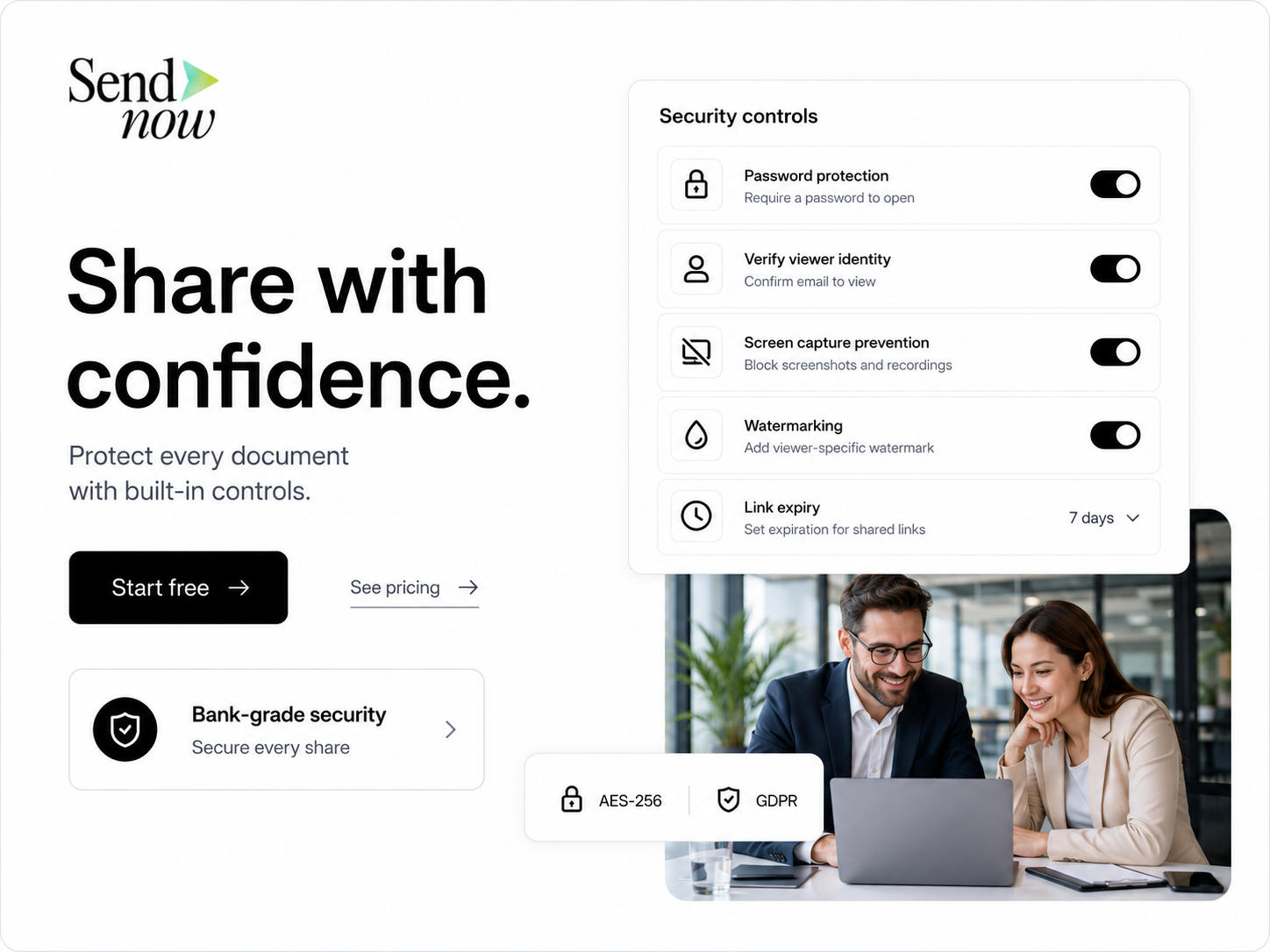
SendNow allows users to apply dynamic watermarks to shared documents. This feature deters unauthorized sharing by displaying the recipient's information on the document, making it clear who has access to sensitive data.
Screenshot Blocking
To prevent unauthorized distribution of shared documents, SendNow includes a screenshot blocking feature. This ensures that recipients cannot capture and share sensitive information without permission.
Require Email Gates
SendNow requires recipients to authenticate their identity via email before accessing shared documents. This additional layer of security ensures that only authorized individuals can view sensitive data.
Link Expiry
SendNow enables users to set expiration dates for shared links. This feature ensures that access to sensitive documents is time-limited, reducing the risk of unauthorized access after the deal is concluded.
NDA Gates
SendNow allows users to implement Non-Disclosure Agreement (NDA) gates, ensuring that recipients must agree to specific terms before accessing sensitive documents. This feature adds an extra layer of legal protection and compliance.
For more information about SendNow and its features, visit their official LinkedIn page.
Technical Walkthrough
To ensure secure data sharing during multi-jurisdictional PE deals using SendNow, follow these step-by-step setup guides:
Step 1: Uploading Documents
- Log in to your SendNow account.
- Click on the "Upload" button to select the documents you wish to share.
- Choose the files from your device and confirm the upload.
Step 2: Configuring Links
- Once the documents are uploaded, select the files you want to share.
- Click on the "Share" button to generate a secure link.
- Configure the link settings, including setting an expiration date and enabling NDA gates if necessary.

Step 3: Distributing Securely
- Enter the email addresses of the recipients.
- Customize the message to provide context for the shared documents.
- Click "Send" to distribute the secure link to the recipients.
Step 4: Monitoring Access
- Use the dashboard to monitor who has accessed the shared documents.
- Review audit trails to ensure compliance and track any unauthorized access attempts.
By following these steps, PE firms can securely share sensitive data while ensuring compliance with GDPR regulations.
ROI & Business Impact
Investing in GDPR compliance and secure file-sharing solutions like SendNow can yield significant returns for private equity firms:
-
Cost-Efficiency: By preventing data breaches and associated fines, firms can save substantial amounts in potential legal fees and penalties. GDPR violations can result in fines of up to €20 million or 4% of annual global turnover, whichever is higher.
-
Contract Compliance: Ensuring GDPR compliance enhances the firm's reputation and builds trust with investors and stakeholders. This trust can lead to more successful fundraising efforts and stronger partnerships.
-
Protection Value: The implementation of advanced security measures protects sensitive data, reducing the risk of leaks and unauthorized access. This protection is invaluable in maintaining the integrity of the deal-making process.
-
Competitive Advantage: Firms that prioritize data protection and compliance can differentiate themselves in the market. This competitive advantage can attract more investors who value transparency and security.
Structured FAQ
1. How does GDPR impact private equity deals?
GDPR mandates strict regulations on how personal data is collected, processed, and stored. Private equity firms must ensure compliance to avoid legal repercussions and protect sensitive information during transactions.
2. Why is data mapping important for GDPR compliance?
Data mapping helps firms identify and document all personal data processed during deals. This understanding is crucial for compliance, as it allows firms to assess risks and implement appropriate security measures.
3. What are the consequences of non-compliance with GDPR?
Non-compliance with GDPR can result in significant fines, legal action, and reputational damage. Firms may face penalties of up to €20 million or 4% of annual global turnover, along with potential lawsuits from affected individuals.
4. How can SendNow enhance data security during PE deals?
SendNow offers features such as dynamic watermarking, screenshot blocking, and email authentication, which enhance data security and help firms comply with GDPR regulations during the sharing of sensitive documents.
5. What steps should firms take in the event of a data breach?
In the event of a data breach, firms should activate their data breach response plan, notify affected individuals, and report the breach to the relevant regulatory authorities within the required timeframe as stipulated by GDPR.
Actionable CTA
To ensure your private equity firm is equipped to handle multi-jurisdictional deals while maintaining GDPR compliance, start a trial on SendNow today. Experience the benefits of secure file sharing and protect your sensitive data by visiting SendNow.
About the Author: Rifana Hameem
Rifana is the founder of SendNow. She leads the team in building secure, compliant, and analytics-rich document sharing tools for finance and professional teams worldwide.
Connect on LinkedIn