
Protecting Operating and Financial Models During Corporate Mergers

Protecting Operating and Financial Models During Corporate Mergers
Executive Summary / TL;DR
Corporate mergers can be transformative events that promise growth, increased market share, and enhanced operational efficiencies. However, they also bring significant challenges, particularly in safeguarding sensitive operating and financial models. The integration of two distinct corporate cultures, systems, and processes can expose vulnerabilities that may lead to data leaks, miscommunication, and financial discrepancies. This article delves into the common security vulnerabilities associated with mergers, outlines best practices tailored for specific industries, and introduces innovative solutions like SendNow to protect critical documents. By implementing these strategies, organizations can ensure the integrity of their operating and financial models throughout the merger process.
Current Security Vulnerabilities
In the context of corporate mergers, the sharing of sensitive operating and financial models often occurs through traditional file-sharing methods such as emails and cloud storage services like Dropbox. While these tools facilitate collaboration, they also expose organizations to several security vulnerabilities:
-
Email Leaks: Emails are notoriously insecure. They can be intercepted, forwarded to unintended recipients, or mistakenly sent to the wrong person. Sensitive financial models shared via email can easily fall into the wrong hands.
-
Cloud Storage Risks: While cloud services provide convenience, they may not offer adequate security controls. Unauthorized access, data breaches, and inadequate encryption can compromise sensitive information stored in the cloud.
-
Insider Threats: Employees with access to sensitive data may intentionally or unintentionally leak information. This risk is heightened during mergers when employees from both organizations may have differing levels of access and understanding of data sensitivity.
-
Lack of Version Control: Merging organizations often work with multiple versions of financial models, leading to confusion and potential errors. Without proper version control, outdated or incorrect models may be used in decision-making processes.
-
Regulatory Compliance Issues: Mergers often involve the handling of sensitive data subject to regulatory frameworks such as GDPR or HIPAA. Failure to comply with these regulations can lead to severe penalties and damage to reputation.
Industry-Specific Best Practices
To mitigate the risks associated with sharing operating and financial models during mergers, organizations should adopt industry-specific best practices. Here are actionable step-by-step methods tailored for various sectors:
1. Financial Services
- Implement Role-Based Access Control (RBAC): Limit access to sensitive financial models based on employee roles. Only authorized personnel should have access to critical data.
- Conduct Regular Security Audits: Regularly assess security measures and protocols to identify vulnerabilities and ensure compliance with financial regulations.
- Utilize Encrypted Communication Channels: Use secure communication tools that offer end-to-end encryption for sharing sensitive financial information.
2. Healthcare
- Adhere to HIPAA Regulations: Ensure that all shared documents comply with HIPAA regulations to protect patient data. This includes implementing secure sharing methods and maintaining audit trails.
- Use Secure File Sharing Platforms: Opt for platforms specifically designed for healthcare that offer features like secure access and data encryption.
- Train Employees on Data Privacy: Conduct regular training sessions to educate employees about the importance of data privacy and the specific regulations governing healthcare data.
3. Technology
- Adopt Agile Project Management Tools: Use project management tools that facilitate secure collaboration and version control for financial models.
- Implement Continuous Monitoring: Utilize monitoring tools that can detect unauthorized access or anomalies in data usage.
- Establish Clear Data Governance Policies: Define data governance policies that outline how sensitive information should be handled during the merger process.
4. Manufacturing
- Secure Supply Chain Data: Protect sensitive supply chain and financial models by implementing secure access protocols for external partners and suppliers.
- Utilize Blockchain Technology: Consider using blockchain for secure sharing of operational data, ensuring transparency and traceability.
- Conduct Risk Assessments: Regularly assess risks associated with data sharing and implement mitigation strategies accordingly.
SendNow Feature Deep-Dive
To address the vulnerabilities inherent in traditional file-sharing methods, SendNow offers a suite of features designed to protect sensitive operating and financial models during corporate mergers. Here’s how these specific controls can help mitigate risks:
1. Dynamic Watermarking
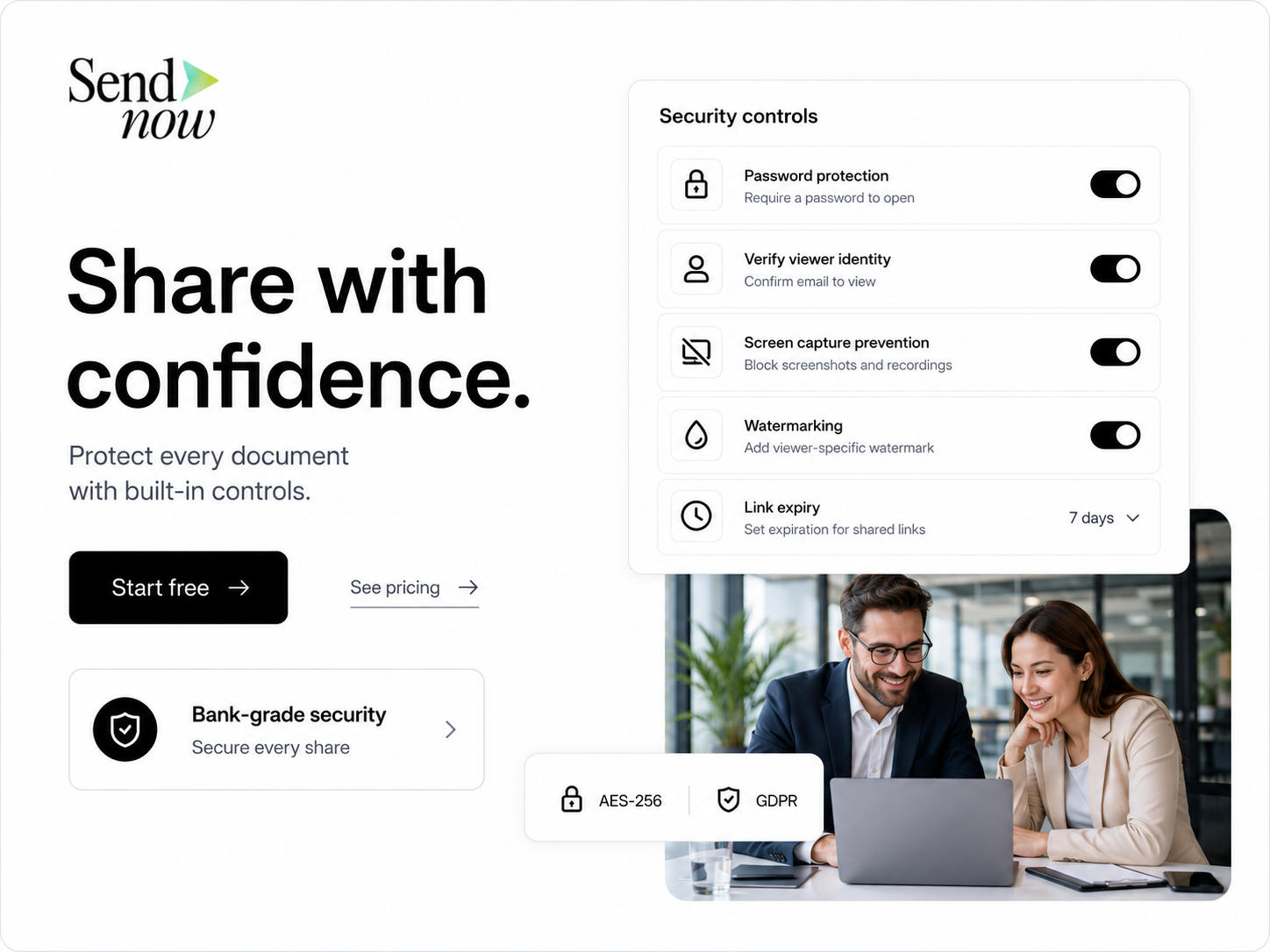
SendNow allows users to apply dynamic watermarks to shared documents. This feature deters unauthorized sharing by embedding the recipient's information directly onto the document. If a document is leaked, it can be traced back to the individual who received it, thereby discouraging misuse.
2. Screenshot Blocking
To prevent unauthorized screenshots of sensitive documents, SendNow includes a screenshot blocking feature. This ensures that recipients cannot capture or share information without permission, further safeguarding critical data.
3. Require Email Gates
SendNow requires recipients to verify their identity through email gates before accessing shared documents. This additional layer of security ensures that only authorized individuals can view sensitive financial models, reducing the risk of data leaks.
4. Link Expiry
With SendNow, users can set expiration dates for shared links. This means that after a specified period, access to the document is automatically revoked, minimizing the window of opportunity for unauthorized access.
5. NDA Gates
SendNow also allows users to implement Non-Disclosure Agreement (NDA) gates. Recipients must agree to the terms of the NDA before accessing sensitive documents, providing an additional legal layer of protection against data misuse.
For more information on how SendNow can enhance your document security during mergers, visit their official LinkedIn page.
Technical Walkthrough
Implementing SendNow for secure sharing of operating and financial models is straightforward. Here’s a step-by-step guide:
Step 1: Uploading Documents
- Log in to SendNow: Access your SendNow account.
- Select 'Upload': Click on the 'Upload' button to add your operating or financial model.
- Choose Files: Select the documents you wish to share from your device.

Step 2: Configuring Links
- Set Permissions: After uploading, configure the permissions for the document. Choose who can view, edit, or download the file.
- Apply Security Features: Enable dynamic watermarking, screenshot blocking, and NDA gates as needed.
- Set Expiry Date: Specify an expiry date for the link to ensure timely access control.
Step 3: Distributing Safely
- Generate Link: Once configured, generate a secure link for the document.
- Share with Recipients: Send the link directly to authorized recipients via secure email or messaging platforms.
- Monitor Access: Use SendNow’s monitoring tools to track who accesses the document and when.
ROI & Business Impact
Investing in secure document-sharing solutions like SendNow can yield significant returns for organizations involved in mergers. Here are some key benefits:
- Cost-Efficiency: By reducing the risk of data breaches and associated penalties, organizations can save on potential legal fees and regulatory fines.
- Contract Compliance: Ensuring that sensitive data is shared securely helps organizations comply with contractual obligations, reducing the risk of disputes.
- Protection Value: The value of protecting sensitive operating and financial models during mergers cannot be overstated. A single data breach can lead to substantial financial losses and damage to reputation.
Structured FAQ
1. How does SendNow protect sensitive documents during corporate mergers?
SendNow employs features like dynamic watermarking, screenshot blocking, and NDA gates to ensure that sensitive documents are shared securely and only with authorized individuals.
2. Why is it important to secure operating and financial models during mergers?
Securing these models is crucial to prevent data leaks that can lead to financial discrepancies, regulatory penalties, and damage to reputation.
3. What are the risks of using traditional file-sharing methods?
Traditional methods like email and cloud storage can expose organizations to data breaches, unauthorized access, and compliance issues.
4. How can organizations ensure compliance with regulations during mergers?
By implementing secure document-sharing solutions and adhering to industry-specific regulations, organizations can protect sensitive data and ensure compliance.
5. What steps should organizations take to mitigate insider threats?
Organizations should implement role-based access control, conduct regular security audits, and provide training on data privacy to minimize the risk of insider threats.
Actionable CTA
To safeguard your operating and financial models during corporate mergers, start a trial on SendNow today. Experience the benefits of secure document sharing and protect your sensitive information. Visit SendNow to get started.
About the Author: Rifana Hameem
Rifana is the founder of SendNow. She leads the team in building secure, compliant, and analytics-rich document sharing tools for finance and professional teams worldwide.
Connect on LinkedIn