
Restricting Financial Report Access to Verified Domain Whitelists

Restricting Financial Report Access to Verified Domain Whitelists
Executive Summary / TL;DR
In today's digital landscape, the sharing of sensitive financial reports poses significant security challenges. Organizations often rely on traditional methods of file sharing, such as emails and cloud storage services, which can expose critical data to unauthorized access and leaks. This article explores the vulnerabilities associated with typical file-sharing workflows, outlines industry-specific best practices for securing financial reports, and delves into the advantages of implementing domain whitelisting as a robust security measure. By restricting access to verified domains, organizations can significantly enhance their data protection strategies while ensuring compliance with regulatory requirements.
Current Security Vulnerabilities
The modern workplace has transformed the way organizations share information, particularly sensitive financial reports. However, this shift has also introduced a myriad of security vulnerabilities. Common file-sharing methods, such as email attachments and cloud storage platforms like Dropbox, often lack the necessary safeguards to protect confidential data.
-
Email Attachments: When financial reports are sent via email, they can easily be intercepted by malicious actors. Phishing attacks, where attackers impersonate legitimate users to gain access to sensitive information, are prevalent. Once an email is compromised, the attached financial documents can be accessed and exploited.
-
Cloud Storage Services: While platforms like Dropbox offer convenience, they also present risks. Unauthorized users can gain access to shared folders if proper permissions are not set. Additionally, if a user's account is compromised, all shared files become vulnerable.
-
Lack of Control: Once a financial report is shared, organizations often lose control over how that document is used. Recipients can easily forward the information to unauthorized parties or store it in insecure locations.
-
Compliance Risks: Financial organizations are subject to stringent regulatory requirements, such as the General Data Protection Regulation (GDPR) and the Sarbanes-Oxley Act. Failing to secure sensitive financial data can lead to hefty fines and reputational damage.
Given these vulnerabilities, organizations must adopt more secure methods for sharing financial reports to mitigate the risk of data breaches and ensure compliance with regulatory standards.
Industry-Specific Best Practices
To effectively secure financial report sharing, organizations should implement the following best practices:
1. Implement Domain Whitelisting
Domain whitelisting allows organizations to specify which domains can access sensitive financial reports. By restricting access to verified domains, organizations can prevent unauthorized users from accessing confidential information. This method is particularly useful for organizations that frequently collaborate with external partners or clients.
2. Use Secure File Sharing Solutions
Invest in secure file-sharing solutions that offer advanced security features, such as encryption, access controls, and audit trails. These solutions provide greater control over who can access financial reports and how they can be used.
3. Educate Employees on Security Protocols
Conduct regular training sessions to educate employees about the importance of data security and the risks associated with sharing financial reports. Employees should be aware of phishing attacks, the importance of using secure passwords, and the need to verify recipient domains before sharing sensitive information.
4. Implement Multi-Factor Authentication (MFA)
MFA adds an additional layer of security by requiring users to verify their identity through multiple methods before accessing sensitive financial reports. This can include a combination of passwords, security questions, and biometric verification.
5. Regularly Review and Update Access Permissions

Conduct periodic reviews of who has access to financial reports and update permissions as necessary. This ensures that only authorized personnel can access sensitive information, reducing the risk of data breaches.
SendNow Feature Deep-Dive
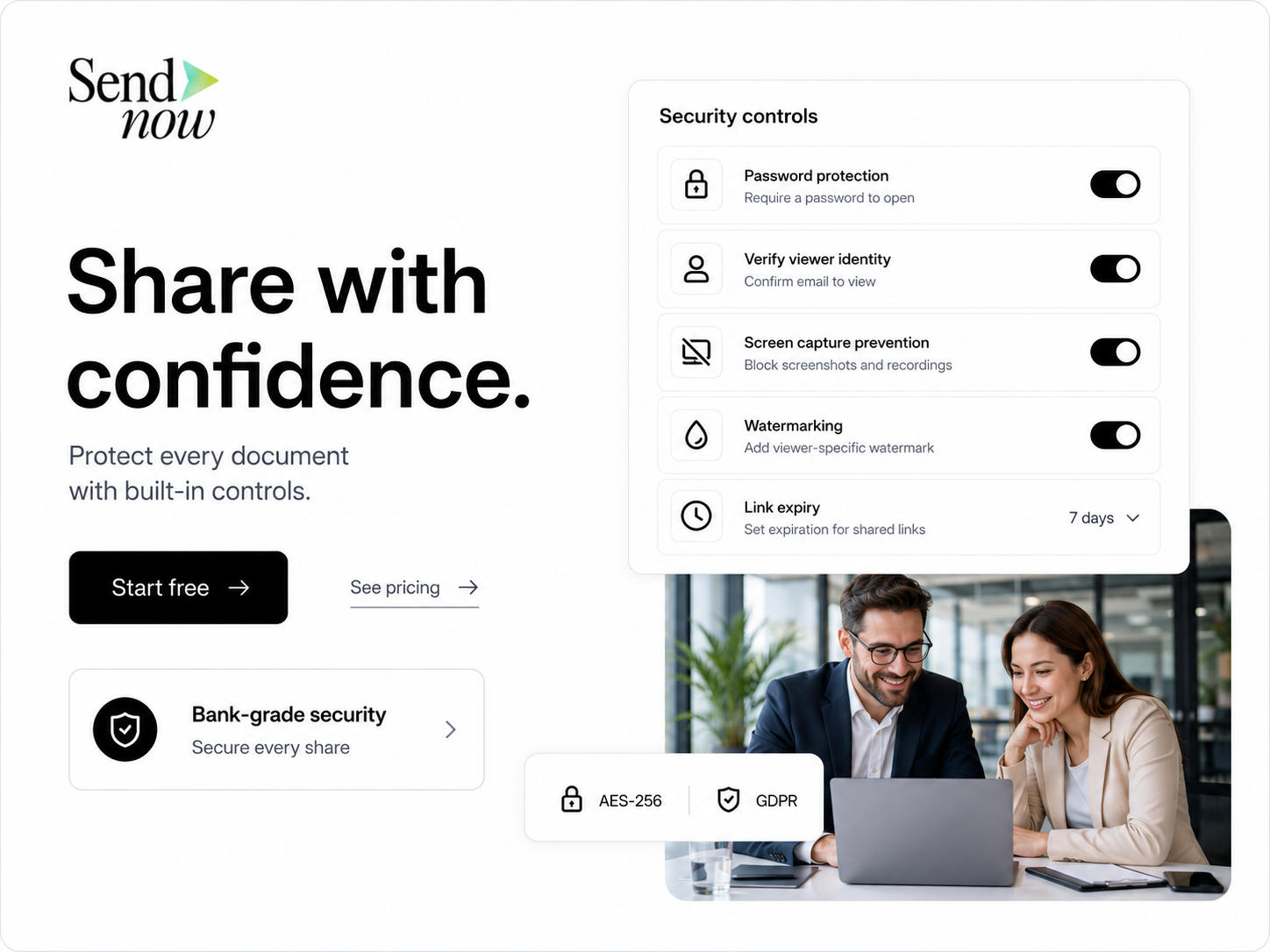
One solution that addresses the challenges of secure financial report sharing is SendNow. This platform offers a range of features designed to protect sensitive data, including:
1. Dynamic Watermarking
Dynamic watermarking adds a layer of security by embedding user-specific information (such as email addresses) onto financial reports. This discourages unauthorized sharing, as recipients are aware that their information is linked to the document.
2. Screenshot Blocking
SendNow includes screenshot blocking features that prevent users from taking screenshots of financial reports. This is particularly important for protecting sensitive data from being captured and shared without authorization.
3. Require Email Gates
By requiring users to authenticate their email addresses before accessing financial reports, SendNow ensures that only verified users can view sensitive information. This adds an additional layer of security to the sharing process.
4. Link Expiry
SendNow allows organizations to set expiration dates for shared links. Once the link expires, access to the financial report is automatically revoked, reducing the risk of unauthorized access over time.
5. NDA Gates
For organizations that require additional legal protection, SendNow offers NDA gates that require users to agree to a non-disclosure agreement before accessing financial reports. This adds a legal layer of protection against unauthorized sharing.
For more information about SendNow and its features, visit their official LinkedIn page: SendNow LinkedIn.
Technical Walkthrough
To effectively use SendNow for secure financial report sharing, follow these step-by-step instructions:
Step 1: Uploading Financial Reports
- Log in to SendNow: Navigate to the SendNow dashboard and log in using your credentials.
- Select 'Upload': Click on the 'Upload' button to begin the process of sharing a financial report.
- Choose Your File: Select the financial report you wish to share from your device and confirm the upload.
Step 2: Configuring Link Settings
- Set Access Controls: After uploading, configure access controls by selecting the 'Settings' option. Here, you can enable features such as dynamic watermarking, screenshot blocking, and email gates.
- Set Link Expiry: Choose an expiration date for the link to ensure that access is automatically revoked after a specified period.
- Add NDA Gates: If necessary, enable NDA gates to require users to agree to a non-disclosure agreement before accessing the report.
Step 3: Distributing the Report
- Generate the Shareable Link: Once all settings are configured, generate a shareable link for the financial report.
- Send the Link: Distribute the link via secure channels, ensuring that recipients are from verified domains.
- Monitor Access: Use SendNow’s tracking features to monitor who accesses the report and when.
By following these steps, organizations can securely share financial reports while minimizing the risk of unauthorized access.
ROI & Business Impact
Investing in secure financial report sharing solutions like SendNow can yield significant returns on investment (ROI) and positively impact business operations in several ways:
1. Cost-Efficiency
By reducing the risk of data breaches, organizations can avoid costly fines and legal fees associated with non-compliance. Additionally, secure sharing solutions can streamline workflows, saving time and resources.
2. Contract Compliance
Many organizations are required to comply with industry regulations regarding data protection. Implementing domain whitelisting and secure sharing solutions can help ensure compliance with regulations such as GDPR and the Sarbanes-Oxley Act, reducing the risk of penalties.
3. Protection Value
The value of protecting sensitive financial data cannot be overstated. By investing in secure sharing solutions, organizations can safeguard their reputation, maintain client trust, and protect their intellectual property.
Structured FAQ
1. How does domain whitelisting work?
Domain whitelisting involves specifying which email domains are allowed to access sensitive financial reports. Only users from these verified domains can view the documents, reducing the risk of unauthorized access.
2. Why is it important to secure financial reports?
Securing financial reports is crucial to prevent data breaches, protect sensitive information, and ensure compliance with regulatory requirements. Unauthorized access to financial data can lead to significant financial and reputational damage.
3. What features should I look for in a secure file-sharing solution?
When choosing a secure file-sharing solution, look for features such as encryption, access controls, dynamic watermarking, screenshot blocking, and the ability to set link expirations. These features enhance data protection and control over shared documents.
4. How can I educate my employees about data security?
Conduct regular training sessions that cover best practices for data security, including recognizing phishing attempts, using strong passwords, and verifying recipient domains before sharing sensitive information.
5. What are the consequences of failing to secure financial reports?
Failing to secure financial reports can lead to data breaches, legal penalties, loss of client trust, and reputational damage. Organizations may also face fines for non-compliance with regulations such as GDPR.
Actionable CTA
To enhance your organization's financial report sharing security, start a trial with SendNow today. Experience the benefits of domain whitelisting and advanced security features that protect your sensitive data. Visit SendNow Trial to get started.
About the Author: Rifana Hameem
Rifana is the founder of SendNow. She leads the team in building secure, compliant, and analytics-rich document sharing tools for finance and professional teams worldwide.
Connect on LinkedIn