How to Share Client Documents Across the EU in Full GDPR Compliance

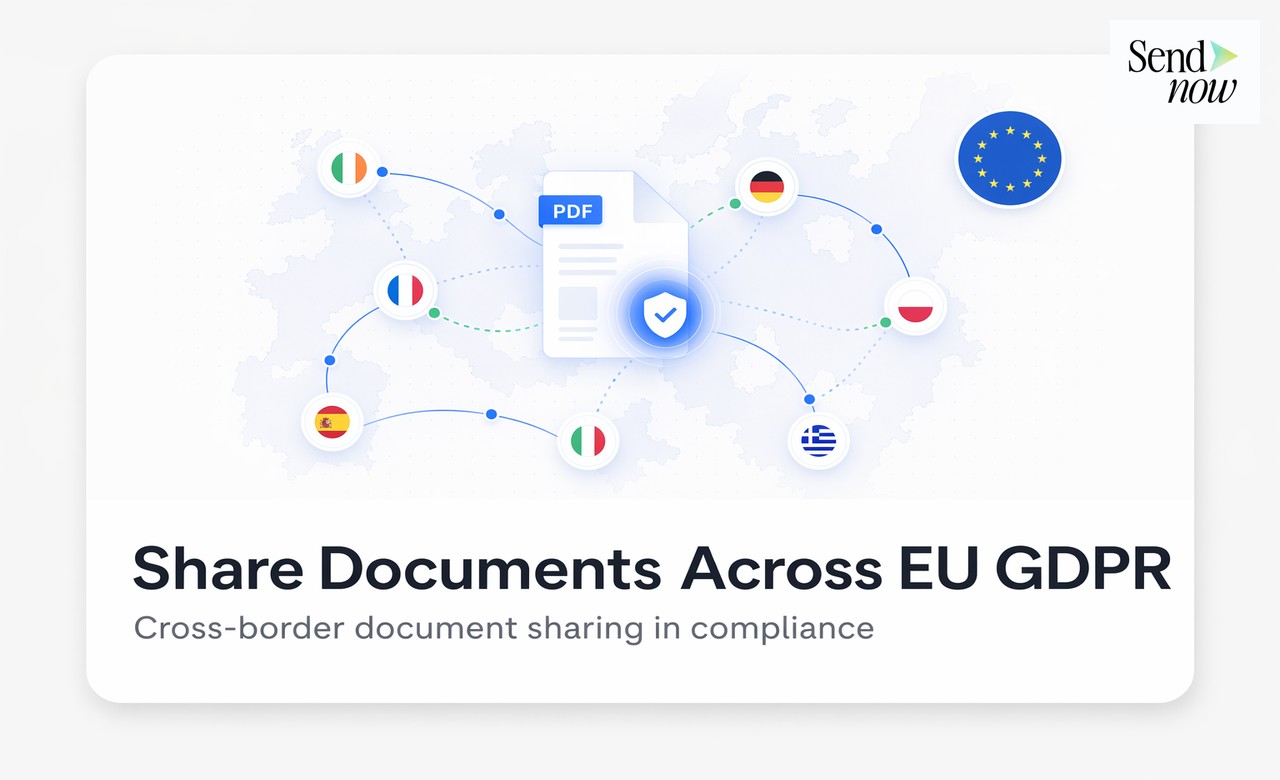
Sharing client documents across EU member states is straightforward from a GDPR perspective, provided your data never leaves the European Economic Area and your security controls are consistent. The GDPR creates a single framework across all 27 EU member states, meaning a document shared from Paris to Warsaw or Amsterdam to Vienna requires no special transfer mechanism as long as you process and store the data within the EEA. This guide explains what that requires in practice.
Why Intra-EU Sharing Is Simpler Than You Think
The GDPR's Chapter V restrictions on international transfers apply to transfers to third countries, that is, countries outside the EEA. Within the EEA, the GDPR applies uniformly, so you do not need Standard Contractual Clauses, adequacy decisions, or Binding Corporate Rules just to share a document with a client in another EU member state.
This is genuinely good news for finance teams operating across European markets. The practical requirements come down to three things: the security of the transfer itself, the security of where the document is stored, and the ability to account for who accessed it.
The Three Pillars of Compliant Cross-EU Document Sharing
Pillar 1: Secure transfer. Every document link should use HTTPS with TLS 1.2 or higher. Never send documents as unencrypted email attachments, and avoid platforms that do not encrypt file transfers by default.
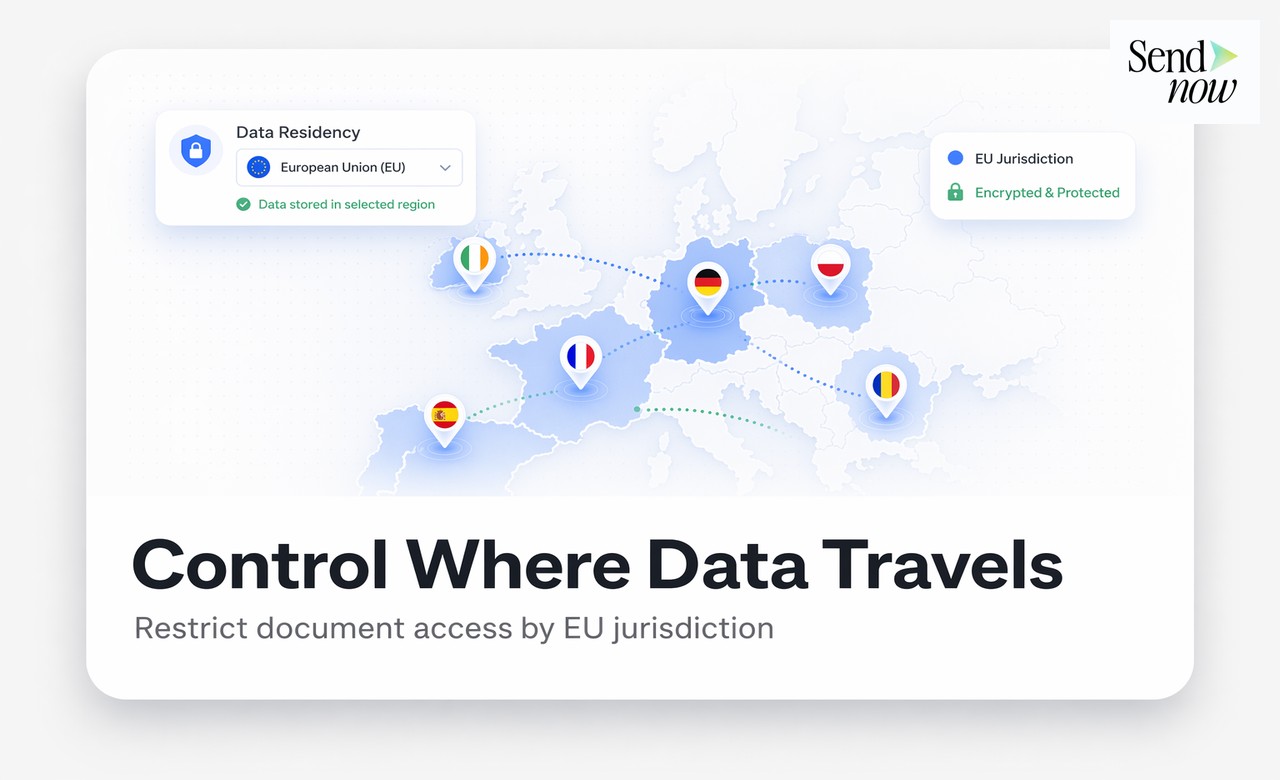
Pillar 2: EU data residency. Your document sharing platform should store files on servers physically located within the EEA. This matters because if a platform routes your data through US or Asian data centres, even temporarily, it introduces third-country transfer risk under Articles 44 to 49.
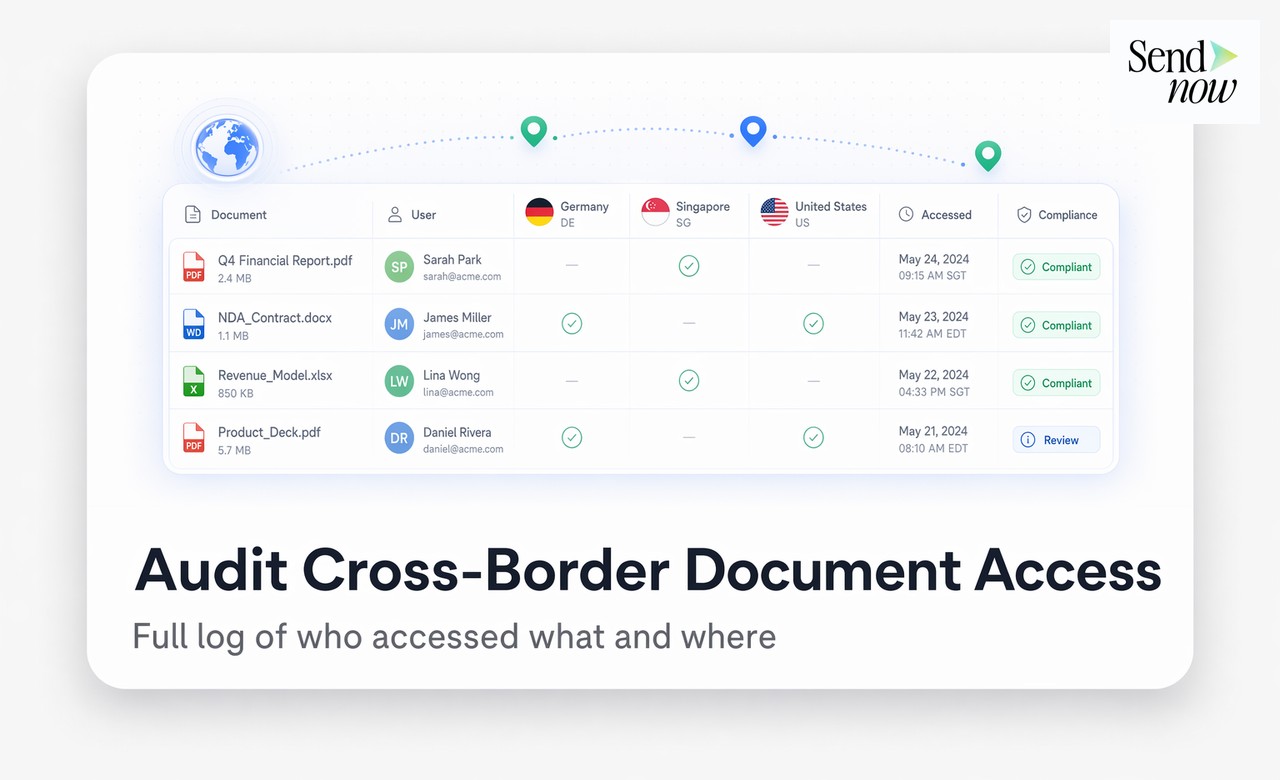
Pillar 3: Access accountability. You should be able to show, for any document, who accessed it, when, from which country, and for how long. This is particularly important when sharing across borders because it allows you to demonstrate that access was limited to the intended recipients in the intended jurisdictions.
Country-Specific Considerations Within the EU
While the GDPR provides a uniform baseline, some member states have supplementary national legislation that affects specific data categories.
| Country | Supplementary Considerations |
|---|---|
| Germany | Federal Data Protection Act (BDSG) adds requirements for employee data and certain financial records |
| France | CNIL guidance on data localisation for regulated financial entities |
| Netherlands | AFM regulatory expectations for client communication records |
| Austria | Additional consent requirements for direct marketing to individuals |
| Italy | Garante guidance on security measures for financial service providers |
For most general client document sharing by finance teams, the GDPR baseline covers your obligations in all member states. Engage local counsel for regulated activities in specific jurisdictions.
Controlling Who Can Access Documents Across Borders
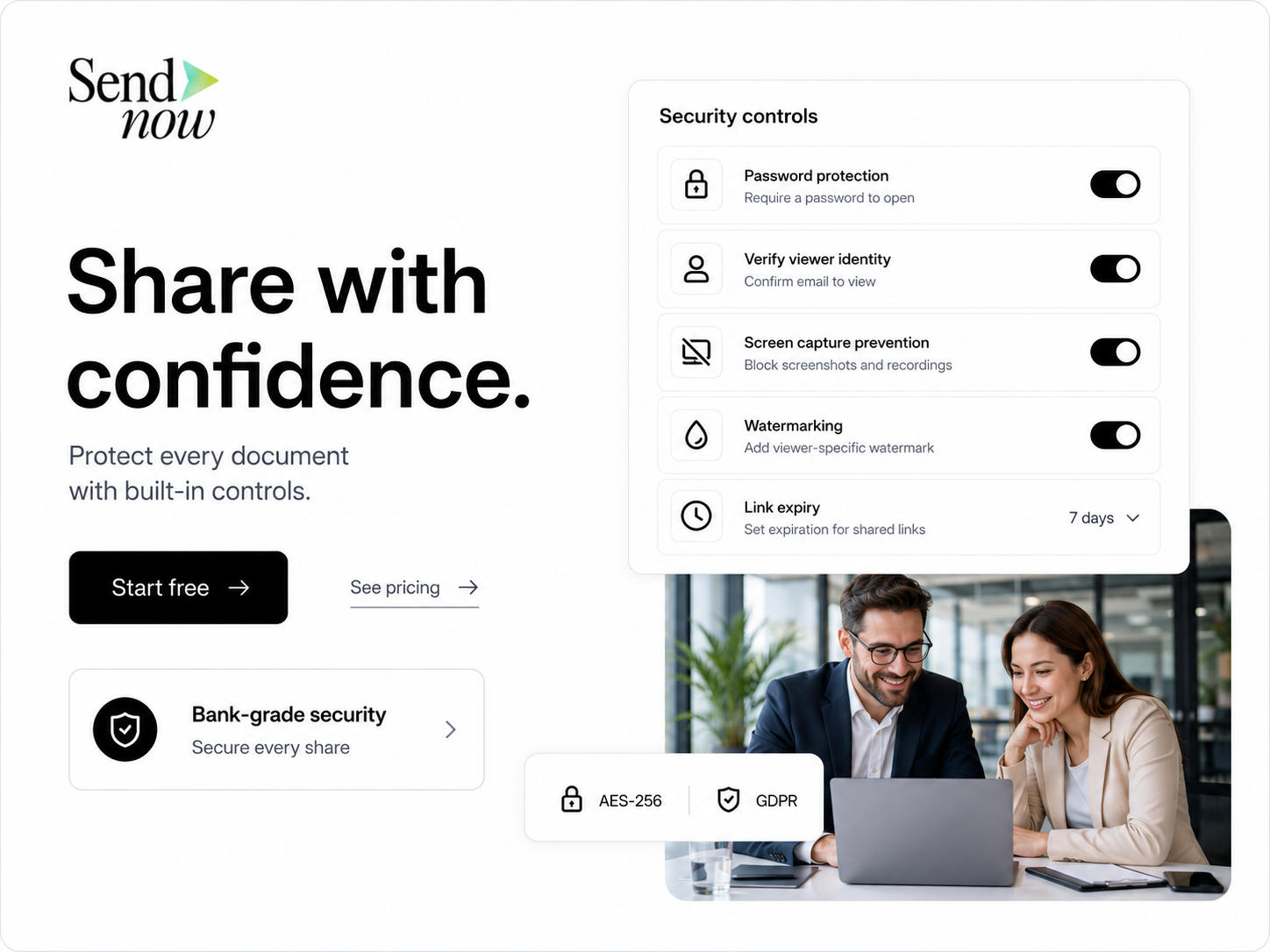
When sharing documents with clients across the EU, apply the same access controls you would use domestically.
- Require recipients to verify their email address before accessing a document
- Set link expiry dates appropriate to the document's sensitivity
- Disable download where the document is for review only
- Enable screenshot blocking for highly confidential materials
- Revoke access immediately when a matter closes or a relationship ends
These controls are straightforward to configure in a purpose-built document sharing platform. They mean that a client in Munich receives the same protected experience as one in Dublin or Madrid.
What Happens When a Recipient Is Outside the EEA
If you need to share documents with a client, investor, or counterparty based outside the EEA, such as in the UK post-Brexit, the United States, or Switzerland, you must have a valid transfer mechanism in place before sharing.
- United Kingdom. The UK currently benefits from a GDPR adequacy decision, meaning transfers to UK-based recipients are treated similarly to intra-EEA transfers. This decision is subject to periodic review.
- Switzerland. Switzerland has its own equivalent framework and is generally treated as adequate for transfers from EU member states.
- United States and other third countries. You will need Standard Contractual Clauses or another approved mechanism before sharing personal data.
Your document sharing policy should require team members to confirm the recipient's jurisdiction before sharing any document containing personal data.
For the full compliance framework, visit our GDPR Document Sharing Complete Guide. See also GDPR-Compliant File Sharing Tools Compared and Is Sending an Email Attachment GDPR Compliant?.
Share documents with any EU client, confidently. SendNow processes and stores all data within EU infrastructure, provides geographic access tracking, and gives you full audit records for every document link. Start at sendnow.live.
Frequently Asked Questions
Q: Do I need a Data Processing Agreement with every client I share documents with? A: A DPA is required between a controller and a processor, not between two controllers. When you share a document with a client who is themselves a controller of their own data, a DPA with them is not required under the GDPR, though your engagement terms should address data handling. A DPA is required with the platform you use to facilitate the sharing.
Q: Does the GDPR apply differently in different EU countries? A: The core GDPR is uniform across all 27 member states. Member states have limited areas where they can legislate supplementary rules, principally for employee data, health data, and specific regulated sectors. For standard client document sharing in financial services, the GDPR baseline applies consistently.
Q: Is it GDPR-compliant to use a US-based file sharing service for EU client documents? A: Only if the provider has adequate safeguards in place for the transfer, such as Standard Contractual Clauses, and stores your data in the EEA. Many US providers offer EU data residency options for paid plans. You must verify this and obtain a signed DPA before using the service.
Q: What is the EEA, and does it differ from the EU for GDPR purposes? A: The EEA includes the 27 EU member states plus Iceland, Liechtenstein, and Norway. For GDPR data transfer purposes, the EEA is the relevant boundary. Transfers within the EEA require no special transfer mechanism.
Q: Can I share documents with a client in the UK after Brexit? A: Yes, currently. The UK has a GDPR adequacy decision from the European Commission, which means transfers to UK-based recipients do not require Standard Contractual Clauses. However, this decision has a finite lifespan and is subject to review, so monitor its status.
Q: What geographic data should my audit logs capture for cross-EU document sharing? A: At minimum, your audit logs should capture the IP address or geolocation of each access event, the timestamp, and the device type. This allows you to confirm that access was consistent with the intended recipient's location and flag any unexpected access from unexpected jurisdictions.
Q: What should I do if a document is accessed from an unexpected country? A: Treat it as a potential incident. Assess whether the access was authorised (for example, a client travelling abroad) or whether the link was forwarded to an unintended recipient. If personal data may have been exposed to an unauthorised party, assess whether Article 33 notification obligations apply.
Q: Do I need to tell clients where their documents are stored? A: Your privacy notice should disclose the countries in which you process personal data. If you store documents on EU infrastructure, stating "processed and stored within the European Union" is both accurate and reassuring for clients with GDPR concerns of their own.
About the Author: Rifana Hameem
Rifana is the founder of SendNow. She leads the team in building secure, compliant, and analytics-rich document sharing tools for finance and professional teams worldwide.
Connect on LinkedIn