

Disabling File Downloads for Internal Performance Reports
Published on June 9, 2026
Disabling File Downloads for Internal Performance Reports
Executive Summary / TL;DR
In today's fast-paced business environment, the sharing of internal performance reports is crucial for informed decision-making. However, the traditional methods of sharing these documents often expose organizations to significant security vulnerabilities. This article explores the challenges associated with file-sharing workflows, particularly focusing on the risks of file downloads. We will discuss industry-specific best practices for securing internal performance reports, delve into the features of SendNow that can mitigate these risks, provide a technical walkthrough for safe document sharing, and highlight the return on investment (ROI) for implementing secure sharing solutions.
Current Security Vulnerabilities
The sharing of internal performance reports typically involves various file-sharing methods, including emails, cloud storage solutions like Dropbox, and other collaborative platforms. While these tools facilitate easy access and collaboration, they also introduce several security vulnerabilities:
-
Unauthorized Access: When performance reports are shared via email or unsecured links, there is a risk of unauthorized access. If the recipient forwards the email or link, sensitive information can fall into the wrong hands.
-
Data Leakage: File downloads can lead to unintentional data leakage. Once a document is downloaded, it can be easily shared, copied, or stored in insecure locations, increasing the risk of exposure.
-
Lack of Control: Traditional file-sharing methods often lack the necessary controls to monitor who accesses the documents and how they are used. This absence of oversight can lead to compliance issues and potential legal ramifications.
-
Inadequate Security Measures: Many organizations rely on basic password protection or encryption, which may not be sufficient to protect sensitive performance reports from sophisticated cyber threats.
-
Regulatory Compliance Risks: Organizations must comply with various regulations, such as GDPR and HIPAA, which mandate strict controls over data sharing and access. Failure to comply can result in hefty fines and reputational damage.
These vulnerabilities highlight the need for a more secure approach to sharing internal performance reports, particularly one that disables file downloads to maintain control over sensitive information.
Industry-Specific Best Practices
To mitigate the risks associated with file sharing, organizations should adopt industry-specific best practices. Here are actionable step-by-step methods for professionals:
-
Implement Secure Sharing Solutions: Utilize secure document-sharing platforms that allow for controlled access to performance reports. Look for features that enable disabling file downloads and tracking document interactions.
-
Establish Access Controls: Define user roles and permissions to ensure that only authorized personnel can access sensitive reports. Implement multi-factor authentication to enhance security.
-
Use Dynamic Watermarking: Apply dynamic watermarks to documents that display the user's information, such as their name or email address. This deters unauthorized sharing as it associates the document with the individual.
-
Set Expiration Dates: Configure documents to expire after a certain period. This ensures that access is time-limited, reducing the risk of prolonged exposure.
-
Regularly Review Access Logs: Monitor who accesses the documents and when. Regular audits can help identify any unauthorized access attempts and allow for prompt action.
-
Educate Employees: Conduct training sessions to raise awareness about the importance of secure document sharing. Employees should understand the risks associated with file downloads and the protocols in place to mitigate them.
-
Develop a Data Sharing Policy: Create a comprehensive policy that outlines the procedures for sharing internal performance reports. This policy should include guidelines on secure sharing practices and the consequences of non-compliance.
By implementing these best practices, organizations can significantly reduce the risks associated with sharing internal performance reports.

SendNow Feature Deep-Dive
SendNow offers a robust solution for secure document sharing, specifically designed to address the vulnerabilities associated with file downloads. Here are some of the key features that make SendNow an ideal choice for organizations looking to protect their internal performance reports:
-
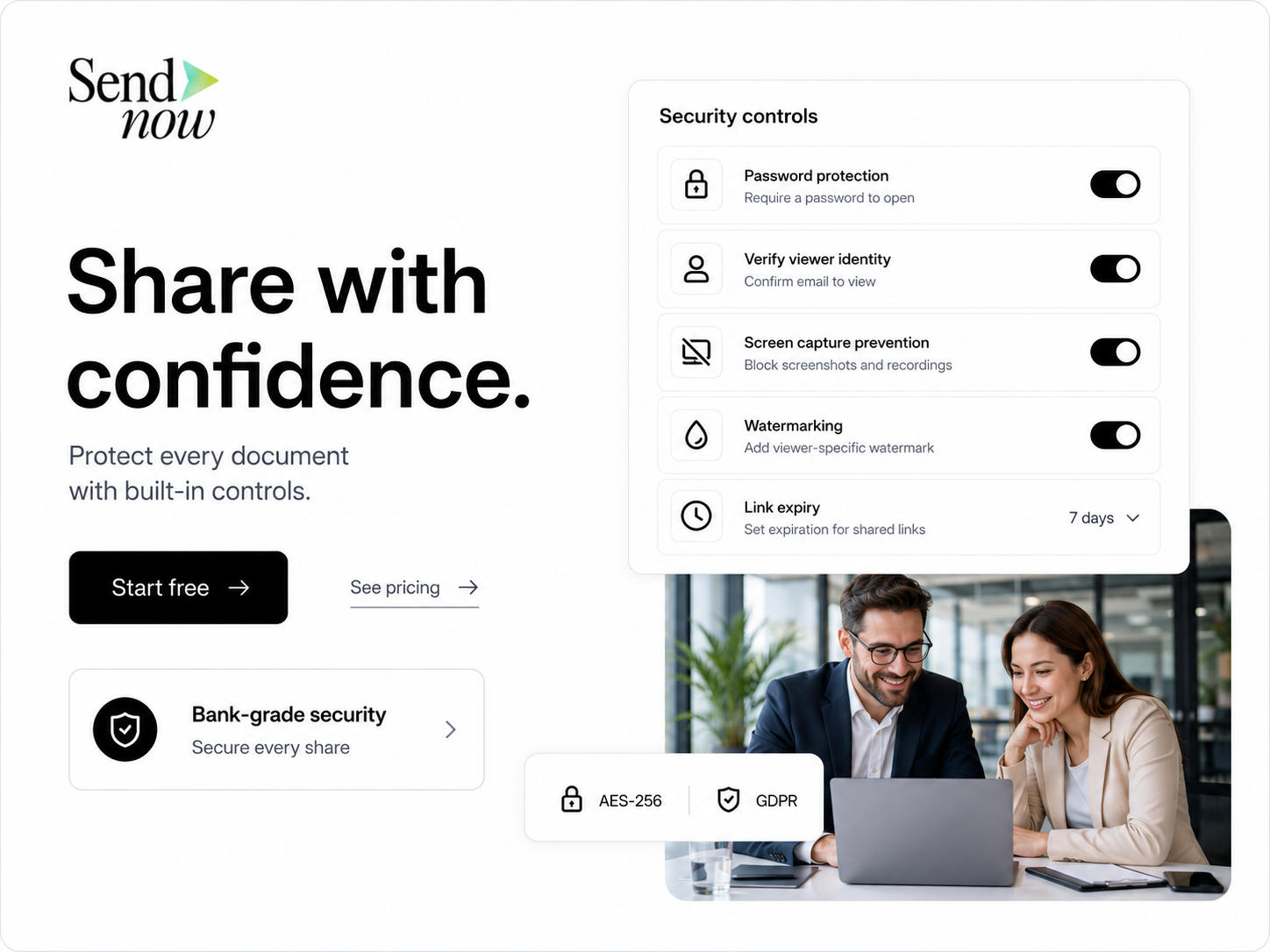
Dynamic Watermarking: SendNow allows users to apply dynamic watermarks to documents. This feature ensures that each recipient's information is displayed on the document, discouraging unauthorized sharing and enhancing accountability.
-
Screenshot Blocking: One of the most significant risks of sharing documents is the potential for recipients to take screenshots. SendNow's screenshot blocking feature prevents users from capturing images of the document, safeguarding sensitive information.
-
Require Email Gates: To access the performance reports, recipients must authenticate their identity through email verification. This adds an extra layer of security, ensuring that only authorized individuals can view the documents.
-
Link Expiry: SendNow enables users to set expiration dates for shared links. Once the link expires, access to the document is automatically revoked, minimizing the risk of unauthorized access over time.
-
NDA Gates: For particularly sensitive documents, SendNow allows organizations to require recipients to sign a Non-Disclosure Agreement (NDA) before accessing the report. This legal safeguard reinforces the confidentiality of the information shared.
By leveraging these features, organizations can effectively disable file downloads and maintain control over their internal performance reports. For more information on SendNow and its capabilities, visit their official LinkedIn page: SendNow LinkedIn.
Technical Walkthrough
To ensure the secure sharing of internal performance reports using SendNow, follow this step-by-step setup guide:
Step 1: Create an Account
- Visit the SendNow website and click on the "Sign Up" button.
- Fill in the required information to create your account.
- Verify your email address to activate your account.
Step 2: Upload Your Document
- Log in to your SendNow account.
- Click on the "Upload" button to select the internal performance report you wish to share.
- Ensure that the document is in a supported format (e.g., PDF, Word).
Step 3: Configure Sharing Settings
- After uploading the document, you will be prompted to configure the sharing settings.
- Enable dynamic watermarking by selecting the option and entering the information to be displayed (e.g., recipient's name).
- Activate screenshot blocking to prevent unauthorized captures of the document.
- Set an expiration date for the link to limit access duration.
- If necessary, enable NDA gates to require recipients to sign an agreement before accessing the document.
Step 4: Generate and Share the Link
- Once the settings are configured, click on the "Generate Link" button.
- Copy the generated link to share with your intended recipients.
- Send the link via email or through your preferred communication channel.
Step 5: Monitor Access
- After sharing the link, you can monitor who accesses the document through the access logs available in your SendNow account.
- Regularly review these logs to identify any unauthorized access attempts.
By following these steps, organizations can securely share internal performance reports while disabling file downloads and maintaining control over sensitive information.
ROI & Business Impact
Implementing secure document-sharing solutions like SendNow can yield significant return on investment (ROI) and business impact for organizations. Here are some key benefits:
-
Cost-Efficiency: By reducing the risk of data breaches and associated costs, organizations can save on potential legal fees, fines, and reputational damage. The cost of implementing secure sharing solutions is often outweighed by the savings from avoiding breaches.
-
Contract Compliance: Many industries are subject to strict regulatory requirements regarding data sharing and protection. By utilizing secure sharing solutions, organizations can ensure compliance with regulations such as GDPR and HIPAA, avoiding costly penalties.
-
Protection of Intellectual Property: Internal performance reports often contain sensitive information that is critical to an organization's competitive advantage. By disabling file downloads and implementing robust security measures, organizations can protect their intellectual property from unauthorized access and theft.
-
Enhanced Collaboration: Secure sharing solutions facilitate collaboration among teams while maintaining control over sensitive information. This balance allows for efficient decision-making without compromising security.
-
Increased Trust: By prioritizing data security, organizations can build trust with stakeholders, clients, and employees. This trust can lead to improved relationships and a stronger reputation in the market.
Overall, the investment in secure document-sharing solutions not only protects sensitive information but also contributes to the organization's long-term success and sustainability.
Structured FAQ
1. How does disabling file downloads protect internal performance reports?
Disabling file downloads prevents unauthorized sharing and reduces the risk of data leakage. By controlling access and limiting how documents can be interacted with, organizations can maintain better oversight and security over sensitive information.
2. Why should organizations use SendNow for sharing performance reports?
SendNow offers advanced security features, such as dynamic watermarking, screenshot blocking, and email gates, which significantly enhance the protection of internal performance reports. These features help organizations comply with regulations and safeguard sensitive information.
3. What are the consequences of not securing internal performance reports?
Failing to secure internal performance reports can lead to unauthorized access, data breaches, compliance violations, and reputational damage. Organizations may face legal repercussions and financial losses as a result of inadequate security measures.
4. How can organizations ensure compliance with data protection regulations?
Organizations can ensure compliance by implementing secure sharing solutions that provide necessary controls and monitoring capabilities. Regular audits, employee training, and adherence to established data-sharing policies are also essential for maintaining compliance.
5. What steps can organizations take to educate employees about secure document sharing?
Organizations can conduct training sessions, provide resources on best practices, and develop clear policies regarding secure document sharing. Regular communication and reminders about the importance of data security can also help foster a culture of awareness.
Actionable CTA
Are you ready to enhance the security of your internal performance reports and disable file downloads? Start your trial with SendNow today and experience the peace of mind that comes with secure document sharing. Visit SendNow Trial to get started!