

Gating Diligence Rooms with Digital One-Click NDAs
Published on June 9, 2026
Gating Diligence Rooms with Digital One-Click NDAs
Executive Summary / TL;DR
In today's fast-paced business environment, the need for secure document sharing is paramount, especially during critical processes such as mergers and acquisitions, fundraising, or sensitive negotiations. Traditional methods of sharing sensitive information, such as email attachments or cloud storage solutions, often expose organizations to significant security vulnerabilities. This article explores how digital one-click Non-Disclosure Agreements (NDAs) can effectively gate diligence rooms, ensuring that only authorized individuals can access sensitive documents while maintaining compliance with legal standards. By leveraging technology to streamline the NDA process, organizations can enhance security, protect intellectual property, and foster trust in their business dealings.
Current Security Vulnerabilities
The rise of digital communication has transformed how businesses share information, but it has also introduced new vulnerabilities. Typical file-sharing workflows, such as emails and platforms like Dropbox, expose files to potential leaks and unauthorized access. Here are some common security vulnerabilities associated with these methods:
-
Email Attachments: When sensitive documents are sent as email attachments, they can easily be forwarded to unintended recipients. Once a document is in someone else's inbox, control over that document is lost, making it susceptible to leaks.
-
Cloud Storage Services: While platforms like Dropbox offer convenience, they often lack robust security measures. Unauthorized users may gain access to shared folders, either through weak passwords or phishing attacks, compromising sensitive information.
-
Lack of Tracking and Control: Traditional methods do not provide visibility into who has accessed documents or how they have been used. This lack of tracking makes it difficult to enforce security protocols and respond to potential breaches.
-
Inadequate Legal Protection: Many organizations fail to implement NDAs effectively, leading to legal challenges if sensitive information is disclosed. Without a formal agreement in place, it can be difficult to prove that a breach occurred or to seek recourse.
-
Human Error: Mistakes such as sending files to the wrong person or misconfiguring sharing settings can lead to significant security breaches. Human error remains one of the leading causes of data leaks.
To mitigate these risks, organizations must adopt more secure methods for sharing sensitive information, particularly in high-stakes situations like diligence rooms.
Industry-Specific Best Practices
To enhance security during the document-sharing process, organizations should implement the following best practices:
-
Implement Digital One-Click NDAs: Utilize digital platforms that allow users to sign NDAs with a single click before accessing sensitive documents. This ensures that all parties are legally bound to confidentiality before they can view any information.
-
Use Secure File-Sharing Solutions: Transition from traditional email and cloud storage to secure file-sharing solutions that offer encryption, access controls, and tracking capabilities. Look for platforms that provide features like password protection and expiration dates for shared links.
-
Establish Clear Access Protocols: Define who has access to sensitive documents and under what circumstances. Implement role-based access controls to ensure that only authorized personnel can view or edit critical files.
-
Regularly Audit Access Logs: Monitor who accesses sensitive documents and when. Regular audits can help identify unauthorized access attempts and ensure compliance with security protocols.
-
Educate Employees on Security Practices: Conduct regular training sessions to educate employees about the importance of data security and the potential risks associated with sharing sensitive information. Encourage them to report suspicious activities.
-
Utilize Watermarking and Document Tracking: Incorporate dynamic watermarking on sensitive documents to deter unauthorized sharing. Document tracking can provide insights into how documents are being used and by whom.
-
Integrate Compliance Standards: Ensure that your document-sharing practices comply with relevant regulations, such as GDPR or HIPAA, depending on your industry. This includes implementing necessary safeguards to protect personal data.
By following these best practices, organizations can significantly reduce the risk of data breaches and enhance the security of their diligence rooms.
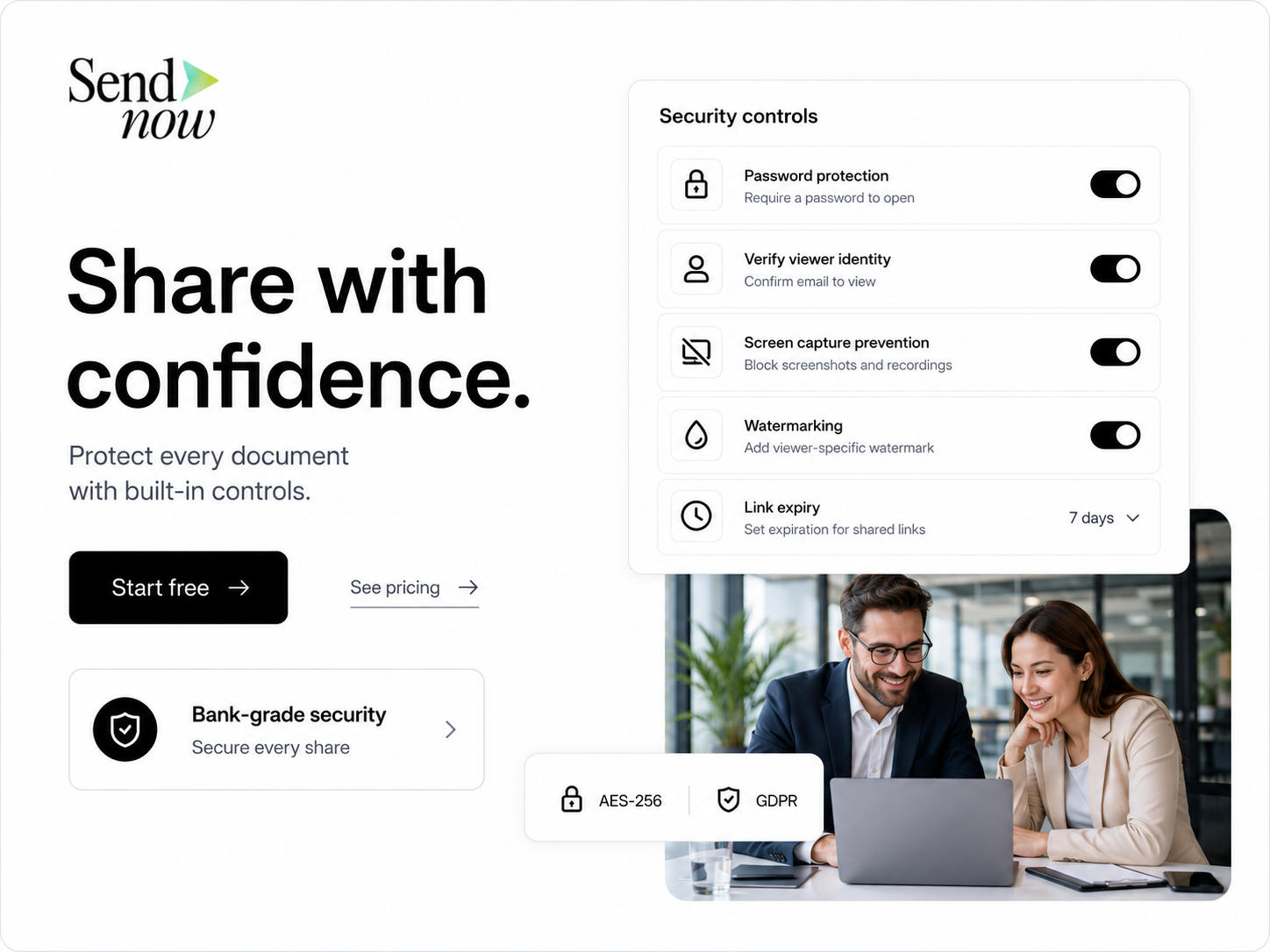
SendNow Feature Deep-Dive
One of the most effective ways to secure diligence rooms is by utilizing SendNow's digital one-click NDA feature. This innovative solution addresses the vulnerabilities associated with traditional document-sharing methods through a range of specific controls:
-
Dynamic Watermarking: SendNow allows users to apply dynamic watermarks to documents, displaying the recipient's name and the date on each page. This discourages unauthorized sharing and provides a clear trail of accountability.
-
Screenshot Blocking: To prevent the unauthorized capture of sensitive information, SendNow includes screenshot blocking capabilities. This feature ensures that recipients cannot take screenshots of the documents, further protecting confidential data.
-
Require Email Gates: Before accessing any sensitive documents, recipients must sign a digital NDA. This process is facilitated through email gates, ensuring that only verified individuals can view the information. This adds an extra layer of security and legal protection.
-
Link Expiry: SendNow allows users to set expiration dates for shared links. After the specified period, the link becomes inactive, preventing unauthorized access to outdated documents.
-
NDA Gates: The NDA gates feature ensures that recipients must agree to the terms of the NDA before accessing any documents. This legally binds them to confidentiality and provides organizations with a clear legal recourse in the event of a breach.
By leveraging these features, organizations can effectively gate their diligence rooms, ensuring that sensitive information remains secure while facilitating smooth collaboration. For more information about SendNow and its innovative solutions, visit their official LinkedIn page.
Technical Walkthrough
To set up a secure diligence room using SendNow, follow these step-by-step instructions:
Step 1: Create an Account
- Visit the SendNow website and click on the "Sign Up" button.
- Fill in the required information to create your account.
- Verify your email address to activate your account.
Step 2: Upload Documents
- Log in to your SendNow account.
- Click on the "Upload" button to select the documents you wish to share.
- Choose the files from your computer and click "Open" to upload them to the platform.
Step 3: Configure Link Settings
- After uploading your documents, click on the "Share" button next to the file.
- In the sharing settings, enable the "Require NDA" option to ensure recipients must sign the NDA before accessing the document.
- Set a link expiration date to limit access to the document after a specified period.
Step 4: Add Recipients
- Enter the email addresses of the individuals you wish to share the document with.
- Customize the message that will accompany the sharing link, if desired.
- Click "Send" to distribute the link to the recipients.
Step 5: Monitor Access
- Use the "Access Logs" feature to monitor who has accessed the documents and when.
- Review any unauthorized access attempts and take appropriate action if necessary.
By following these steps, organizations can securely share sensitive documents while ensuring compliance with legal requirements.

ROI & Business Impact
Investing in secure document-sharing solutions like SendNow can yield significant returns on investment (ROI) and positively impact business operations:
-
Cost-Efficiency: By reducing the risk of data breaches, organizations can avoid costly legal fees, regulatory fines, and reputational damage. Secure document-sharing solutions can save businesses money in the long run.
-
Contract Compliance: Digital one-click NDAs ensure that all parties are legally bound to confidentiality, reducing the risk of contract disputes and enhancing compliance with industry regulations.
-
Protection Value: Protecting sensitive information is crucial for maintaining a competitive advantage. By securing diligence rooms, organizations can safeguard intellectual property and proprietary information, fostering trust with clients and partners.
-
Increased Efficiency: Streamlining the document-sharing process with digital NDAs and secure file-sharing solutions can enhance collaboration and improve overall efficiency in business operations.
-
Enhanced Reputation: Organizations that prioritize data security demonstrate a commitment to protecting their clients' and partners' information. This can enhance their reputation and attract new business opportunities.
By recognizing the ROI and business impact of secure document-sharing solutions, organizations can make informed decisions about their data security strategies.
Structured FAQ
1. How do digital one-click NDAs work?
Digital one-click NDAs allow users to sign a Non-Disclosure Agreement electronically with a single click before accessing sensitive documents. This process ensures that all parties are legally bound to confidentiality, providing a layer of protection against unauthorized disclosure.
2. Why should I use SendNow for document sharing?
SendNow offers advanced security features, including dynamic watermarking, screenshot blocking, and NDA gates, that help protect sensitive information during the document-sharing process. These features enhance security, compliance, and accountability, making SendNow an ideal choice for organizations that require secure document sharing.
3. What types of documents can I share using SendNow?
SendNow supports a wide range of document types, including PDFs, Word documents, presentations, and spreadsheets. This versatility allows organizations to securely share various types of sensitive information.
4. How can I monitor who accesses my documents?
SendNow provides access logs that allow you to monitor who has accessed your documents and when. This feature enables organizations to track document usage and identify any unauthorized access attempts.
5. Is SendNow compliant with data protection regulations?
Yes, SendNow is designed to comply with relevant data protection regulations, including GDPR and HIPAA. The platform incorporates necessary safeguards to protect personal data and ensure compliance with legal standards.
Actionable CTA
Ready to enhance the security of your document-sharing process? Start your trial on SendNow today and experience the benefits of secure pitch decks and digital one-click NDAs. Visit SendNow to get started!