
How Page-by-Page Analytics Changes When You Follow Up
Published on April 24, 2026
TLDR
Total document opens tell you almost nothing useful. Page-by-page analytics tells you which sections your client actually read, how long they spent, and which slides triggered a return visit. This data transforms follow-up from guesswork into a signal-driven process. Teams using per-page tracking close conversations faster because they know exactly where client attention sits before they pick up the phone.
Table of Contents
- What Page-by-Page Analytics Tracks
- Why Total Opens Are a Vanity Metric
- Reading Patterns That Signal Buying Intent
- How to Use Page Data for Follow-Up Timing
- Return Visit Signals from Page Analytics
- Integrating Analytics into Your Sales Workflow
- FAQs
What Page-by-Page Analytics Tracks {#what-page-by-page-analytics-tracks}
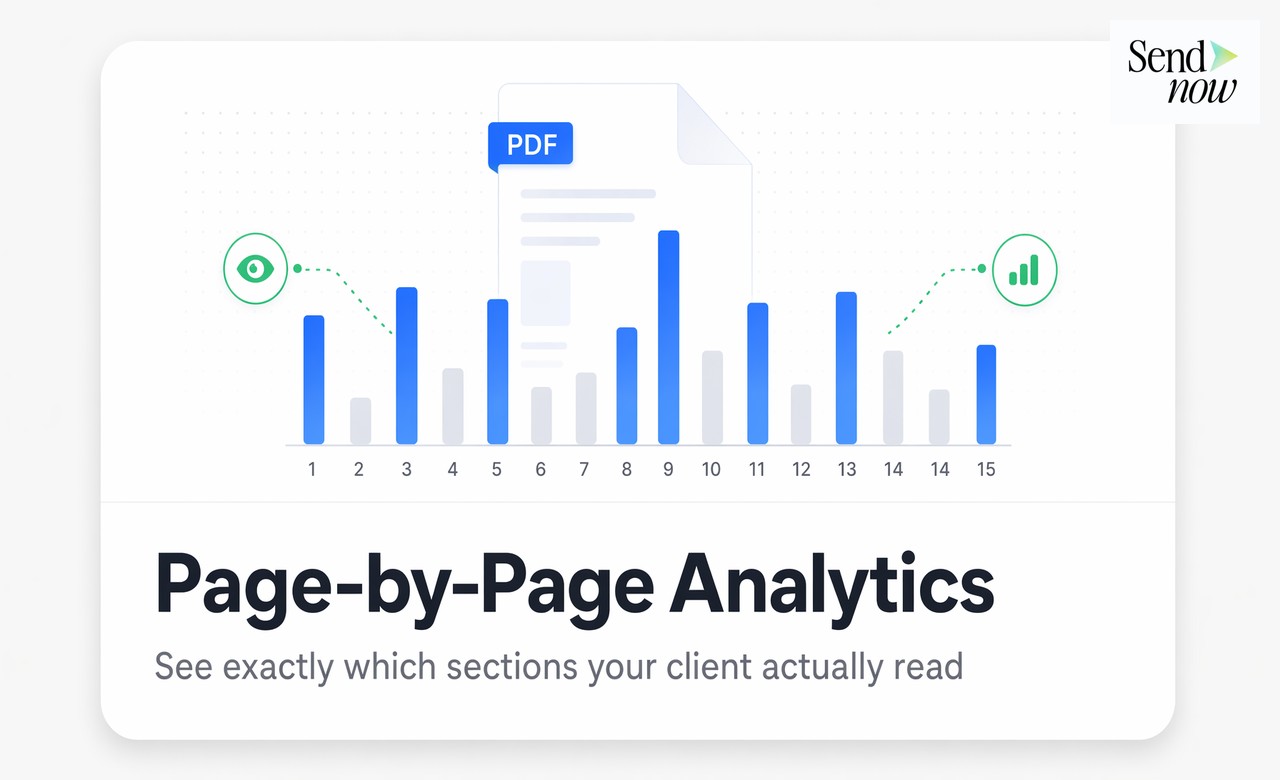
Page-by-page document analytics records how long a viewer spends on each individual page of a shared document. Unlike a basic open tracking pixel, which records only whether the document was accessed and at what time, per-page tracking creates a full reading map of every session.
For each viewing session, you get:
- Time spent per page — measured in seconds, averaged across all views if the document is opened multiple times
- Pages visited — which pages were accessed at all during the session
- Pages skipped — pages the viewer scrolled past without reading
- Session duration — total time the viewer spent in the document across the session
- Entry and exit points — the first page opened and the last page viewed before closing
This data is captured per viewer, not in aggregate. If three investors open the same pitch deck, you see separate session maps for each one, tied to their verified email addresses.
Why Total Opens Are a Vanity Metric {#why-total-opens-are-a-vanity-metric}
A single total open count is nearly meaningless as a signal. A viewer can open a document, spend three seconds on the cover page, and close it. That registers as an open. A different viewer can spend 18 minutes reading every page three times and close with high intent. That also registers as an open.
Acting on open counts alone means treating both scenarios as equivalent, which leads to poorly timed follow-ups and missed opportunities.
The follow-up call made two days after an open that lasted three seconds gets a cold reception. The follow-up call made within an hour of an 18-minute deep read with a return visit gets a warm one. The difference is the data.
Reading Patterns That Signal Buying Intent {#reading-patterns-that-signal-buying-intent}
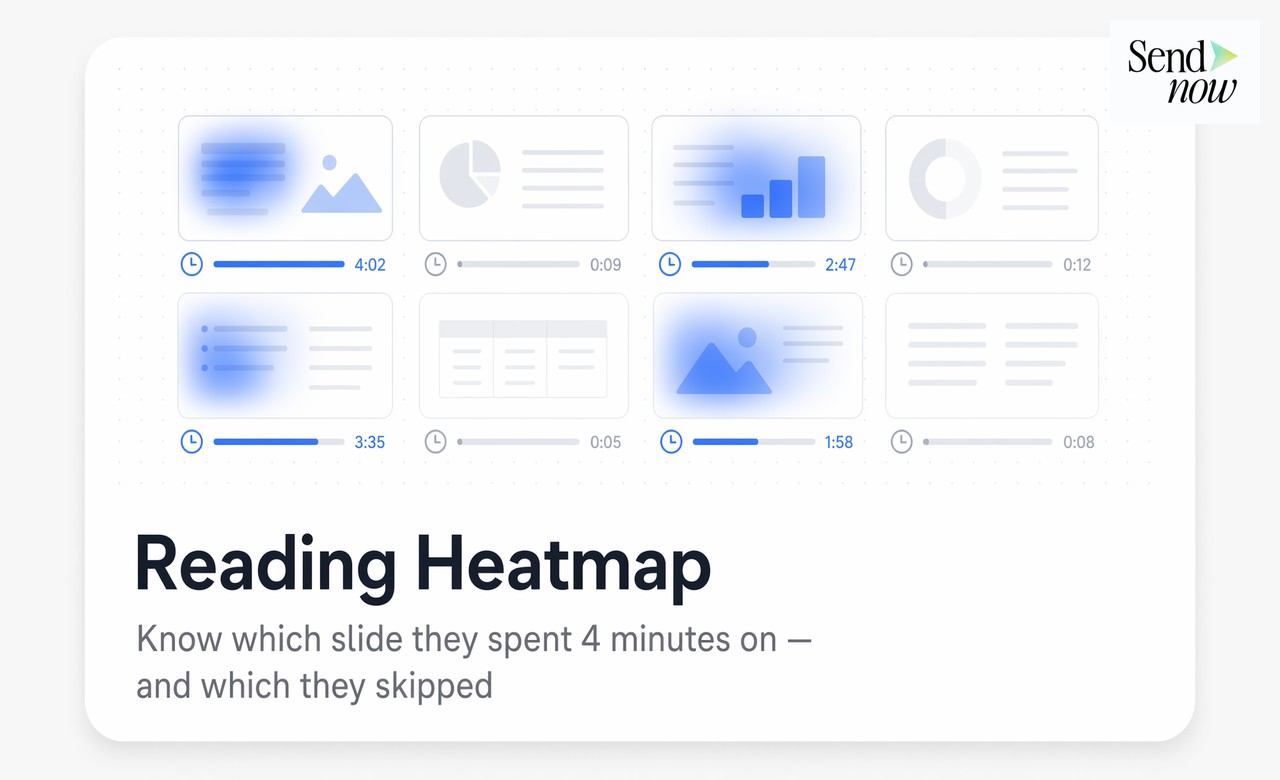
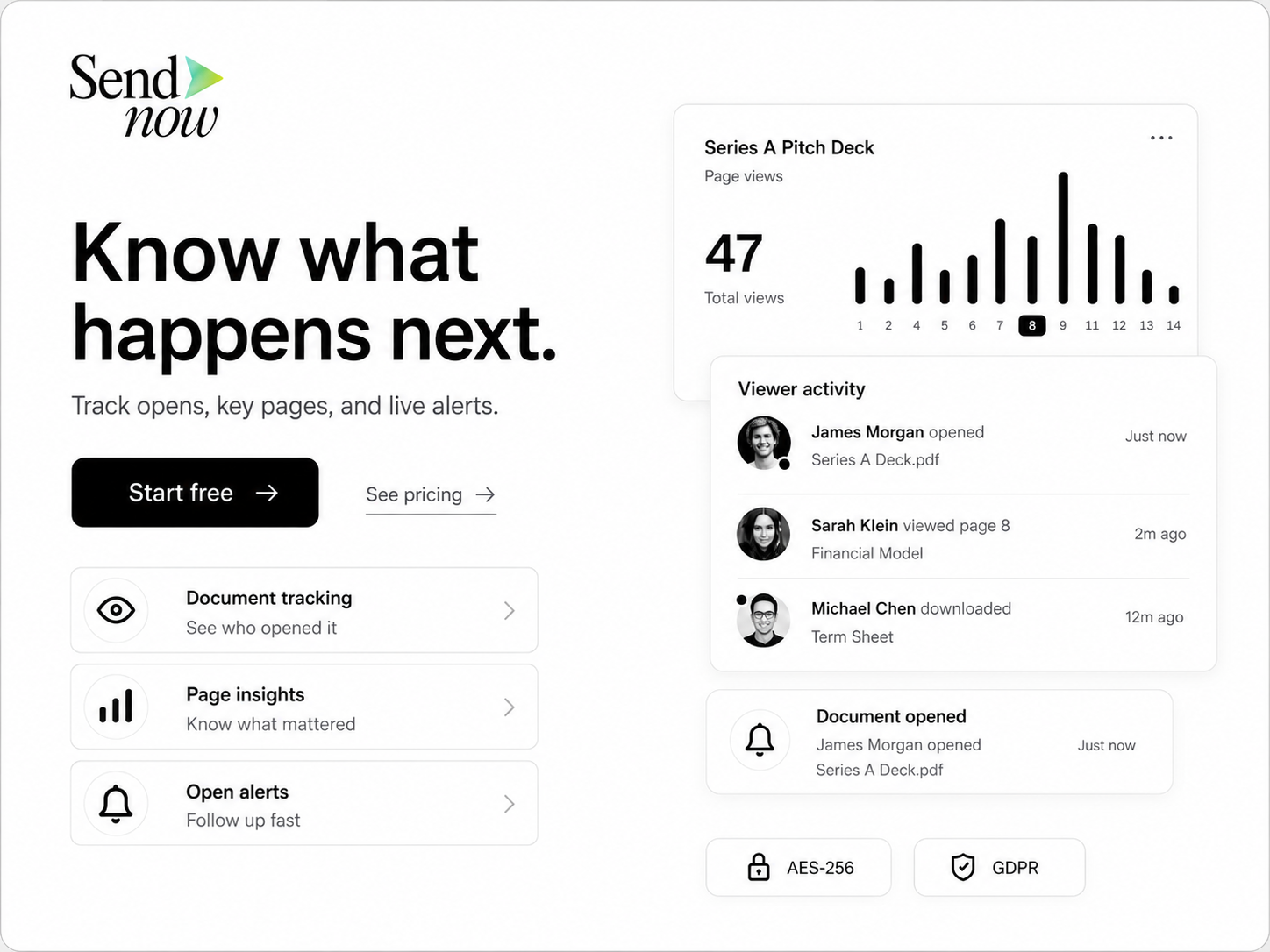
Certain reading patterns consistently appear in the data before a buying conversation advances. Knowing these patterns lets you act at the right moment rather than on a fixed schedule.
High time on pricing or terms pages. When a viewer spends disproportionate time on slides containing pricing, deal terms, or ROI figures, it indicates active evaluation rather than casual browsing. This is a primary follow-up trigger.
Sequential full reads. A viewer who reads every page in order, spending reasonable time on each, is engaging with the full narrative of your document. This is distinct from someone who jumps to a specific section and exits.
Re-reads of specific sections. When a viewer returns to the same page multiple times within a session or across sessions, the content on that page is clearly driving consideration. Use this as the anchor point for your follow-up conversation.
Late-session re-entry. Opening a document, stopping partway through, then returning hours later to resume from where they left off signals genuine interest and active internal review.
How to Use Page Data for Follow-Up Timing {#how-to-use-page-data-for-follow-up-timing}
The strongest follow-up timing rule is simple: call within 60 minutes of a session that shows high engagement signals. Not the next day. Not three days later. Within the hour.
When a prospect finishes reading a 20-page pitch deck and spent 12 minutes on it, they have your material at top of mind. A follow-up call at that moment arrives while the content is fresh and while their attention is already on the decision. Waiting until the next morning means you are re-entering a conversation that has already faded.
SendNow sends real-time open notifications to your phone and team Slack channel the moment a document is opened. You do not need to manually check a dashboard to catch high-engagement moments. The alert comes to you.
From the notification, click through to the session detail view to see which pages were read before dialing. Walk into the follow-up conversation already knowing which sections the prospect focused on.
Return Visit Signals from Page Analytics {#return-visit-signals-from-page-analytics}
A return visit to a document you shared is one of the highest-intent signals in a sales process. When a prospect goes back to re-read a CIM, term sheet, or proposal, something has changed in their evaluation process. They may be preparing for an internal presentation, comparing your document with a competitor, or revisiting terms before a decision.
Return visit data shows:
- The exact time of each return visit
- Which pages were read during the return (often different from the first session)
- How long each return session lasted
If a prospect who was previously unresponsive suddenly opens your proposal for the third time, that is an outreach trigger regardless of how much time has passed since the original send.
Integrating Analytics into Your Sales Workflow {#integrating-analytics-into-your-sales-workflow}
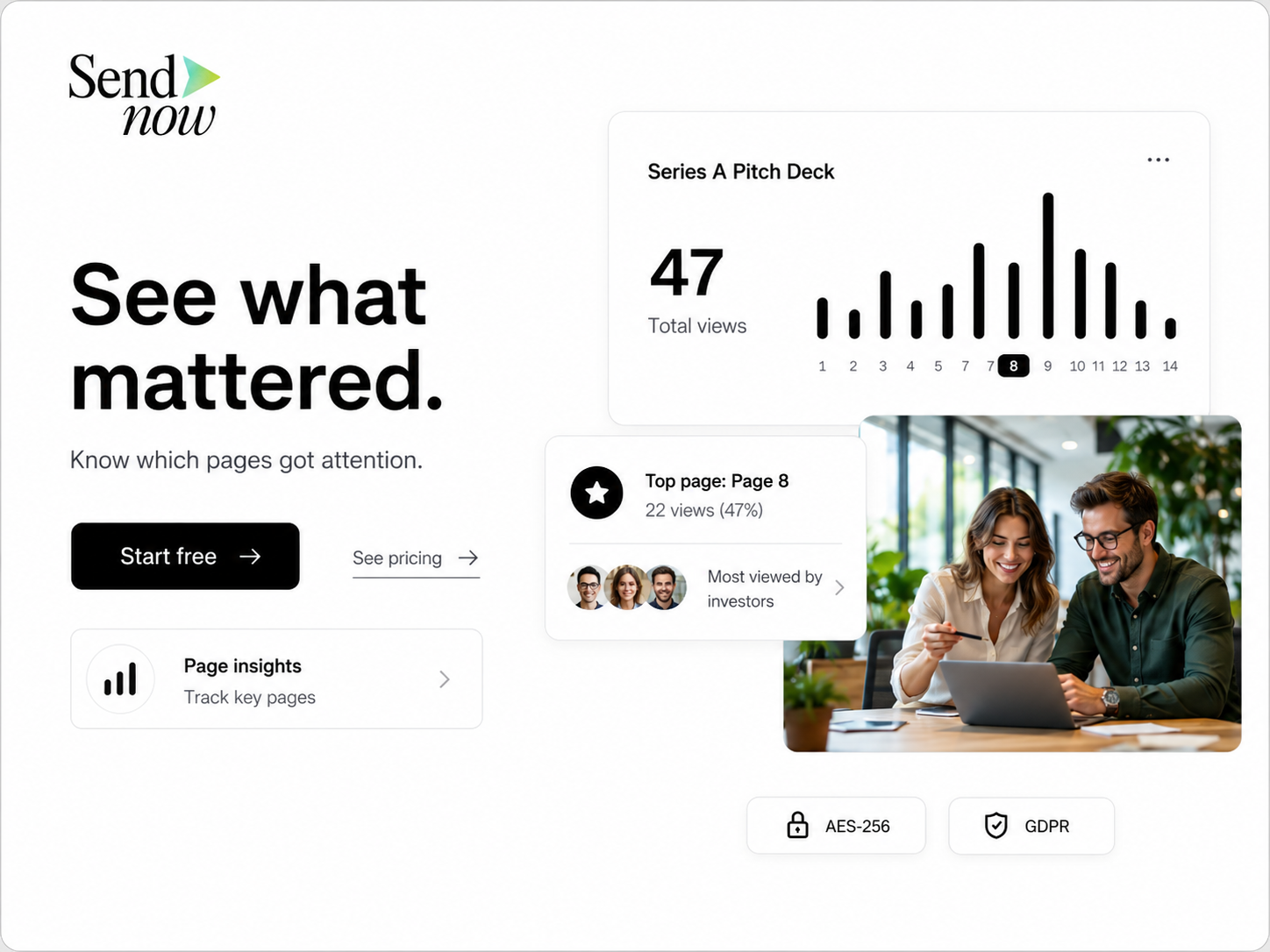
Page analytics is most valuable when it connects directly to the tools your team already uses.
| Integration | What It Enables |
|---|---|
| Slack alerts | Instant team notification when any document is opened |
| Webhooks | Push open and page data to your CRM automatically |
| Email notifications | Per-sender alerts when a shared document gets a new session |
| AI engagement score | Aggregate signal across pages and sessions for prioritization |
| Return visit triggers | Automated flag when a previously read document is reopened |
SendNow covers all five of these integration points. The AI engagement score in particular reduces manual interpretation by giving each viewer session a composite score based on pages read, time spent, and return visit frequency. Teams working with large pipelines use the score to triage which opens need immediate attention.
The practical workflow looks like this: share document, receive open alert, review session map, call the prospect with context. At each step, the analytics layer removes a guessing game from the process.
Explore the full analytics suite at sendnow.live.
FAQs {#faqs}
What is page-by-page document analytics? Page-by-page document analytics records how long a viewer spends on each individual page of a shared document, which pages they visited, and which they skipped. It provides a full reading map of every viewing session.
Why are document open rates not enough to act on? A document open only tells you the file was accessed. It does not tell you whether the viewer read anything, which sections they focused on, or how long they were engaged. Without per-page data, follow-up timing and messaging rely on guesswork.
What reading patterns indicate high buying intent? High time spent on pricing or terms pages, sequential full reads, re-reads of specific sections, and return visits within 24 hours of the original session all indicate active evaluation and represent primary follow-up triggers.
When is the best time to follow up after a document open? Follow up within 60 minutes of a high-engagement session. The prospect has your material fresh in mind and is actively thinking about the decision. Waiting until the next day reduces the impact of perfect timing.
What is a return visit in document analytics? A return visit occurs when a viewer who previously opened a document opens it again in a new session. It signals renewed interest and is one of the strongest intent indicators available in document sharing analytics.
How do document analytics tools notify you of opens? Tools like SendNow send real-time notifications via email, mobile push, and Slack the moment a document is opened. You see the viewer's identity, the timestamp, and the session engagement data within seconds of the open.
Can document analytics integrate with a CRM? Yes. Webhook integrations push open events, viewer identity, page data, and engagement scores directly to CRM platforms. This creates an automatic activity record without manual data entry from the sales team.
What is an AI engagement score for documents? An AI engagement score aggregates page read time, session duration, return visit frequency, and pages skipped into a single composite signal per viewer. Teams use it to prioritize follow-up across large pipelines without reviewing every individual session manually.
<script type="application/ld+json"> }, { "@type": "Question", "name": "Why are document open rates not enough to act on?", "acceptedAnswer": { "@type": "Answer", "text": "A document open only tells you the file was accessed. It does not tell you whether the viewer read anything, which sections they focused on, or how long they were engaged." } }, { "@type": "Question", "name": "What reading patterns indicate high buying intent?", "acceptedAnswer": { "@type": "Answer", "text": "High time spent on pricing or terms pages, sequential full reads, re-reads of specific sections, and return visits within 24 hours of the original session all indicate active evaluation." } }, { "@type": "Question", "name": "When is the best time to follow up after a document open?", "acceptedAnswer": { "@type": "Answer", "text": "Follow up within 60 minutes of a high-engagement session. The prospect has your material fresh in mind and is actively thinking about the decision." } }, { "@type": "Question", "name": "What is a return visit in document analytics?", "acceptedAnswer": { "@type": "Answer", "text": "A return visit occurs when a viewer who previously opened a document opens it again in a new session. It signals renewed interest and is one of the strongest intent indicators in document analytics." } }, { "@type": "Question", "name": "How do document analytics tools notify you of opens?", "acceptedAnswer": { "@type": "Answer", "text": "Tools like SendNow send real-time notifications via email, mobile push, and Slack the moment a document is opened, showing the viewer's identity, timestamp, and session engagement data within seconds." } }, { "@type": "Question", "name": "Can document analytics integrate with a CRM?", "acceptedAnswer": { "@type": "Answer", "text": "Yes. Webhook integrations push open events, viewer identity, page data, and engagement scores directly to CRM platforms, creating an automatic activity record without manual data entry." } }, { "@type": "Question", "name": "What is an AI engagement score for documents?", "acceptedAnswer": { "@type": "Answer", "text": "An AI engagement score aggregates page read time, session duration, return visit frequency, and pages skipped into a single composite signal per viewer, used to prioritize follow-up across large pipelines." } } ] } </script>