
How Brokerages Comply with GDPR Rules for Property Disclosures

How Brokerages Comply with GDPR Rules for Property Disclosures
Executive Summary / TL;DR
The General Data Protection Regulation (GDPR) has transformed how businesses handle personal data, including real estate brokerages. Compliance with GDPR is not just a legal obligation but also a vital component of building trust with clients. This article outlines the challenges brokerages face in complying with GDPR rules regarding property disclosures, the specific requirements under the regulation, and actionable steps brokerages can take to ensure compliance while maintaining operational efficiency.
Current Security Vulnerabilities
In the real estate sector, brokerages often handle a significant amount of personal data, including names, addresses, financial information, and property details. Traditional methods of sharing this sensitive information—such as email communications, unsecured file-sharing services, or even physical documents—expose brokerages to various security vulnerabilities.
-
Email Communications: Emails can be intercepted or misdirected, leading to unauthorized access to sensitive information. A simple typo in an email address can result in confidential property disclosures being sent to the wrong recipient.
-
Unsecured File Sharing: Services like Dropbox or Google Drive, while convenient, often lack the necessary security controls to protect sensitive data. If a link to a shared document is sent without adequate restrictions, it can be accessed by anyone who has the link, leading to potential data leaks.
-
Physical Documents: Paper documents can be lost or stolen, and once they are out of the brokerage's control, there is little recourse to protect the information contained within them.
These vulnerabilities highlight the need for brokerages to adopt more secure methods for handling property disclosures in compliance with GDPR.
Industry-Specific Best Practices
To comply with GDPR while managing property disclosures, brokerages should implement the following best practices:
1. Data Minimization
Only collect and process personal data that is necessary for the specific purpose of the property transaction. For instance, if a client is only interested in receiving property listings, avoid collecting unnecessary information such as their financial status unless it is essential for the transaction.
2. Obtain Explicit Consent
Before processing personal data, obtain explicit consent from clients. This can be done through clear and concise consent forms that outline what data will be collected, how it will be used, and for how long it will be retained.
3. Implement Secure Data Sharing Solutions
Utilize secure platforms designed for sharing sensitive information. These platforms should offer features such as encryption, access controls, and audit trails to ensure that only authorized individuals can access the data.
4. Train Staff on GDPR Compliance
Regularly train staff on GDPR requirements and best practices for handling personal data. This training should include recognizing phishing attempts, understanding data protection principles, and knowing how to respond to data breaches.
5. Conduct Regular Data Audits
Perform regular audits of data processing activities to ensure compliance with GDPR. This includes reviewing how personal data is collected, stored, and shared, as well as ensuring that all data processing activities are documented.
6. Establish a Data Breach Response Plan
Develop a clear response plan for data breaches that includes notifying affected individuals and relevant authorities within the required 72-hour timeframe as mandated by GDPR.
SendNow Feature Deep-Dive
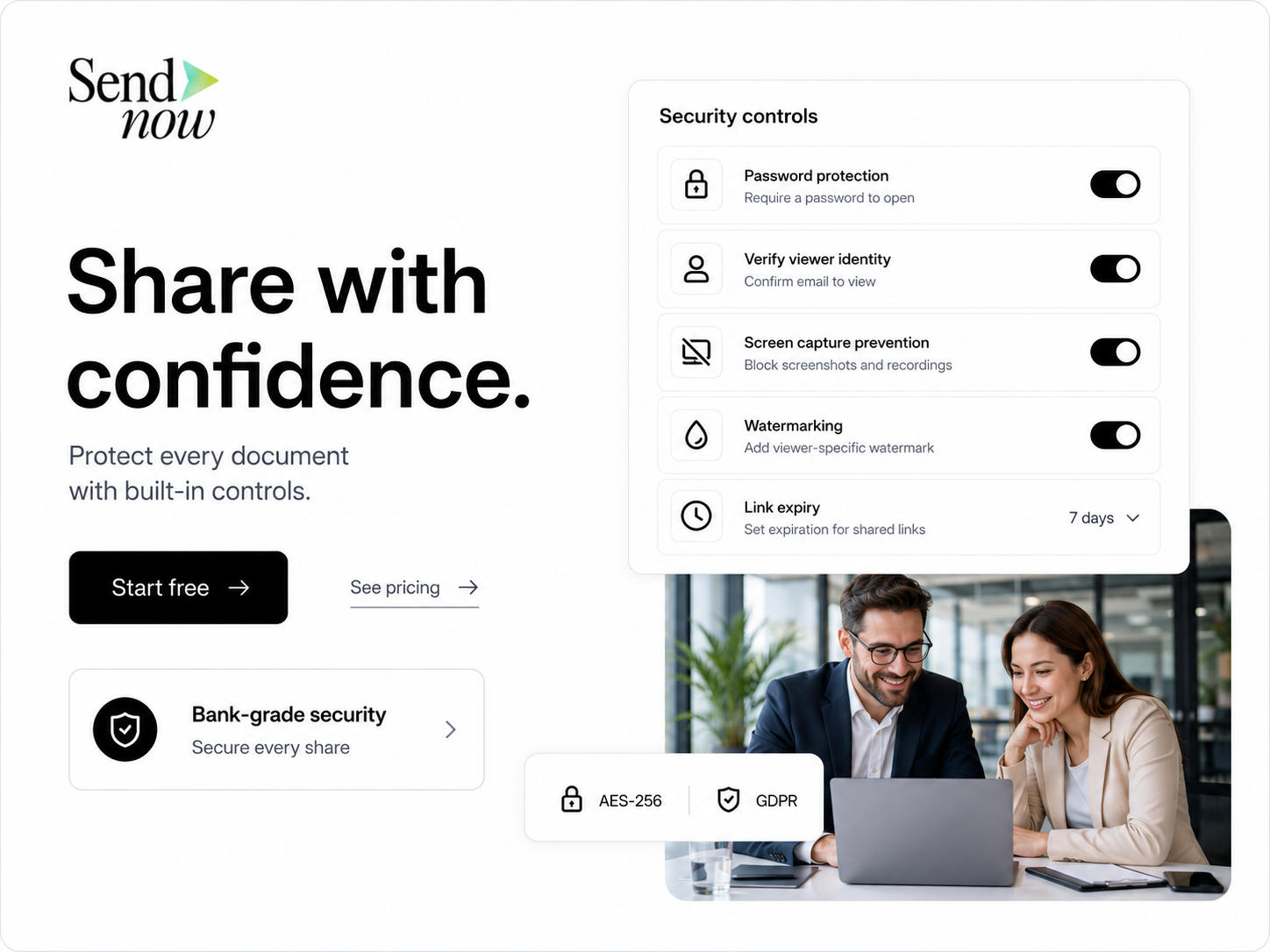
To address the challenges of securely sharing property disclosures while complying with GDPR, brokerages can leverage SendNow, a secure document-sharing platform. SendNow offers several features specifically designed to enhance data security and compliance:
1. Dynamic Watermarking
Dynamic watermarking adds a layer of security by embedding the recipient's information directly onto the document. This discourages unauthorized sharing and ensures that any leaked documents can be traced back to the original recipient.
2. Screenshot Blocking
SendNow's screenshot blocking feature prevents recipients from taking screenshots of sensitive documents, further protecting against unauthorized sharing of property disclosures.
3. Require Email Gates
By requiring recipients to verify their email addresses before accessing documents, SendNow ensures that only authorized individuals can view sensitive information. This feature helps prevent data leaks caused by misdirected emails.
4. Link Expiry
SendNow allows users to set expiration dates for shared links. This means that even if a link is shared inappropriately, it will become inaccessible after a specified period, reducing the risk of unauthorized access.
5. NDA Gates
For particularly sensitive property disclosures, SendNow offers the option to require recipients to sign a Non-Disclosure Agreement (NDA) before accessing the document. This adds an additional layer of legal protection for the brokerage.
For more information on how SendNow can help brokerages comply with GDPR while securely sharing property disclosures, visit their official LinkedIn page.
Technical Walkthrough
To ensure secure sharing of property disclosures using SendNow, follow these step-by-step instructions:
Step 1: Create an Account
- Visit the SendNow website and sign up for an account.
- Verify your email address to activate your account.
Step 2: Upload Documents
- Log in to your SendNow account.
- Click on the "Upload" button to select the property disclosure documents you wish to share.
- Ensure that the documents are in a supported format (PDF, DOCX, etc.).
Step 3: Configure Sharing Settings

- After uploading the documents, select the sharing settings.
- Enable dynamic watermarking and screenshot blocking for added security.
- Set an expiration date for the shared link to limit access duration.
- If necessary, enable NDA gates to require recipients to sign an agreement before accessing the documents.
Step 4: Distribute Securely
- Enter the recipient's email address in the designated field.
- Add a personalized message if desired.
- Click "Send" to share the documents securely.
Step 5: Monitor Access
- Use the SendNow dashboard to monitor who has accessed the documents.
- Review audit trails to ensure compliance with GDPR and internal policies.
ROI & Business Impact
Investing in secure document-sharing solutions like SendNow not only ensures compliance with GDPR but also offers significant return on investment (ROI) for brokerages:
-
Cost-Efficiency: By reducing the risk of data breaches and the associated costs of legal penalties, brokerages can save significant amounts of money. The average cost of a data breach can exceed millions of dollars, making prevention a worthwhile investment.
-
Contract Compliance: Ensuring compliance with GDPR helps brokerages avoid fines and legal repercussions. Non-compliance can result in penalties of up to €20 million or 4% of annual global turnover, whichever is higher.
-
Protection Value: By implementing secure document-sharing practices, brokerages can protect their reputation and build trust with clients. Clients are more likely to engage with brokerages that prioritize data security and compliance.
Structured FAQ
1. How does GDPR affect real estate brokerages?
GDPR requires brokerages to handle personal data with care, ensuring that data is collected, processed, and stored securely. Brokerages must obtain explicit consent from clients and implement measures to protect sensitive information.
2. Why is data minimization important for compliance?
Data minimization ensures that brokerages only collect and process the personal data necessary for specific purposes. This reduces the risk of data breaches and helps brokerages comply with GDPR requirements.
3. What are the consequences of non-compliance with GDPR?
Non-compliance with GDPR can result in significant fines, legal action, and damage to a brokerage's reputation. It is essential for brokerages to implement measures to ensure compliance and protect client data.
4. How can SendNow help brokerages comply with GDPR?
SendNow offers secure document-sharing features such as dynamic watermarking, screenshot blocking, and email verification, which help brokerages protect sensitive information and comply with GDPR requirements.
5. What should a brokerage do in the event of a data breach?
In the event of a data breach, brokerages must have a response plan in place that includes notifying affected individuals and relevant authorities within 72 hours, as required by GDPR.
Actionable CTA
To ensure your brokerage complies with GDPR while securely sharing property disclosures, start a trial on SendNow today. Visit this link to get started and protect your clients’ sensitive information effectively.
About the Author: Rifana Hameem
Rifana is the founder of SendNow. She leads the team in building secure, compliant, and analytics-rich document sharing tools for finance and professional teams worldwide.
Connect on LinkedIn