How to Build a Deal Room That Actually Closes Deals

- A deal room is a branded, secure digital space where you share all deal-related documents with buyers, investors, or counterparties in one place.
- A data room focuses on due diligence storage; a deal room focuses on closing — it is dynamic, trackable, and buyer-facing.
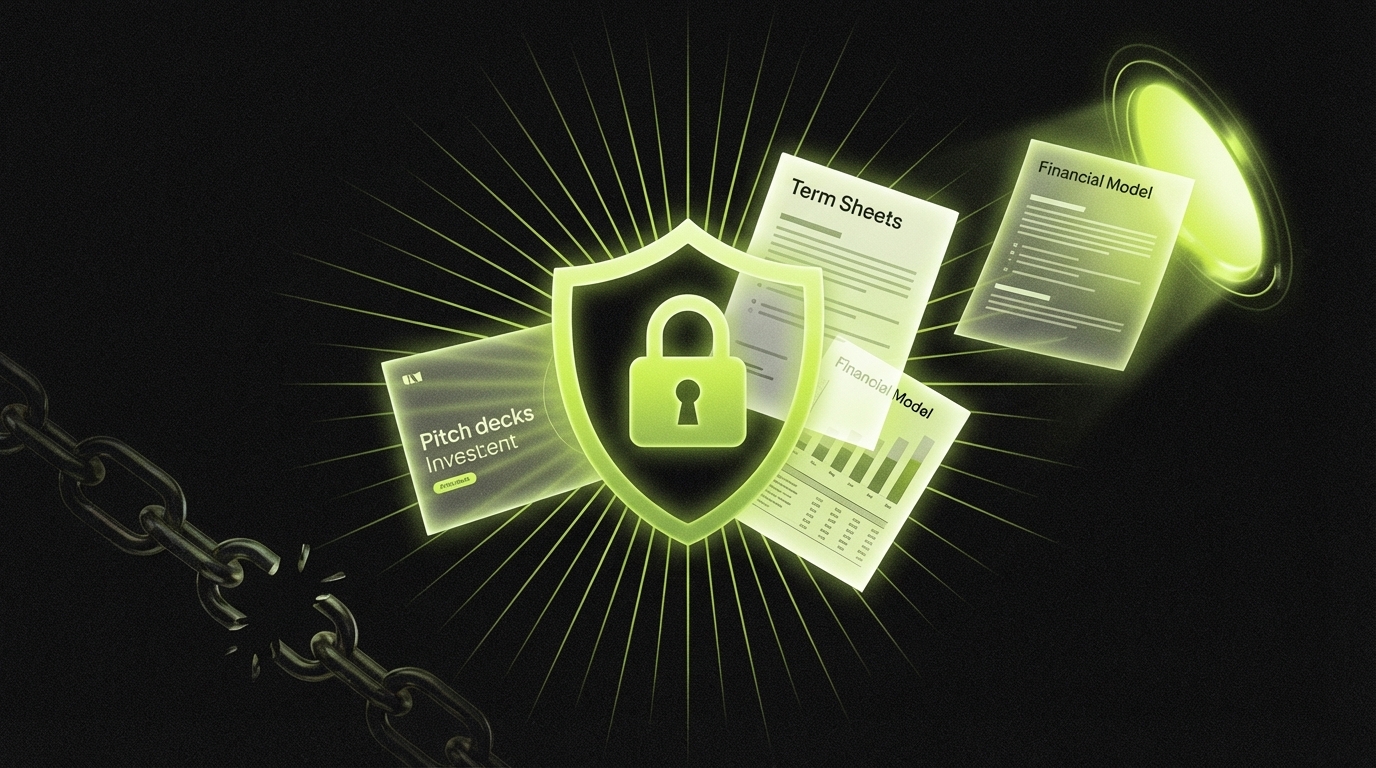
- The documents you include should match the stage of the deal: pitch deck and one-pager early, financial models and term sheets later.
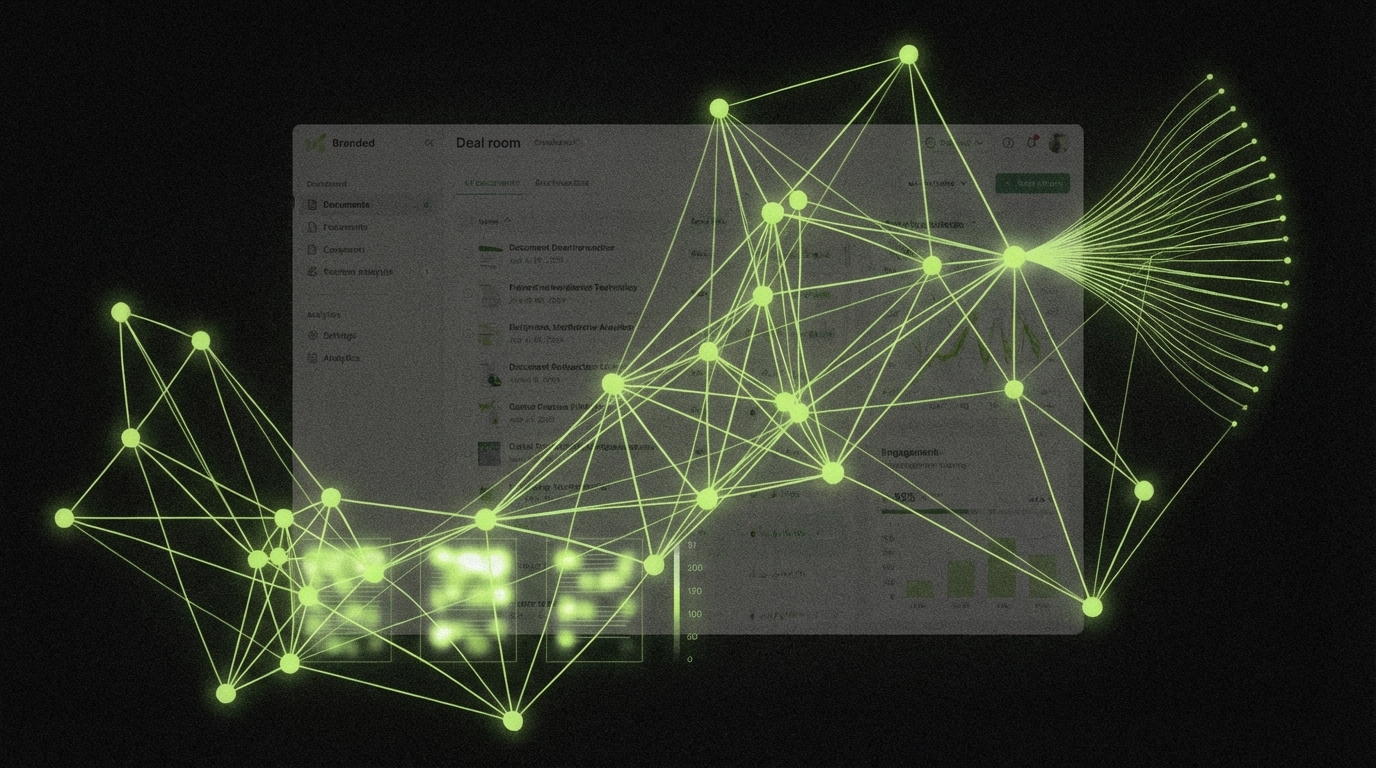
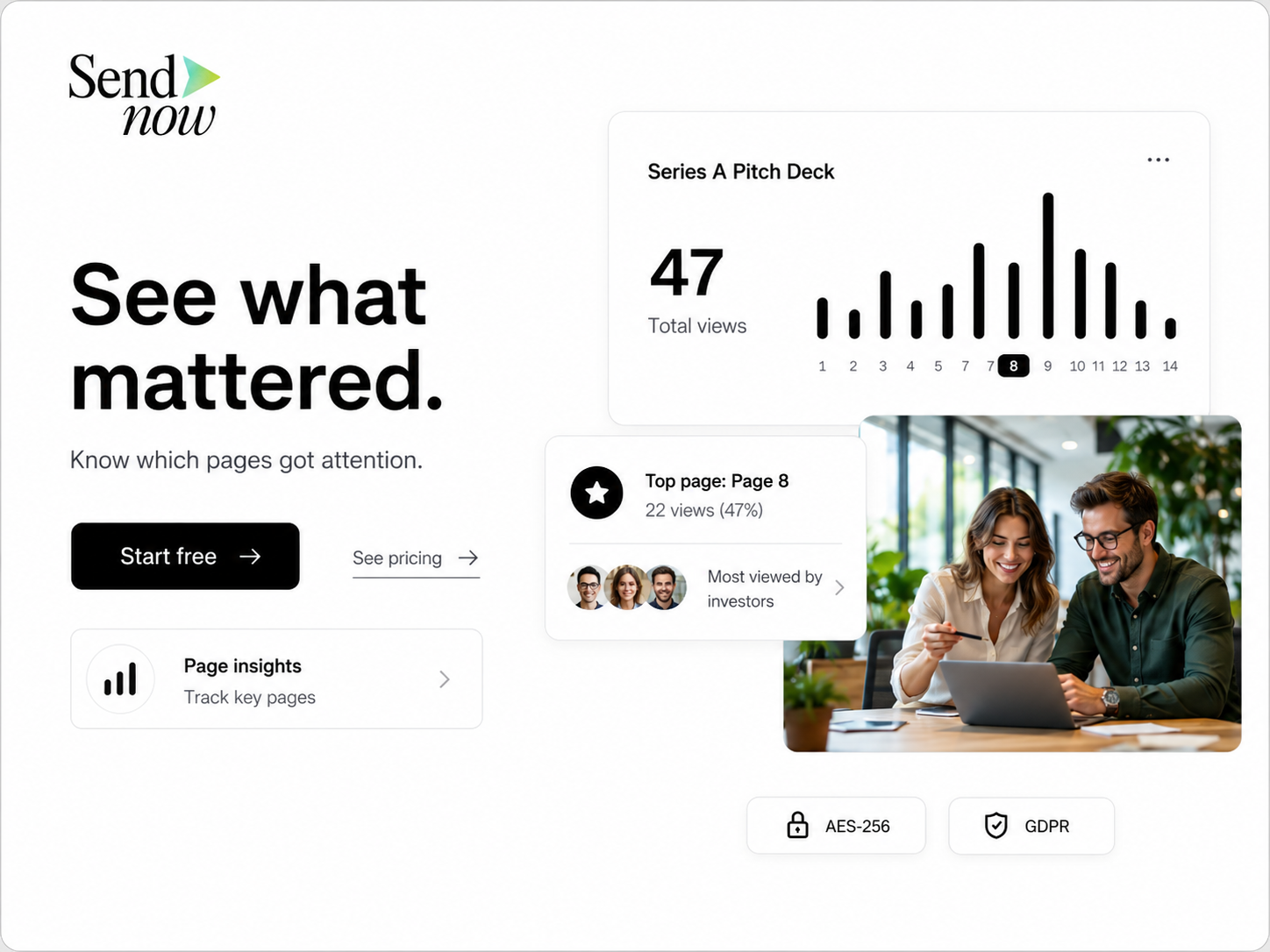
- Deal room analytics tell you exactly which pages your prospect read, for how long, and how engaged they are — so you follow up at exactly the right moment.
- NDA gating protects sensitive content by requiring visitors to sign a confidentiality agreement before accessing your documents.
- Branding your deal room with your logo, colors, and custom domain signals professionalism and builds trust at the most critical moment in a deal.
- The best deal room software for finance-first teams combines analytics, security controls, and branded experiences at a price that does not require an enterprise contract.
How to Build a Deal Room That Actually Closes Deals
Description: A step-by-step guide to deal room software for finance and sales teams who want to close faster using branded microsites, document analytics, and AI engagement scoring. Learn how deal rooms replace scattered email threads with a single, trackable, professional experience that moves buyers to yes.
Introduction
Most deals do not die in the negotiation. They die in the inbox.
A prospect requests your financial model. You attach it to an email, fire it off, and wait. You have no idea whether they opened it, which pages they read, whether they forwarded it to three colleagues, or whether it landed in a spam folder. You send a follow-up on Tuesday. Nothing. You try again on Thursday. Silence.
The document left your control the moment you hit send.
Deal room software solves this by replacing the attachment with a controlled, tracked, branded digital environment. Instead of a PDF wandering through inboxes, your prospect visits a purpose-built microsite where every page view, scroll, and return visit is recorded and scored.
This guide answers the seven questions finance and sales professionals ask most about deal rooms — from what they are and how they differ from data rooms, to which documents to include, how analytics accelerate closing, and what the best software looks like in 2026.
1. What Is a Deal Room?
A deal room is a secure digital workspace that sellers, founders, or deal teams create to share documents with buyers, investors, or counterparties during a commercial negotiation or fundraising process.
Unlike a shared Dropbox folder or email thread, a deal room is purpose-built for the sales moment. It gives buyers a single, organized destination for every document they need — pitch deck, financial model, case studies, legal terms — while giving the sender complete visibility into how those documents get used.
According to Seismic, today's B2B buying journey involves multiple stakeholders conducting independent research across numerous digital touchpoints. A deal room centralizes that experience so sellers can meet buyers where they are instead of chasing them through fragmented communication channels.
The best deal rooms do more than host files. They present your brand, protect your content, capture lead information, and score buyer engagement — giving your team signal at every step of the process.
2. What Is the Difference Between a Deal Room and a Data Room?
The terms are often used interchangeably, but they serve different purposes at different stages of a transaction.
A data room is primarily a due diligence archive. It stores large volumes of legal, financial, and operational documents that a buyer, auditor, or investor reviews before closing. The focus is on completeness, access control, and compliance. Data rooms are typically activated after a term sheet is signed. Morgan and Westfield describes a data room as "a central location for due diligence materials provided by a company to potential buyers for the purpose of inspecting confidential data."
A deal room is buyer-facing and deal-accelerating. It appears earlier in the process — often as soon as a prospect shows serious interest. Its primary purpose is to move a decision, not archive information. Deal rooms are designed around the buyer's experience: clean navigation, branded presentation, and real-time engagement signals for the seller.
Think of it this way: a data room is where a deal gets examined; a deal room is where a deal gets closed.
Both categories benefit from the same underlying technology: secure access controls, permission management, and document tracking. The distinction matters when choosing software, because tools optimized for M&A due diligence often lack the sales-oriented features — engagement scoring, branded microsites, AI chatbots on documents — that help move a buyer to yes faster.
3. What Documents Should You Include in a Deal Room?
The right documents depend on the stage of the deal and the type of counterparty. Overloading a deal room early creates friction; under-loading it creates doubt.
For early-stage investor outreach:
- Executive summary or one-pager
- Pitch deck
- Founder bios
- Product demo video or link
For active investor due diligence:
- Financial model (historical and projected)
- Cap table
- Revenue metrics dashboard
- Customer references or case studies
- Legal entity documents
For enterprise sales deals:
- Business case or ROI calculator
- Case studies and reference clients
- Security and compliance documentation
- Pricing proposal
- Master Service Agreement draft
According to Carta, a strong investor data room typically includes a financial model, legal documents, product roadmap, and team information organized in clearly labeled folders. The principle applies to sales deal rooms too: clarity and organization signal professionalism.
One rule applies at every stage: only include what is relevant to the current conversation. A prospect who asked for pricing does not need your full legal entity documents on the first visit. You can add documents to the deal room progressively as the conversation deepens — and your analytics will tell you when they are ready for the next layer.
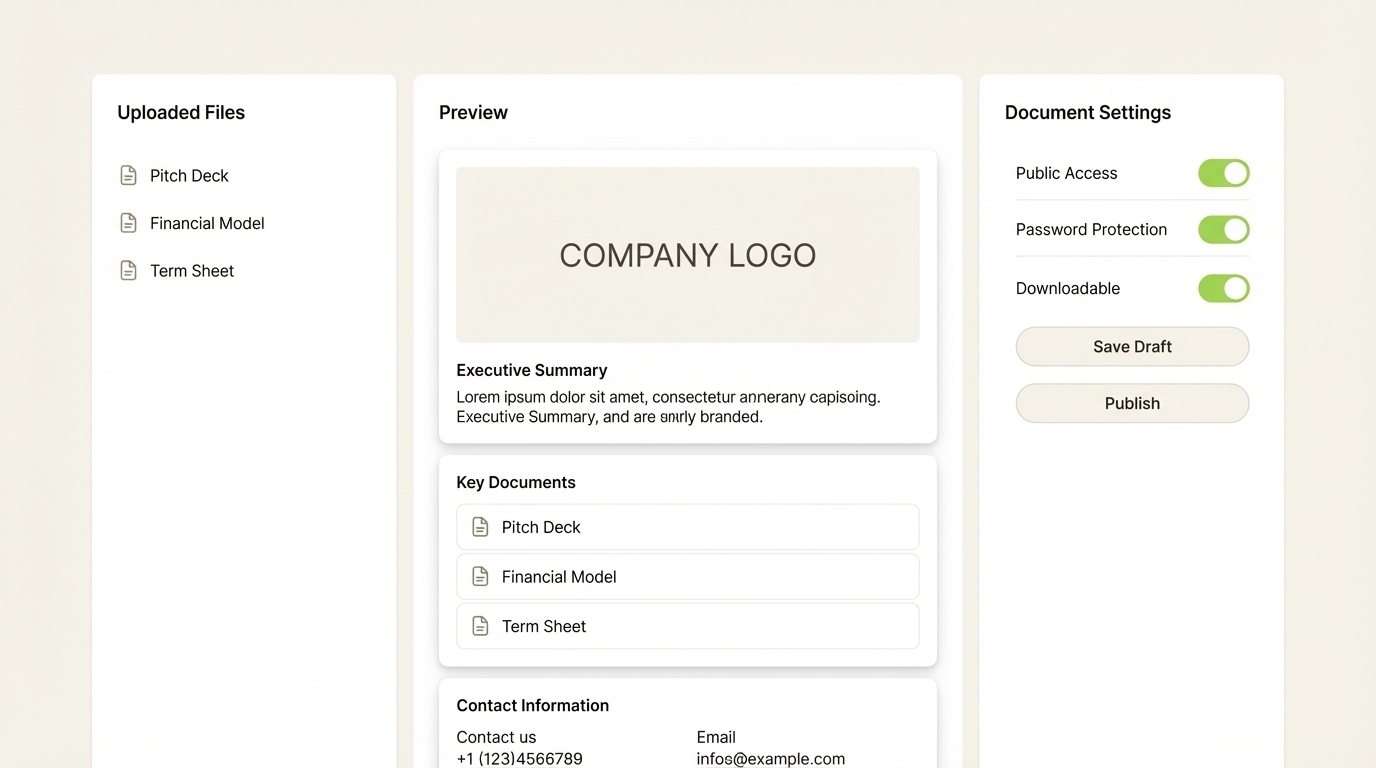
SendNow's deal room builder lets you configure your branded microsite, upload documents, and set access controls from a single panel.
4. How Do Deal Room Analytics Help Close Deals Faster?
This is where modern deal room software fundamentally changes how you sell.
When a prospect receives an email attachment, you lose all visibility the moment they download it. When they visit a deal room, you gain page-by-page analytics on every session.
Good deal room analytics tell you:
- Which pages got the most time — so you know what the prospect cares about
- Which pages were skipped entirely — so you know what objections to address
- How many times they returned — a strong buying signal
- Whether they shared the link with colleagues — indicating the deal is expanding internally
- At what point they stopped reading — revealing where the narrative loses them
Walnut.io's deal room documentation describes deal room insights as providing "complete visibility into deal engagement and momentum." That visibility replaces guesswork with data.
Spekit notes that AI-powered deal rooms are transforming how complex deals close, particularly in B2B environments where 6-10 decision-makers each conduct independent research. AI engagement scoring aggregates all of this behavior into a single signal: is this deal heating up or cooling down?
SendNow builds this AI engagement scoring natively into every deal room. Rather than manually interpreting a spreadsheet of page views, you get a real-time score that tells you exactly when to call. When the score spikes, your prospect is reading your financial model right now. That is the moment to pick up the phone.
5. What Is NDA Gating and Why Does It Matter?
NDA gating is a document access control that requires a visitor to sign a Non-Disclosure Agreement before they can view the contents of a deal room.
In finance, the documents you share during a deal frequently contain information that would cause serious competitive or legal harm if disclosed to the wrong person. Financial models, acquisition targets, fund performance data, and proprietary pricing all qualify as material non-public information in many contexts.
Pinsent Masons emphasizes that "putting in place measures to protect confidentiality during business sale negotiations should not be neglected," pointing to NDAs and data rooms as essential tools.
Investopedia defines an NDA as "a legally binding contract that establishes a confidential relationship." In the context of deal rooms, NDA gating means that the digital agreement appears as an interstitial step before document access, and the signed NDA is timestamped and stored automatically.
Without NDA gating, any deal room link you send could theoretically be forwarded to a competitor, a journalist, or a regulator — with no legal recourse and no record of who accessed what.
With NDA gating, every viewer is identified, every signature is recorded, and your legal protection travels with the document.
6. How Do You Brand a Deal Room for Investors or Buyers?
Branding a deal room is not cosmetic. It is a trust signal at the most high-stakes moment in your commercial relationship.
When a VC receives a pitch deck from an unknown founder via a generic shared link, the visual experience communicates as much as the content does. A deal room with your logo, brand colors, and custom domain tells the investor that you run a tight operation. A raw Dropbox link tells them the opposite.
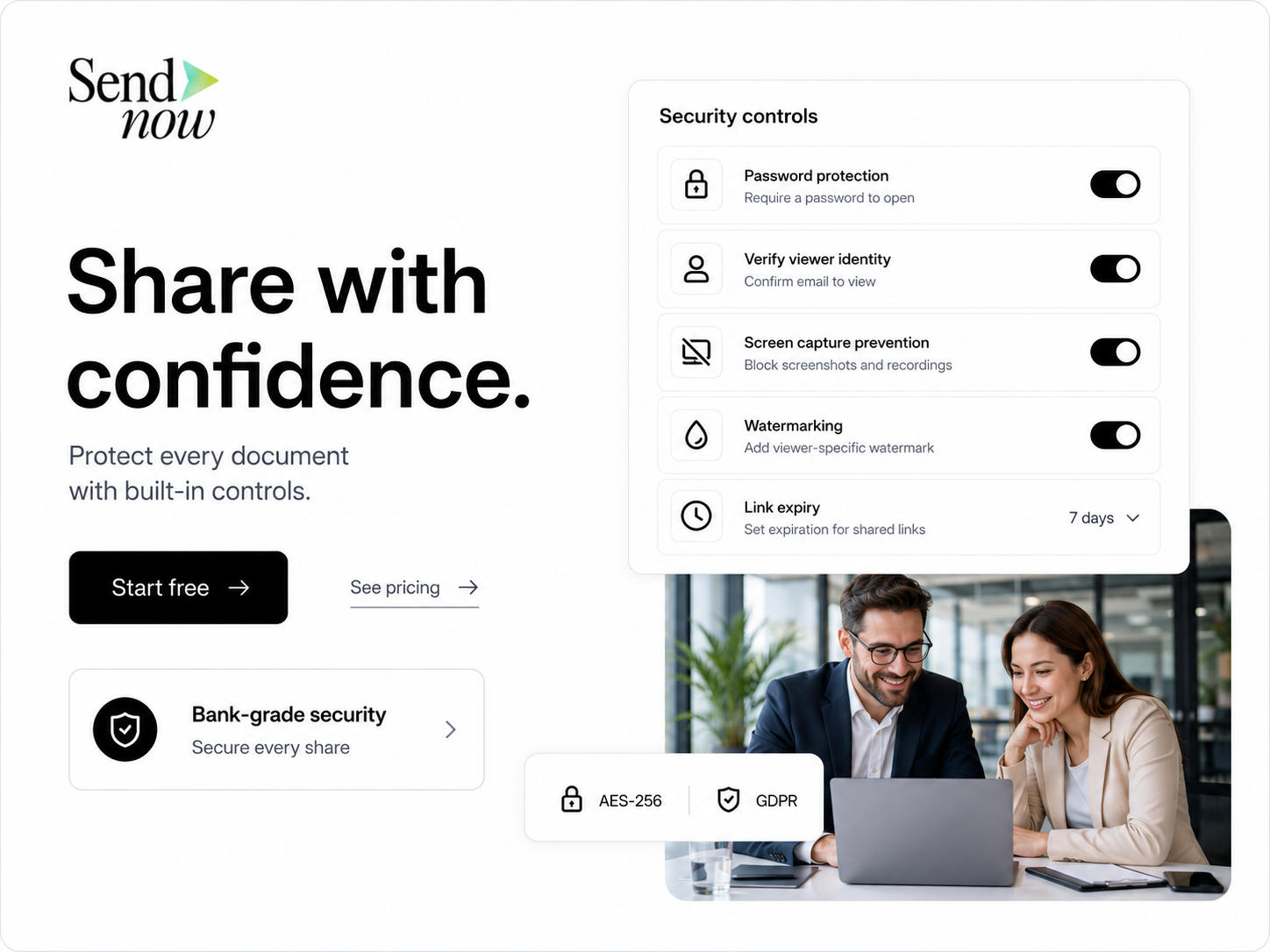
Effective deal room branding includes:
- Your logo and brand colors prominently displayed on the landing page
- A custom domain or subdomain (e.g., deals.yourfirm.com) instead of a generic tool URL
- A personalized cover message addressing the specific counterparty by name
- Consistent typography and layout that matches your firm's visual identity
- A professional cover image or header banner that sets the tone
GetAccept's deal room guide highlights branded microsites as one of the six deal room features every team needs, noting that the buyer experience within the room directly affects deal momentum.
The logic is simple: buyers form impressions fast. A branded, organized deal room signals that you take the relationship seriously. It also keeps your prospect immersed in your narrative from first click to final signature rather than bouncing between documents in their local Downloads folder.
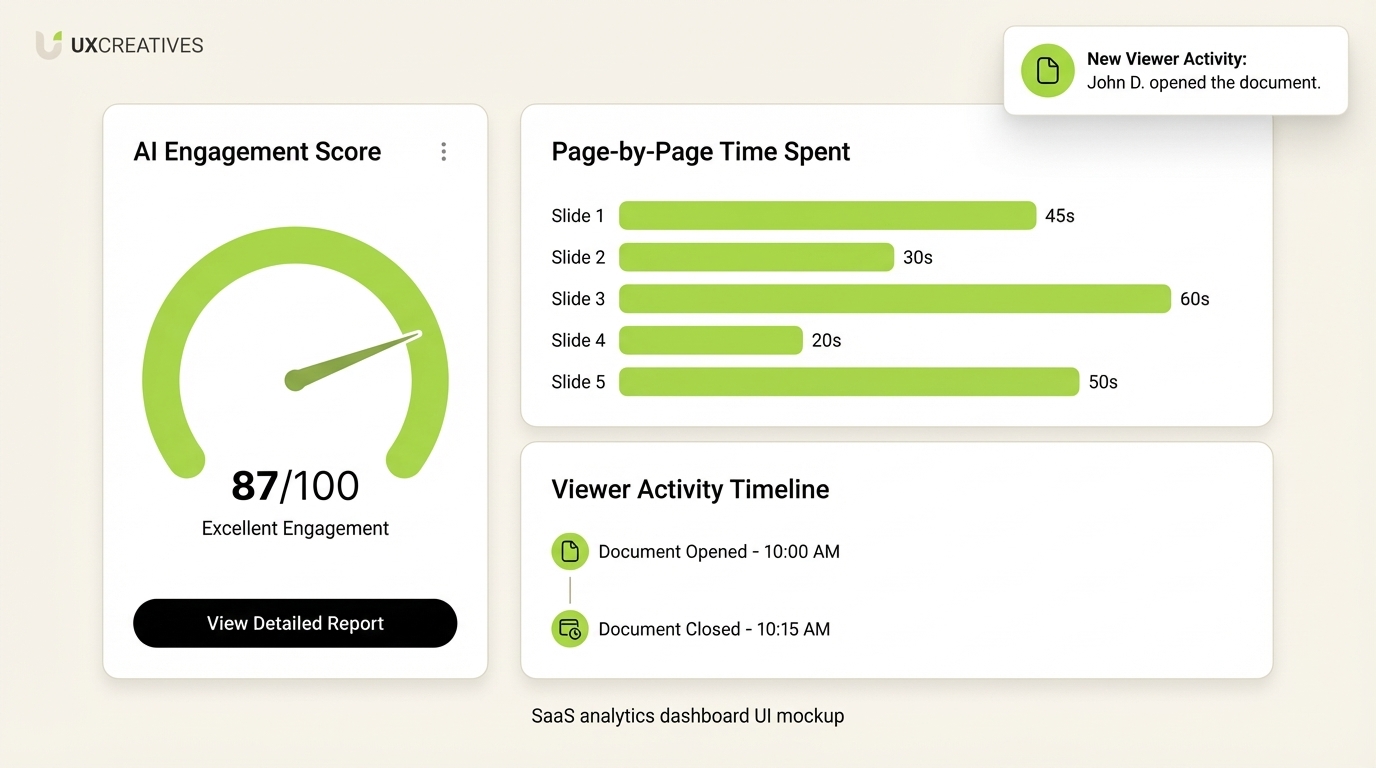
SendNow's AI engagement scoring aggregates page-by-page view data into a single score, so your team knows exactly when a prospect is ready for a follow-up call.
7. What Is the Best Deal Room Software in 2026?
The best deal room software for your team depends on your primary use case — fundraising, enterprise sales, or M&A — and the features you actually need versus the ones you pay for but never use.
DocSend (owned by Dropbox) is the most recognized name in document analytics and deal rooms. It offers robust tracking and is widely adopted by VC-backed startups for pitch deck sharing. However, DocSend's pricing scales aggressively for teams, and it lacks finance-specific features like AI engagement scoring and NDA gating built natively into the deal room experience. Multiple sources note that DocSend pricing becomes a friction point as teams grow.
PandaDoc focuses heavily on document creation, eSignatures, and proposals. It is a strong choice for sales teams that need contract execution but less suited for finance teams focused on investor relations and deal analytics.
Digify offers strong document security controls including watermarking and access expiry, making it popular in legal and finance contexts. It lacks the AI engagement scoring and branded microsite capabilities that modern deal teams expect.
SendNow is purpose-built for finance-first teams. It combines page-by-page analytics, AI engagement scoring, NDA gating, screenshot protection, dynamic watermarks, branded deal rooms, custom domains, and Slack integrations in a single platform. Pricing starts at $9/month for the Pro plan (no credit card required to try), making it significantly more accessible than enterprise VDR alternatives. For teams that want the capabilities of a premium deal room without the enterprise price tag, SendNow is the strongest option in the market today.
The Real Reason Deals Stall
Deal stalls almost always trace back to the same root cause: the seller does not know where the buyer is in their decision process.
They send documents into a void. They guess at timing. They follow up too early and seem desperate, or too late and lose momentum to a competitor who happened to call at exactly the right moment.
Deal room analytics eliminate that guesswork. When you know a prospect spent 14 minutes on your financial projections and just opened your competitive comparison for the second time, you do not need to guess when to call. You already know.
Building a deal room that actually closes deals requires four things: the right documents, a branded experience that builds trust, security controls that protect your sensitive content, and analytics that tell you when your buyer is ready.
Tools have caught up with that requirement. The only question is whether your team has.
Build Your First Deal Room Today
SendNow gives finance and sales teams everything they need to build deal rooms that close: branded microsites, page-by-page analytics, AI engagement scoring, NDA gating, screenshot protection, and real-time Slack notifications.
Plans start from $9/month. No credit card required to start your free trial.
Start your free trial at sendnow.live
Keep Reading
About the Author: Rifana Hameem
Rifana is the founder of SendNow. She leads the team in building secure, compliant, and analytics-rich document sharing tools for finance and professional teams worldwide.
Connect on LinkedIn