Virtual Data Room vs Deal Room: Key Differences Explained

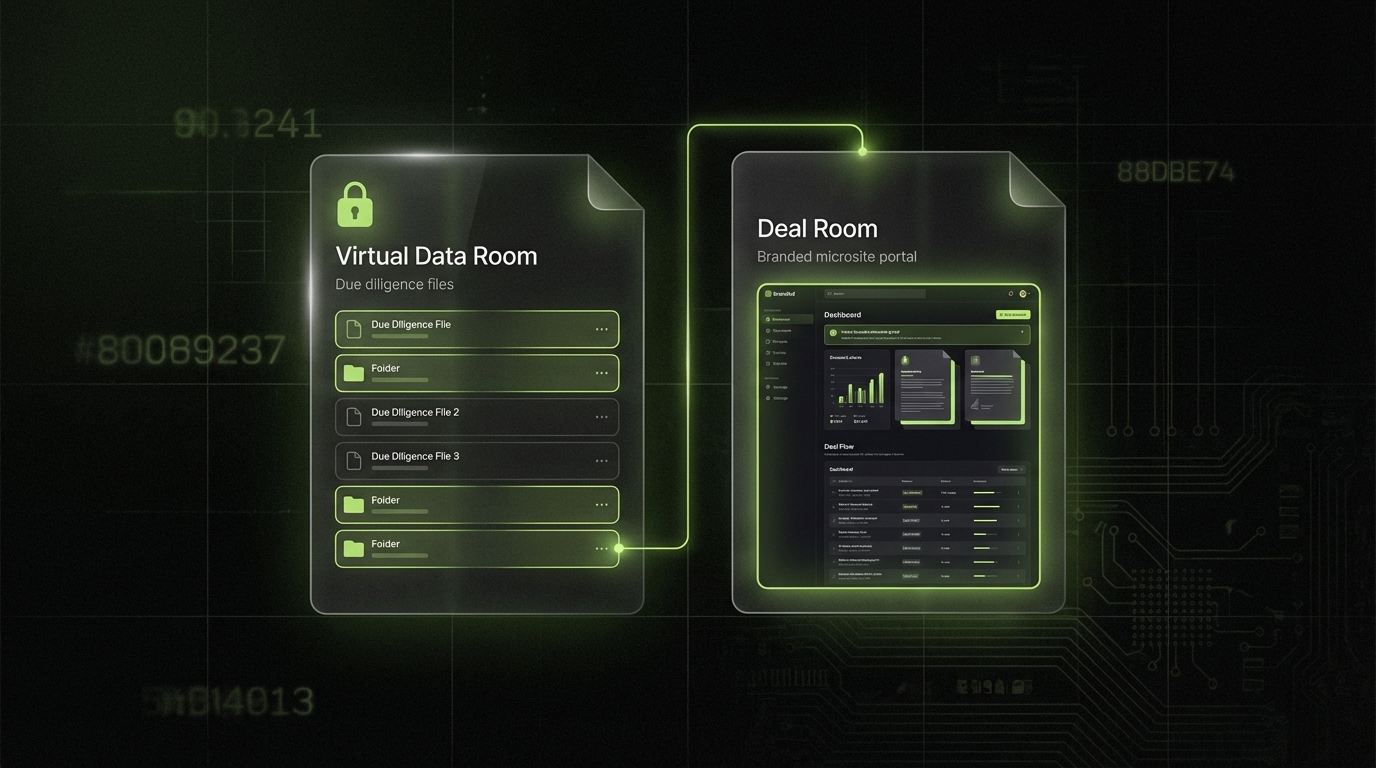
- A virtual data room (VDR) is a secure, structured repository for storing and sharing large volumes of confidential documents during due diligence, M&A, or legal proceedings.
- A deal room is a purpose-built, branded digital environment focused on the investor experience, document presentation, and real-time engagement analytics.
- VDRs prioritize compliance, permissioned access, and bulk document management. Deal rooms prioritize deal momentum, AI-powered engagement scoring, and branded interactions.
- For finance professionals running active transactions, the most powerful platforms combine both functions in one place.
- Tools like SendNow give deal teams a single platform that handles secure storage AND deal room branding with page-level analytics -- eliminating the need for two separate subscriptions.
Virtual Data Room vs Deal Room: Key Differences Explained
A virtual data room and a deal room are not the same tool, even though the terms often get used interchangeably. This guide breaks down exactly what separates them, when to use each, and which solution finance professionals actually need in 2026.
Introduction
If you work in venture capital, investment banking, or private equity, you have almost certainly used both terms. Someone asks for a "data room" and you send a structured folder of financial documents. Someone asks for a "deal room" and you send a branded microsite with your pitch deck and a custom link.
In reality, the two concepts overlap significantly -- but they serve different purposes at different stages of a transaction. Using the wrong tool at the wrong stage can slow a deal down, signal disorganization to potential buyers or investors, and create security gaps that put sensitive information at risk.
The global virtual data room market reached USD 2.46 billion in 2024 and is expected to grow at a CAGR of 18.1% through 2029, driven by the acceleration of cross-border M&A and rising regulatory requirements around data privacy. Source: data-rooms.org.
This guide answers the seven questions finance professionals ask most when comparing virtual data rooms and deal rooms -- with clear, practical answers to help you choose the right structure for every stage of your deal.
1. What Is a Virtual Data Room?
A virtual data room (VDR) is a secure, cloud-based repository for storing, organizing, and distributing confidential documents. It replaces the original physical data room model, where buyers and sellers had to physically visit a secure location to review printed documents.
According to Investopedia, a VDR "is a secure online repository for document storage and distribution... typically utilized during the due diligence process preceding a merger or acquisition to review, share, and disclose company documentation."
Core VDR functions include:
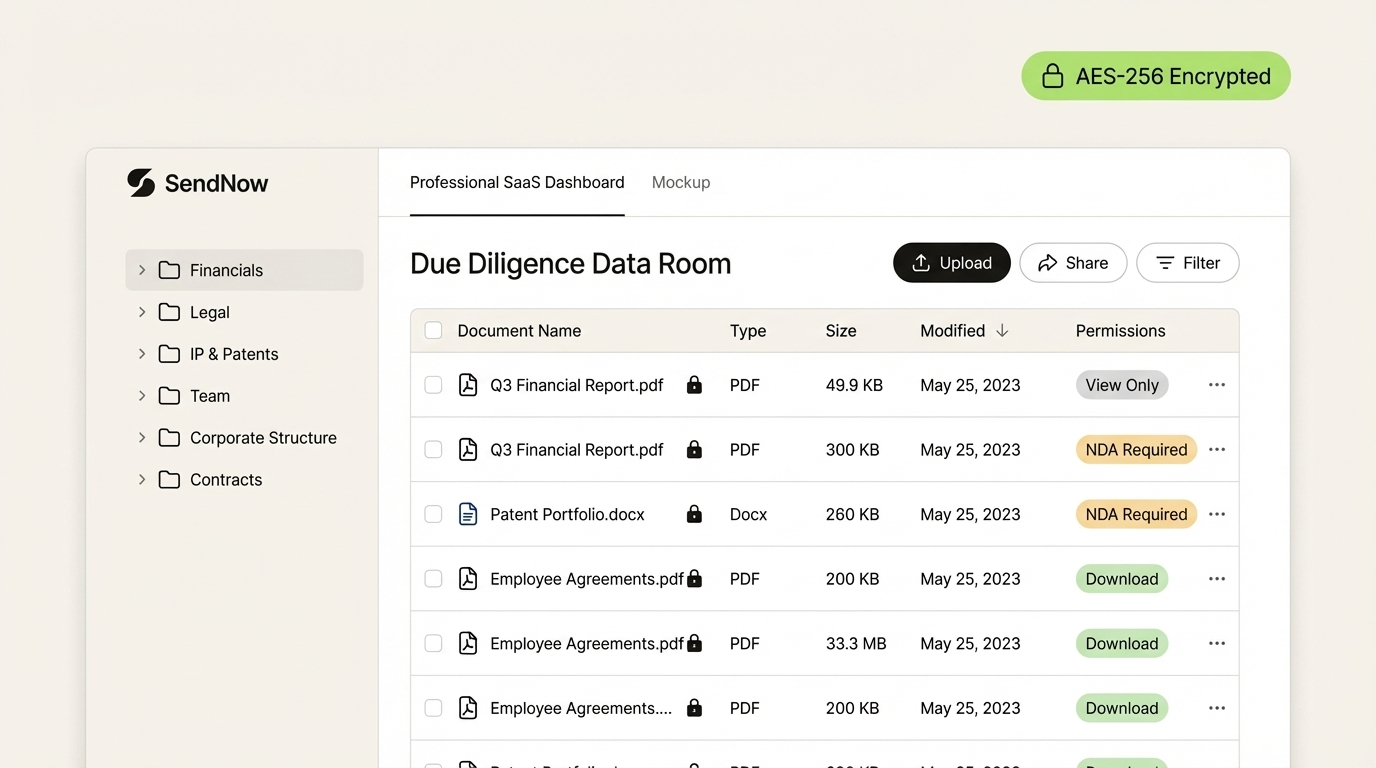
- Bulk document management -- upload and organize hundreds or thousands of files into a structured folder hierarchy
- Granular access controls -- assign specific permissions per user, group, or file (view-only, download, edit)
- Audit trails -- full logs of who accessed what document and when
- AES-256 encryption -- at-rest and in-transit encryption to meet regulatory standards
- GDPR and SOC 2 compliance -- mandatory for cross-border transactions involving EU data subjects
VDRs are the standard tool for M&A due diligence, IPO preparation, legal proceedings, licensing deals, and any transaction where a large volume of structured, permissioned document access is required. Source: Corporate Finance Institute.
2. What Is a Deal Room in Finance and M&A?
A deal room is a secure digital environment built specifically to manage and present a business transaction. While a VDR stores documents for review, a deal room curates an experience -- it controls what investors or buyers see, in what order, and delivers real-time intelligence on how they engage with that content.
The key differentiator is intent. A VDR says "here are all the documents you're permitted to see." A deal room says "here is our story -- and we know exactly which chapter you care about most."
Modern deal rooms include:
- Branded microsites -- white-labeled portals with custom domain (e.g., deal.yourfirm.com)
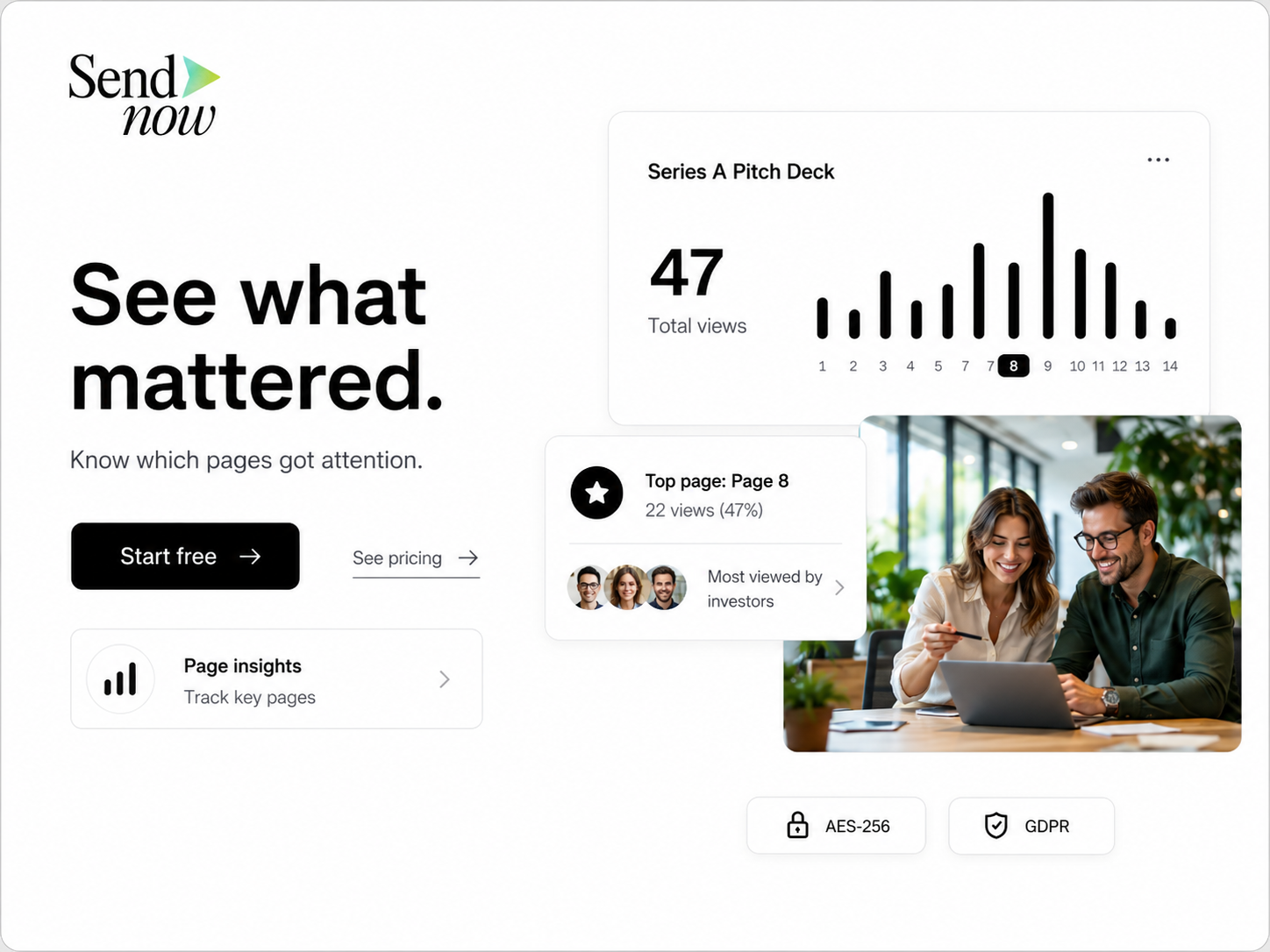
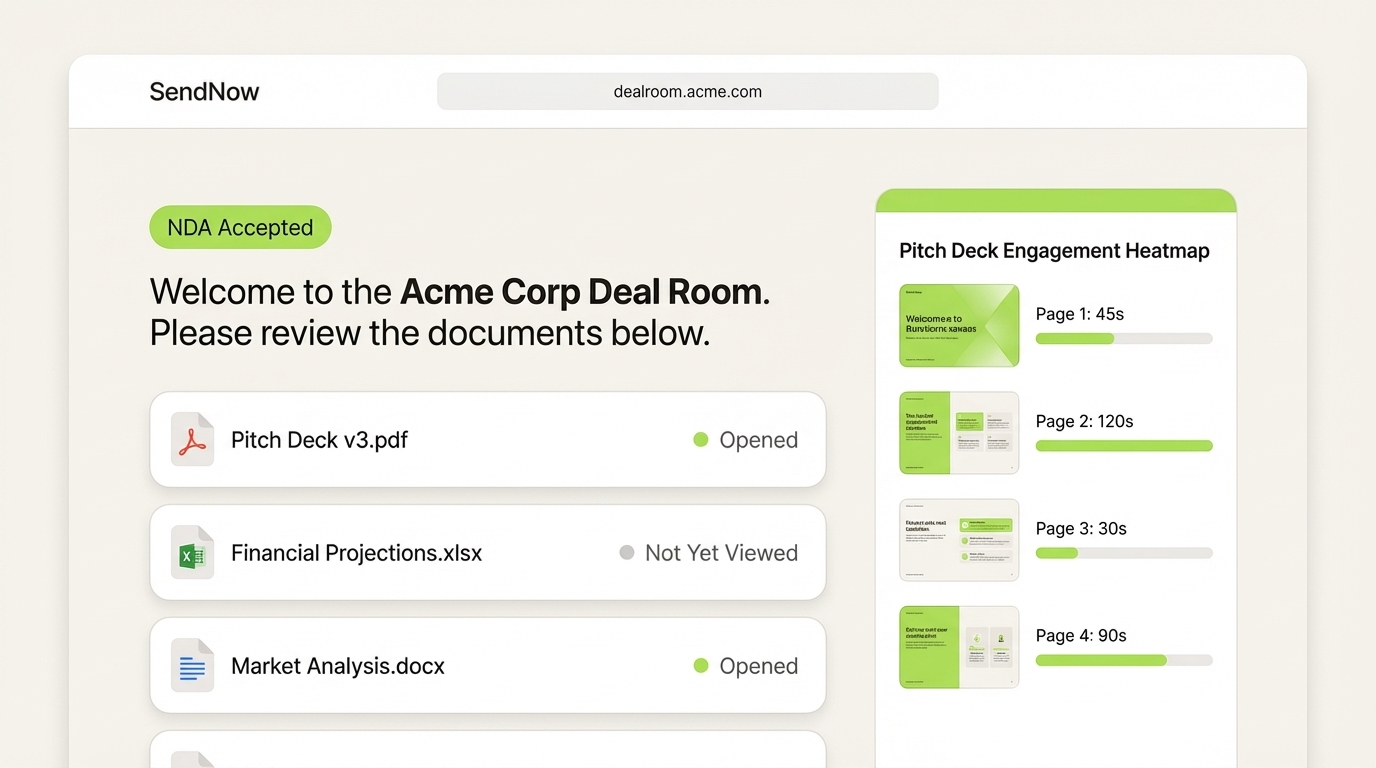
- Page-by-page analytics -- tracking exactly which slide or page each recipient spent the most time on
- AI engagement scoring -- an algorithmic signal of how interested a given investor or buyer is based on behavior patterns
- NDA gating -- recipients must accept a non-disclosure agreement before accessing any documents
- Real-time open notifications -- instant alerts when a recipient opens a document or returns for a second look
- AI chatbot on documents -- recipients can ask questions about the materials directly inside the deal room
ShareVault notes that deal rooms "go beyond simple document sharing -- they create an immersive, controlled experience for counterparties, with built-in communication, tracking, and governance tools."
3. What Is the Main Difference Between a Virtual Data Room and a Deal Room?
The clearest way to separate the two is by purpose and audience orientation.
| Feature | Virtual Data Room | Deal Room |
|---|---|---|
| Primary purpose | Structured document storage and permissioned access | Curated deal presentation and engagement analytics |
| Typical use stage | Mid-to-late due diligence | Early outreach through deal close |
| Document volume | Hundreds to thousands of files | 1-50 curated documents |
| Analytics depth | Access logs, who opened what | Page-by-page heatmaps, AI engagement scores |
| Branding | Minimal, provider-branded | Fully branded microsite, custom domain |
| NDA gating | Available on most platforms | Core feature, often required before entry |
| Audience | Legal, financial, technical diligence teams | Investors, potential buyers, deal decision-makers |
| Cost range | $500-$3,000+/month (enterprise) | $12-$300/month depending on platform |
According to DealRoom.net, modern VDR platforms are adding deal room-style functionality, and the lines are increasingly blurring. However, the fundamental orientation of each tool remains distinct.
A VDR assumes you are managing complexity -- many documents, many users, many permissions. A deal room assumes you are managing perception -- a small number of key documents, a small number of key decision-makers, and maximum intelligence on every interaction.
4. When Should You Use a Virtual Data Room Instead of a Deal Room?
The answer depends on your deal stage and your counterparty.
Use a virtual data room when:
- You are in formal due diligence and need to share 200+ documents across legal, financial, and technical workstreams
- Multiple parties need different permission levels for the same document set (e.g., buyer's legal counsel sees everything, financial advisors see financials only)
- You need a complete audit trail for regulatory or legal purposes
- Your deal involves international parties and requires GDPR or cross-border data residency compliance
- You are in an IPO process and need SEC-compliant document management
According to SmartRoom, "investment banking, private equity, corporate development, and legal teams use VDRs to centralize documents, control access, and share confidential documents during critical transactions."
Use a deal room when:
- You are running an early-stage fundraise and want to control the investor narrative
- You are presenting an acquisition opportunity to 3-10 potential buyers who need to see a curated information memorandum
- You want to know which specific sections of your CIM or pitch deck an investor engaged with most -- before you take a call with them
- You need NDA acceptance logged before any document is viewed
- You want your materials delivered through a branded, professional portal rather than an email attachment
The practical reality for most investment banking and VC teams is that both tools are needed across a single transaction lifecycle. Most modern platforms -- including SendNow -- combine both capabilities, so teams do not need separate vendor contracts for each stage.
5. What Security Features Do Virtual Data Rooms and Deal Rooms Share?
Both VDRs and deal rooms handle highly sensitive financial information. Regulatory expectations for both are significant, especially for transactions involving EU data subjects (GDPR) or US public companies (SEC).
The security layer that serious platforms share includes:
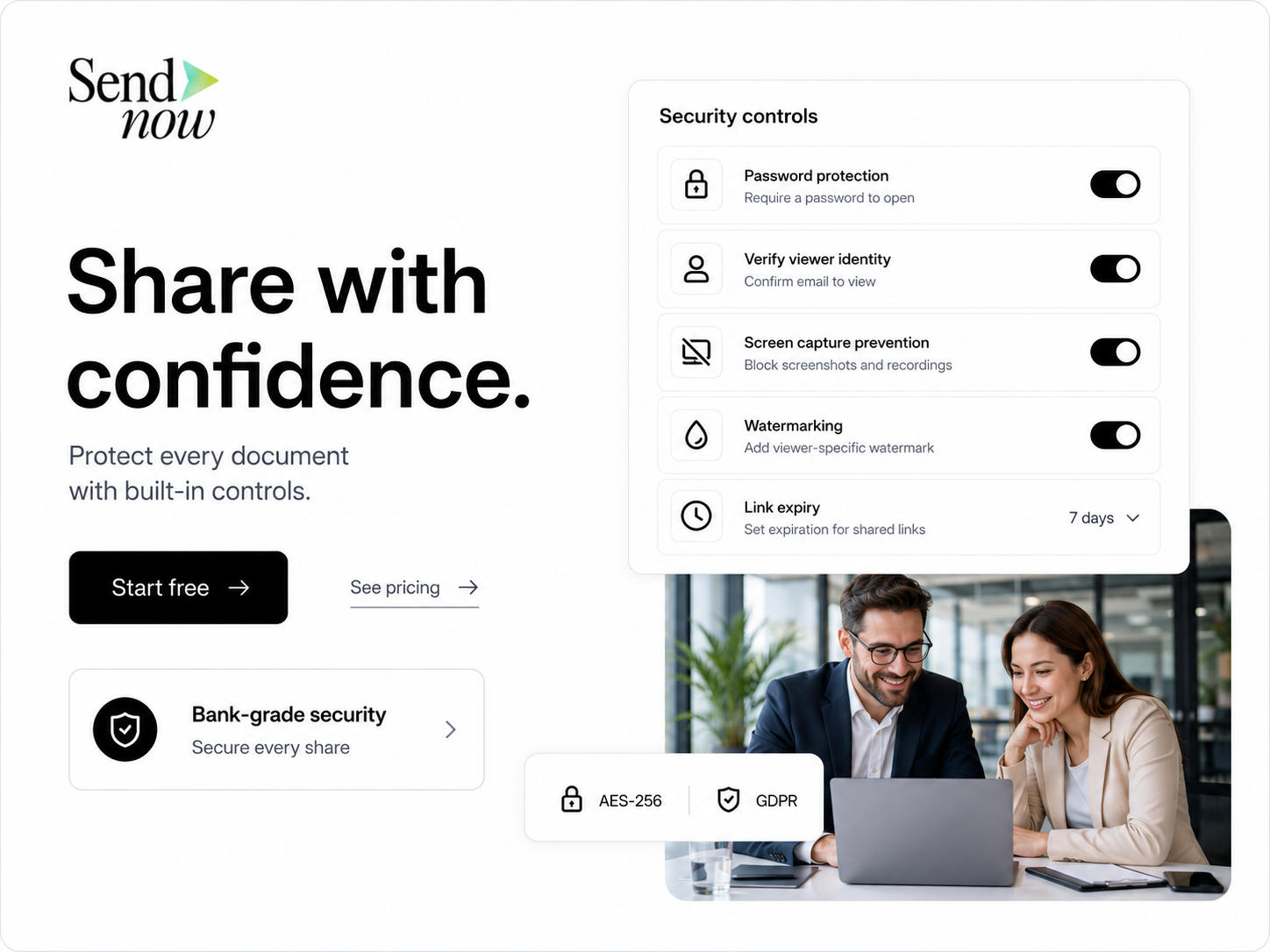
Encryption: AES-256 encryption is the industry standard for both at-rest and in-transit document protection. According to Kiteworks, "encryption is the foundational security control for any VDR used in high-stakes transactions."
Dynamic watermarks: Automatically stamping each document view with the recipient's email address and IP address. This deters unauthorized screenshots and creates an audit trail in the event of a leak.
Screenshot protection: Blocking or obscuring screen capture attempts within the document viewer.
Access controls and user permissions: The ability to assign read-only, download-restricted, or time-limited access per user or per document.
Audit logs: Comprehensive logs of every action -- who opened what, when, from which IP and device -- for both compliance reporting and post-deal review.
NDA gating: Requiring a legally binding NDA acceptance before any document is accessible. Orangedox notes that one-click NDA acceptance prevents deal stalls while maintaining legal enforceability.
GDPR compliance and data residency: For deals involving European parties, data must be stored and processed in compliance with GDPR. AWS-hosted platforms with configurable data residency options provide the most flexibility.
The key difference is that enterprise VDRs (Intralinks, Datasite) tend to carry more formal compliance certifications (ISO 27001, SOC 2 Type II) because their primary use case involves regulatory filings. Deal room tools like SendNow prioritize GDPR compliance and AES-256 encryption as the baseline for finance-first document sharing without the $10,000+/month price tag of enterprise VDRs.
6. How Do Deal Rooms Support Document Analytics and Investor Engagement Tracking?
This is where deal rooms pull clearly ahead of traditional VDRs. The analytics layer in a deal room is purpose-built to tell you something operationally useful: which investor is actually interested in this deal.
Traditional VDR analytics show access logs -- "User A downloaded File B at 3:47pm." Useful for compliance, but not for deal intelligence.
Deal room analytics go several layers deeper:
Page-by-page engagement data shows which specific pages of your pitch deck or CIM each recipient spent the most time on. If an investor spent 8 minutes on your financial projections and 30 seconds on the team page, that is meaningful signal before your next call.
AI engagement scoring assigns a composite interest score to each viewer based on behavioral patterns: time spent, return visits, pages viewed, sections downloaded, NDA acceptance speed. This turns raw analytics into a ranked list of "most interested" vs. "low-interest" counterparties.
Real-time open notifications alert the sending team the moment a document is opened -- or when a recipient returns for a second view. Deal teams use these alerts to time follow-up calls for maximum impact.
Slack and webhook integrations route these notifications directly into existing team workflows, so no one needs to check a dashboard -- the intelligence comes to you.
According to MnaCommunity, "VDRs that include analytics capabilities reduce the time teams waste chasing uninterested parties and allow them to concentrate resources on the highest-probability counterparties."
SendNow's AI engagement scoring layer synthesizes all of these signals into a single score per recipient -- giving deal teams a clear priority order for follow-up without any manual interpretation.
7. Can a Single Platform Work as Both a Virtual Data Room and a Deal Room?
Yes -- and in 2026, the best finance teams insist on it.
The historical reason for separate tools was market segmentation. Enterprise VDR vendors (Intralinks, Datasite) built platforms for complex M&A transactions at $1,000+ per month. Deal room tools (DocSend, Digify) served the lighter-weight document sharing needs of startups and smaller advisory firms.
The gap has closed. Modern platforms designed specifically for finance professionals now combine:
- Structured folder repositories with granular permission levels (VDR functionality)
- Branded microsites and custom domain deal rooms (deal room functionality)
- Page-level analytics, AI engagement scoring, and real-time notifications (deal intelligence)
- NDA gating, screenshot protection, and dynamic watermarks (security layer)
- Slack integrations, webhook support, and AI chatbots on documents (workflow layer)
SendNow is built on exactly this premise. It gives investment bankers, VCs, PE firms, and financial advisors a single platform that handles every stage of a deal's document workflow -- from the initial NDA-gated introduction through full due diligence -- starting at $9/month for the Pro plan or $43/month for Business. There is no credit card required for the free trial.
This matters especially in a market where DocSend removed its free plan in March 2025 and enterprise VDR costs continue to climb. Finance teams at boutique advisory firms and emerging managers can now access institutional-grade document infrastructure without enterprise pricing.
Conclusion: The Right Tool for Every Stage of the Deal
The virtual data room vs deal room question is ultimately a question of deal stage and intent.
A VDR is the right infrastructure for formal due diligence: large document volumes, multiple stakeholders with differentiated access, and regulatory audit trails. A deal room is the right environment for deal marketing: controlled narratives, investor engagement intelligence, and branded first impressions.
The most competitive finance teams in 2026 do not choose between them. They use a platform that delivers both -- structured enough for due diligence, intelligent enough to tell them which investor is ready to move.
Ready to combine your data room and deal room into one secure, analytics-driven platform? Start your free trial at SendNow -- no credit card required. Pro plan starts at $9/month.
Sources:
- Investopedia -- Virtual Data Room (VDR)
- Corporate Finance Institute -- Data Room
- MnaCommunity -- M&A Data Room Complete Guide
- SmartRoom -- Virtual Data Room Features
- Kiteworks -- VDR Compliance Guide
- Orangedox -- NDA Gating
- ShareVault -- What Is a Deal Room
- DealRoom.net -- M&A Virtual Data Room
- data-rooms.org -- NDA in Business Transactions
Keep Reading
About the Author: Rifana Hameem
Rifana is the founder of SendNow. She leads the team in building secure, compliant, and analytics-rich document sharing tools for finance and professional teams worldwide.
Connect on LinkedIn