
Best Practices for Document Governance in Corporate Finance

Best Practices for Document Governance in Corporate Finance
Executive Summary / TL;DR
In the fast-paced world of corporate finance, effective document governance is crucial for ensuring compliance, protecting sensitive information, and maintaining operational efficiency. However, many organizations face significant challenges, including data leaks, regulatory compliance issues, and inefficient workflows. This article outlines the current security vulnerabilities associated with document management, industry-specific best practices for document governance, and actionable steps to enhance security and compliance. By implementing these best practices, organizations can safeguard their documents, streamline processes, and ultimately drive better business outcomes.
Current Security Vulnerabilities
In today’s corporate finance landscape, the reliance on traditional file-sharing methods such as emails and cloud storage services like Dropbox poses significant security risks. These platforms often lack robust security measures, making sensitive financial documents vulnerable to unauthorized access and data breaches.
Common Vulnerabilities Include:
-
Email Leaks: Emails are often sent without encryption, making them susceptible to interception. Sensitive information can be easily leaked if the wrong recipient is included in the email chain.
-
Uncontrolled Access: Cloud storage solutions typically allow for broad sharing capabilities, which can lead to unauthorized access by individuals who do not have a legitimate need to view the documents.
-
Lack of Version Control: When multiple versions of documents exist, it can become challenging to track changes and ensure that all stakeholders are working from the most current version. This can lead to confusion and errors in financial reporting.
-
Regulatory Compliance Risks: Financial documents are subject to strict regulatory requirements, including GDPR and SEC regulations. Failure to comply can result in hefty fines and damage to an organization's reputation.
-
Inadequate Audit Trails: Many file-sharing solutions do not provide sufficient logging capabilities to track who accessed documents and when, making it difficult to conduct audits and investigations.
Industry-Specific Best Practices
To mitigate these vulnerabilities, organizations in corporate finance should adopt industry-specific best practices for document governance. Here are actionable steps to enhance document security and compliance:
1. Implement a Document Management System (DMS)
Investing in a robust Document Management System (DMS) can centralize document storage and provide enhanced security features. Look for a DMS that offers:
- Access Controls: Define user roles and permissions to restrict access to sensitive documents.
- Encryption: Ensure that documents are encrypted both in transit and at rest.
- Version Control: Maintain a clear history of document revisions to prevent confusion.
2. Establish Clear Document Governance Policies
Create comprehensive policies that outline how documents should be created, shared, and stored. Key elements to include are:
- Document Classification: Categorize documents based on sensitivity and establish guidelines for handling each category.
- Retention Policies: Define how long documents should be retained and when they should be securely disposed of.
- Access Procedures: Specify who can access certain documents and under what circumstances.
3. Train Employees on Document Security
Regular training sessions can help employees understand the importance of document governance and the specific practices they should follow. Topics to cover include:
- Recognizing Phishing Attempts: Educate employees on how to identify and avoid phishing scams that could compromise sensitive information.
- Secure Sharing Practices: Teach employees how to securely share documents using approved methods and tools.

4. Conduct Regular Audits
Regular audits of document management practices can help identify vulnerabilities and ensure compliance with established policies. During audits, assess:
- Access Logs: Review who has accessed documents and whether access aligns with established policies.
- Compliance with Retention Policies: Ensure that documents are being retained and disposed of according to established guidelines.
5. Utilize Advanced Security Features
Leverage advanced security features to further protect sensitive documents. Consider implementing:
- Dynamic Watermarking: Apply watermarks that display user information, discouraging unauthorized sharing.
- Screenshot Blocking: Prevent users from taking screenshots of sensitive documents.
- Link Expiry: Set expiration dates for shared links to limit access over time.
SendNow Feature Deep-Dive
One solution that addresses many of the vulnerabilities associated with document sharing is SendNow. This platform offers a suite of features designed to enhance document security and governance.
Key Features of SendNow:
-
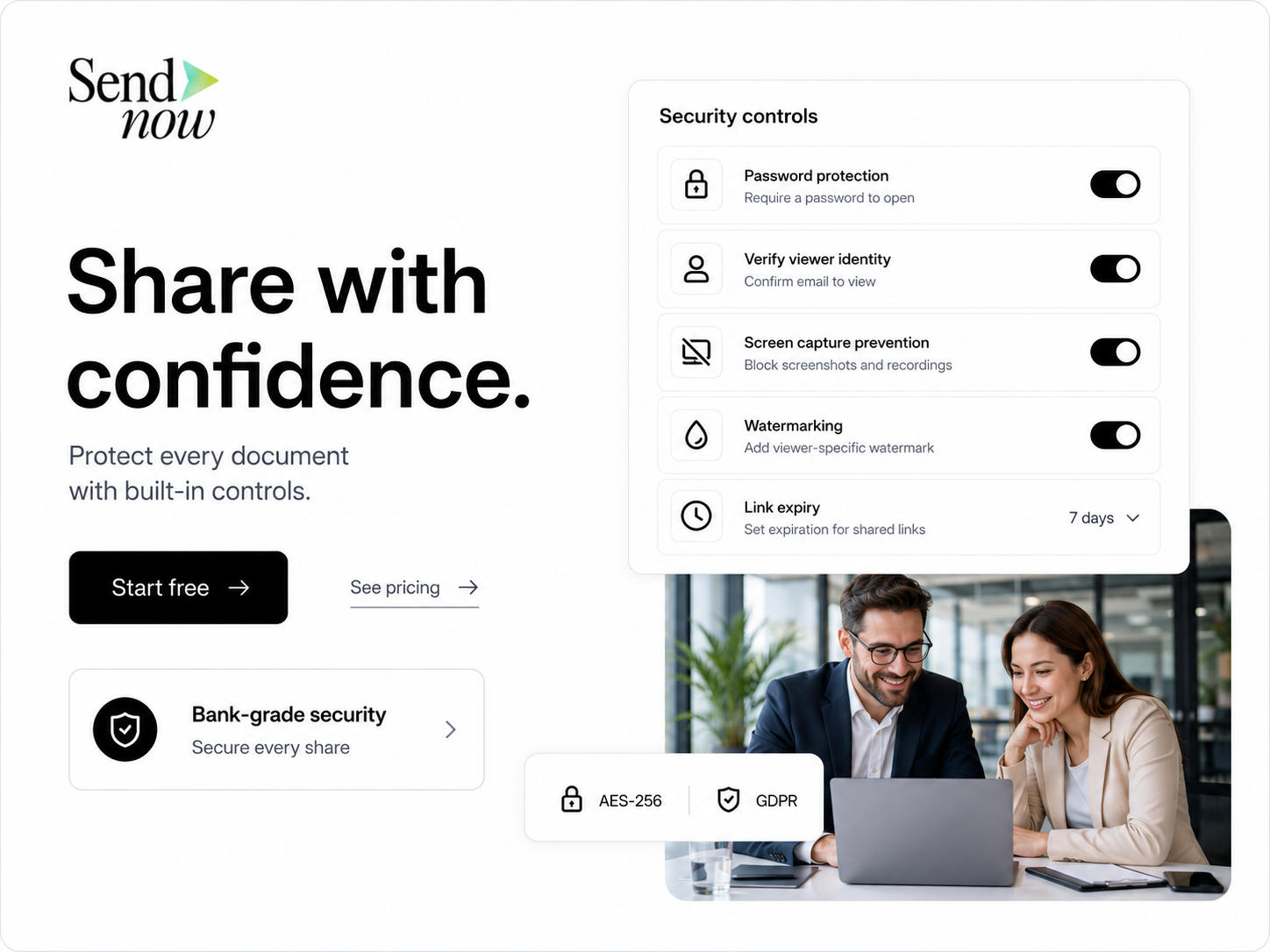
Dynamic Watermarking: SendNow allows users to apply dynamic watermarks to documents, displaying the recipient's information. This discourages unauthorized sharing and provides accountability.
-
Screenshot Blocking: The platform includes features that prevent users from taking screenshots of sensitive documents, further protecting confidential information.
-
Email Gates: SendNow requires recipients to verify their email addresses before accessing documents, ensuring that only authorized individuals can view sensitive information.
-
Link Expiry: Users can set expiration dates for shared links, automatically revoking access after a specified period. This reduces the risk of unauthorized access over time.
-
NDA Gates: SendNow can require recipients to agree to a Non-Disclosure Agreement (NDA) before accessing sensitive documents, providing an additional layer of legal protection.
For more information about SendNow and its features, visit their official LinkedIn page: SendNow LinkedIn.
Regulatory Compliance
Incorporating SendNow into your document governance strategy can also help ensure compliance with regulations such as GDPR and SEC guidelines. For more information on GDPR, visit GDPR Info. For e-signature regulations, refer to eSign Act.
Technical Walkthrough
To maximize the benefits of SendNow, follow this step-by-step guide for setting up and securely sharing documents:
Step 1: Uploading Documents
- Log into SendNow: Access your SendNow account.
- Navigate to the Upload Section: Click on the “Upload” button.
- Select Files: Choose the documents you wish to upload from your device.
- Add Metadata: Include relevant metadata such as document title, description, and classification level.
Step 2: Configuring Links
- Create a Shareable Link: After uploading, select the document and click on “Create Link.”
- Set Expiry Date: Choose an expiration date for the link to limit access.
- Enable Security Features: Activate dynamic watermarking, screenshot blocking, and email gates as needed.
- Add NDA Requirement: If necessary, enable the NDA gate to require recipients to agree to terms before accessing the document.
Step 3: Distributing Documents Safely
- Enter Recipient Information: Input the email addresses of individuals you wish to share the document with.
- Send Notification: Click “Send” to notify recipients of the shared document and any required actions (e.g., signing an NDA).
- Monitor Access: Use SendNow’s tracking features to monitor who accesses the document and when.
ROI & Business Impact
Implementing effective document governance practices can yield significant returns on investment (ROI) for organizations in corporate finance. Key benefits include:
1. Cost-Efficiency
By reducing the risk of data breaches and associated fines, organizations can save substantial amounts of money. Additionally, streamlined document management processes can lead to increased productivity and reduced operational costs.
2. Contract Compliance
Ensuring compliance with regulatory requirements can protect organizations from legal repercussions. By adopting best practices and utilizing tools like SendNow, companies can demonstrate their commitment to compliance and reduce the likelihood of costly violations.
3. Protection Value
Investing in document governance not only protects sensitive information but also enhances the organization’s reputation. Clients and stakeholders are more likely to trust organizations that prioritize data security and compliance.
Structured FAQ
Q1: How can I ensure my documents are secure when sharing them?
To ensure document security, implement a robust Document Management System (DMS), establish clear governance policies, and utilize advanced security features such as dynamic watermarking and link expiry.
Q2: Why is document governance important in corporate finance?
Document governance is crucial in corporate finance to protect sensitive information, ensure compliance with regulations, and maintain operational efficiency. It helps prevent data breaches and enhances accountability.
Q3: What are the risks of using email for document sharing?
Using email for document sharing poses risks such as unauthorized access, data leaks, and lack of version control. Emails are often not encrypted, making sensitive information vulnerable to interception.
Q4: How can SendNow help with document governance?
SendNow offers features such as dynamic watermarking, screenshot blocking, and email gates that enhance document security and compliance. These tools help mitigate risks associated with traditional file-sharing methods.
Q5: What steps should I take to implement document governance in my organization?
Start by investing in a Document Management System (DMS), establishing clear governance policies, training employees on document security, conducting regular audits, and utilizing advanced security features.
Actionable CTA
Ready to enhance your document governance practices? Start a trial on SendNow today and experience the benefits of secure document sharing. Visit SendNow Trial to get started!
By adopting these best practices and leveraging innovative tools like SendNow, organizations in corporate finance can protect sensitive information, ensure compliance, and drive operational efficiency.
About the Author: Rifana Hameem
Rifana is the founder of SendNow. She leads the team in building secure, compliant, and analytics-rich document sharing tools for finance and professional teams worldwide.
Connect on LinkedIn