

Securing Employee Compensation and Payroll Tables During Audits

Securing Employee Compensation and Payroll Tables During Audits
Executive Summary / TL;DR
In today's data-driven world, the security of sensitive employee compensation and payroll information is paramount, especially during audits. Organizations face significant challenges in safeguarding this data from unauthorized access, breaches, and leaks. This article explores the vulnerabilities associated with traditional payroll management systems, outlines industry-specific best practices for securing payroll data, and provides actionable steps to enhance security during audits. Additionally, we will delve into the SendNow feature, which offers robust controls to protect sensitive information, ensuring compliance with regulatory standards. By implementing these strategies, organizations can mitigate risks, enhance data integrity, and maintain trust with employees and stakeholders.
Current Security Vulnerabilities
The management of employee compensation and payroll data is fraught with security vulnerabilities, particularly when traditional file-sharing methods are employed. Common practices such as sending payroll information via email or using unsecured cloud storage solutions like Dropbox expose organizations to various risks, including:
-
Unauthorized Access: Emails can be intercepted, and links to cloud storage can be shared inadvertently, allowing unauthorized individuals to access sensitive payroll data.
-
Data Breaches: Cybercriminals often target payroll systems, exploiting vulnerabilities to gain access to sensitive information. A breach can lead to identity theft, financial fraud, and significant reputational damage.
-
Human Error: Employees may accidentally send payroll data to the wrong recipient or fail to apply necessary security measures, leading to unintentional data leaks.
-
Compliance Risks: Organizations must adhere to various regulatory standards, such as GDPR and HIPAA, which impose strict requirements on data protection. Failure to comply can result in hefty fines and legal repercussions.
-
Inadequate Audit Trails: Traditional systems may lack comprehensive logging and monitoring capabilities, making it difficult to track who accessed payroll data and when.
To address these vulnerabilities, organizations must adopt a proactive approach to securing employee compensation and payroll tables.
Industry-Specific Best Practices
To enhance the security of payroll data during audits, organizations should implement the following best practices:
1. Data Encryption
Ensure that all payroll data is encrypted both in transit and at rest. This means using secure protocols (such as HTTPS and TLS) for data transmission and encrypting files stored on servers.
2. Access Controls
Implement strict access controls to limit who can view and edit payroll information. Use role-based access controls (RBAC) to ensure that only authorized personnel have access to sensitive data.
3. Regular Audits and Monitoring
Conduct regular audits of payroll systems to identify vulnerabilities and ensure compliance with security policies. Implement monitoring tools to track access to payroll data and detect any unauthorized attempts.
4. Employee Training
Provide training to employees on data security best practices, including recognizing phishing attempts, securely sharing information, and reporting suspicious activity.
5. Secure File Sharing Solutions
Utilize secure file-sharing solutions that offer advanced security features, such as dynamic watermarking, screenshot blocking, and link expiry. These features help protect sensitive data from unauthorized access and sharing.
6. Data Minimization
Limit the amount of sensitive data collected and stored. Only retain payroll information that is necessary for compliance and operational purposes, and securely delete any unnecessary data.
7. Incident Response Plan
Develop and maintain an incident response plan to address potential data breaches. This plan should outline steps for containment, investigation, notification, and remediation.
SendNow Feature Deep-Dive
SendNow is a secure file-sharing solution designed to protect sensitive information, including employee compensation and payroll tables. Its specific controls address the vulnerabilities associated with traditional file-sharing methods:
1. Dynamic Watermarking
Dynamic watermarking adds a layer of security by embedding user-specific watermarks on shared documents. This discourages unauthorized sharing and helps trace leaks back to the source.
2. Screenshot Blocking
SendNow's screenshot blocking feature prevents users from taking screenshots of sensitive documents, further protecting against unauthorized dissemination of payroll data.
3. Require Email Gates
By requiring email authentication, SendNow ensures that only authorized users can access shared payroll files. This adds an additional layer of verification before sensitive data is accessed.
4. Link Expiry
SendNow allows users to set expiration dates for shared links, ensuring that access to sensitive payroll data is time-limited. This reduces the risk of unauthorized access after the audit period.
5. NDA Gates
Organizations can require recipients to agree to non-disclosure agreements (NDAs) before accessing sensitive payroll data. This legal safeguard reinforces the importance of confidentiality.
For more information about SendNow and its features, visit their official LinkedIn page: SendNow LinkedIn.
Technical Walkthrough
To securely upload, configure links, and distribute payroll data using SendNow, follow these step-by-step instructions:
Step 1: Create an Account
- Visit the SendNow website and sign up for an account.
- Verify your email address to activate your account.
Step 2: Upload Payroll Data
- Log in to your SendNow account.
- Click on the "Upload" button on the dashboard.
- Select the payroll file you wish to share and click "Open."
- Wait for the file to upload successfully.
Step 3: Configure Link Settings
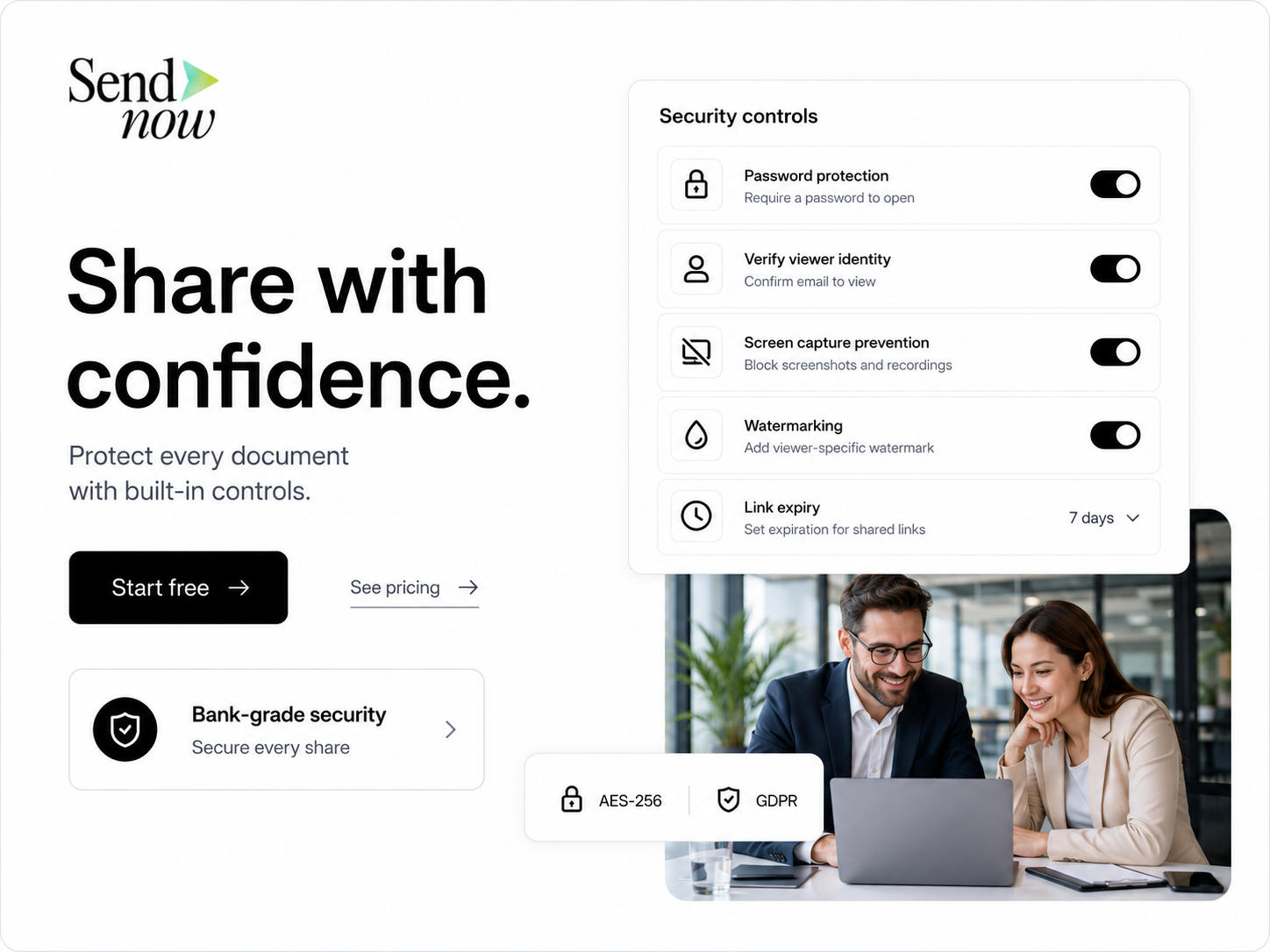
- After the file is uploaded, select the file from your dashboard.
- Click on the "Share" button to generate a shareable link.
- Configure the following settings:
- Dynamic Watermarking: Enable this feature to add watermarks to the document.
- Screenshot Blocking: Toggle this option to prevent screenshots.
- Require Email Gates: Enable this to restrict access to verified email addresses.
- Link Expiry: Set an expiration date for the link to limit access.
- NDA Gates: If necessary, require recipients to agree to an NDA before accessing the file.
Step 4: Distribute the Link
- Copy the generated link.
- Share the link with authorized personnel via secure channels (e.g., encrypted email).
- Monitor access to the file through the SendNow dashboard to ensure compliance.
ROI & Business Impact
Investing in secure payroll management solutions like SendNow can yield significant returns on investment (ROI) and positively impact business operations:
1. Cost-Efficiency
By reducing the risk of data breaches and associated costs (such as fines, legal fees, and reputational damage), organizations can save substantial amounts of money. Secure file-sharing solutions can also streamline payroll processes, reducing administrative overhead.
2. Contract Compliance
Adhering to regulatory standards such as GDPR and HIPAA is crucial for avoiding penalties. Implementing secure payroll management practices ensures compliance, protecting the organization from legal repercussions.
3. Protection Value
The value of protecting sensitive employee data cannot be overstated. By securing payroll information, organizations maintain employee trust and safeguard their reputation, which is essential for attracting and retaining talent.
Structured FAQ
1. How can I secure my payroll data during audits?
To secure payroll data during audits, implement data encryption, access controls, regular audits, employee training, and secure file-sharing solutions like SendNow.
2. Why is it important to use secure file-sharing solutions?
Secure file-sharing solutions protect sensitive data from unauthorized access and breaches, ensuring compliance with regulatory standards and maintaining employee trust.
3. What features should I look for in a secure file-sharing solution?
Look for features such as dynamic watermarking, screenshot blocking, email authentication, link expiry, and NDA gates to enhance the security of shared payroll data.
4. How can I train my employees on data security?
Provide regular training sessions on data security best practices, including recognizing phishing attempts, securely sharing information, and reporting suspicious activity.
5. What should I do if a data breach occurs?
If a data breach occurs, follow your incident response plan, which should include steps for containment, investigation, notification, and remediation.
Actionable CTA
To enhance the security of your employee compensation and payroll tables during audits, start a trial on SendNow today. Experience the peace of mind that comes with knowing your sensitive data is protected. Visit SendNow Trial to get started.
About the Author: Rifana Hameem
Rifana is the founder of SendNow. She leads the team in building secure, compliant, and analytics-rich document sharing tools for finance and professional teams worldwide.
Connect on LinkedIn