How to Follow Up on a Proposal at Exactly the Right Time

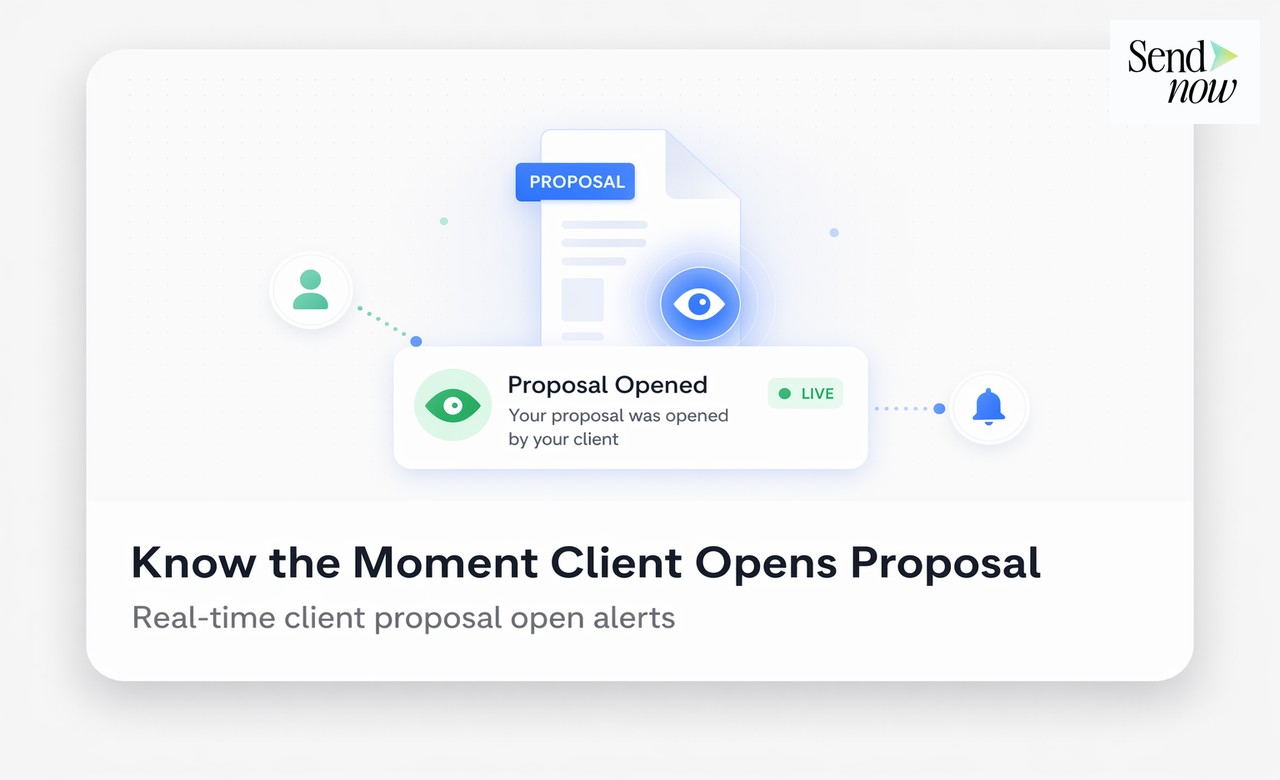
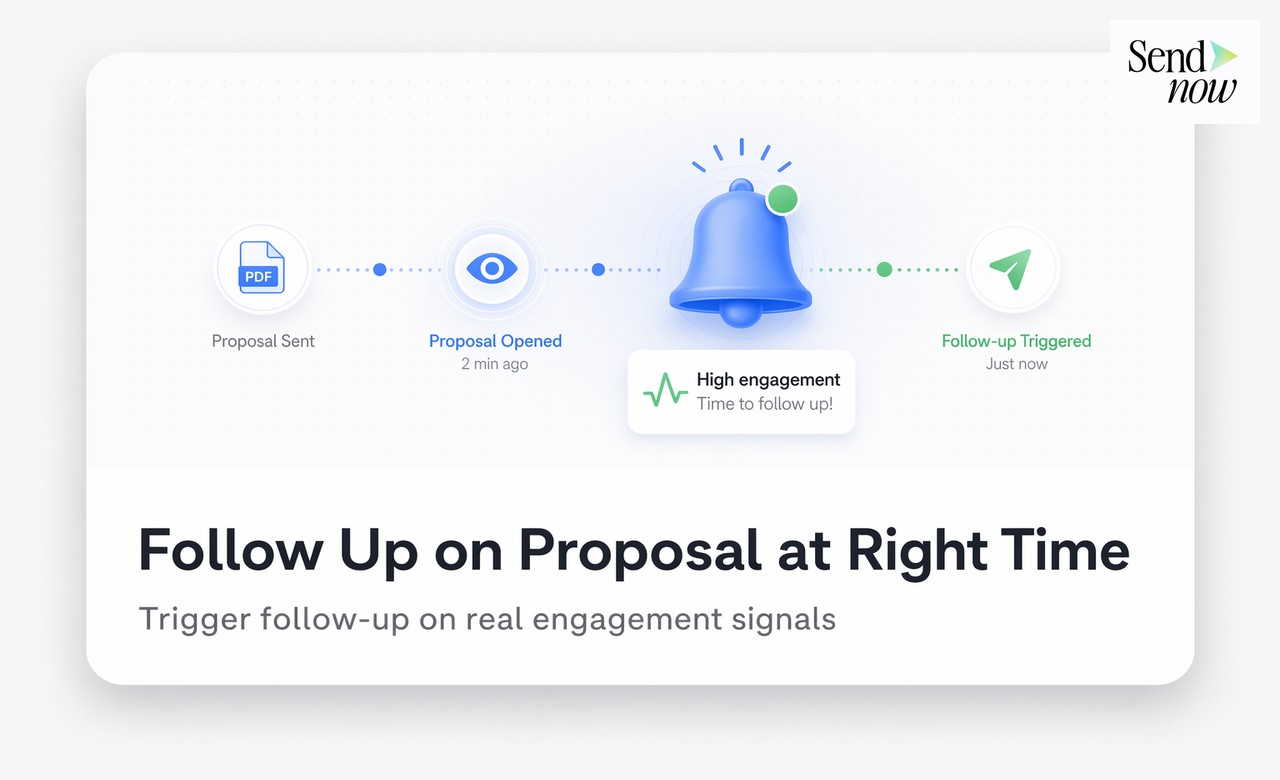
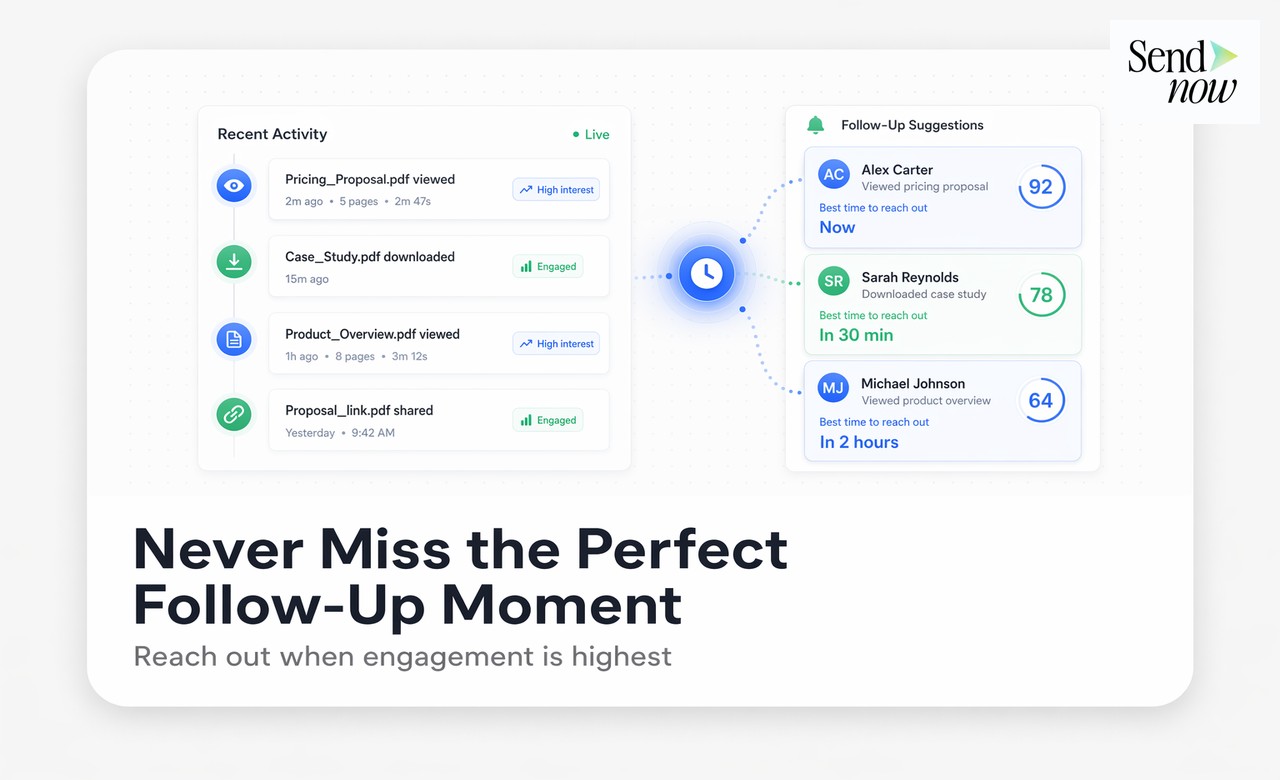
The right time to follow up on a proposal is when the prospect is actively engaged with it, and document engagement tracking tells you exactly when that is. A data-led follow-up approach replaces the guesswork of arbitrary three-day wait times with real signals: when a prospect returns to your proposal for a second or third time, when they spend concentrated time on the pricing section, or when a new viewer joins the document, these events tell you that right now is the moment to reach out.
Why Arbitrary Follow-Up Timing Costs You Deals
The traditional rule of "follow up after three business days" was a reasonable heuristic in an era before engagement data existed. In 2026, it is a liability.
The problem is not just bad timing. It is the nature of the follow-up it produces. When a salesperson does not know whether their proposal was read, their follow-up is necessarily vague: "Just checking in to see if you had a chance to review the proposal." This message signals that the sender has no idea what the prospect has or has not engaged with. It is the sales equivalent of a cold call to someone who is already in the building.
Contrast that with a data-driven follow-up: "I noticed you've had a closer look at the commercial section. Happy to walk through the numbers together if that would help." This message is specific, timely, and demonstrates that you are paying attention. It is also more likely to generate a response, because it meets the prospect where they actually are.
The Four Engagement Signals That Tell You When to Follow Up
Signal 1: First open. When a prospect opens your proposal for the first time, send a light, low-pressure confirmation within the hour: "Just wanted to make sure the link worked and everything displays well. Happy to answer any questions as you work through it." This message is useful and non-pushy, and it opens a conversation at the moment the proposal is fresh.
Signal 2: Return visit. A prospect who returns to your proposal voluntarily is in active evaluation mode. This is your primary follow-up trigger. Reach out within minutes of receiving a return visit notification, and reference the fact that you know they are revisiting: "I imagine you're comparing options at the moment. Happy to schedule a call if it would help clarify anything."
Signal 3: Extended time on the pricing or scope section. If analytics show a prospect spending significant time on your investment or delivery timeline sections, they are working through the practical questions of whether to proceed. This is the right moment to offer a clarifying conversation focused on those specific areas.
Signal 4: New viewer. When a second email address accesses your document, the decision has escalated internally. Your champion has shared it with a decision-maker or a colleague. Follow up with your primary contact and ask who else is involved, so you can engage those stakeholders directly.
What to Say When You Follow Up
The content of your follow-up is as important as the timing. Use the engagement data you have to make your message specific.
| Engagement Signal | Follow-Up Message Approach |
|---|---|
| First open | "Just checking everything displays well. Happy to answer questions." |
| Return visit | "I imagine you're weighing your options. Let's find 20 minutes." |
| Long time on pricing | "Happy to walk through the numbers in more detail." |
| New viewer | "Looks like others are taking a look too. Who else is involved?" |
| High completion rate | "You've clearly had a thorough read. What questions can I answer?" |
| No open after 5 days | "Resending in case the link was buried. Anything I can clarify?" |
Keep follow-up messages short: three to five sentences at most. A long follow-up email competes with the proposal itself and dilutes your message.
Setting Up Real-Time Follow-Up Notifications
To follow up at the right time, you need to know in real time when engagement events occur. Configure your document sharing platform to send you push notifications, email alerts, or Slack messages when:
- A prospect opens your document for the first time
- A prospect returns to the document after a gap of more than 24 hours
- A new email address accesses the document
For return visit alerts specifically, having the notification arrive on your phone or in Slack means you can respond within minutes regardless of whether you are at your desk.
What to Do When There Is No Engagement Signal
If a prospect has not opened your proposal after five business days, the follow-up logic changes. You are no longer responding to engagement; you are re-establishing contact. In this scenario:
- Resend the link with a brief note confirming you are available to help. Keep any assumption of interest low.
- Consider whether the document was received at all. Email deliverability issues do occur.
- If there is still no engagement after a second attempt, treat the prospect as low-priority and move them to a longer-cadence nurture sequence rather than a close sequence.
A prospect who does not open a proposal after two send attempts is telling you something important about their current level of interest. Respect that signal rather than ignoring it.
For the broader framework, read our Document Intelligence for Sales Guide and How to Send a Business Proposal That Actually Gets Read. For the specific moment of knowing a prospect has opened your proposal, see How to Know the Moment a Client Opens Your Proposal.
Follow up at exactly the right moment. SendNow sends you real-time return visit notifications via email, Slack, or push notification so you can respond within minutes of a prospect re-engaging with your proposal. Start at sendnow.live.
Frequently Asked Questions
Q: How long should I wait before following up on a proposal? A: With engagement tracking, you do not wait a fixed period. You follow up when engagement signals tell you the prospect is active. If you do not have tracking in place, follow up on the same day as the first open notification, or within three business days if you have no visibility at all.
Q: Should I follow up by phone or email? A: Use the channel that matches the prospect's communication preference and the urgency of the signal. A return visit notification warrants a phone call or a brief, conversational email. A first-open notification is better handled with a light email rather than an immediate call.
Q: How many times should I follow up before stopping? A: Follow up until you receive a clear signal in either direction: active engagement leading towards a decision, or an explicit indication that the prospect is not proceeding. Do not follow up more than three or four times without a response, as continued contact without engagement becomes noise rather than sales activity.
Q: What if the prospect says "I'll review it this weekend"? A: Set a reminder to follow up on Monday morning and monitor your notifications over the weekend. If they engage with the document at the weekend, sending a brief message on Monday morning that acknowledges their engagement ("Saw you had a look over the weekend") can feel timely and attentive without being intrusive.
Q: Does quick follow-up after a return visit seem stalkerish to prospects? A: Not if the message is appropriate. "I noticed you've been reviewing the proposal and wanted to see if you had any questions" is a professional and helpful message. Avoid making the tracking itself the subject of the conversation: the point is to be helpful, not to demonstrate that you are monitoring their behaviour.
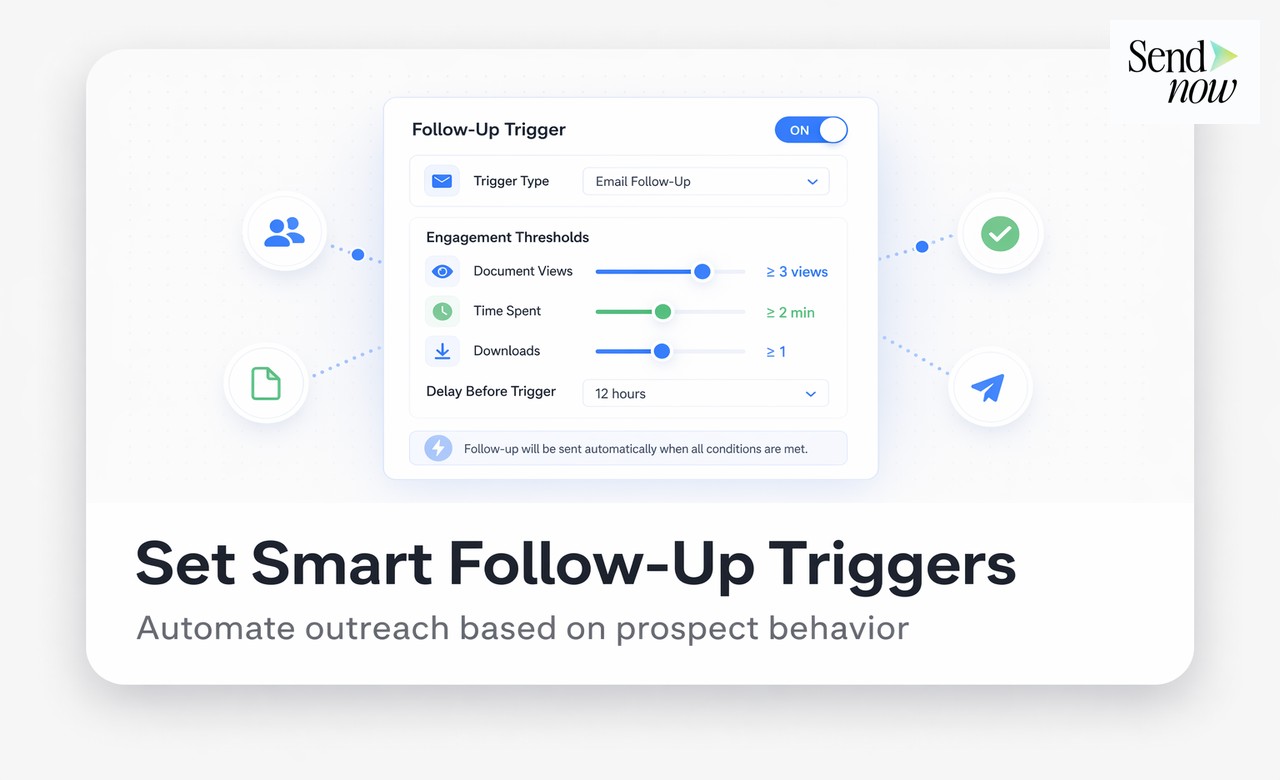
Q: Can I automate proposal follow-ups? A: You can automate low-engagement sequences (for example, a follow-up email if no open is recorded within five days). However, high-engagement triggers such as return visits are generally better handled with personalised, manually written messages because the specificity of a personal response is a significant part of its value.
Q: What should I do if a prospect returns to my proposal multiple times but never responds to my follow-up? A: They are interested but not yet ready to commit. Continue to monitor without pestering. Increase your follow-up frequency slightly when engagement spikes (for example, a third or fourth return visit) and consider asking whether there is a specific concern you can address.
Q: How does proposal follow-up timing differ for enterprise versus SMB prospects? A: Enterprise deals typically involve longer evaluation cycles, more stakeholders, and more deliberate engagement patterns. Return visits in an enterprise deal may span several weeks rather than days. SMB decisions move faster; a return visit within 48 hours of sending often signals that a decision is imminent.
About the Author: Rifana Hameem
Rifana is the founder of SendNow. She leads the team in building secure, compliant, and analytics-rich document sharing tools for finance and professional teams worldwide.
Connect on LinkedIn