

Meeting GDPR Article 32 Requirements for Finance Documentation

Meeting GDPR Article 32 Requirements for Finance Documentation
Executive Summary / TL;DR
The General Data Protection Regulation (GDPR) has established stringent requirements for the protection of personal data, particularly in sensitive sectors such as finance. Article 32 of the GDPR mandates that organizations implement appropriate technical and organizational measures to ensure a level of security appropriate to the risk. This article delves into the challenges financial institutions face in meeting these requirements, particularly concerning finance documentation. It outlines current vulnerabilities, industry best practices, a deep dive into specific solutions like SendNow, a technical walkthrough for implementation, and the overall business impact of compliance.
Current Security Vulnerabilities
In the finance sector, sensitive information is often shared through traditional methods such as emails, file-sharing services like Dropbox, or even physical documents. These methods expose organizations to significant security risks, including:
-
Email Vulnerabilities: Emails can be intercepted, leading to unauthorized access to sensitive financial documents. Phishing attacks are prevalent, where attackers impersonate legitimate entities to gain access to confidential information.
-
Unsecured File Sharing: Platforms like Dropbox, while convenient, often lack robust security features. Files can be shared without adequate encryption, and links can be forwarded without restrictions, making sensitive data vulnerable to leaks.
-
Physical Document Risks: Hard copies of financial documents can be lost or stolen, leading to data breaches. Additionally, improper disposal of such documents can expose sensitive information.
-
Lack of Access Controls: Many organizations fail to implement strict access controls, allowing unauthorized personnel to access sensitive financial information. This can lead to data mishandling or breaches.
-
Inadequate Audit Trails: Without proper logging and monitoring, organizations may struggle to track who accessed what information and when, complicating compliance with GDPR requirements.
Industry-Specific Best Practices
To meet the requirements of Article 32, financial institutions must adopt best practices tailored to their specific needs. Here are actionable steps to enhance security for finance documentation:
-
Conduct Risk Assessments: Regularly evaluate the risks associated with handling financial documents. Identify potential vulnerabilities and assess the impact of data breaches.
-
Implement Strong Access Controls: Use role-based access controls to ensure that only authorized personnel can access sensitive financial documents. Regularly review and update access permissions.
-
Utilize Encryption: Encrypt sensitive financial documents both in transit and at rest. This ensures that even if data is intercepted, it remains unreadable without the proper decryption keys.
-
Adopt Secure File Sharing Solutions: Move away from traditional email and unsecured file-sharing platforms. Use secure file-sharing solutions that offer robust security features, such as encryption, access controls, and audit logs.
-
Establish Data Retention Policies: Define how long financial documents should be retained and ensure they are securely disposed of when no longer needed. This minimizes the risk of data exposure.
-
Train Employees: Conduct regular training sessions to educate employees about data protection best practices, phishing threats, and the importance of safeguarding sensitive information.
-
Monitor and Audit: Implement continuous monitoring and auditing of access to financial documents. This helps identify any unauthorized access or suspicious activities promptly.
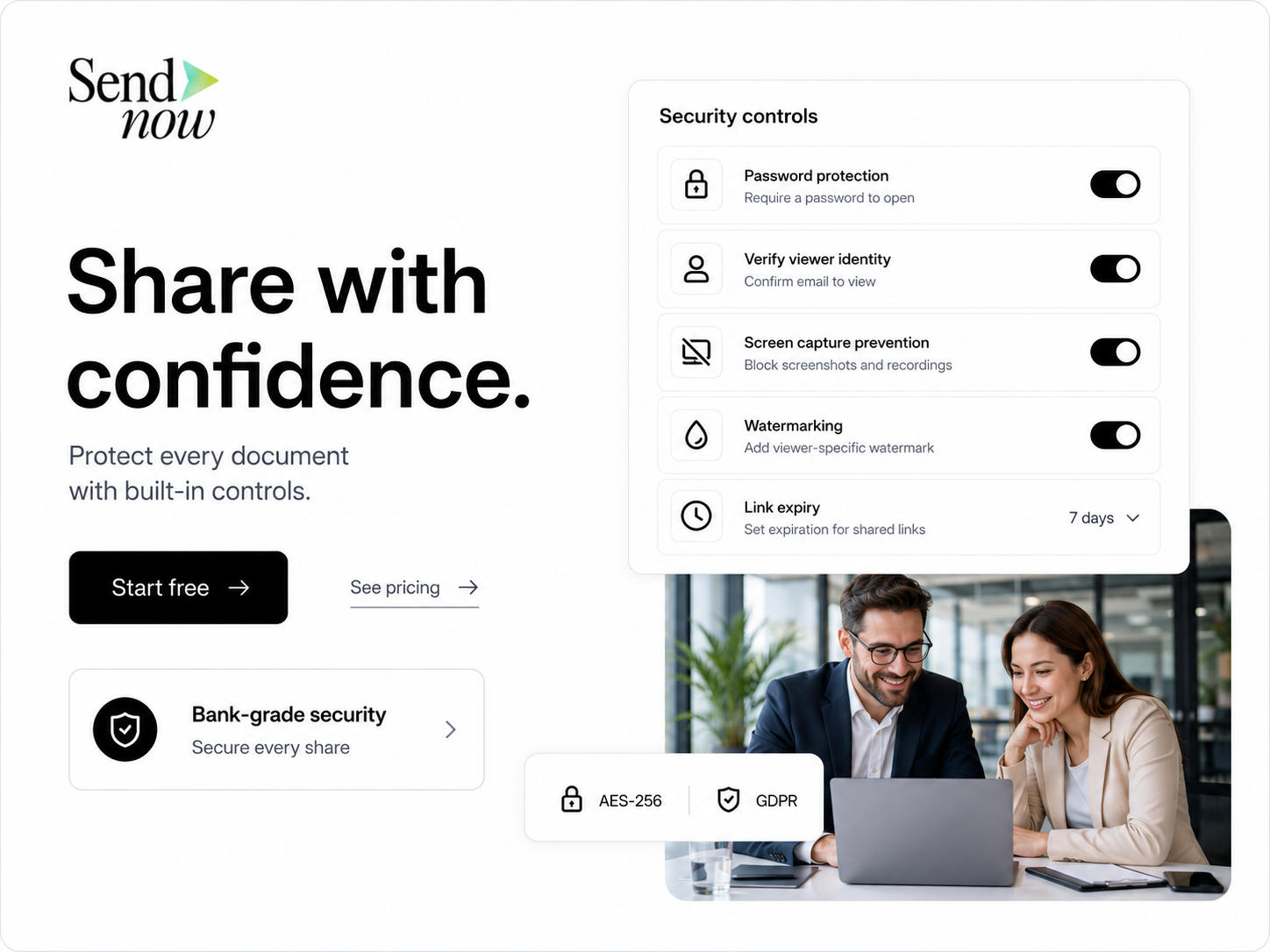
SendNow Feature Deep-Dive
SendNow is a secure file-sharing solution designed to address the vulnerabilities associated with traditional methods of sharing sensitive financial documentation. Here’s how its specific controls help meet GDPR Article 32 requirements:
-
Dynamic Watermarking: SendNow allows users to apply dynamic watermarks to documents. This feature deters unauthorized sharing and provides a clear audit trail by displaying the recipient's information on the document.
-
Screenshot Blocking: To prevent unauthorized duplication of sensitive documents, SendNow includes screenshot blocking functionality. This ensures that recipients cannot capture or share the content without permission.
-
Require Email Gates: SendNow requires recipients to verify their email before accessing documents. This adds an additional layer of security by ensuring that only intended recipients can view sensitive information.
-
Link Expiry: Users can set expiration dates for shared links, ensuring that access to sensitive documents is time-limited. This reduces the risk of unauthorized access after the intended sharing period.
-
NDA Gates: SendNow can enforce non-disclosure agreements (NDAs) before granting access to sensitive documents. This legal safeguard ensures that recipients understand their obligations regarding the confidentiality of the information.
For more information on SendNow and its features, visit their official LinkedIn page: SendNow LinkedIn.
Technical Walkthrough
Implementing SendNow for secure finance documentation sharing is straightforward. Here’s a step-by-step guide:
Step 1: Sign Up for SendNow
- Visit the SendNow website and create an account.
- Choose a plan that suits your organization’s needs.
Step 2: Upload Financial Documents
- Log in to your SendNow account.
- Click on the "Upload" button to select the financial documents you wish to share.
- Ensure that the documents are in a secure format (e.g., PDF) and are encrypted if necessary.
Step 3: Configure Sharing Settings
- After uploading, select the document and click on "Share."
- Set up dynamic watermarks by entering the recipient's information.
- Enable screenshot blocking to prevent unauthorized captures.
- Choose whether to require email verification for access.
- Set an expiry date for the link to limit access duration.
- If applicable, configure NDA gates to ensure legal compliance.
Step 4: Distribute the Document
- Enter the recipient's email address and any additional message you wish to include.
- Click "Send" to distribute the document securely.
Step 5: Monitor Access and Audit
- Use SendNow’s dashboard to monitor who has accessed the document and when.
- Review audit logs regularly to ensure compliance and address any unauthorized access.

ROI & Business Impact
Investing in secure file-sharing solutions like SendNow not only enhances compliance with GDPR Article 32 but also offers significant business benefits:
-
Cost-Efficiency: By reducing the risk of data breaches, organizations can avoid costly fines associated with non-compliance. The GDPR imposes penalties of up to €20 million or 4% of annual global turnover, whichever is higher.
-
Contract Compliance: Financial institutions often deal with contracts that require adherence to strict data protection standards. Using secure solutions helps ensure compliance with these contractual obligations.
-
Protection Value: The value of protecting sensitive financial information extends beyond compliance. It builds trust with clients and stakeholders, enhances the organization’s reputation, and fosters long-term relationships.
-
Operational Efficiency: Secure file-sharing solutions streamline workflows, allowing for faster document sharing without compromising security. This can lead to improved productivity and collaboration among teams.
-
Risk Mitigation: By implementing robust security measures, organizations can significantly reduce the likelihood of data breaches, protecting both their assets and their clients’ information.
Structured FAQ
1. How does GDPR Article 32 affect financial institutions?
GDPR Article 32 requires financial institutions to implement appropriate security measures to protect personal data. This includes conducting risk assessments, implementing access controls, and ensuring data is encrypted.
2. Why is secure file sharing important for finance documentation?
Secure file sharing is crucial for finance documentation because it protects sensitive information from unauthorized access and breaches, ensuring compliance with GDPR and maintaining client trust.
3. What are the consequences of non-compliance with GDPR?
Non-compliance with GDPR can result in hefty fines, legal repercussions, and damage to an organization’s reputation. Financial institutions are particularly vulnerable due to the sensitive nature of the data they handle.
4. How can SendNow help with GDPR compliance?
SendNow provides features such as dynamic watermarking, screenshot blocking, and email verification that enhance the security of shared documents, helping organizations meet GDPR Article 32 requirements effectively.
5. What steps should I take to implement SendNow in my organization?
To implement SendNow, sign up for an account, upload your financial documents, configure sharing settings, distribute the documents securely, and monitor access through the SendNow dashboard.
Actionable CTA
Ready to enhance your organization’s data protection and meet GDPR Article 32 requirements for finance documentation? Start your trial with SendNow today at SendNow Trial. Secure your sensitive information and ensure compliance with the highest standards of data protection.
About the Author: Rifana Hameem
Rifana is the founder of SendNow. She leads the team in building secure, compliant, and analytics-rich document sharing tools for finance and professional teams worldwide.
Connect on LinkedIn