
Investor Data Room Checklist: What Startup Founders Should Include

Investor Data Room Checklist
A good investor data room should answer questions before they turn into delays.
The mistake I see founders make is treating the room as a dumping ground.
More documents do not automatically mean better diligence.
The objective is clarity.
Recommended structure

| Folder | Typical documents |
|---|---|
| 01 Company | incorporation, ownership, org chart |
| 02 Fundraising | deck, round information, use of funds |
| 03 Financials | P&L, balance sheet, cash flow, forecasts |
| 04 Cap table | current cap table, options |
| 05 Product | product overview, roadmap |
| 06 Market & traction | KPIs, customer metrics |
| 07 Customers | key contracts, case studies |
| 08 Legal | material agreements, disputes |
| 09 IP | trademarks, patents, assignments |
| 10 Team | key employment/contractor information |
Not every startup needs every folder.
My rule: relevance before completeness
A seed investor usually does not need the same diligence package as an acquirer.
Keep the room appropriate to the transaction.
Security considerations
Sensitive folders should have stronger controls than the pitch deck.
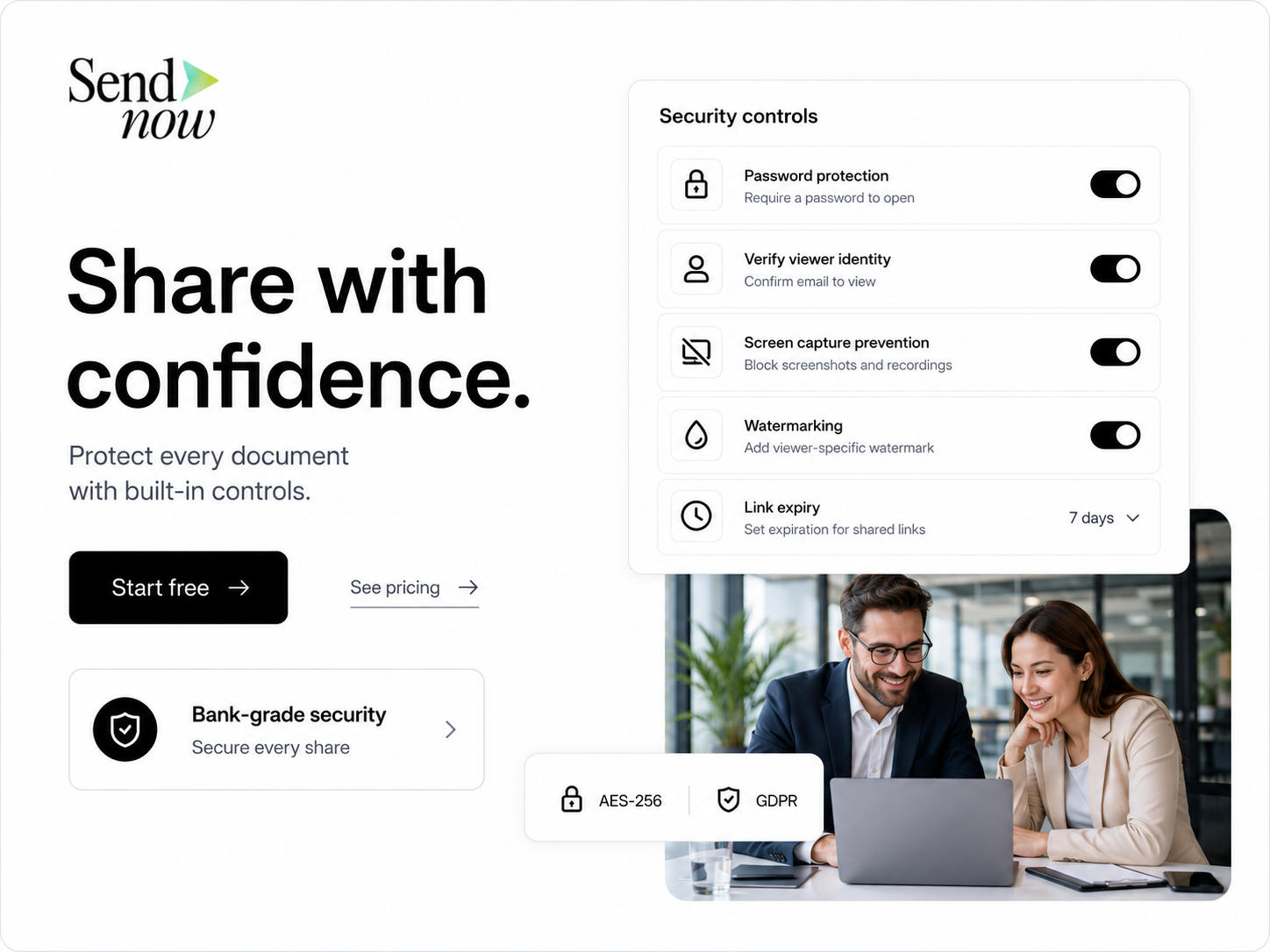
Consider:
- email verification,
- expiration,
- dynamic watermarking,
- NDA gate where appropriate,
- per-document permissions,
- activity tracking.
FAQ
Should customer names be included?
Only where appropriate and permitted. Consider anonymized metrics at earlier stages.
Should I include every employee contract?
Not necessarily during early fundraising. Materiality matters.
Should financial forecasts be included?
Serious investors will normally expect a model or forecast.
Conclusion
The best data room is easy to navigate and proportional to the level of diligence.
About the Author: Rifana Hameem
Rifana is the founder of SendNow. She leads the team in building secure, compliant, and analytics-rich document sharing tools for finance and professional teams worldwide.
Connect on LinkedIn