
Why Startups Must Use Dynamic Watermarking on Investor Decks

Why Startups Must Use Dynamic Watermarking on Investor Decks
Executive Summary / TL;DR
In the fast-paced world of startups, securing sensitive information such as investor decks is paramount. Traditional file-sharing methods expose startups to significant risks, including data leaks and unauthorized access. Dynamic watermarking emerges as a crucial solution to these challenges, providing a layer of security that deters information theft and enhances confidentiality. This article explores the vulnerabilities inherent in typical file-sharing workflows, outlines industry best practices, and delves into how dynamic watermarking can protect your investor decks effectively.
Current Security Vulnerabilities
Startups often rely on common file-sharing methods such as email attachments, cloud storage services like Dropbox, or even basic file-sharing links. While these platforms offer convenience, they also present several security vulnerabilities:
-
Email Attachments: Sending investor decks via email exposes them to interception. Emails can be hacked, and attachments can be forwarded without the sender's consent, leading to potential leaks.
-
Cloud Storage Services: While services like Dropbox offer file-sharing capabilities, they often lack robust security features. Unauthorized users can gain access if links are shared indiscriminately or if account credentials are compromised.
-
Lack of Control: Once a file is shared, startups lose control over its distribution. Recipients can easily share the document with others, leading to unintended exposure of sensitive information.
-
Inadequate Tracking: Traditional methods do not provide insights into who accessed the document or how it was used. This lack of visibility can make it challenging to identify potential leaks or unauthorized access.
-
Regulatory Compliance Risks: Startups must adhere to various regulations, such as GDPR and data protection laws. Failing to secure sensitive information can lead to hefty fines and reputational damage.
Given these vulnerabilities, startups must adopt more secure methods for sharing investor decks to protect their intellectual property and maintain investor trust.
Industry-Specific Best Practices
To mitigate the risks associated with sharing investor decks, startups should implement the following best practices:
-
Use Secure File Sharing Solutions: Invest in platforms specifically designed for secure file sharing. Look for features such as encryption, access controls, and tracking capabilities.
-
Implement Dynamic Watermarking: Utilize dynamic watermarking to deter unauthorized sharing. This technology embeds personalized watermarks on documents, displaying the recipient's information, which discourages them from distributing the file.
-
Set Expiration Dates for Access: Limit the time frame during which recipients can access investor decks. Setting expiration dates ensures that sensitive information is not available indefinitely.
-
Require Authentication: Use email gates or other authentication methods to ensure that only authorized individuals can access sensitive documents. This adds an extra layer of security.
-
Monitor Document Access: Choose solutions that provide tracking and analytics. Being able to see who accessed the document and when can help identify potential leaks.
-
Educate Your Team: Conduct regular training sessions on data security and the importance of safeguarding sensitive information. Ensure that all team members understand the risks and best practices for sharing investor decks.
By following these best practices, startups can significantly reduce the risk of data breaches and protect their valuable intellectual property.
SendNow Feature Deep-Dive
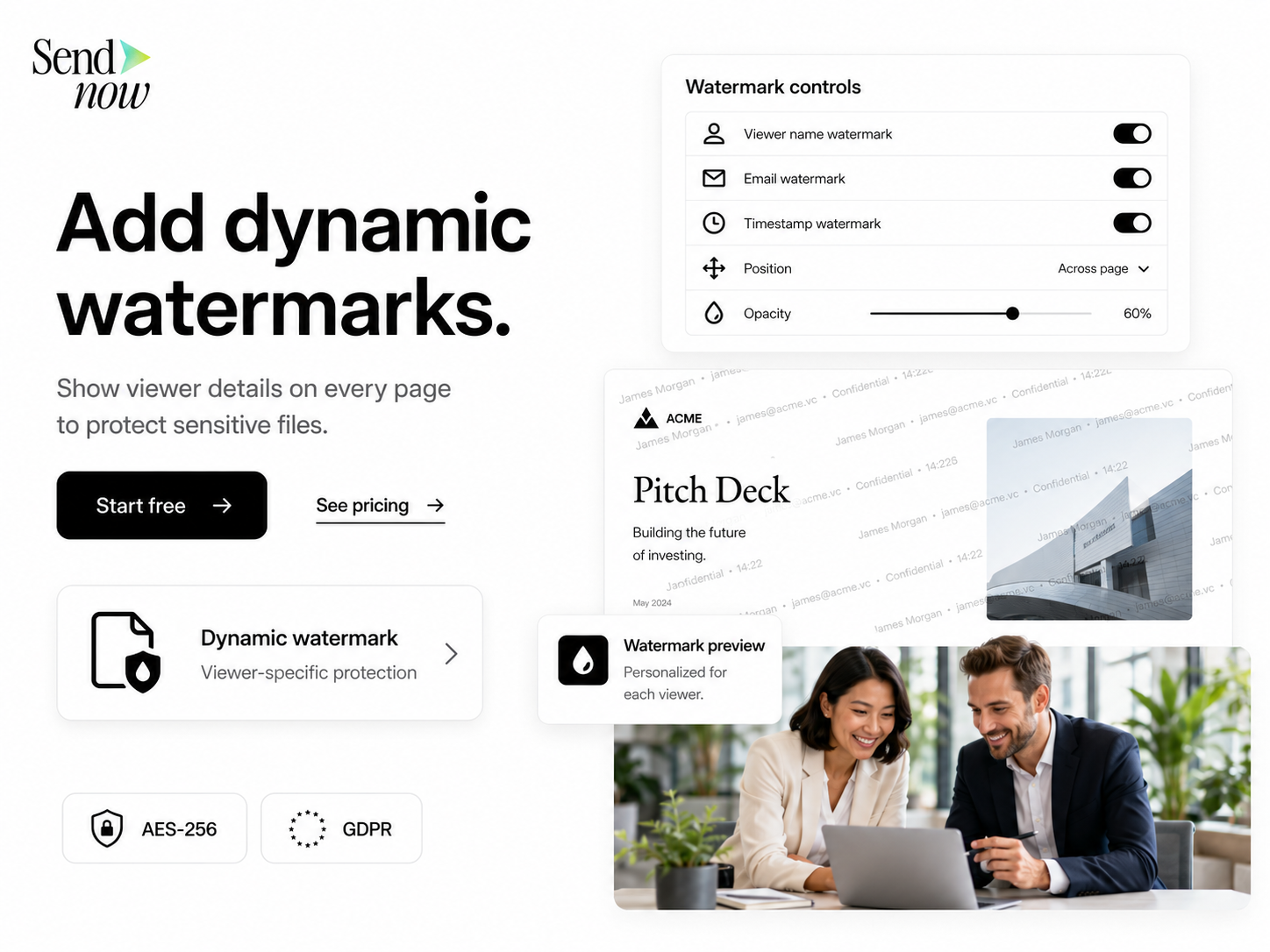
One of the most effective solutions for securing investor decks is SendNow, a platform designed to enhance document security through innovative features. Here’s how SendNow’s specific controls address the vulnerabilities outlined earlier:
Dynamic Watermarking
Dynamic watermarking is a standout feature of SendNow. Each document shared through the platform can have a unique watermark that includes the recipient's name, email address, or other identifying information. This discourages unauthorized sharing, as recipients are aware that their information is visibly linked to the document.
Screenshot Blocking
SendNow also offers screenshot blocking capabilities. This feature prevents recipients from taking screenshots of the investor deck, further protecting sensitive information from being shared without consent.
Email Gates
By requiring recipients to authenticate their identity through email gates, SendNow ensures that only authorized individuals can access investor decks. This reduces the risk of unauthorized access and enhances overall document security.
Link Expiry
With SendNow, startups can set expiration dates for shared links. This means that after a specified period, the link will no longer grant access to the document, ensuring that sensitive information is not available indefinitely.
NDA Gates
SendNow allows startups to implement Non-Disclosure Agreement (NDA) gates. Recipients must agree to the terms of the NDA before accessing the investor deck, providing an additional layer of legal protection against unauthorized sharing.
For more information about SendNow and its features, visit their official LinkedIn page: SendNow LinkedIn.
Technical Walkthrough
Setting up SendNow for secure sharing of investor decks is straightforward. Here’s a step-by-step guide:
Step 1: Create an Account
- Visit the SendNow website and sign up for an account.
- Verify your email address to activate your account.
Step 2: Upload Your Investor Deck
- Log in to your SendNow account.
- Click on the “Upload” button and select your investor deck file from your computer.
- Ensure the file is in a supported format (PDF, PPT, etc.).
Step 3: Configure Security Settings
- After uploading, navigate to the security settings.
- Enable dynamic watermarking and customize the watermark text (e.g., recipient name, email).
- Activate screenshot blocking to prevent unauthorized captures.
- Set an expiration date for the link to limit access duration.
- If necessary, enable NDA gates and upload your NDA document.
Step 4: Generate and Share the Link
- Once all settings are configured, click on “Generate Link.”
- Copy the generated link and share it with your intended recipients via email or messaging platforms.
- Optionally, you can send the link directly through SendNow’s platform.
Step 5: Monitor Access
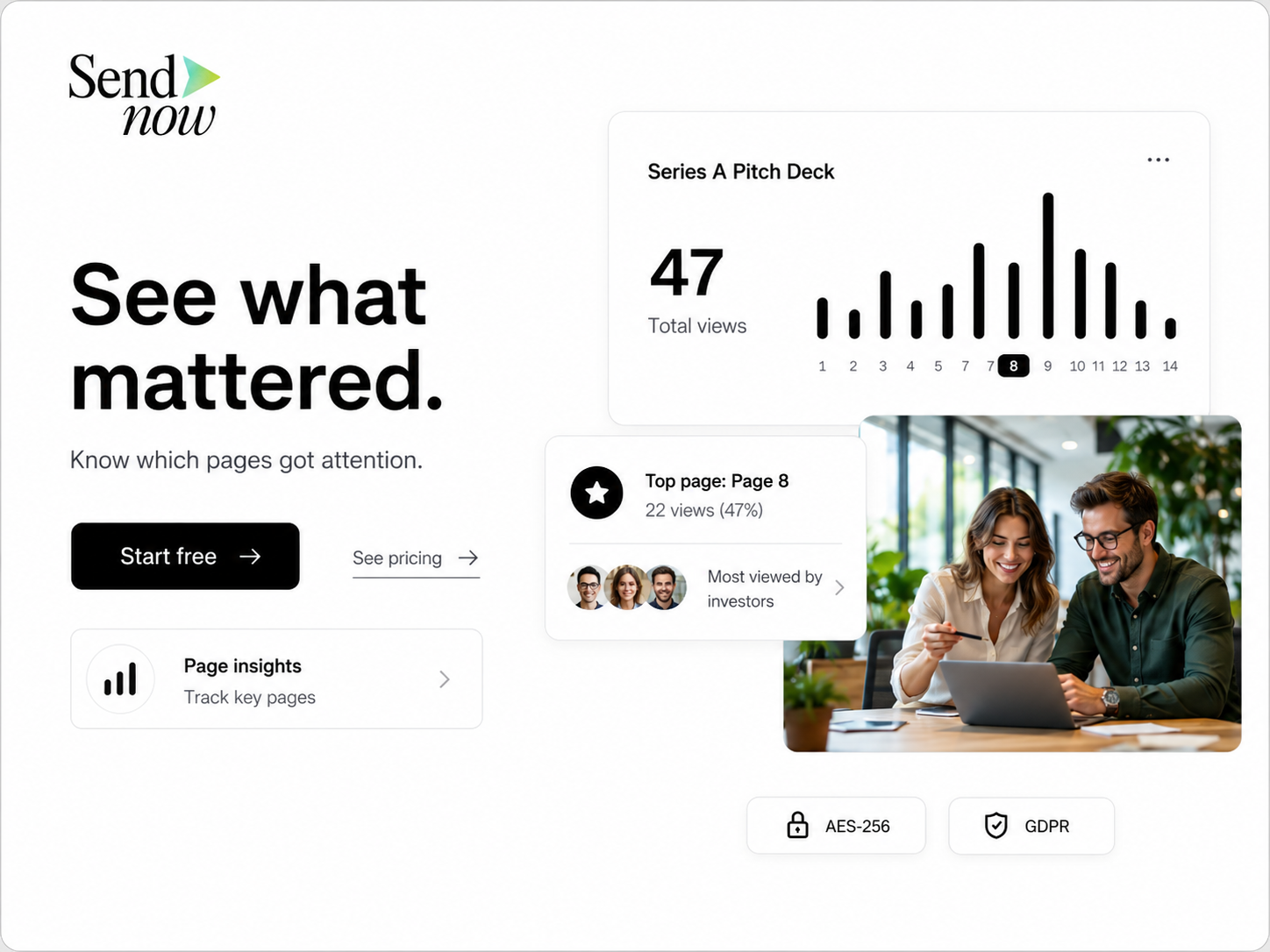
- After sharing, return to your SendNow dashboard.
- Monitor who has accessed the document and when. This data can help you identify any unauthorized access attempts.
By following these steps, startups can securely share their investor decks while maintaining control over their sensitive information.
ROI & Business Impact
Investing in secure file-sharing solutions like SendNow offers significant returns on investment (ROI) for startups. Here are some key benefits:
-
Cost-Efficiency: While there may be initial costs associated with adopting a secure file-sharing platform, the potential savings from avoiding data breaches and legal penalties far outweigh these expenses.
-
Contract Compliance: Many investors and partners require adherence to data protection regulations. Using secure methods for sharing sensitive information ensures compliance, fostering trust and credibility.
-
Protection Value: The value of protecting intellectual property cannot be overstated. By securing investor decks, startups safeguard their innovative ideas and business strategies, which can be crucial for attracting funding and partnerships.
-
Enhanced Reputation: Demonstrating a commitment to data security can enhance a startup's reputation in the eyes of investors and partners. This can lead to increased opportunities and stronger relationships.
-
Informed Decision-Making: With tracking and analytics features, startups can make informed decisions based on document access data. Understanding who is engaging with investor decks can help tailor follow-up strategies.
By prioritizing secure file-sharing practices, startups can protect their sensitive information and position themselves for success in a competitive landscape.
Structured FAQ
1. How does dynamic watermarking work?
Dynamic watermarking embeds personalized information into shared documents, such as the recipient's name or email address. This discourages unauthorized sharing, as recipients are aware that their information is linked to the document.
2. Why is screenshot blocking important?
Screenshot blocking prevents recipients from capturing and sharing sensitive information without consent. This feature adds an extra layer of security, ensuring that investor decks remain confidential.
3. What are email gates, and how do they enhance security?
Email gates require recipients to authenticate their identity before accessing shared documents. This ensures that only authorized individuals can view sensitive information, reducing the risk of unauthorized access.
4. How can I monitor access to my investor deck?
SendNow provides tracking and analytics features that allow you to see who accessed your document and when. This visibility helps identify potential leaks and unauthorized access attempts.
5. What are NDA gates, and why should I use them?
NDA gates require recipients to agree to the terms of a Non-Disclosure Agreement before accessing sensitive documents. This legal protection helps safeguard your intellectual property and ensures that recipients understand their obligations regarding confidentiality.
Actionable CTA
Start protecting your investor decks today by leveraging the power of dynamic watermarking and other security features available on SendNow. Begin your trial now at SendNow Trial and take the first step towards securing your sensitive information. Don’t leave your startup’s future to chance—ensure your investor decks are protected with the best in secure file-sharing technology.
About the Author: Rifana Hameem
Rifana is the founder of SendNow. She leads the team in building secure, compliant, and analytics-rich document sharing tools for finance and professional teams worldwide.
Connect on LinkedIn