

Security Risks of Sharing Property Disclosures via Email

Security Risks of Sharing Property Disclosures via Email
Executive Summary / TL;DR
In the real estate industry, sharing property disclosures is a critical part of the transaction process. However, the conventional methods of sharing these sensitive documents—primarily through email—pose significant security risks. This article delves into the vulnerabilities associated with email-based file sharing, outlines best practices tailored for real estate professionals, and introduces a more secure alternative for sharing property disclosures. By understanding these risks and implementing robust security measures, real estate agents and firms can protect sensitive information and maintain client trust.
Current Security Vulnerabilities
Email has long been the go-to method for sharing documents, including property disclosures. However, this method is fraught with security vulnerabilities that can lead to data breaches and unauthorized access. Here are some of the most pressing concerns:
1. Lack of Encryption
Most email services do not provide end-to-end encryption by default. This means that while the email is in transit, it can be intercepted by malicious actors. Once intercepted, sensitive information contained in property disclosures can be exploited, leading to identity theft, fraud, or other malicious activities.
2. Phishing Attacks
Phishing remains one of the most common methods for cybercriminals to gain access to sensitive information. Real estate professionals often receive emails that appear legitimate but are designed to trick them into providing personal information or clicking on malicious links. A compromised email account can lead to unauthorized access to sensitive property disclosures.
3. Unintended Recipients
Emails can easily be sent to the wrong recipient, especially when dealing with multiple clients and properties. An inadvertent click can expose confidential information to individuals who should not have access to it, leading to potential legal ramifications and loss of client trust.
4. Insecure Storage
Many agents store emails and attachments on their devices or cloud services that may not have robust security measures. If a device is lost or compromised, sensitive property disclosures can be accessed by unauthorized individuals.
5. Lack of Audit Trails
When sharing documents via email, it is challenging to track who accessed the information and when. This lack of accountability can be problematic, especially in the event of a dispute or breach.
Industry-Specific Best Practices
To mitigate the risks associated with sharing property disclosures via email, real estate professionals should adopt the following best practices:
1. Use Secure File Sharing Platforms
Instead of relying on email, utilize secure file-sharing platforms that offer encryption and access controls. These platforms provide a more secure environment for sharing sensitive documents.
2. Implement Two-Factor Authentication (2FA)
Enable two-factor authentication for all email accounts and file-sharing services. This extra layer of security makes it significantly harder for unauthorized users to gain access.
3. Educate Staff and Clients
Conduct regular training sessions for staff and clients on recognizing phishing attempts and understanding the importance of data security. Awareness is key to preventing security breaches.
4. Regularly Review Access Permissions
Ensure that only authorized personnel have access to sensitive property disclosures. Regularly review and update access permissions to minimize the risk of unauthorized access.
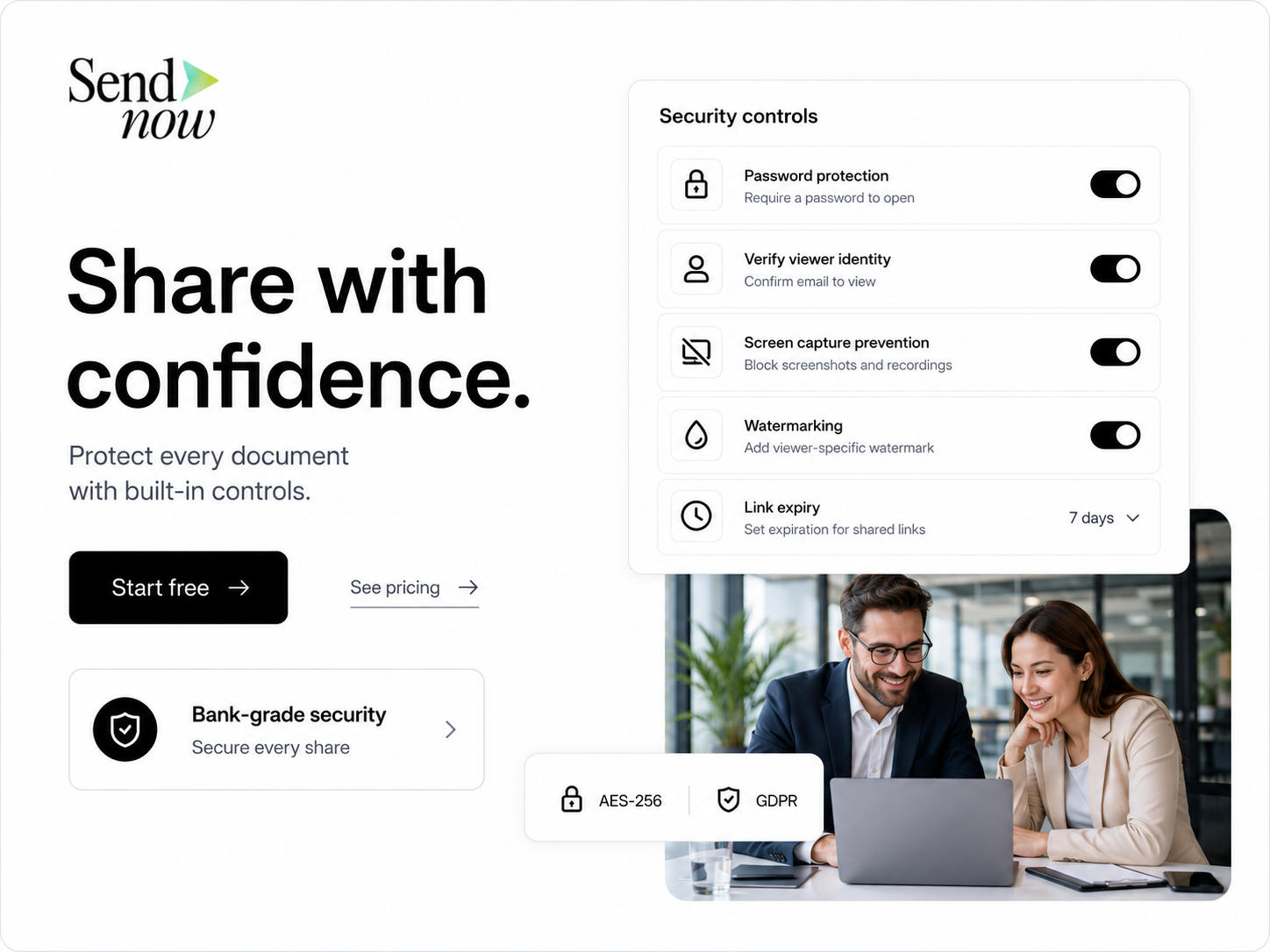
5. Use Watermarking and Expiry Dates
When sharing sensitive documents, consider using watermarking to deter unauthorized sharing. Additionally, set expiry dates for access to documents to limit the time sensitive information is available.
SendNow Feature Deep-Dive
For real estate professionals seeking a secure solution for sharing property disclosures, SendNow offers a robust set of features designed to address the vulnerabilities associated with traditional email sharing. Here’s how SendNow can help:
1. Dynamic Watermarking
SendNow allows users to apply dynamic watermarks to documents. This feature displays the recipient's email address on the document, discouraging unauthorized sharing and ensuring accountability.
2. Screenshot Blocking
One of the unique features of SendNow is its ability to block screenshots. This means that even if a recipient tries to capture sensitive information visually, they will be unable to do so, further protecting the integrity of property disclosures.
3. Require Email Gates
SendNow requires recipients to verify their identity through email gates before accessing documents. This ensures that only authorized individuals can view sensitive information, significantly reducing the risk of leaks.
4. Link Expiry
With SendNow, users can set expiration dates for document access links. This feature ensures that sensitive property disclosures are only available for a limited time, reducing the window of opportunity for unauthorized access.
5. NDA Gates
For added security, SendNow offers the option to require recipients to agree to a Non-Disclosure Agreement (NDA) before accessing sensitive documents. This legal safeguard reinforces the importance of confidentiality and can deter unauthorized sharing.
For more information on SendNow and its features, visit their official LinkedIn page: SendNow LinkedIn.
Technical Walkthrough
To effectively utilize SendNow for sharing property disclosures, follow this step-by-step guide:
Step 1: Create an Account
- Visit the SendNow website and sign up for an account.
- Follow the prompts to verify your email address and complete your profile.
Step 2: Upload Documents
- Log in to your SendNow account.
- Click on the "Upload" button to select the property disclosure documents you wish to share.
- Ensure that all documents are in an acceptable format (e.g., PDF, DOCX).
Step 3: Configure Sharing Settings
- After uploading, select the document you want to share.
- Set dynamic watermarking by enabling the feature and entering the recipient's email address.
- Enable screenshot blocking to prevent unauthorized captures.
- Set an expiration date for the document link to limit access time.
- If necessary, enable NDA gates to require recipients to agree to confidentiality terms.

Step 4: Distribute the Document
- Enter the recipient's email address in the sharing settings.
- Add a personalized message if desired.
- Click "Send" to distribute the document securely.
Step 5: Monitor Access
- Use the SendNow dashboard to monitor who has accessed the document and when.
- Review audit trails for accountability and compliance.
ROI & Business Impact
Investing in secure document-sharing solutions like SendNow can yield significant returns for real estate professionals:
1. Cost-Efficiency
By reducing the risk of data breaches, firms can avoid costly legal fees and potential fines associated with non-compliance. Secure sharing solutions can also streamline workflows, saving time and resources.
2. Contract Compliance
Using secure platforms helps ensure compliance with industry regulations, such as GDPR and e-signature laws. This compliance not only protects the firm but also enhances its reputation among clients.
3. Protection Value
The value of protecting sensitive property disclosures cannot be overstated. By minimizing the risk of leaks, real estate professionals can maintain client trust and safeguard their reputation in a competitive market.
Structured FAQ
1. How can I ensure the security of property disclosures when sharing them?
To ensure security, use a secure file-sharing platform like SendNow that offers features such as encryption, dynamic watermarking, and access controls. Avoid sharing sensitive documents via email whenever possible.
2. Why is email not a secure method for sharing sensitive documents?
Email lacks built-in encryption, making it vulnerable to interception. Additionally, phishing attacks and the risk of sending documents to unintended recipients further compromise security.
3. What are the benefits of using SendNow for sharing property disclosures?
SendNow provides enhanced security features such as dynamic watermarking, screenshot blocking, and email gates, ensuring that only authorized individuals can access sensitive documents.
4. How can I track who accessed my property disclosures?
SendNow offers an audit trail feature that allows you to monitor who accessed your documents and when, providing accountability and transparency.
5. Can I set expiration dates for document access in SendNow?
Yes, SendNow allows you to set expiration dates for document links, ensuring that access is limited to a specific timeframe, further enhancing security.
Actionable CTA
To protect your sensitive property disclosures and enhance your document-sharing processes, start your trial on SendNow today. Visit SendNow Trial and experience the benefits of secure file sharing for real estate professionals.
About the Author: Rifana Hameem
Rifana is the founder of SendNow. She leads the team in building secure, compliant, and analytics-rich document sharing tools for finance and professional teams worldwide.
Connect on LinkedIn