
Virtual Data Rooms vs Dropbox for VC Private Equity M&A Portals

Virtual Data Rooms vs Dropbox for VC Private Equity M&A Portals
When choosing between a private equity data room and Dropbox for M&A transactions, the primary differentiator is security governance and document intelligence. While Dropbox functions as a passive cloud storage folder, a specialized virtual data room (VDR) provides NDA gating, dynamic watermarking, screenshot protection, and page-level engagement analytics to protect sensitive transaction files and close deals faster.
Why General Cloud Storage Fails High-Stakes Deals
In the early stages of a transaction, it is tempting to use what is already familiar. Most companies use general cloud storage tools like Dropbox, Google Drive, or Box for internal collaboration. However, when transitioning to external-facing processes—such as venture capital fundraising, private equity buyouts, or corporate M&A—relying on standard cloud storage is a dangerous security gap.
A high-stakes transaction requires a dedicated private equity data room designed to manage external due diligence. When you share a folder on Dropbox, you grant the recipient broad download and synchronization permissions. Once a buyer downloads your financial model, your employee payroll list, or your source code, those files are permanently out of your control. They can be shared, edited, or leaked without your knowledge.
A virtual data room (VDR) solves this by separating access from possession. It creates a secure sandbox where external parties can review documents under strict governance. This comparison outlines why venture capital, private equity, and M&A deal teams are shifting away from generic cloud storage in favor of modern, secure, and analytical VDR portals.
The Core Differences: Dropbox vs. VDR
At first glance, both platforms store and share files. The differences lie in the security, tracking, and compliance layers.
1. File Storage vs. Information Governance
Dropbox is a storage-first platform designed to sync files across multiple devices and facilitate collaborative editing. It is optimized for open sharing. A VDR, on the other hand, is a governance-first platform. It is designed to control, track, and restrict information access. The primary objective of a VDR is to ensure that only verified, whitelisted users can view specific files, and that they cannot extract those files without explicit permission.
2. Encryption and Security Controls
Dropbox encrypts files at rest and in transit and offers basic password protection. However, it lacks advanced, deal-specific security controls:
- No Screenshot Blocking: Dropbox cannot prevent viewers from taking screen captures of sensitive files.
- No Dynamic Watermarks: You cannot overlay the viewer's email address and IP address on the pages of your documents.
- No NDA Gates: You cannot force a user to sign a legally binding confidentiality agreement prior to viewing files.
A VDR includes these features as standard, ensuring that your corporate intellectual property and cap tables remain secure.
3. Basic File Access Logs vs. Page-Level Engagement Analytics
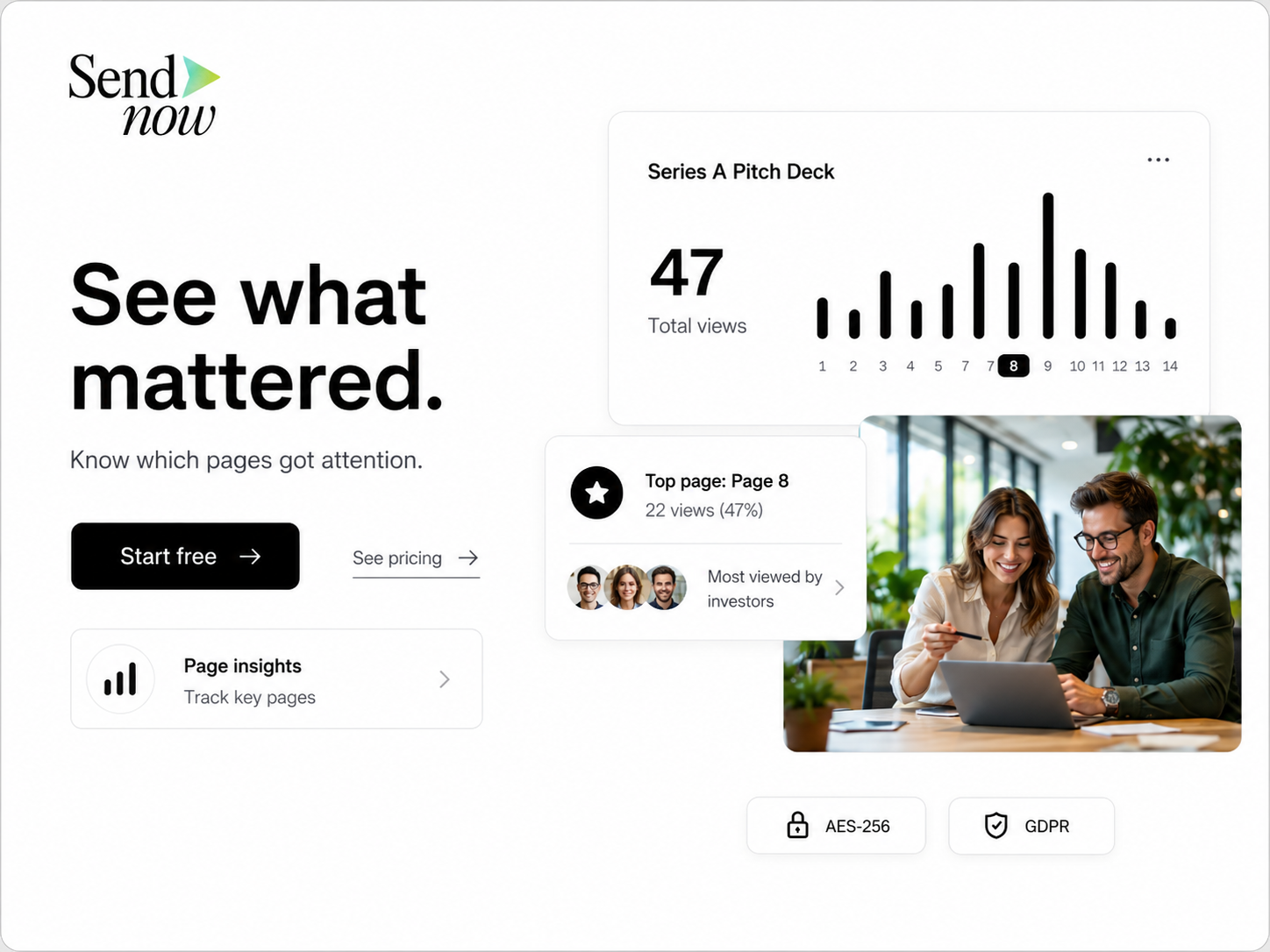
Dropbox Business provides basic event logging (e.g., "User A downloaded File B"). While useful for internal IT audits, this does not help a deal team manage a transaction. A VDR provides granular, page-level analytics. It tracks exactly how many seconds or minutes a user spends on each page of a PDF, financial presentation, or contract. It tells you which sections received the most attention, when a viewer returned to review a document, and whether they forwarded the link to external advisors.
Why Private Equity Teams Switch to VDRs
Private equity and venture capital deal teams run complex, multi-party transactions under strict timelines. They choose a VDR over Dropbox for several operational and strategic reasons.
Protecting Sensitive Financial Models and Intellectual Property
During M&A due diligence, you must share your proprietary financial models, customer contracts, and tax returns. If a competitor under the guise of an interested buyer accesses your Dropbox and downloads these files, they gain an unfair competitive advantage. In a VDR, you can restrict access to view-only mode, block downloads, apply dynamic watermarks, and prevent screenshots. This ensures that prospective buyers can verify your numbers without taking ownership of your intellectual property.
Managing Bidder Engagement and Identifying Serious Acquirers
In a competitive M&A process, understanding buyer engagement is a significant negotiation advantage. A VDR's page-level analytics show you which bidders are actively conducting due diligence. If a private equity firm claims they are highly interested but their VDR activity log shows they have spent only five minutes in the data room, you know their interest may be superficial. Conversely, if another firm's analysts are spending hours reviewing your IP and customer contracts, you can prioritize those conversations, knowing they are serious contenders.
Running Structured Q&A Workflows
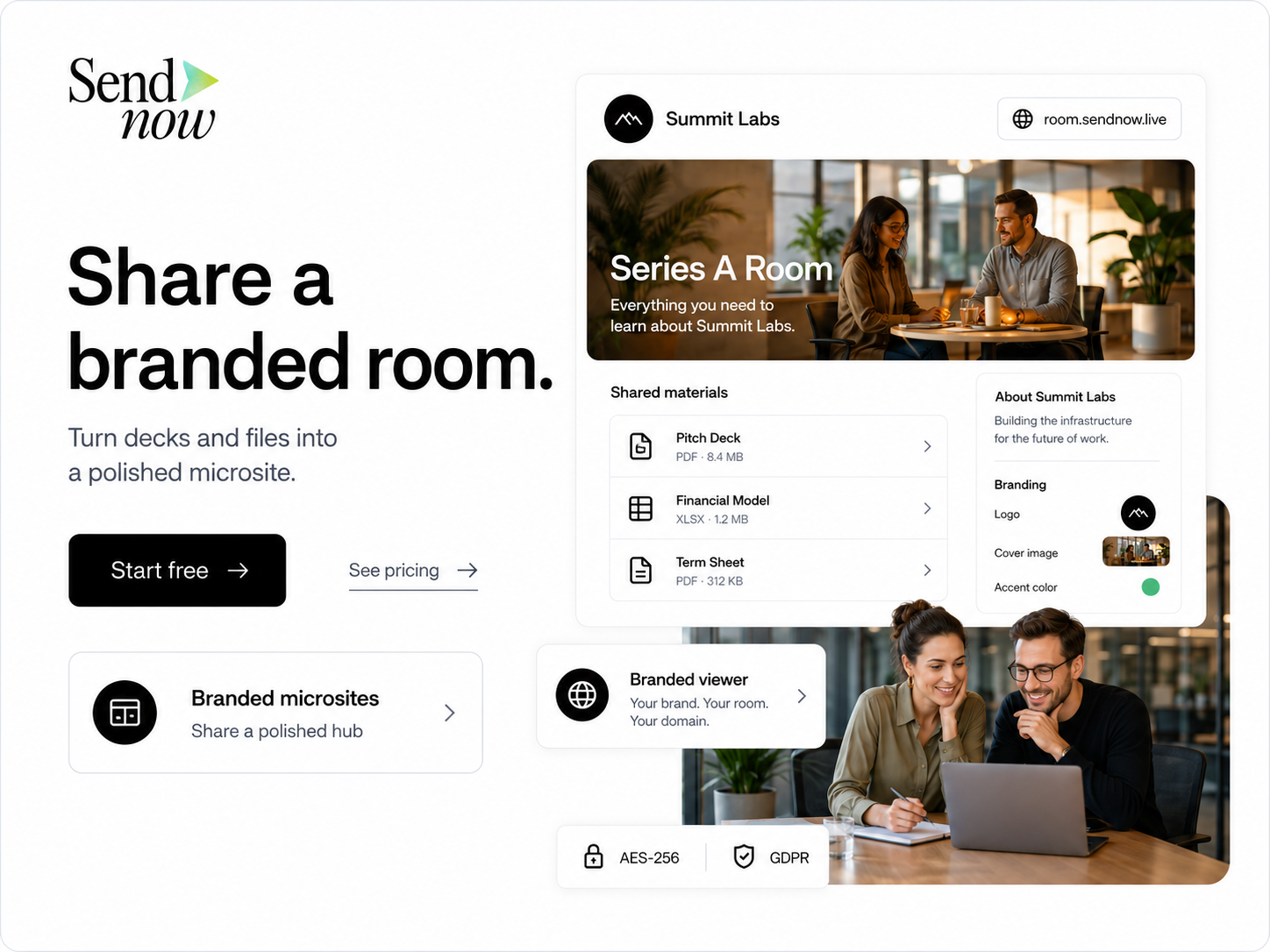
Due diligence involves a constant stream of questions. When using Dropbox, this workflow is managed via email or shared spreadsheets, leading to confusion, delayed responses, and lost information. A dedicated VDR integrates a structured Q&A workflow. Buyers submit questions directly within the VDR environment, linked to specific documents. The deal team can assign these questions to internal experts, approve answers, and publish them securely, maintaining a clear audit trail of all clarifications.
Compliance and Audit Trail Gaps
Generic cloud storage platforms do not provide the detailed audit records required for corporate governance and regulatory compliance. A VDR generates comprehensive, exportable audit trails showing every access, signature, and activity event. This log is crucial for legal protection post-transaction and satisfies compliance audits (such as SOC 2 and GDPR).
Detailed Feature Comparison
The table below breaks down the feature differences between standard cloud storage (Dropbox) and a modern, finance-focused VDR (such as SendNow):
| Feature | Dropbox Business | SendNow VDR |
|---|---|---|
| AES-256 Encryption | Yes | Yes |
| Access Gating | Email / Password | Email, Passcode, and NDA Gates |
| View-only Permission | Yes (but easily bypassed) | Yes (enforced by secure web viewer) |
| Download Blocking | Yes | Yes |
| Dynamic Watermarking | No | Yes (includes email, IP, and timestamp) |
| Screenshot Shield | No | Yes |
| Page-by-page Analytics | No | Yes |
| Time-on-page Tracking | No | Yes |
| AI Engagement Scoring | No | Yes |
| Custom Domain Branding | No | Yes (Business plan and above) |
| Structured Q&A | No | Yes |
| Per-User Pricing | Yes ($15–$30/user/mo) | No (Flat monthly subscription) |
Cost Analysis: Is Dropbox Actually Cheaper?
One of the main reasons founders and deal teams default to Dropbox is the perceived cost savings. Dropbox starts at a low per-user price point, while legacy virtual data rooms are notorious for their high, opaque pricing.
The True Cost of Dropbox
While Dropbox appears inexpensive, the per-user pricing model scales quickly. If you have five internal team members, three legal advisors, two accountants, and ten prospective bidders, you must pay for 20 user licenses. At $20/user/month, that is $400/month. Furthermore, Dropbox limits the features available on its entry-level plans, forcing you to upgrade to higher tiers to get basic access controls.
The High Cost of Legacy VDRs
Historically, virtual data rooms were priced per page uploaded, or required five-figure annual contracts. This pricing model made them impractical for early-stage startups and mid-market deal teams. A single M&A process could result in tens of thousands of dollars in surprise page-overage fees.
The Modern VDR Alternative: Flat-Rate Subscriptions
Modern platforms like SendNow bridge this gap by offering transparent, flat-rate pricing with no per-user fees.
- SendNow Pro: $12/month (includes unlimited viewers, 300 documents, and core security features like watermarks and NDA gates).
- SendNow Business: $33/month (includes custom domain branding, Slack integration, and up to 1,000 documents with unlimited viewers).
With a flat-rate model, you can invite as many bidders, advisors, and team members as you need without worrying about escalating monthly bills. In many cases, a modern VDR is actually less expensive than a Dropbox Business subscription for a transactional workflow, while providing the security and intelligence layers your deal requires.
Setup Comparison: Time-to-Value
A common misconception is that setting up a virtual data room is a complex, time-consuming process. While this may be true for legacy enterprise systems, modern SaaS VDRs are as easy to set up as a standard cloud folder.
Setting Up a Folder in Dropbox
To share files on Dropbox, you upload your folders, click "Share", enter the recipient's email address, and define their permissions (viewer or editor). The setup takes under five minutes, but you are left with zero analytics, no screenshot protection, and no NDA enforcement.
Setting Up a Portal on SendNow
Configuring a secure portal on SendNow is a straightforward process:
- Log in to your dashboard at https://share.sendnow.live/dashboard.
- Create a new deal room and upload your organized folders using drag-and-drop.
- Toggle security policies: Enable NDA gating, dynamic watermarking, and screenshot blocking.
- Generate a secure link and share it with your buyers.
The setup takes less than ten minutes and provides a fully branded, highly secure due diligence portal that protects your data and tracks viewer engagement.
Managing Multi-Party Deals
When running a private equity buyout or a venture capital fundraising round, you are rarely dealing with a single counterparty. You are managing multiple prospective buyers, each at different stages of the process.
Using a single Dropbox folder for multiple bidders is highly risky. If an analyst from Firm A notices a shared folder containing files with names related to Firm B, the competitive tension of your deal is broken. To prevent this, you must create separate, duplicate folders for each bidder, which increases the management overhead and the risk of uploading a file to the wrong folder.
A VDR allows you to manage multiple bidders from a single central portal. You can create unique, isolated links for each firm.
- Firm A accesses the data room via Link A and cannot see that Firm B is also reviewing the materials via Link B.
- You can track each firm's engagement separately on your dashboard.
- You can revoke access for Firm B if they pull out of the process, without affecting Firm A's access.
- You can update files centrally, and the updates will propagate across all secure links automatically.
This centralized structure reduces the administrative burden on your CFO and legal advisors, allowing them to focus on negotiating the transaction.
Technical Security and Industry Compliance
Confidential financial transactions are subject to strict legal and regulatory compliance frameworks. Your document sharing platform must meet these standards.
System and Organization Controls (SOC 2)
SOC 2 compliance is a standard for service organizations, developed by the American Institute of CPAs (AICPA). It outlines criteria for managing customer data based on security, availability, processing integrity, confidentiality, and privacy. A VDR must maintain SOC 2 compliance to ensure that your corporate data is stored in a secure, audited environment.
General Data Protection Regulation (GDPR)
If your deal involves EU citizens, companies, or assets, your file sharing workflows must comply with the GDPR. A VDR ensures compliance by encrypting all personal data, logging all user consent (including digital NDA signatures), and storing data in secure, compliant AWS regions. For additional information on GDPR compliance standards, you can refer to the official GDPR rules.
eIDAS and the U.S. ESIGN Act
Electronic signatures captured by VDR portals (such as during NDA gating) are legally recognized under the U.S. ESIGN Act and the European eIDAS regulation. A VDR logs the viewer's IP address, verified email, and exact timestamp of acceptance, providing a legally binding signature record that stands up to audit checks. More information about electronic signature standards is available at the ESIGN Act portal.
Frequently Asked Questions
What is a private equity data room?
A private equity data room is a highly secure online document repository used by PE firms, investment banks, and target companies to store, manage, and share confidential financial, legal, and operational documents during due diligence. It features granular access permissions, page-level analytics, and digital NDA gates.
Can I use Dropbox as a data room for M&A?
While you can technically upload and share files on Dropbox, it lacks the security and tracking features required for M&A due diligence. Dropbox does not offer screenshot blocking, dynamic watermarking, or page-level view time analytics, which increases the risk of data leaks and limits your visibility into bidder interest.
Why is page-level tracking important in private equity deals?
Page-level tracking shows you exactly which pages of your financial models, corporate bylaws, or customer agreements a buyer is reviewing, and for how long. This engagement intelligence helps you identify serious buyers, prepare for upcoming questions, and shape your negotiation strategy.
How do virtual data rooms protect against document leaks?
Virtual data rooms prevent leaks by using secure, view-only web viewers that disable printing, copy-pasting, and downloading. Additionally, they apply dynamic watermarks displaying the viewer's email and IP address, and include screenshot blocking to stop unauthorized duplication of proprietary data.
What is the cost difference between Dropbox and a dedicated VDR?
Dropbox is priced per user, which can become expensive as you add external advisors and bidders. Legacy VDRs are priced per page or require expensive annual contracts. Modern VDRs like SendNow offer flat monthly subscriptions starting at $12/month with no per-user fees, making them highly cost-effective.
Upgrade Your Diligence Process with SendNow
Running an M&A or private equity deal on Dropbox is a risk you do not need to take. For the same or lower cost, you can secure your transaction with a dedicated virtual data room.
SendNow provides a finance-first virtual data room that combines bank-grade security—including AES-256 encryption, screenshot blocking, and dynamic watermarks—with page-level analytics and AI-powered engagement scoring. Our transparent flat-rate pricing starting at $12/month ensures you can run your deal without worrying about surprise bills.
Protect your data and accelerate your transaction timeline today.
Start your free trial of SendNow at the Dashboard, or explore our solutions and pricing to find the perfect plan for your deal team. Connect with us on LinkedIn for the latest updates in secure financial transaction management.
About the Author: Rifana Hameem
Rifana is the founder of SendNow. She leads the team in building secure, compliant, and analytics-rich document sharing tools for finance and professional teams worldwide.
Connect on LinkedIn