Digital NDA vs Paper NDA: What Finance Teams Need to Know

Digital NDA vs Paper NDA: What Finance Teams Need to Know
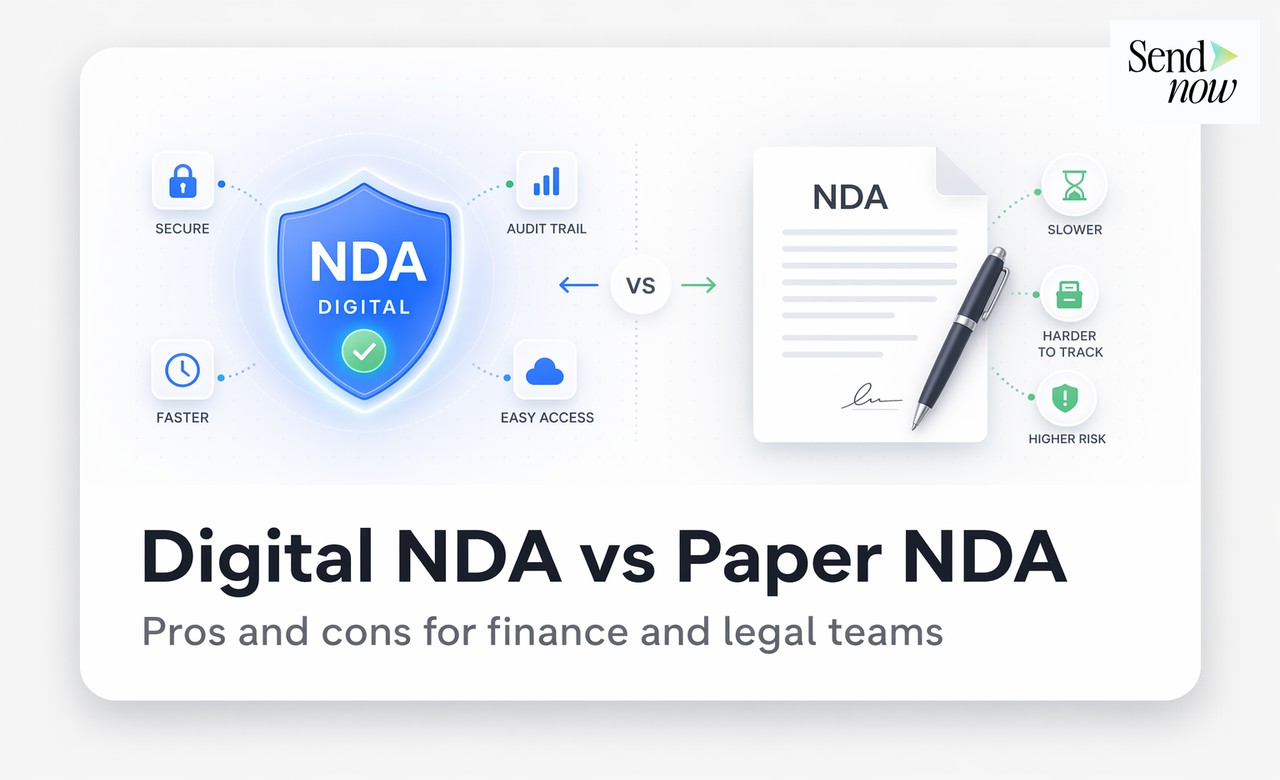
A digital NDA captures confidentiality agreement electronically, either through a click-through gate, an e-signature platform, or an embedded agreement within a document-sharing tool. A paper NDA requires a printed document, physical or wet signature, and manual handling. For finance teams sharing documents digitally, a digital NDA is faster to deploy, easier to audit, and often more reliably documented than its paper equivalent.
The Core Difference
The distinction is not just about format. Paper and digital NDAs differ in speed, enforceability, audit trail quality, and compatibility with modern document workflows.
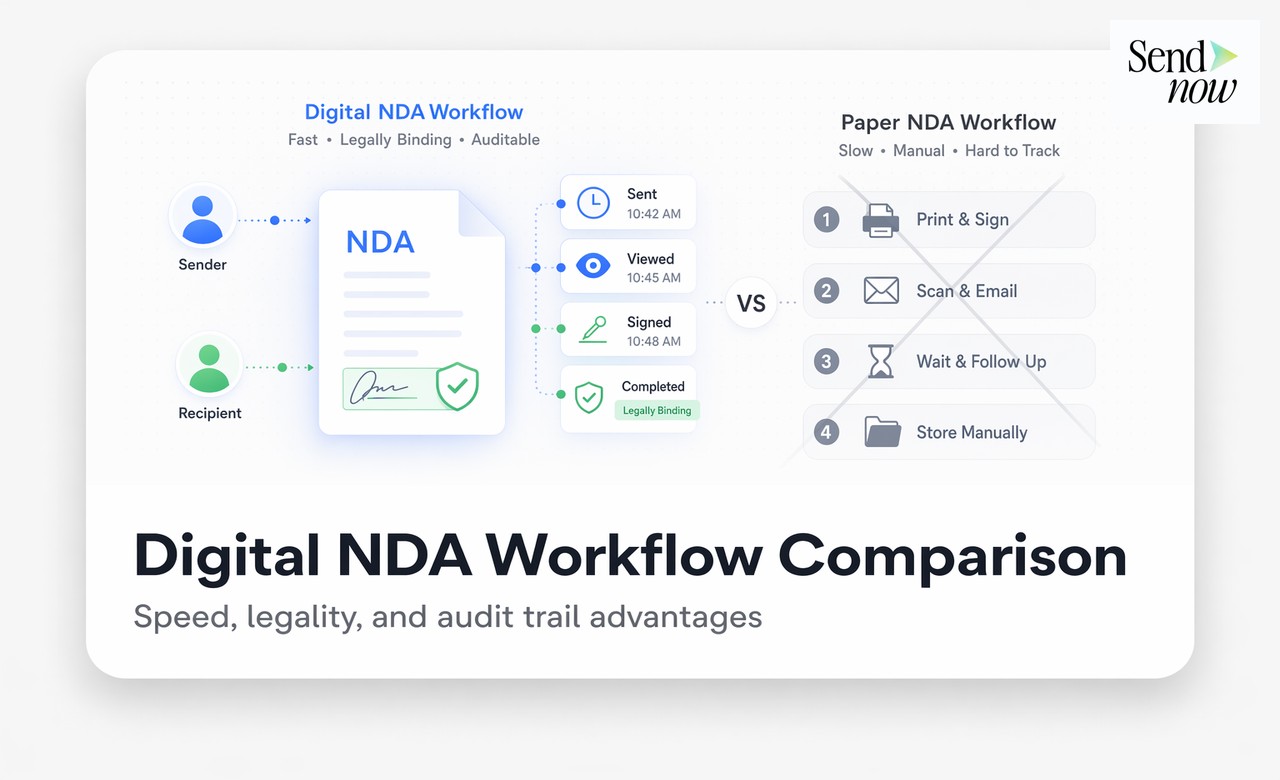
A paper NDA requires the other party to receive the document (by post or as an email attachment), print it, sign it, scan or photograph it, and return it. This process typically takes one to three days and produces a scanned image that may or may not be clearly legible, with no automatic timestamp linking the signing event to any document-sharing action.
A digital NDA, implemented as a click-through gate on SendNow, takes under two minutes to set up. It captures the acceptance in real time, records a timestamp and IP address, and links the agreement event directly to the specific document view.
Side-by-Side Comparison
| Factor | Digital NDA (Click-through) | Paper NDA (Wet signature) | E-Signature NDA |
|---|---|---|---|
| Setup time | Under 2 minutes | 1-3 days | 30-60 minutes |
| Delivery method | Built into document link | Post or email + return | Separate email flow |
| Timestamped record | Yes, automatic | Partial (if scanned) | Yes |
| Linked to document access | Yes | No | No |
| Revoke document access | Yes | No | No |
| GDPR data handling | Automated | Manual | Partial |
| Legal enforceability (EU) | High (click-through) | High (wet sig) | High (qualified e-sig) |
| Audit-ready | Yes | Partial | Yes |
Legal Enforceability in the EU
Both paper and digital NDAs are legally binding in EU jurisdictions, subject to the standard requirements of contract law: offer, acceptance, consideration, and intention to create legal relations.
Under the EU's eIDAS Regulation (Regulation (EU) No 910/2014), electronic signatures and electronic contracts are legally valid. A click-through agreement presented clearly and accepted affirmatively constitutes a valid contract under eIDAS and national implementing laws in all EU member states.
The key advantage of a digital click-through NDA over a paper NDA in practice is not enforceability per se, but evidence. A paper NDA requires you to produce a signed copy, establish chain of custody, and prove the signature was authentic. A digital NDA produces an automatic, tamper-resistant log of the acceptance event tied to a specific IP address and time.
GDPR Considerations
When you capture a digital NDA, you process personal data (the viewer's email address, IP address, and timestamp). This processing must comply with GDPR. SendNow handles this under Article 6(1)(f) (legitimate interests) and stores acceptance records in EU-compliant infrastructure.
Paper NDAs are not inherently GDPR compliant. If you store signed paper NDAs containing personal data, you must manage their retention, security, and disposal in accordance with GDPR requirements. Digital NDA records processed by a GDPR-compliant platform are typically easier to manage from a data governance perspective.
When to Use Each Format
Use a digital click-through NDA when:
- Sharing documents digitally and wanting instant protection.
- Working with multiple counterparties simultaneously.
- Needing an audit trail linked to document access events.
- Sharing across EU jurisdictions where eIDAS is recognised.
Use a paper or qualified e-signature NDA when:
- The deal involves high-value IP transfer or long-term strategic partnerships where qualified signatures are expected.
- The counterparty's legal team insists on a formally executed document.
- The NDA includes complex bespoke clauses requiring negotiation before signing.
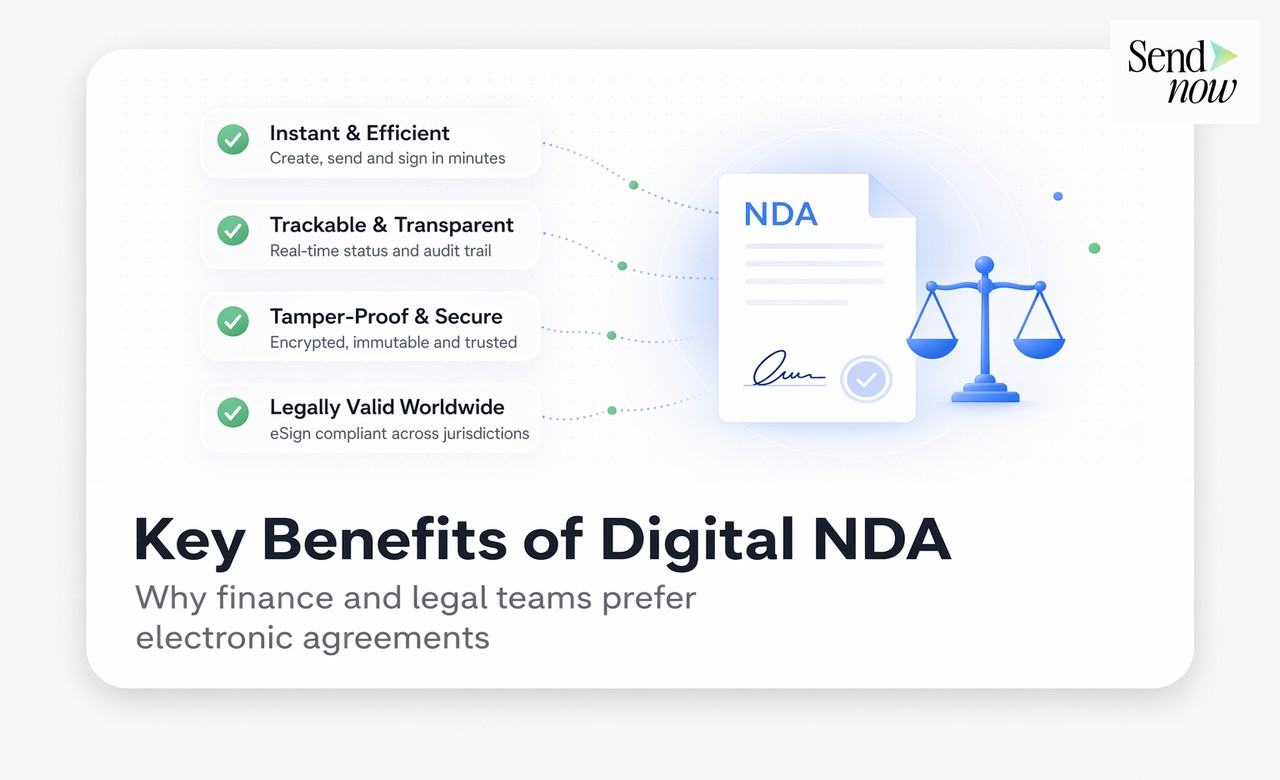
In most day-to-day finance workflows, a digital click-through NDA covers the risk adequately and is dramatically faster to deploy.
Why Digital NDAs Win on Audit Trails
A paper NDA tells you the recipient agreed to confidentiality. It does not tell you when they first accessed the confidential document, how long they spent reviewing it, or whether they forwarded a link to a colleague. A digital NDA gate combined with SendNow's analytics gives you all of this.
This is particularly relevant for finance teams managing investor relations, M&A processes, or fundraising rounds where multiple parties access the same materials and you need to know who has seen what.

Related Resources
- Free NDA Template for Sharing Confidential Business Documents
- How to Require a Signed NDA Before Anyone Views Your File
Switch to a Smarter NDA Workflow
Digital NDAs through SendNow take two minutes to set up and come with automatic audit trails, GDPR-compliant logging, and instant revocation.
Start your free trial at sendnow.live
Frequently Asked Questions
Is a digital NDA legally binding in EU countries? Yes. Under the EU eIDAS Regulation and national contract law in all member states, click-through electronic agreements are legally binding when the terms are clearly presented and affirmatively accepted.
Which is more enforceable: a digital NDA or a paper NDA? Both are enforceable. Digital NDAs are often easier to enforce in practice because the acceptance record is automatic, timestamped, and tamper-resistant, while paper NDAs require producing a physical signed copy with established chain of custody.
Can a counterparty claim they did not accept the digital NDA? It is difficult to successfully claim non-acceptance when the system records the specific IP address, timestamp, and device of the acceptance event. The acceptance gate prevents document access without a positive click, so denial of access implies denial of acceptance.
Do digital NDAs work for cross-border EU transactions? Yes. The eIDAS Regulation applies across all EU member states, meaning a click-through NDA accepted by a German counterparty carries the same legal weight as one accepted by a French or Dutch counterparty.
How long should I retain digital NDA records? Retain records for at least the duration of the NDA itself plus the applicable limitation period in your jurisdiction (typically 6 years in the UK, 3-5 years in most EU member states).
Is a PDF NDA sent by email considered a digital NDA? Technically yes, but it lacks the audit trail and access-linking features of a gate-based digital NDA. Sending a PDF NDA and requesting it be signed and returned is more similar to a paper NDA process than to a click-through gate.
Do I need to store the NDA text separately from the acceptance log? Best practice is to store both: the exact NDA text presented at the time of acceptance and the acceptance event record. SendNow logs both automatically.
What if the recipient's jurisdiction does not recognise click-through agreements? This is a rare concern within the EU, but if a counterparty is based outside the EU in a jurisdiction with stricter signature requirements, use a qualified e-signature platform for the NDA and use SendNow's gate as an additional access control layer.
About the Author: Rifana Hameem
Rifana is the founder of SendNow. She leads the team in building secure, compliant, and analytics-rich document sharing tools for finance and professional teams worldwide.
Connect on LinkedIn