Dropbox vs Document Tracking Platforms: What Finance Teams Choose

Dropbox vs Document Tracking Platforms: What Finance Teams Choose
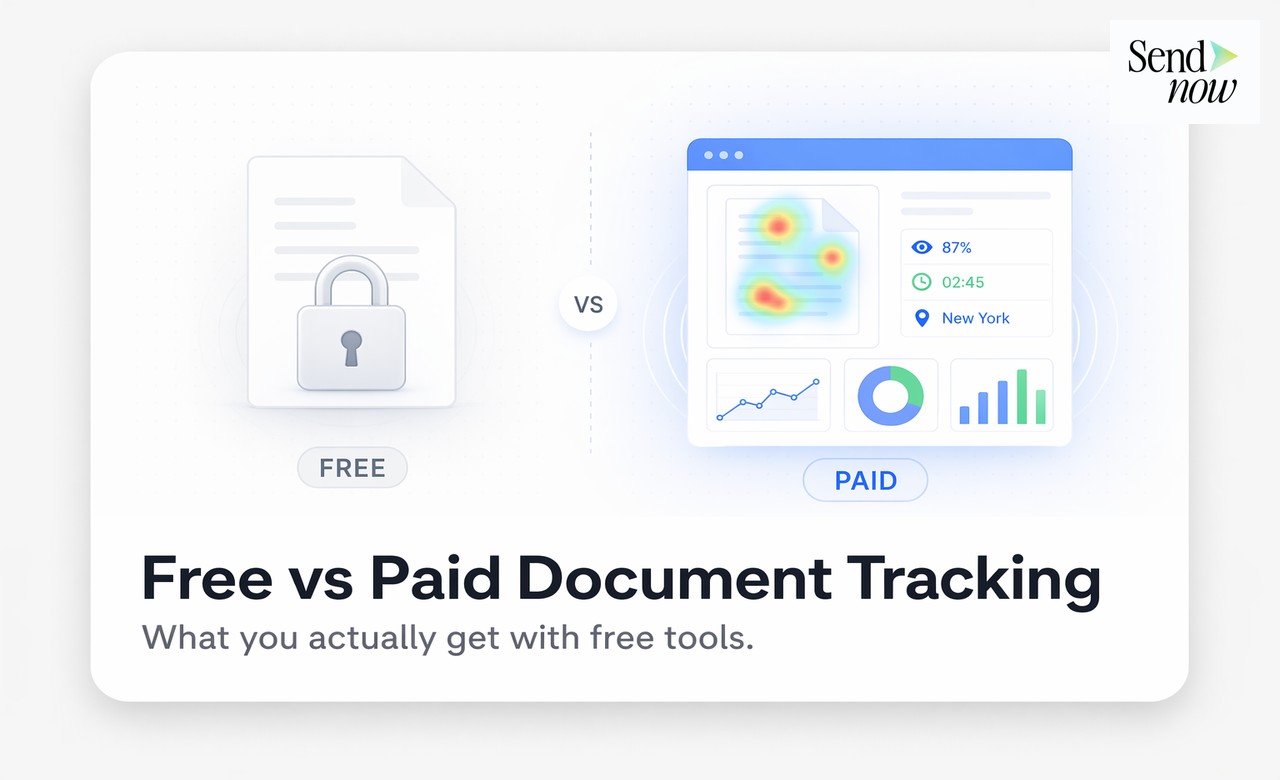
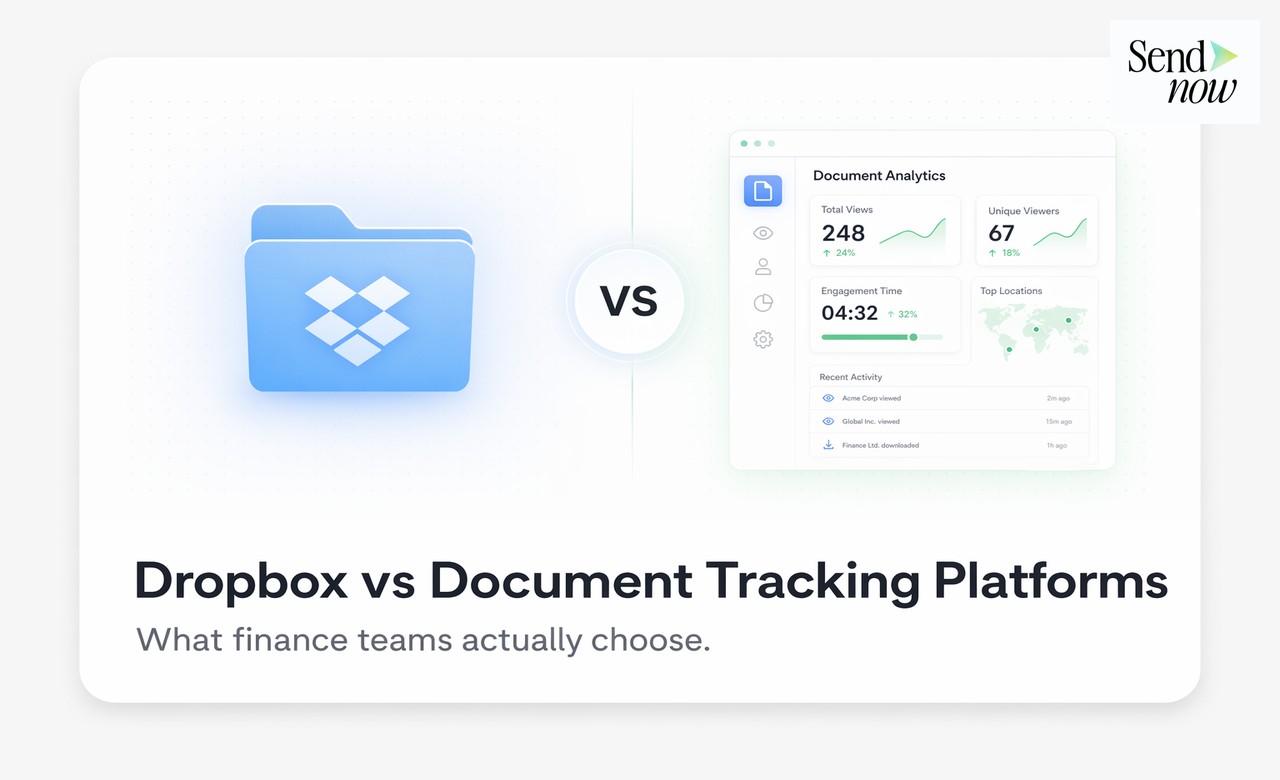
Dropbox is a file storage and synchronisation platform. Document tracking platforms are built to tell you who opened your document, which pages they read, and what they did next. These are different tools serving different needs, and finance teams consistently reach the same conclusion: Dropbox handles internal storage well, but for external document sharing with clients, counterparties, and investors, dedicated tracking is the better fit.
What Dropbox Does Well
Dropbox remains one of the most reliable file synchronisation and internal storage tools available. Its strengths are well established:
- Seamless sync across devices and team members
- Version history and file recovery
- Integration with productivity tools such as Microsoft Office and Google Workspace
- Team folders with shared access for internal collaboration
- Solid uptime and file reliability
These are genuinely useful capabilities for managing files internally. The problem arises when finance teams try to use Dropbox as a client-facing document sharing tool.
What Dropbox Cannot Tell You
When you send a Dropbox link to a client, investor, or counterparty, you lose visibility almost immediately. Here is what Dropbox cannot provide:
- Whether the document was opened: Dropbox does not notify you when an external recipient opens a shared link
- How long they spent reading: There is no time-on-page data, no page-by-page engagement, and no session duration
- Which pages they read: Dropbox provides no per-page analytics at all
- Whether they forwarded the link: If a recipient shares your link with a third party, you have no record of it
- Whether they downloaded the file: You cannot reliably prevent downloads, and you have no audit trail of download events
- Whether they accepted any terms: There is no NDA gate or identity verification before a Dropbox link opens
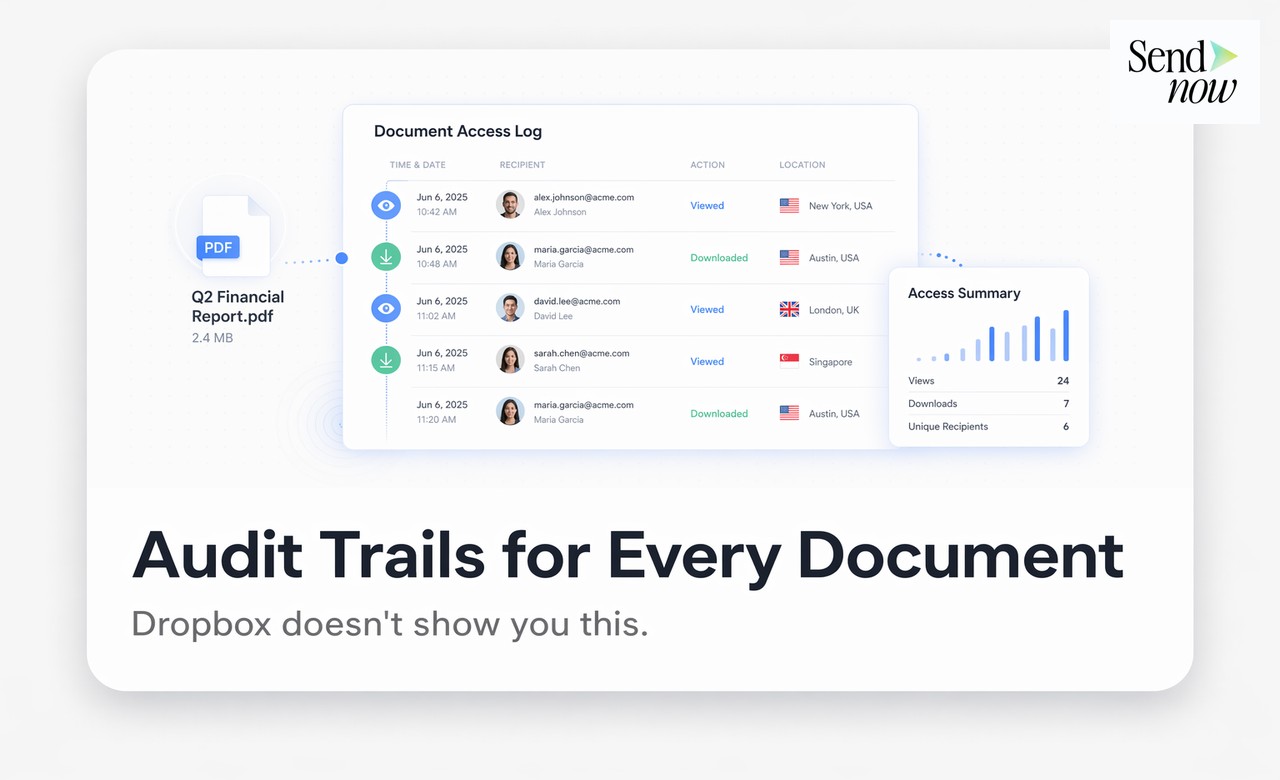
For a financial model, a term sheet, a pitch deck, or a due diligence document, the absence of this information is not a minor inconvenience. It removes your ability to act on engagement signals and leaves you without the audit trail that regulated industries often require.
Feature Comparison: Dropbox vs Document Tracking Platforms

| Capability | Dropbox | SendNow | Purpose-Built Tracker |
|---|---|---|---|
| File storage and sync | Excellent | No | No |
| External link sharing | Basic | Yes | Yes |
| Open notifications | No | Yes | Yes |
| Per-page time analytics | No | Yes | Yes |
| Visitor identification | No | Yes | Yes |
| NDA gate | No | Yes | Some |
| Screenshot blocking | No | Yes | Some |
| Download prevention | No | Yes | Some |
| Link expiry | Basic | Yes | Yes |
| Audit trail | No | Yes | Yes |
| GDPR / EU data residency | Partial | Yes | Varies |
| Watermarking | No | Yes | Some |
| Free plan | Yes (limited) | Yes | Varies |
How Finance Teams Use Both Tools Together
The most practical approach for most finance teams is not choosing one over the other, but using each for its intended purpose:
Dropbox (or an equivalent cloud storage platform) handles internal file management: version control, team access, backup, and sync across devices. This is what it does best.
SendNow handles external document sharing: anything sent to a client, investor, regulator, or counterparty that needs to be tracked, controlled, and logged. This is what dedicated tracking tools do best.
The handoff is simple. When a document is ready to go external, upload it to SendNow (or share the hosted link), generate a trackable link with the appropriate security settings, and send that link instead of a Dropbox share. From that point, you have full visibility.
Why Tracking Matters More for Finance Than Other Industries
Finance teams share documents that drive real decisions: investment proposals, financial models, risk assessments, compliance reports, term sheets, and due diligence packages. The engagement data from these documents is commercially valuable in ways that do not apply to, say, a shared marketing brief.
Knowing that a prospect has read your term sheet three times and spent eight minutes on the revenue projections page is not a curiosity. It is a signal that shapes your next call, your follow-up timing, and your negotiating position.
Dropbox cannot provide any of that. A document tracking platform can.
GDPR Compliance: Another Reason Finance Teams Switch
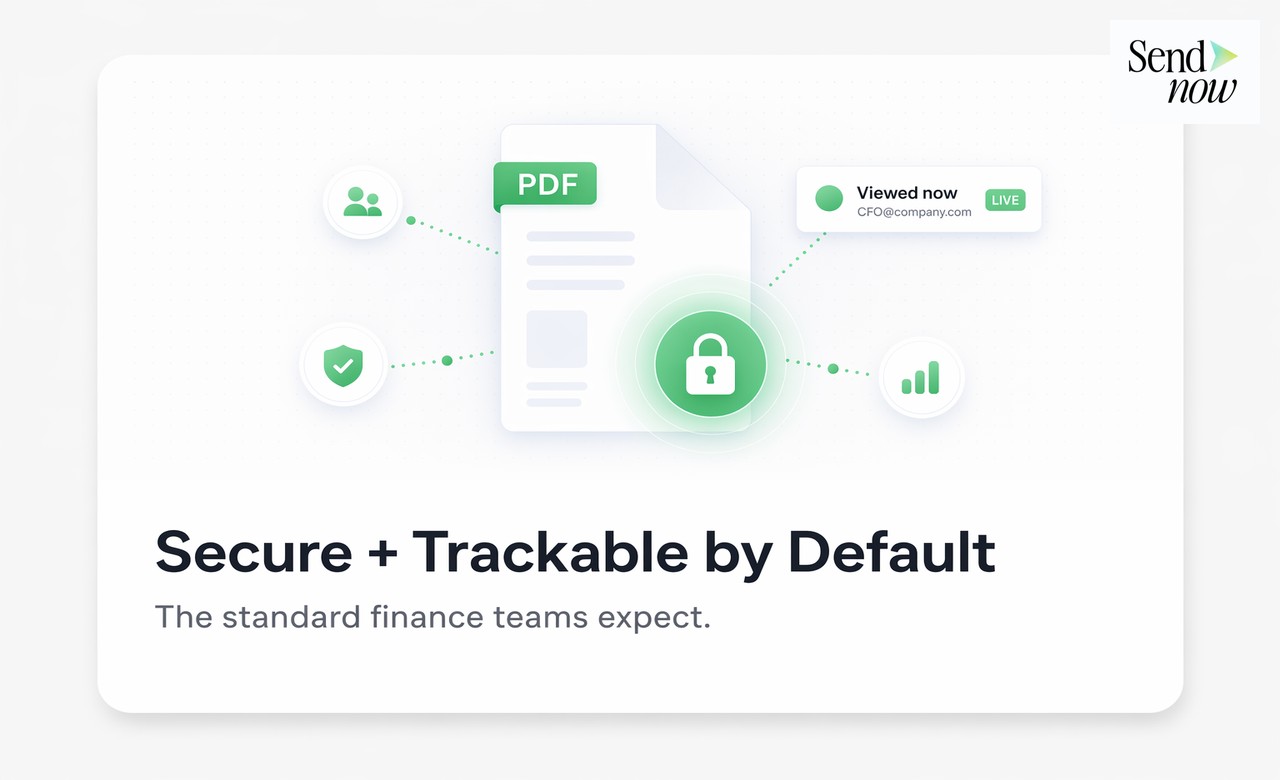
Dropbox operates global infrastructure, and data shared via Dropbox links may be processed on servers outside the EU. For finance teams operating under GDPR, particularly those sharing documents that contain personal data, this creates compliance exposure.
SendNow stores all data within the EU and is built around GDPR requirements. For EU-regulated financial services businesses, this is not a premium feature but a baseline requirement.
Frequently Asked Questions
Q: Can I use Dropbox for client document sharing? You can share files via Dropbox, but you will have no visibility into whether they were opened, how they were engaged with, or whether they were forwarded. For client-facing documents that require tracking, a dedicated tool is more appropriate.
Q: Is there a Dropbox alternative that also tracks documents? Yes. SendNow combines secure external document sharing with full analytics, per-page engagement, visitor identification, and EU GDPR compliance.
Q: Does Dropbox notify me when someone opens a shared link? No. Dropbox does not provide open notifications for external shared links.
Q: Can I prevent someone from downloading a document I share via Dropbox? Dropbox allows you to disable downloads in some sharing modes, but you cannot prevent screenshots or restrict access after a link has been shared without changing the link itself.
Q: What is the best Dropbox alternative for finance teams? For external document sharing with analytics and compliance controls, SendNow is designed specifically for finance and professional services use cases in the EU.
Q: Do I need to replace Dropbox entirely? No. Most teams use Dropbox for internal storage and SendNow for external sharing. They complement each other rather than competing.
Q: Is Dropbox GDPR-compliant? Dropbox maintains GDPR compliance commitments, but data is not stored exclusively within the EU by default. EU teams requiring confirmed EU data residency should verify their configuration or choose an EU-native alternative.
Q: How does document tracking help with regulatory compliance? An audit trail showing who accessed a document, when, and from where can satisfy record-keeping requirements in many regulated industries. Dropbox does not provide this level of detail for external sharing events.
Know What Happens After You Send
Stop sharing in the dark. Try SendNow free at sendnow.live and get full visibility on every document you share externally.
Related reading:
About the Author: Rifana Hameem
Rifana is the founder of SendNow. She leads the team in building secure, compliant, and analytics-rich document sharing tools for finance and professional teams worldwide.
Connect on LinkedIn