How to Track Client Proposals and Win More Deals

- Proposal tracking software monitors when, how often, and how deeply prospects read your proposals.
- CRMs record contact data. Proposal tracking tools show you buyer behavior inside the document itself.
- Real-time open notifications let sales reps follow up at the exact right moment, not days later when the prospect has moved on.
- Page-by-page analytics reveal which sections stall deals so you can fix them.
- Key metrics include open rate, time per page, completion rate, and number of views.
- Tools like SendNow provide all of this with AI engagement scoring, NDA gating, and branded deal rooms built for revenue teams.
How to Track Client Proposals and Win More Deals
Meta description: Proposal tracking software gives sales teams real-time visibility into who reads their proposals, which pages hold attention, and when to follow up. This guide answers the top questions sales reps, AEs, and marketing managers ask about tracking client proposals effectively in 2026.
Introduction
You spent two hours building a proposal. You hit send. Then nothing.
The silence after sending a proposal is one of the most frustrating experiences in sales. You have no idea whether the prospect opened it, skimmed the pricing page, forwarded it to their CFO, or deleted it outright. And because you have no data, your follow-up is pure guesswork: too early and you seem pushy, too late and you lose the deal.
This is the core problem proposal tracking software solves.
The proposal management software market is on track to reach $9 billion by 2035, growing at an 11.1% CAGR, according to Oneflow. That growth reflects how seriously revenue teams now treat the post-send stage of the sales cycle. With 80% of B2B sales interactions now happening through digital channels, according to Guideflow, the ability to track what happens inside a document is no longer a nice-to-have. It is a competitive edge.
Below, we answer the seven most common questions sales teams ask about tracking client proposals.
1. What Is Proposal Tracking Software?
Proposal tracking software is a category of sales tool that gives you visibility into how recipients engage with documents you share. Rather than simply confirming delivery, it tells you:
- Whether the recipient opened the document
- How many times they viewed it
- Which pages or sections they spent the most time on
- Whether they forwarded it to additional stakeholders
- When they last accessed it
Traditional document sharing (email attachments, Google Drive links, Dropbox) gives you none of this. Once you send a PDF, it disappears into a black hole.
Proposal tracking tools assign a unique link to each document. When a recipient opens that link, the software captures engagement data in real time, and often fires an instant notification to the sender.
Most platforms in this category sit between a CRM and a document management tool. They focus specifically on the moment of buyer engagement with sales content, the window that determines whether a deal moves forward or stalls.
According to Arphie, organizations lose up to 30% of winnable deals because of inadequate proposal tracking. The same source notes that teams using manual tracking methods spend 40% of their proposal time on status updates rather than on closing.
2. How Does Proposal Tracking Software Work?
Most proposal tracking tools operate through a link-based sharing system. Here is the standard workflow:
- Upload your document to the platform (PDF, slide deck, or Word file).
- Generate a tracked link specific to that recipient or deal.
- Send the link via email, LinkedIn, or any messaging channel.
- Receive real-time data as the recipient engages: an open notification, page-by-page view duration, scroll depth, and session count.
- Act on the signal: if the prospect just spent 4 minutes on your pricing page, that is your cue to call them right now.
Some platforms, including SendNow, add a layer of security and intelligence on top of this. Beyond standard link tracking, SendNow provides page-by-page analytics, an AI engagement score that ranks prospects by deal readiness, NDA gating so prospects must sign before viewing, dynamic watermarks, and screenshot protection. Sales teams can also build branded microsites (deal rooms) that house all relevant documents in one place.
The result is that instead of guessing where a prospect stands, you have a ranked, scored view of buyer intent that tells you exactly who to call first.
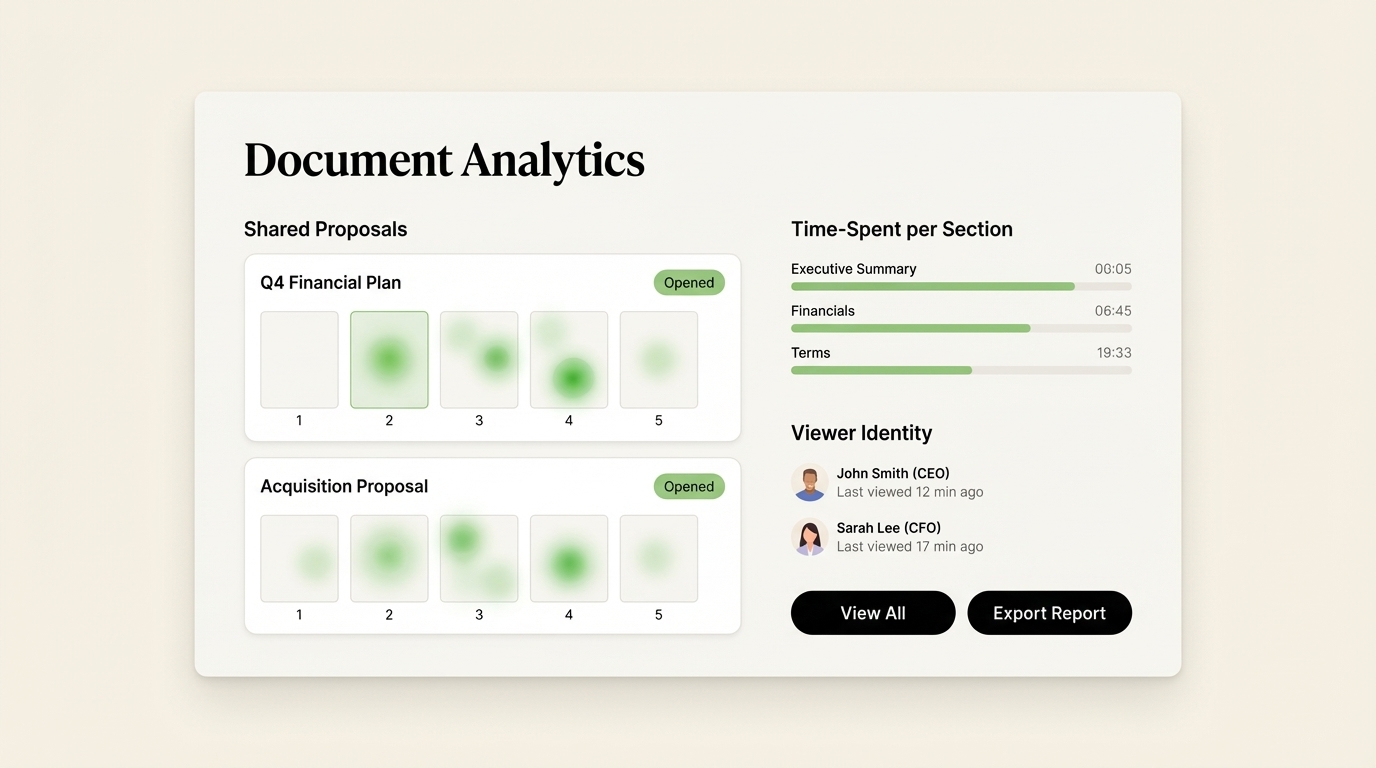
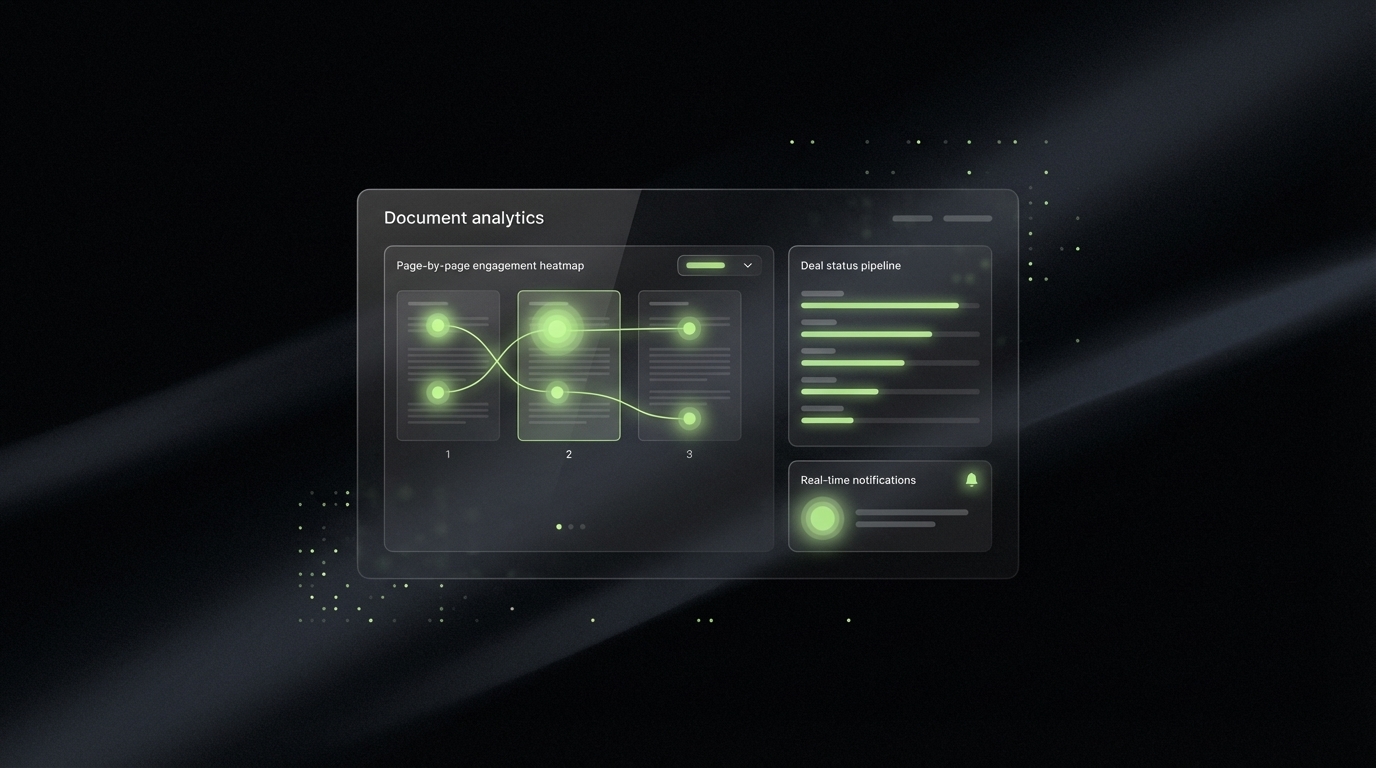
SendNow's analytics panel shows time-spent per page, open notifications, and viewer identity at a glance.
3. Is Proposal Tracking Software Different from a CRM?
Yes, and the distinction matters for your tech stack.
A CRM (Customer Relationship Management system) like Salesforce or HubSpot records contacts, logs call notes, tracks pipeline stages, and manages tasks. It tells you where a deal is in your process. It does not tell you what is happening inside your document after you share it.
Proposal tracking software closes that gap. It operates at the content engagement layer, not the pipeline management layer. The two tools work best together: your CRM knows the deal stage, and your proposal tracker knows whether the prospect actually read your proposal before that next call.
The practical difference in daily workflow:
| CRM | Proposal Tracking Software |
|---|---|
| Records that you sent a proposal | Shows you whether they opened it |
| Tracks deal stage | Tracks buyer engagement inside the document |
| Manages follow-up tasks manually | Triggers follow-up at the moment of engagement |
| Pipeline view | Document-level intelligence |
Many modern proposal tracking platforms integrate directly with CRMs via API or native connections, so the data syncs without double-entry. Proposify offers CRM integrations. SendNow supports Slack and webhook integrations so your whole team gets instant notifications when a prospect opens a key document.
According to GetAccept, two-thirds of sales reps now use some form of proposal software to increase win rates. The remaining third are still flying blind.
4. How Do You Know When a Client Opens Your Proposal?
With proposal tracking software, you receive a real-time notification the moment the prospect opens your link. The notification typically includes:
- The time and date of the open
- How long they viewed the document
- Their email address or IP-based identity (depending on your settings)
- The device or browser they used
Without a tracking tool, the only way to confirm a proposal was opened is to ask the prospect directly, which is awkward and unreliable.
Offorte describes the classic problem well: following up based on gut feeling means sometimes calling in the middle of a busy week to hear, "Oh right, your proposal. I still need to open that." With tracking, you call right after the prospect finishes reading, when the content is still fresh in their mind.
The timing advantage is real. Research cited by Better Proposals shows that proposals followed up on within minutes of an open notification convert significantly better than those followed up on at an arbitrary time. The prospect is literally thinking about your offer at that moment.
This is where tools with Slack integration earn their keep. If your whole revenue team gets notified the second a key prospect opens a proposal, the right person can reach out immediately, not when they remember to check the dashboard.

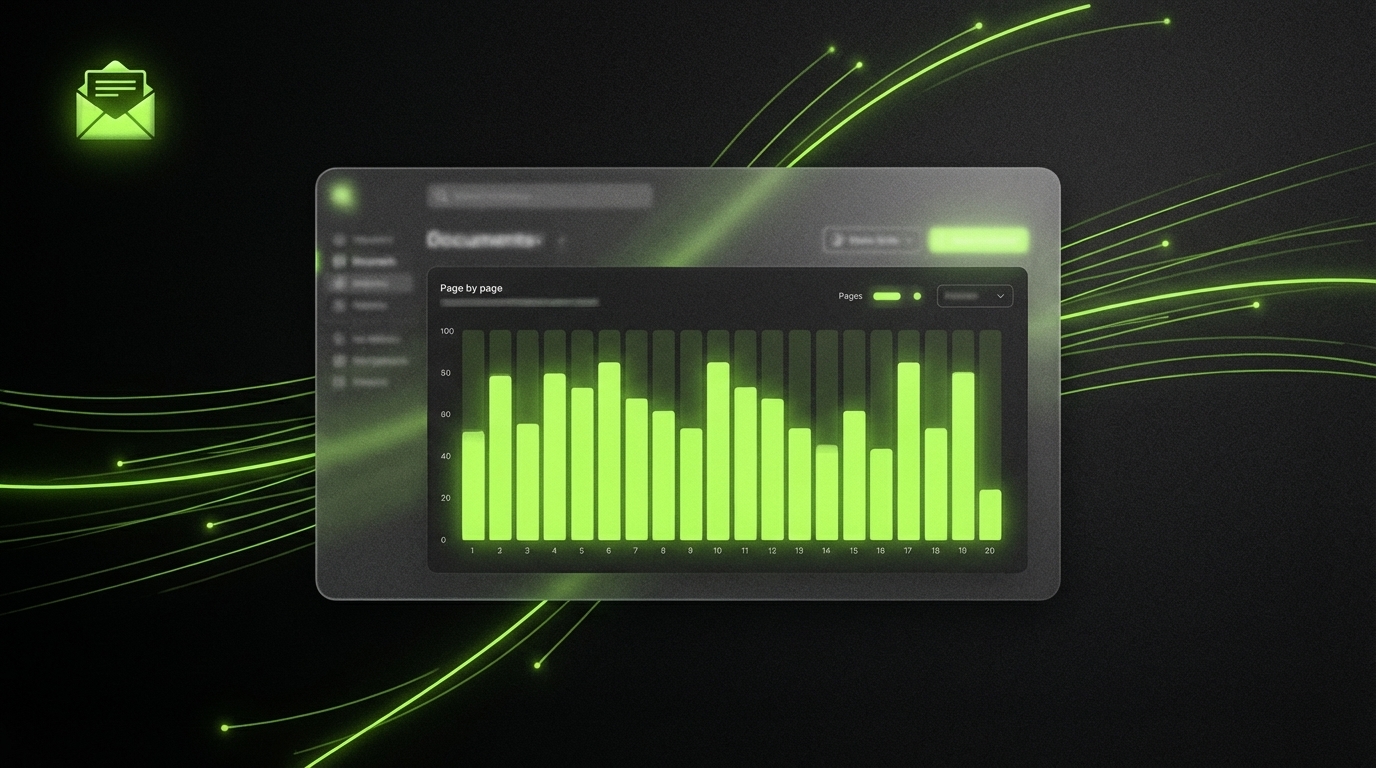
SendNow's real-time interface gives revenue teams instant visibility into prospect activity.
5. How Do You Follow Up Effectively After Sending a Proposal?
The best follow-up is timely and specific. Proposal analytics make both possible.
Follow up at the right moment. Trigger your follow-up based on an open notification rather than a fixed number of days. If the prospect opens your proposal at 2pm on a Tuesday, call or email at 2:10pm. They are actively thinking about your offer.
Reference what they engaged with. If your analytics show they spent three times longer on the ROI section than on any other page, lead your follow-up with ROI. "I saw you had a chance to look through the proposal. I wanted to walk you through the ROI numbers since that section tends to generate the most questions."
Identify additional stakeholders. If your document was opened by three different email addresses or sessions, the prospect forwarded it internally. That is a buying signal. Follow up and ask directly: "I noticed a few people have had a look. Is there anyone else you'd like me to walk through this with?"
Address the section they skipped. If a prospect spent zero time on your case studies page, they may have concern about proof points. Your follow-up email can proactively include a relevant case study.
Proposify notes that most deals do not close on the first proposal. The follow-up strategy, and how data-informed it is, often determines who wins the deal.
6. What Are the Key Metrics to Track in a Client Proposal?
Not all engagement data is equally useful. The metrics that actually predict deal outcome are:
Open rate. The percentage of sent proposals that get opened. A low open rate points to a delivery or subject line problem, not a proposal quality problem.
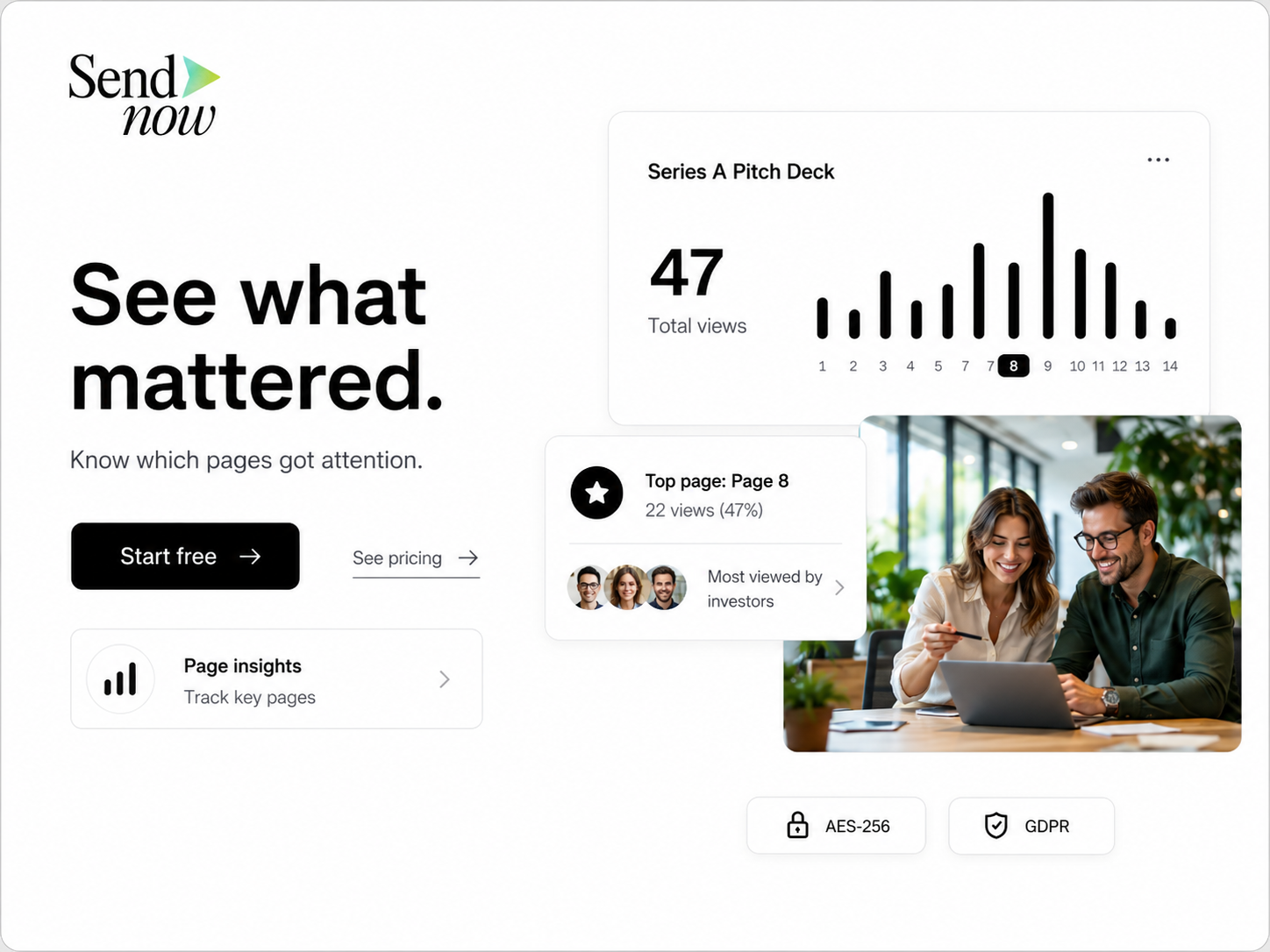
Time per page. The single most predictive metric in most deal contexts. Where a prospect spends time is where their attention and concerns live. Pricing pages with high time often indicate sticker shock. Feature pages with high time indicate strong interest.
Completion rate. Did they reach the last page? A prospect who reads your full proposal is significantly more likely to convert than one who dropped off at page two.
Number of views. Multiple views often mean the proposal is being circulated internally, which is a strong buying signal. A prospect who opens a document seven times over two days is actively considering it.
Time to first open. How long after sending did they open it? Long delays correlate with lower priority, which helps you calibrate urgency in your follow-up.
Engagement score. Advanced platforms like SendNow calculate an AI-driven composite engagement score that ranks all your active prospects by deal readiness. Instead of manually reviewing analytics for each deal, you see a prioritized list: call these three first.
DocBeacon frames this well: proposal tracking lets you spot real intent and prioritize the right deals, rather than spending equal time on every prospect regardless of their actual interest level.
7. What Should You Look for When Choosing Proposal Tracking Software?
The market has several options, each with different strengths. Here is what to evaluate:
Page-by-page analytics (not just "opened"). Basic email tracking tells you a link was clicked. True proposal tracking tells you exactly which pages held attention. Make sure the tool goes beyond open confirmation.
Real-time notifications. Delayed notifications lose the timing advantage. Look for instant alerts via email, mobile push, or Slack.
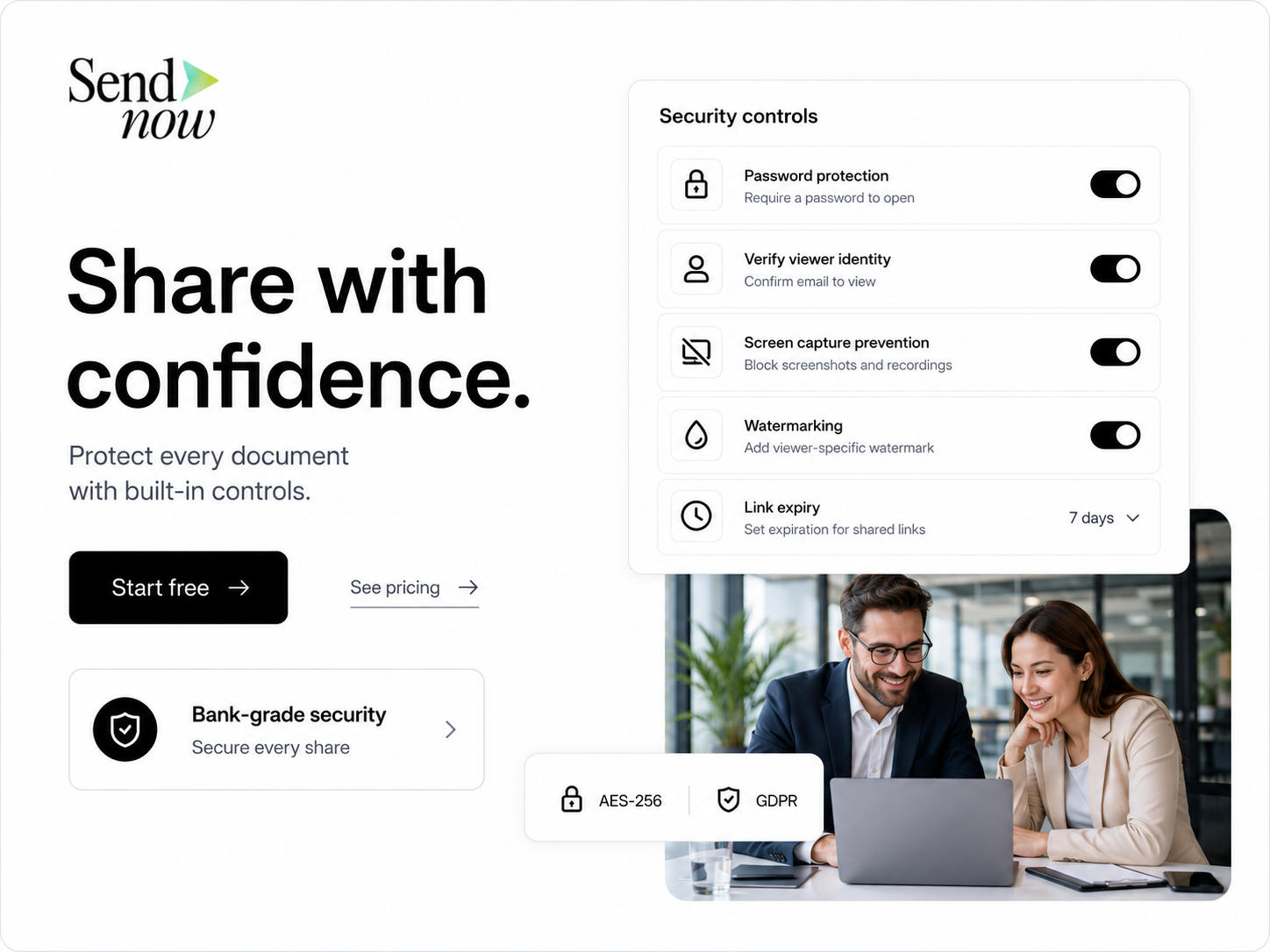
Security controls. For sensitive proposals, you need the ability to restrict downloads, require NDA signatures before access, add dynamic watermarks with the viewer's identity, and disable screenshots. This matters especially for agencies, financial services firms, and any deal involving proprietary pricing.
Branded deal rooms. A single link to a clean, custom-branded microsite that houses all relevant documents (proposal, case studies, pricing, legal terms) looks far more professional than emailing five separate attachments. Branded deal rooms also reduce friction for the buyer.
Pricing that scales. DocSend removed its free plan in March 2025, making it a harder sell for growing teams on a budget. SendNow starts at $9/month for the Lite plan and $17/month for the Pro plan for 3 members and 1,000 documents, with no credit card required for the free trial.
AI and integrations. Look for AI engagement scoring to prioritize follow-up automatically, plus Slack, webhook, or CRM integrations so your existing workflow gets the data it needs.
According to DocBeacon's 2026 comparison, the best-fit tool depends on your primary use case: if your priority is security, look for watermarking and NDA gating; if it is buyer experience, branded deal rooms and clean in-browser reading matter most; if it is pipeline intelligence, engagement scoring and Slack alerts are the deciding factor.
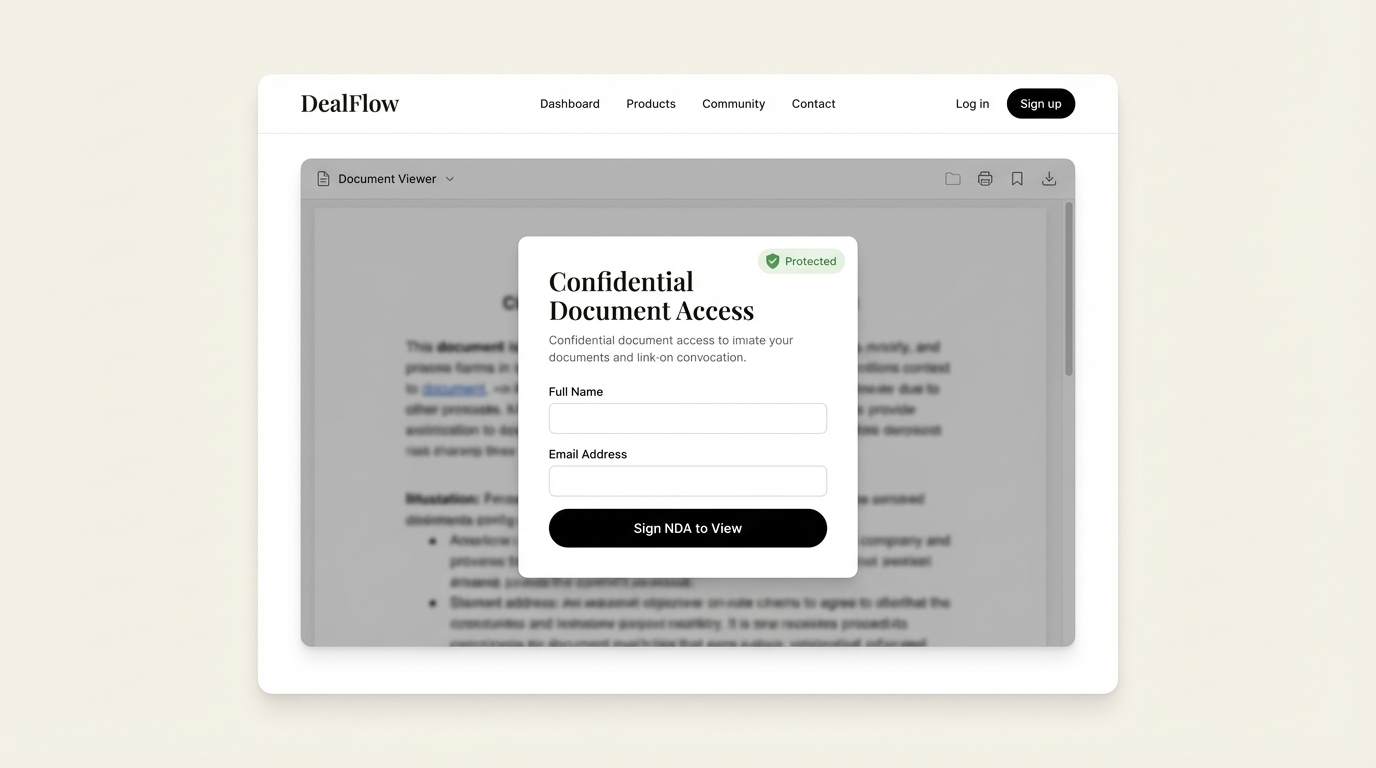
SendNow's deal rooms give prospects a branded, NDA-gated experience while capturing full engagement analytics.
Conclusion: Stop Guessing and Start Tracking
The difference between a sales team that consistently closes deals and one that chases silence is information. When you know which proposals were opened, by whom, for how long, and which sections generated the most attention, you stop guessing and start selling with precision.
Proposal tracking software gives you that information in real time. The follow-up becomes timely. The conversation becomes specific. The close rate goes up.
If your current process involves sending a PDF and waiting, it is time to upgrade.
SendNow gives sales teams page-by-page analytics, AI engagement scoring, real-time open notifications, branded deal rooms, NDA gating, and screenshot protection, starting at $9/month. No credit card required to start your free trial.
See exactly what happens to your proposals after you hit send.
Sources: Oneflow | Guideflow | Arphie | GetAccept | Offorte | Better Proposals | Proposify | DocBeacon
Keep Reading
About the Author: Rifana Hameem
Rifana is the founder of SendNow. She leads the team in building secure, compliant, and analytics-rich document sharing tools for finance and professional teams worldwide.
Connect on LinkedIn