
Pitch Deck Analytics: What Investor Engagement Data Actually Means

Pitch Deck Analytics: What Investor Engagement Data Actually Means
When founders first discover pitch deck analytics, it can feel like x-ray vision.
Suddenly there are opens, timestamps, viewer identities, page engagement, and return visits.
The temptation is to overinterpret every number.
I think that is a mistake.
Analytics are most useful when they reduce uncertainty, not when they create a false sense of certainty.
The metrics that matter
| Metric | Useful question |
|---|---|
| Open | Did the investor actually access the deck? |
| Viewer identity | Who reviewed it? |
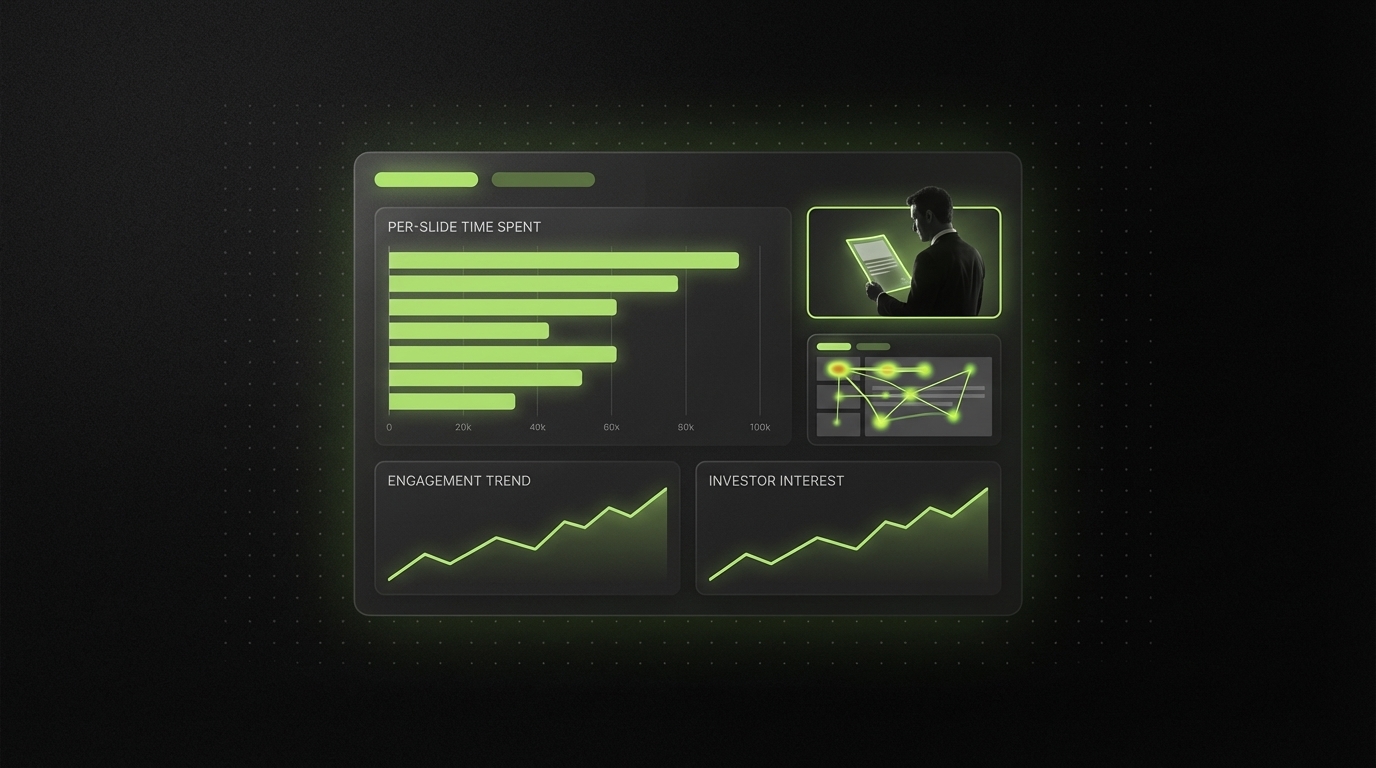
| Time spent | Was it skimmed or reviewed more carefully? |
| Slide engagement | Which sections received attention? |
| Return visit | Did the investor come back? |
| Completion | How far did the review go? |
What analytics cannot tell you
They cannot tell you exactly what an investor thinks.
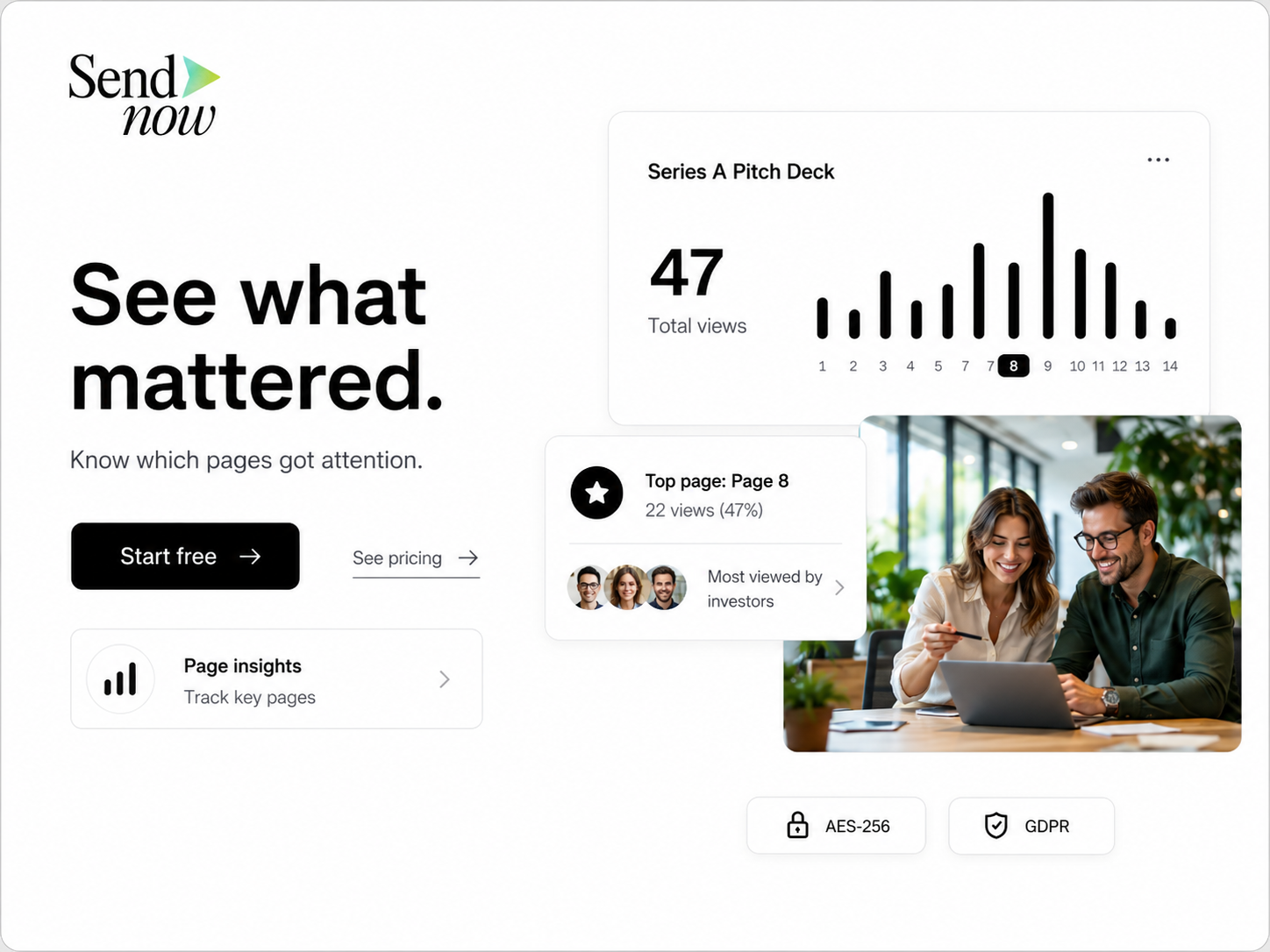
A long dwell time could indicate interest or confusion.
A short session could indicate rejection or simply that the investor already knows the company.
Use the data to shape follow-up, not replace human judgment.
How I would use investor analytics
I would use them in three ways.
First, prioritize follow-up.
Second, prepare for meetings based on which sections received attention.
Third, improve future versions of the deck if the same slides repeatedly cause disengagement.
DocSend's fundraising content explicitly advocates using deck analytics to understand where investors spend time and to improve follow-up.
That is a reasonable model.
From engagement to diligence
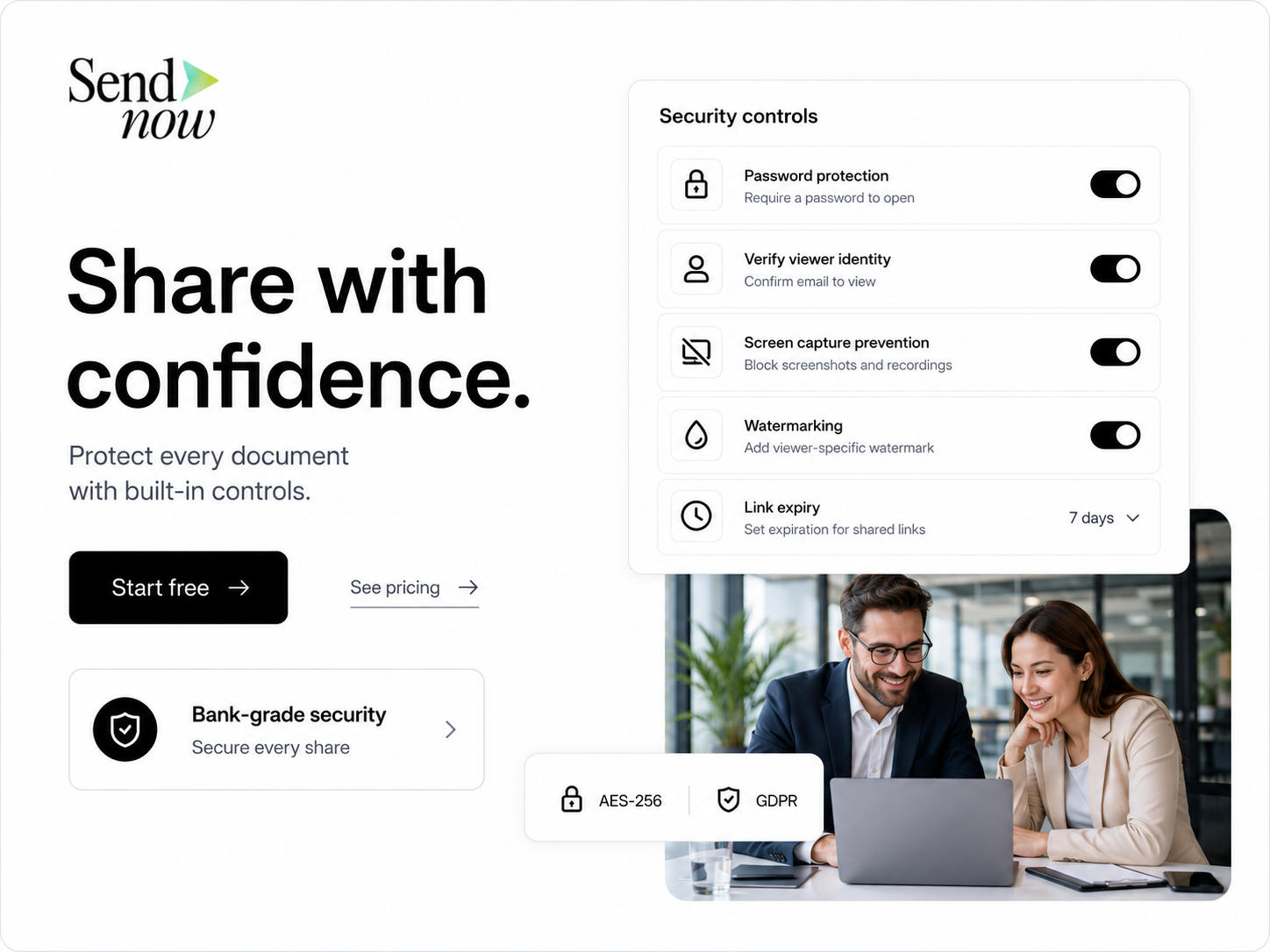
Once a serious investor begins asking for financials, legal documents, contracts, or cap-table information, stop forcing everything into the pitch-deck link.
Move them into an investor room.
That transition is one of the reasons SendNow's document-sharing and Microsite workflows fit together.
FAQ
What is pitch deck analytics?
It is engagement data collected when a pitch deck is shared through a trackable link.
Should I follow up immediately after an open?
Not necessarily. Use the signal in context and avoid creepy “I saw you opened slide seven” messaging.
Is repeat viewing a good sign?
It can indicate higher engagement, but it is not a guarantee.
What should happen after the deck?
Serious investor conversations usually move toward additional documents and diligence.
Conclusion
Analytics are not a fundraising oracle.
They are simply better feedback than silence.
About the Author: Rifana Hameem
Rifana is the founder of SendNow. She leads the team in building secure, compliant, and analytics-rich document sharing tools for finance and professional teams worldwide.
Connect on LinkedIn