How to Send Financial Documents Securely to Clients

- Email is structurally insecure for financial documents: it transmits data in clear text and provides no post-send control
- AES-256 encryption at rest plus TLS in transit is the financial industry standard
- A dedicated secure document sharing platform keeps files on a server and shares a tracked, access-controlled link instead of an attachment
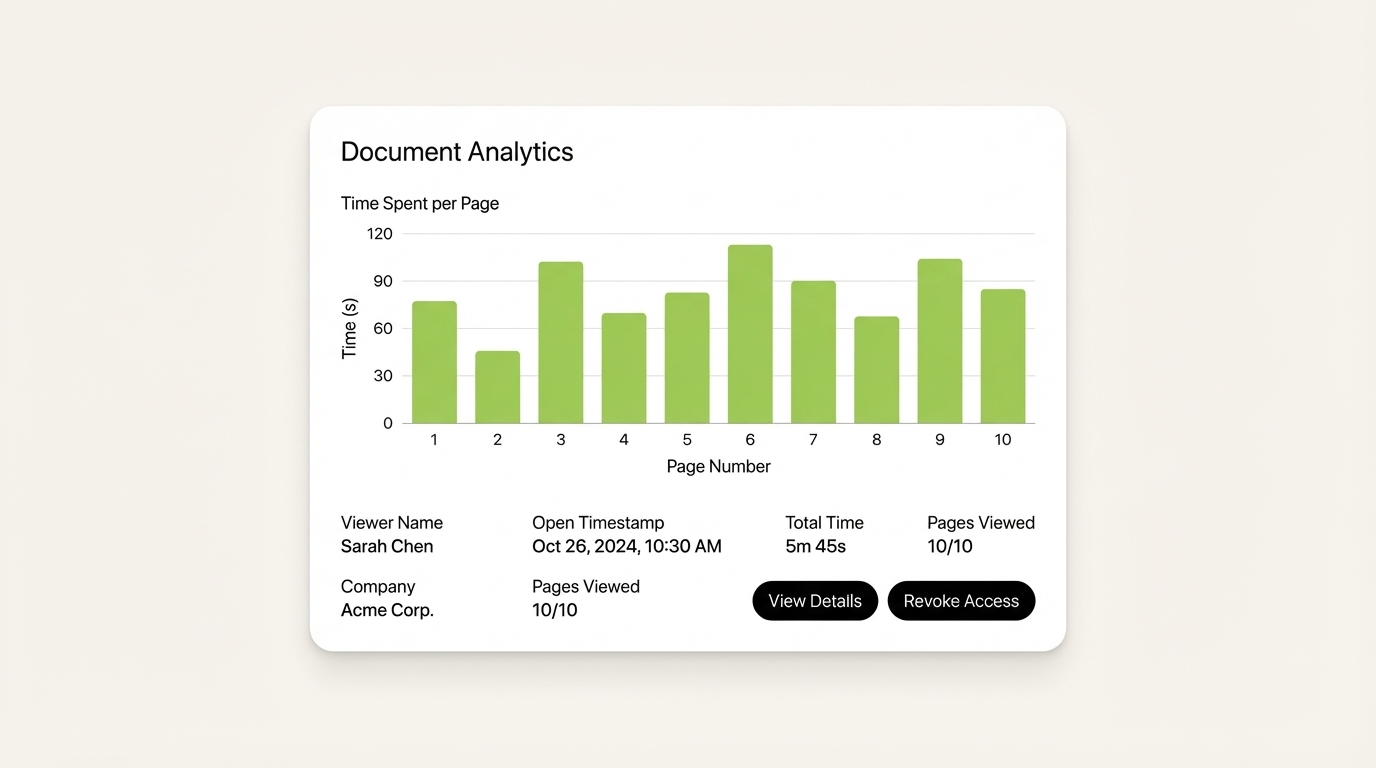
- Page-by-page analytics reveal which slides an investor actually read and for how long
- GDPR compliance requires documented access logs, data minimization, and revocation capability
- Virtual data rooms and document sharing platforms serve different stages of deal activity and are not interchangeable
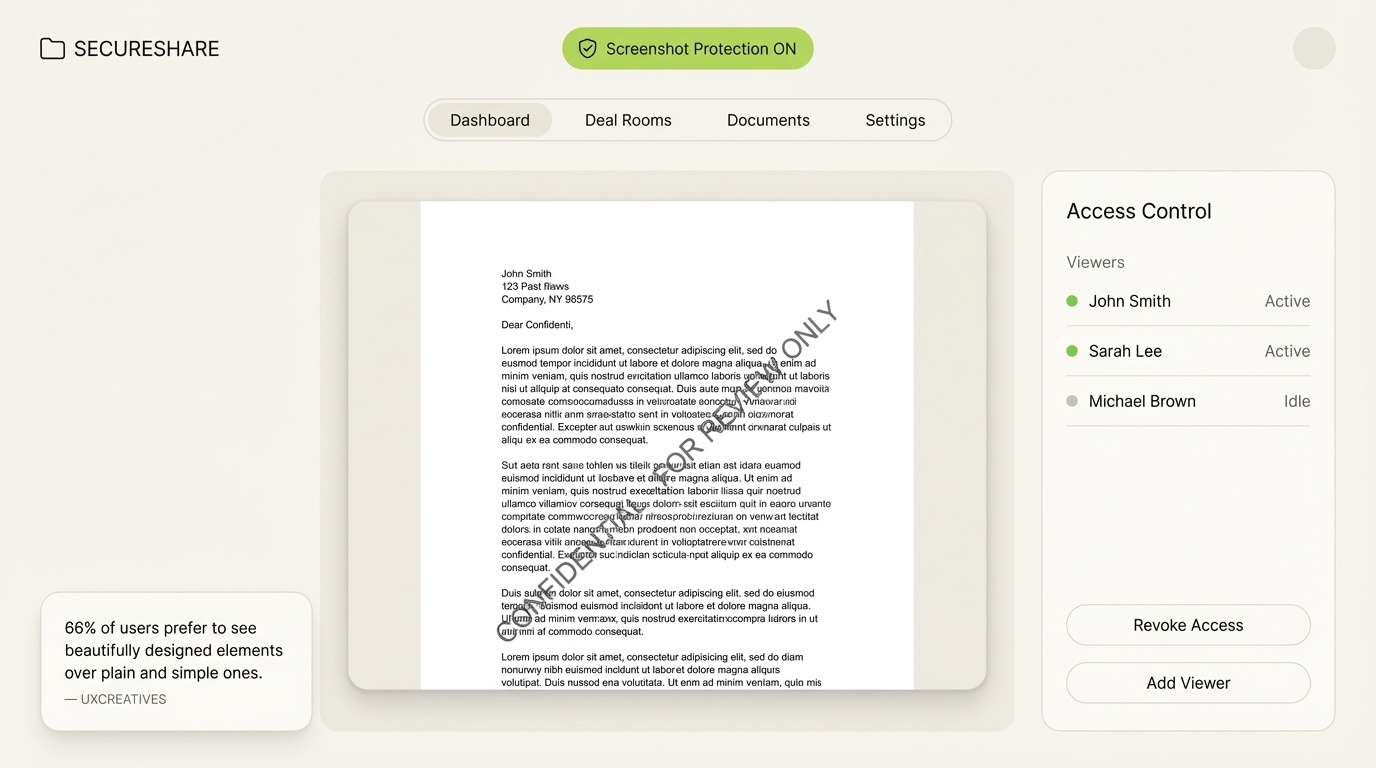
- Screenshot protection, dynamic watermarking, and download disabling form the final layer of content defense
How to Send Financial Documents Securely to Clients
This guide answers the seven questions VCs, financial advisors, investment bankers, and deal teams ask most about secure document sharing, covering encryption standards, compliance requirements, access controls, and engagement tracking. Use it to upgrade your document workflow from untracked email attachments to a controlled, auditable system that protects both your clients and your firm.
Introduction
Every day, professionals across finance send pitch decks, financial models, term sheets, and confidential information memorandums to clients, counterparties, and investors. Most use email. That is the risk.
IBM's 2024 Cost of a Data Breach Report placed financial services as the second-highest industry by average breach cost at $5.9 million per incident. Beyond the dollar figure, a leaked CIM during an active deal or a pitch deck in the wrong inbox can destroy trust, compromise valuations, and invite regulatory scrutiny.
Finance professionals at VC firms, private equity houses, and investment banks now operate under the expectation that documents arrive via encrypted, access-controlled channels with full audit trails. This guide answers the seven most common questions about how to send financial documents securely to clients.
1. Why Is Email Unsafe for Financial Document Sharing?
Email was designed in the 1970s for academic message exchange, not commercial data transfer. Despite decades of security patches, fundamental structural vulnerabilities remain.
Dr. Catherine J. Ullman, Senior Information Security Analyst at the University at Buffalo, puts it directly: "Although you need credentials to log in and access the email in your mailbox, email is by default sent from server to server in clear text that can be read by anyone while in transit." SmartVault
For financial documents specifically, email creates several compounding risks.
No post-send control. Once a PDF lands in a recipient's inbox, you cannot revoke it, prevent it from being forwarded, or know whether it was opened. The document is completely out of your hands the moment you click send.
No engagement visibility. You have no record of whether the recipient spent time on your financial projections or opened the document at all. Follow-up becomes pure guesswork.
Wrong-recipient exposure. Research from Cellcrypt identifies misaddressed emails as one of the most common sources of financial data exposure, particularly under deal-close pressure when teams rush. Cellcrypt
Phishing attack surface. Malicious actors routinely spoof financial advisory firm domains. A client expecting your financial report will not always scrutinize a convincingly faked sender address.
Compliance exposure. GDPR, SEC, and FINRA guidelines require financial services firms to maintain documented access controls and audit trails. Standard email provides neither.
The practical fix is a link-based system where the document stays on a secure server and the recipient views it in a browser without ever holding a local file copy.
2. What Encryption Standard Should You Use?
AES-256 (Advanced Encryption Standard, 256-bit key length) is the established benchmark for financial document encryption. The U.S. National Institute of Standards and Technology adopted AES as a federal standard in 2001, and it remains cryptographically unbroken in practice.
"AES encryption is the backbone of financial data security, ensuring sensitive information like bank accounts, credit card details, and transaction records remains protected," according to Phoenix Strategy Group. Phoenix Strategy Group
For a document sharing platform, AES-256 must cover two distinct states.
Data at rest: Documents stored on servers are encrypted with AES-256 keys. Even if an attacker gained physical access to server hardware, individual files remain unreadable without the decryption key.
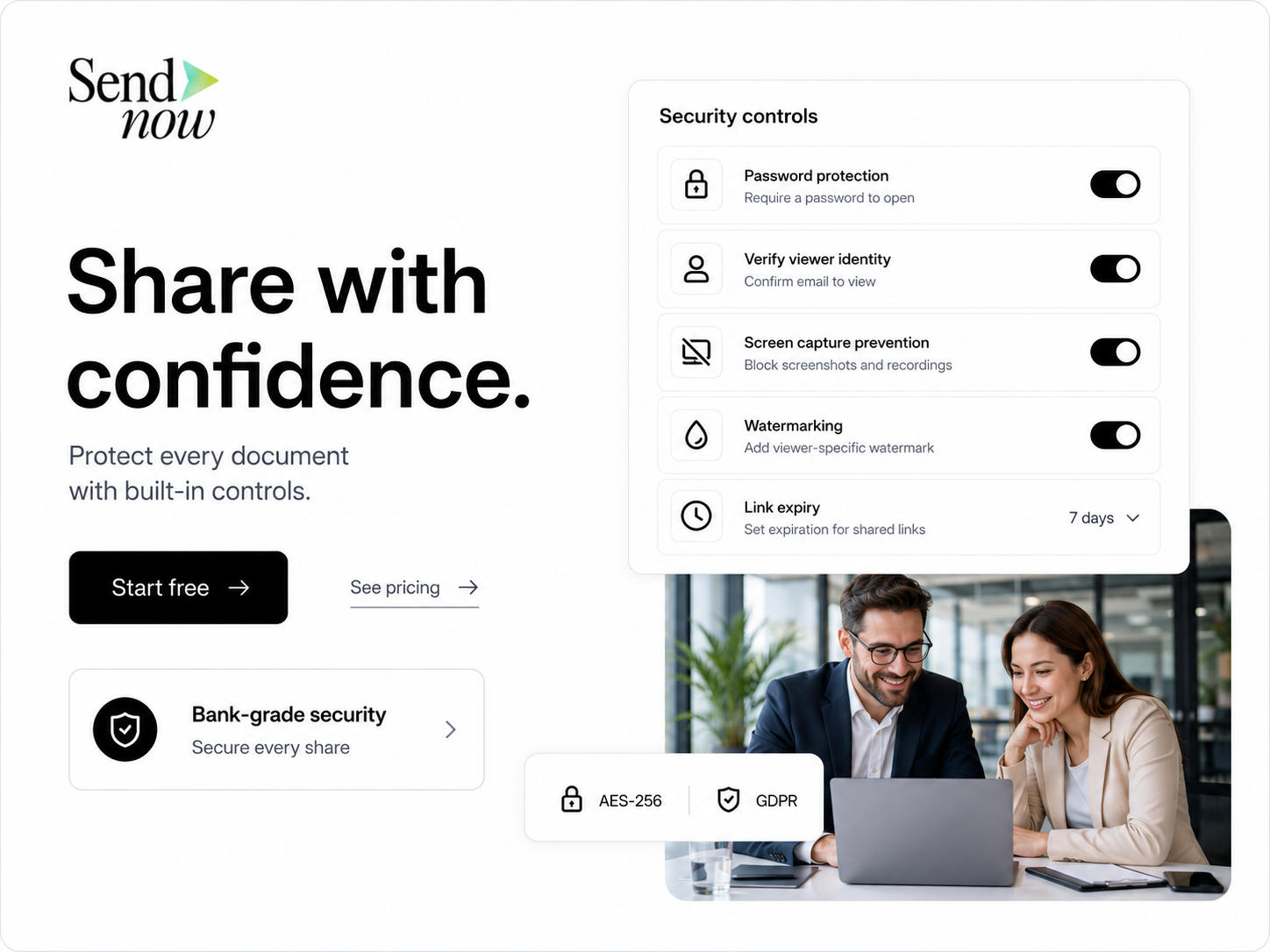
Data in transit: TLS (Transport Layer Security) encrypts documents as they travel between server and recipient browser. This is the same protocol banks use for online transactions and online banking portals.
Kiteworks confirms that AES-256 is "an industry standard for securing data and needs to be part of every organization's integrated risk management strategy." Kiteworks
A financial data transfer checklist from Lucid.now is explicit: "Apply AES-256 for data at rest and TLS for data in transit." Lucid.now
When evaluating platforms, confirm that AES-256 applies at the file storage level, not only at the transport layer. Both protections are necessary.
3. What Is a Secure Document Sharing Platform?
A secure document sharing platform distributes files via a tracked, encrypted link rather than an email attachment. Unlike general cloud storage tools such as Dropbox or Google Drive, a financial-grade sharing platform adds a control and analytics layer between the document and the viewer.
Core capabilities include:
- Link-based access: Viewers see the document in a browser viewer. The underlying file is never transmitted to their device unless you explicitly permit download.
- Email authentication: The platform verifies that the person opening the link matches the intended recipient before granting access.
- Real-time open notifications: You receive an instant alert the moment a document is opened, along with viewer device, location, and timestamp.
- Access expiry: Links expire automatically after a set date or number of views.
- Revocation: You can deactivate a shared link at any time, immediately cutting off access to documents already distributed.

Morningstar's guide to secure client file exchange notes: "These tools make exchanging sensitive client files more secure and less cumbersome," particularly as document volumes per client household in financial advisory can reach the hundreds. Morningstar
Platforms built specifically for finance go further. SendNow adds NDA gating before access, branded deal room microsites, dynamic watermarks, screenshot protection, AI engagement scoring, and Slack and webhook integrations for deal team workflow, giving firms a complete picture of every document interaction rather than a binary "opened/not opened."
4. How Do You Track Who Viewed Your Financial Documents?
Document-level tracking is one of the most operationally valuable capabilities in finance deal workflows. When you distribute a pitch deck to twenty investors or a CIM to eight prospective buyers, knowing who engaged, how deeply, and which sections captured attention changes every subsequent conversation.
Modern document tracking platforms record engagement at the page level:
- Pages viewed and the sequence in which they were read
- Time spent on each individual page, measured in seconds
- Total session duration
- Number of return visits to the document
- Whether the link was forwarded to additional viewers
DocSend's analysis of investor pitch deck behavior confirms: "Busy VCs have even less time to look at every pitch deck sent their way," making real-time engagement data critical for founders and bankers prioritizing their follow-up pipeline. DocSend
SendNow extends page-level analytics with AI engagement scoring. Rather than requiring deal teams to manually interpret raw view data, the platform assigns a numerical score to each viewer based on behavioral signals: total time, page revisits, section focus, and return frequency. A score of 87 tells you that person read your financials section thoroughly and came back twice, worth a call today. A score of 11 tells you the link opened for a few seconds and closed, worth moving down the priority list.
For investment bankers, VC associates, and financial advisors managing multiple concurrent document distributions, this turns follow-up from a guessing exercise into a data-driven decision.
5. What Does GDPR Compliance Require for Document Sharing?
GDPR applies to any organization that processes personal data of EU citizens, regardless of where the organization is headquartered. For financial services firms sharing client documents, LP information, or deal materials containing personal data, GDPR creates specific operational obligations.
Key requirements for document sharing under GDPR, according to InnReg's compliance guide for financial services:
- Data minimization: Share only the data necessary for the stated purpose. An LP update must not contain other investors' personal information inadvertently.
- Purpose limitation: Documents shared for due diligence cannot be repurposed for unrelated commercial activities.
- Documented access controls: You must demonstrate who accessed specific data and when. An audit log is not optional.
- Right to erasure: A counterparty whose deal does not close can request deletion of documents containing their personal data. The platform must support access revocation and data deletion. InnReg
GDPR Local's compliance roadmap for financial institutions confirms: "Compliance and data protection are essential for financial institutions, including those in non-EU countries that process data of EU citizens." GDPR Local
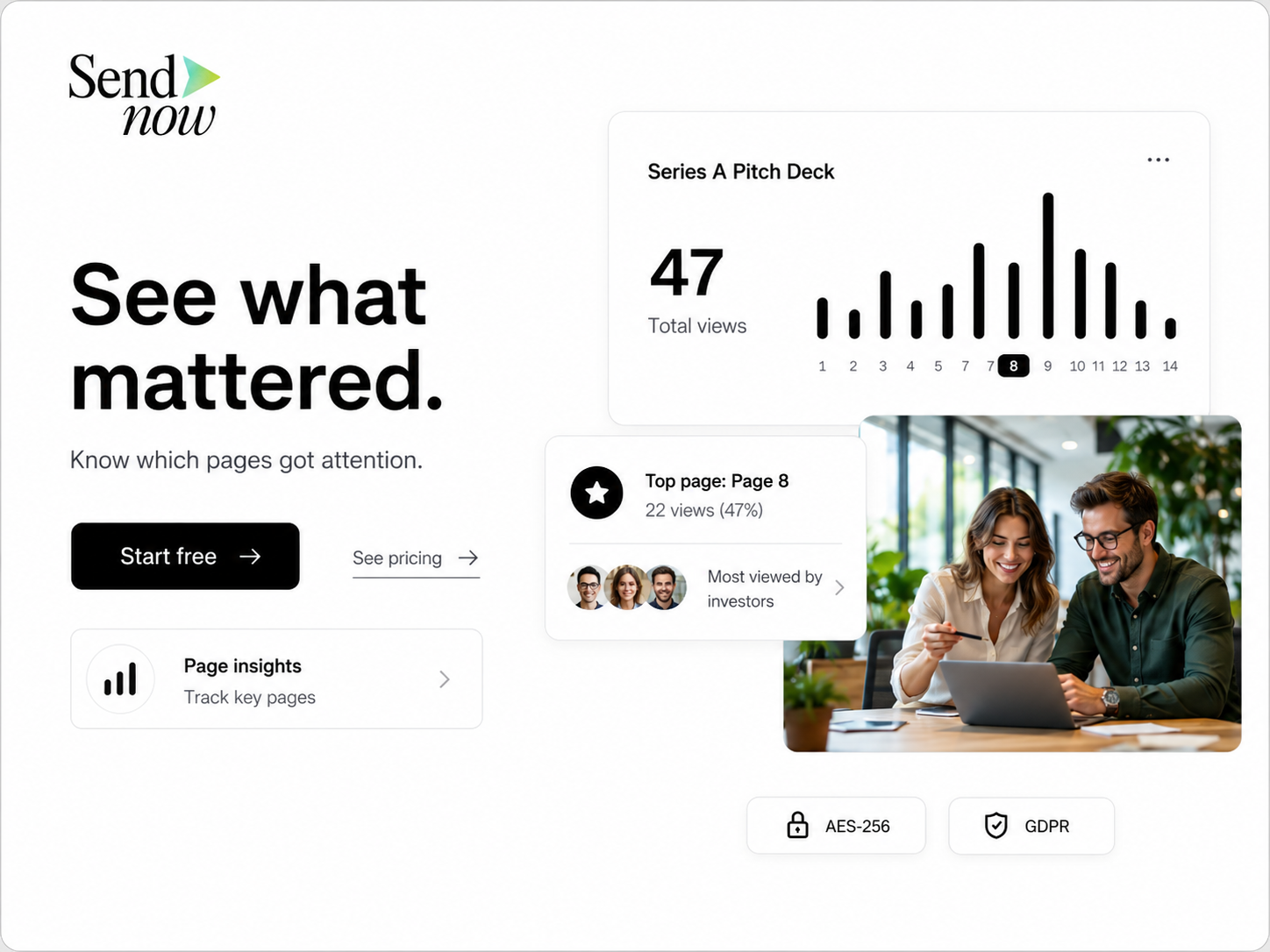
For a document sharing platform to support GDPR compliance, it needs a comprehensive exportable audit log, immediate-effect access revocation, data residency options on GDPR-compliant infrastructure, and the ability to delete all access records for a specific viewer on request. AWS-hosted platforms with SOC 2 and GDPR certifications provide the infrastructure foundation that financial regulators expect.
6. What Is the Difference Between a Virtual Data Room and a Document Sharing Platform?
This distinction matters practically because the two tools serve different scales and stages of deal activity.
A virtual data room (VDR) is purpose-built for high-volume due diligence transactions: M&A processes, IPOs, structured finance, and large leveraged buyouts. VDRs offer granular folder-level permissions for multiple buyer parties simultaneously, bulk document upload with index management, integrated Q&A modules for bidder questions, and regulatory-grade audit trails. The global VDR market reached an estimated $2.9 billion in 2024, driven by growing M&A activity and heightened compliance demands. The MSP Hub
A document sharing platform is optimized for the everyday document workflow that precedes formal due diligence: sharing a financial model with a prospective client, distributing a pitch deck to early-stage investors, sending a fund update to LPs, or sharing a deal teaser with five strategic buyers. Setup takes minutes, and the focus is on link analytics, engagement visibility, and access control rather than on managing a structured multi-party document index.
Most finance professionals need both at different deal stages. A document sharing platform handles the top of the funnel, the early distribution of teasers and decks before a counterparty enters formal due diligence. Once a deal advances and dozens of parties need granular access to hundreds of document folders, a full VDR takes over.
Platforms like SendNow bridge this gap with branded deal room microsites that organize multiple documents into a professional presentation and provide page-level analytics and NDA gating, making them the right tool for Series A through growth-stage fundraising, financial advisory, and mid-market M&A workflows before full data room setup is warranted.
7. How Do You Protect Documents from Screenshots and Unauthorized Downloads?
Download protection and screenshot deterrence form the final defensive layer for deal-sensitive financial documents. Even with strict access controls, an authorized viewer can photograph their screen or use a third-party capture tool to save and redistribute content.
Effective content protection layers work in combination.
Dynamic watermarking applies the viewer's name, email address, and IP address as a unique overlay on every page, rendered in real time within the browser viewer. If the document is photographed or screenshotted, the source is immediately traceable. This acts as both a forensic tool and a deterrent against casual redistribution.
Screenshot protection uses browser-layer techniques that detect screenshot shortcut keystrokes and either display a black overlay or interrupt the action. While not technically absolute across all operating systems, it blocks the majority of casual capture attempts and signals to viewers that their activity is monitored.
Download disabling renders the document entirely within the browser viewer with no download option exposed. The underlying file is never transmitted to the viewer's device.
Session expiry prevents documents from circulating indefinitely in forwarded email threads. A link set to expire after 72 hours or a single viewing session stops a document from being accessible long after a deal has moved on or fallen through.
Kiteworks recommends "end-to-end encryption, secure file transfer protocols, and access controls" as a security baseline, with additional content protection features for the highest-sensitivity documents. Kiteworks
For investment bankers and PE firms distributing confidential information memorandums, the layered combination of NDA gating, dynamic watermarking, download disabling, and link expiry creates a defensible legal and technical barrier against unauthorized disclosure that email attachments structurally cannot replicate.
Conclusion
Sending financial documents securely requires more than a password on a PDF. It requires AES-256 encryption at rest and in transit, authenticated link-based access, page-level engagement analytics, GDPR-compliant audit logs, and content protection that holds even after authorized access is granted.
The stakes are high. Financial services data breaches average $5.9 million per incident. Regulators expect documented access trails. Institutional counterparties increasingly evaluate the professionalism of your document workflow alongside the quality of the underlying content.
If you currently send pitch decks, financial models, or deal materials as email attachments, the upgrade is straightforward. SendNow offers a free trial with no credit card required, starting from $9 per month on the Pro plan. Trusted by 100+ finance teams, it provides AES-256 encryption, real-time open notifications, page-by-page analytics, NDA gating, dynamic watermarks, screenshot protection, and branded deal rooms: everything needed to send financial documents with the control and visibility that modern deal work demands.
Keep Reading
About the Author: Rifana Hameem
Rifana is the founder of SendNow. She leads the team in building secure, compliant, and analytics-rich document sharing tools for finance and professional teams worldwide.
Connect on LinkedIn