
How to Share a Financial Model With an NDA and Controlled Access

How to Share a Financial Model With an NDA
Financial models often contain the assumptions a company is least comfortable distributing broadly.
A model may reveal:
- pricing,
- growth assumptions,
- unit economics,
- hiring plans,
- customer concentration,
- margins,
- runway,
- financing assumptions.
That makes it reasonable to apply more controls than you would to an ordinary pitch deck.
First question: do you actually need an NDA?
Not every recipient will sign one.
Institutional venture investors often avoid NDAs at the initial pitch stage because they review many companies in adjacent categories.
An NDA may be more appropriate when:
- detailed confidential assumptions are being shared,
- the process is M&A,
- a strategic or commercial partner is receiving proprietary information,
- the recipient has already entered serious diligence,
- the model contains commercially sensitive data.
Use legal advice appropriate to your transaction.
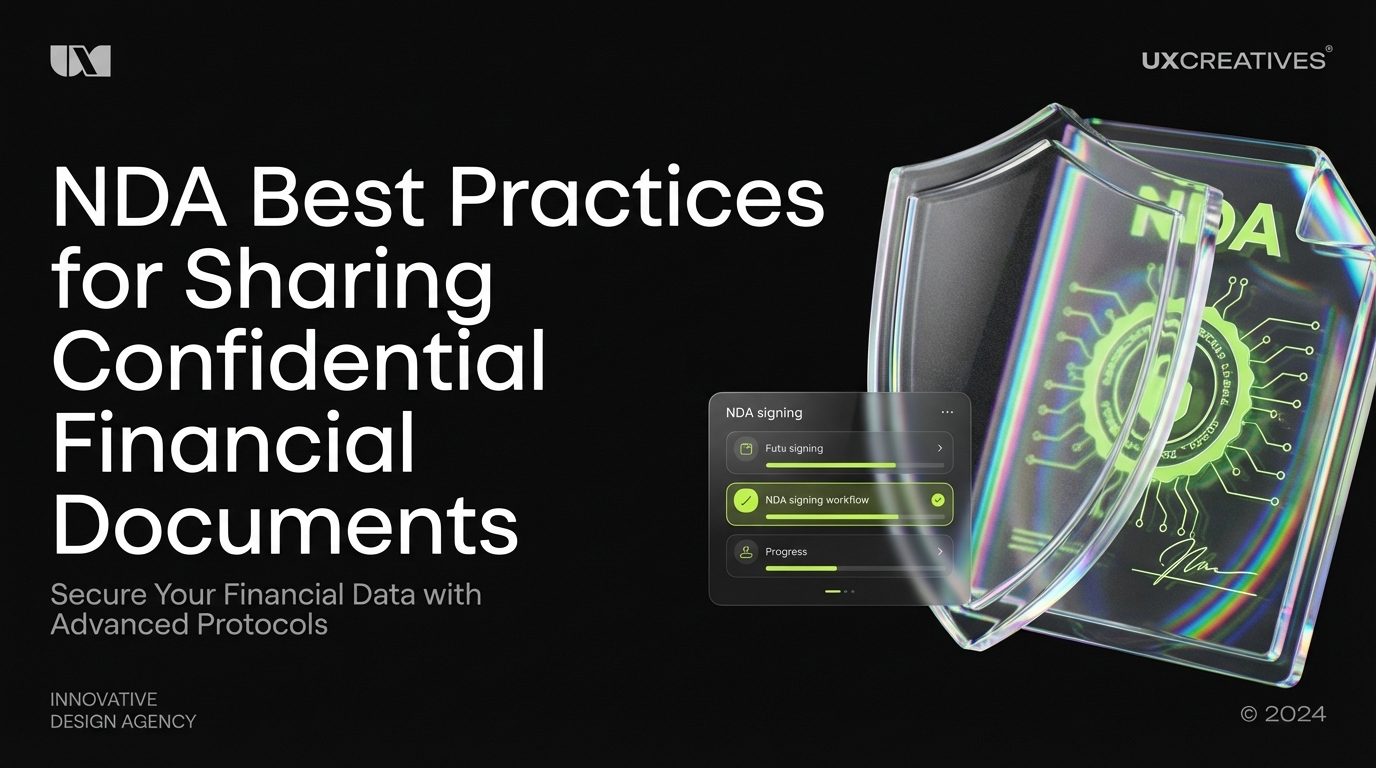
NDA gate vs manually signed NDA
A manually negotiated NDA may be necessary for complex transactions.
For a standard sharing workflow, an NDA gate can create a simpler experience:
- recipient opens the link,
- NDA terms are presented,
- recipient agrees,
- access is granted.
Use this only where it is legally appropriate for your workflow.
Protect the model beyond the NDA
The NDA is contractual protection.
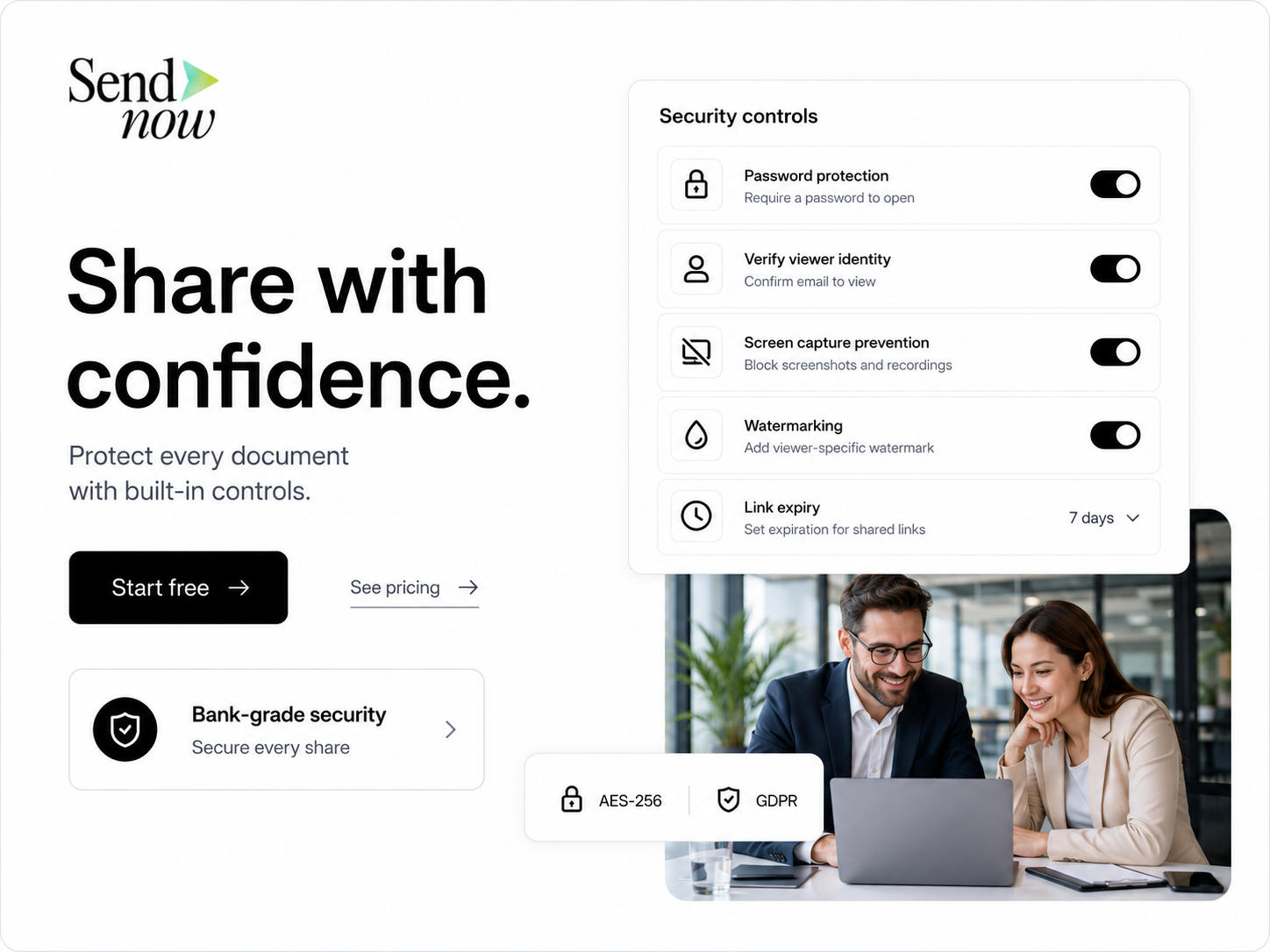
Technical controls can add practical protection:
- recipient verification,
- personalized watermarking,
- expiration,
- download settings,
- access revocation,
- activity logs.
No single control makes a financial model impossible to copy.
The goal is to create accountability and reduce casual redistribution.
Spreadsheet vs PDF
If the recipient only needs to review assumptions, a rendered or PDF-style view may be enough.
If they need to inspect formulas or manipulate scenarios, the original spreadsheet may be required.
The level of access should match the diligence need.
Investor workflow example
A founder might share:
Initial meeting
Pitch deck only.

Follow-up
High-level KPI summary.
Serious diligence
Financial model behind appropriate access control.
Final diligence
Model + historical financials + cap table + legal material inside the investor room.
This avoids oversharing before investor interest is clear.
M&A workflow example
A buyer may receive:
- teaser,
- NDA,
- CIM,
- financial model,
- QoE,
- deeper diligence.
In this case, the financial model is one part of a larger controlled buyer process.
FAQ
Should investors sign an NDA before seeing my financial model?
Some will and some will not. It depends on investor type, stage, sensitivity, and negotiation. Do not assume an NDA is standard for every fundraising conversation.
Can I watermark a financial model?
A platform may allow watermarks on rendered pages or document views. Check current format support.
Can I stop the recipient downloading the model?
Use the current download-control options available, but understand that no browser control can guarantee absolute prevention of content capture.
Should I send the Excel file or a view-only version?
Send only the level of access the recipient actually needs.
Final takeaway
Use the NDA as one layer in a broader controlled-sharing workflow.
The goal is to share enough information for serious diligence without turning a confidential model into an unrestricted attachment.
About the Author: Rifana Hameem
Rifana is the founder of SendNow. She leads the team in building secure, compliant, and analytics-rich document sharing tools for finance and professional teams worldwide.
Connect on LinkedIn