
The Document Security Checklist for Tech Startup Founders

The Document Security Checklist for Tech Startup Founders
Executive Summary / TL;DR
In the fast-paced world of tech startups, document security is often overlooked amid the hustle of innovation and growth. However, the risks associated with inadequate document security can lead to significant financial losses, reputational damage, and legal repercussions. This comprehensive checklist aims to equip tech startup founders with actionable strategies to safeguard sensitive documents, ensuring that intellectual property and confidential information remain protected. By following these guidelines, founders can mitigate risks and focus on scaling their businesses with confidence.
Current Security Vulnerabilities
Tech startups frequently rely on various file-sharing workflows—such as emails, cloud storage services like Dropbox, and collaborative platforms—to share sensitive documents. While these tools enhance collaboration, they also introduce significant security vulnerabilities:
-
Email Risks: Emails can be intercepted, leading to unauthorized access to sensitive information. Phishing attacks can trick employees into revealing confidential data.
-
Cloud Storage Vulnerabilities: Services like Dropbox may not provide adequate encryption or access controls, making files susceptible to breaches. Misconfigured sharing settings can inadvertently expose documents to the public.
-
Weak Passwords: Many startups use weak or reused passwords across multiple platforms, making it easier for cybercriminals to gain access.
-
Lack of Access Controls: Without proper access management, employees may have access to documents they do not need, increasing the risk of accidental leaks.
-
Inadequate Training: Employees may not be aware of best practices for document security, leading to careless handling of sensitive information.
By understanding these vulnerabilities, tech startup founders can take proactive steps to enhance their document security.
Industry-Specific Best Practices
To effectively secure documents, tech startup founders should implement the following best practices:
1. Conduct a Security Audit
- Assess Current Practices: Evaluate existing document-sharing practices and identify potential vulnerabilities.
- Identify Sensitive Information: Determine which documents contain sensitive information that requires additional protection.
2. Implement Strong Access Controls
- Role-Based Access: Assign document access based on employee roles to minimize exposure.
- Multi-Factor Authentication (MFA): Require MFA for accessing sensitive documents to add an extra layer of security.
3. Use Secure File Sharing Solutions
- Choose Secure Platforms: Opt for file-sharing solutions that offer end-to-end encryption and robust access controls.
- Avoid Public Sharing Links: Refrain from using public links for sensitive documents; instead, use password-protected links.
4. Educate Employees
- Regular Training: Conduct regular training sessions on document security best practices.
- Phishing Awareness: Educate employees on recognizing phishing attempts and other social engineering tactics.
5. Monitor Document Access
- Audit Trails: Utilize platforms that provide audit trails to monitor who accessed documents and when.
- Regular Reviews: Periodically review access permissions and remove access for employees who no longer need it.
6. Encrypt Sensitive Documents
- File Encryption: Use encryption tools to secure sensitive documents before sharing them.
- Secure Communication: Ensure that all communication regarding sensitive documents is conducted over secure channels.
7. Establish a Data Retention Policy
- Retention Guidelines: Define how long sensitive documents should be retained and when they should be securely disposed of.
- Regular Cleanup: Schedule regular cleanups of stored documents to eliminate unnecessary data.
SendNow Feature Deep-Dive
For tech startups looking to enhance their document security, SendNow offers a suite of features designed to address common vulnerabilities in document sharing. Here’s how SendNow’s specific controls can help:
Dynamic Watermarking
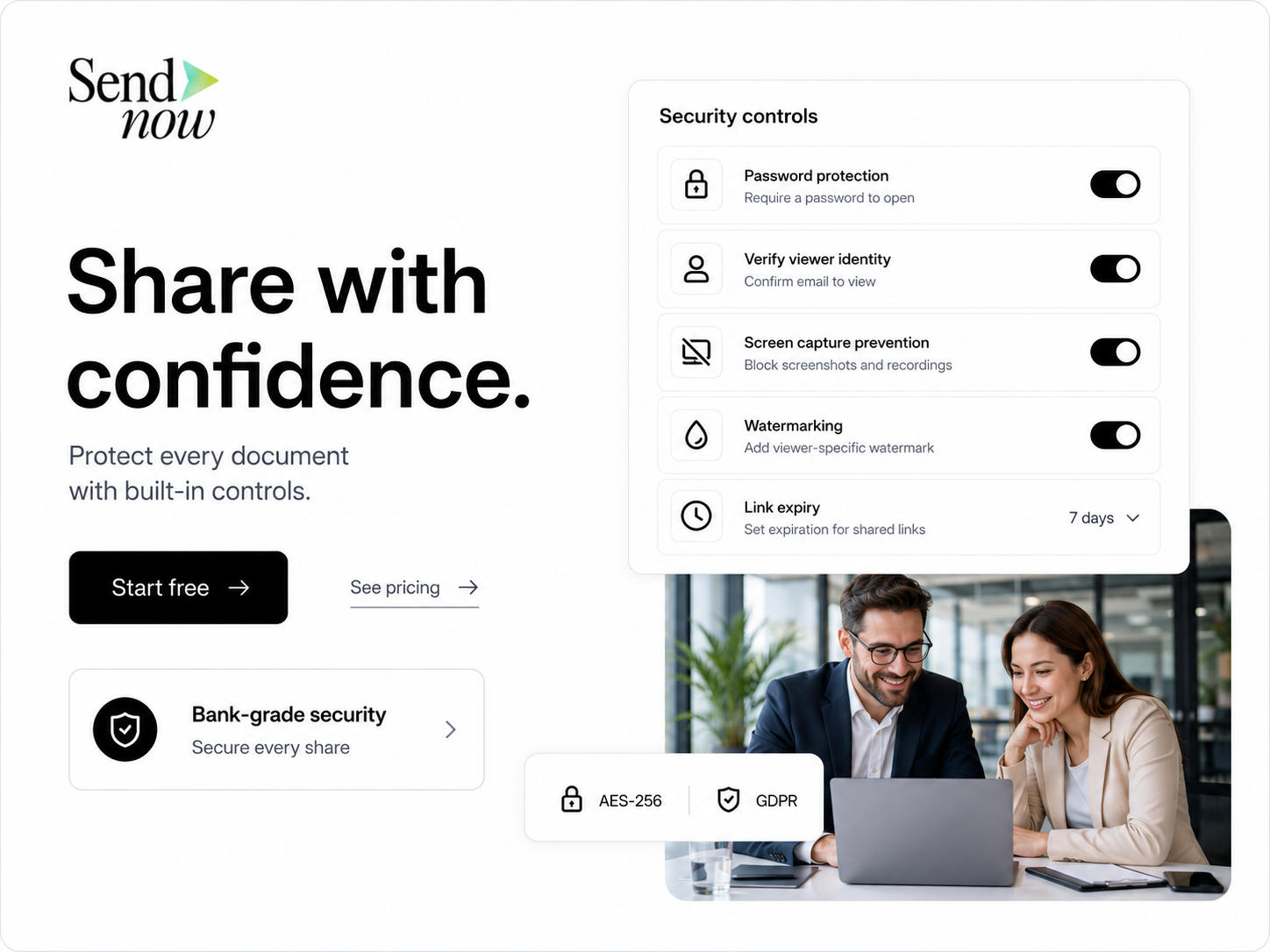
Dynamic watermarking adds a layer of protection by displaying the recipient's information on the document. This discourages unauthorized sharing and ensures accountability.
Screenshot Blocking
SendNow's screenshot blocking feature prevents recipients from taking screenshots of sensitive documents, reducing the risk of leaks.
Email Gates
By requiring recipients to verify their email addresses before accessing documents, SendNow ensures that only authorized individuals can view sensitive information.
Link Expiry
SendNow allows users to set expiration dates for shared links, ensuring that access to sensitive documents is time-limited and reducing the risk of unauthorized access over time.
NDA Gates
SendNow enables users to require recipients to agree to a Non-Disclosure Agreement (NDA) before accessing sensitive documents, providing an additional layer of legal protection.
For more information on how SendNow can enhance your document security, visit their official LinkedIn page.
Technical Walkthrough
To maximize document security using SendNow, follow these step-by-step setup guides:
Step 1: Uploading Documents
- Log In: Access your SendNow account.
- Navigate to Upload: Click on the "Upload" button on the dashboard.
- Select Files: Choose the documents you wish to secure and upload them to the platform.
Step 2: Configuring Links
- Create a New Link: After uploading, select the document and click on "Create Link."
- Set Permissions: Choose the desired permissions, such as requiring email verification and setting an expiration date.
- Enable Security Features: Activate dynamic watermarking, screenshot blocking, and NDA gates as needed.

Step 3: Distributing Documents Safely
- Share the Link: Copy the generated link and share it with the intended recipients via secure channels.
- Monitor Access: Use the audit trail feature to track who accesses the document and when.
By following these steps, tech startup founders can ensure that their sensitive documents are shared securely.
ROI & Business Impact
Investing in document security solutions like SendNow can yield significant returns for tech startups:
Cost-Efficiency
- Reduced Risk of Breaches: By preventing data breaches, startups can avoid costly fines and legal fees associated with non-compliance.
- Lower Insurance Premiums: Enhanced security measures can lead to lower cybersecurity insurance premiums.
Contract Compliance
- Regulatory Adherence: Implementing robust document security helps ensure compliance with regulations such as GDPR and HIPAA, reducing the risk of penalties.
- Client Trust: Demonstrating a commitment to document security can enhance client trust and lead to increased business opportunities.
Protection Value
- Intellectual Property Safeguarding: Protecting sensitive documents helps safeguard intellectual property, which is often a startup's most valuable asset.
- Reputation Management: Maintaining a strong security posture enhances the startup's reputation, attracting investors and customers alike.
Structured FAQ
1. How can I improve document security in my startup?
To improve document security, conduct a security audit, implement strong access controls, use secure file-sharing solutions, educate employees, monitor document access, encrypt sensitive documents, and establish a data retention policy.
2. Why is document security important for tech startups?
Document security is crucial for tech startups to protect sensitive information, safeguard intellectual property, maintain compliance with regulations, and prevent costly data breaches.
3. What are the risks of using email for document sharing?
Using email for document sharing can expose sensitive information to interception, phishing attacks, and unauthorized access due to weak passwords or misconfigured settings.
4. How does SendNow enhance document security?
SendNow enhances document security through features like dynamic watermarking, screenshot blocking, email gates, link expiry, and NDA gates, providing comprehensive protection for sensitive documents.
5. What should I do if a document is accidentally shared with the wrong person?
If a document is accidentally shared with the wrong person, immediately revoke access through your file-sharing platform, notify your team, and assess any potential risks associated with the breach.
Actionable CTA
Ready to enhance your document security and protect your startup's sensitive information? Start your trial on SendNow today at https://share.sendnow.live/dashboard and experience the peace of mind that comes with secure document sharing. Don't leave your startup's future to chance—take action now!
About the Author: Rifana Hameem
Rifana is the founder of SendNow. She leads the team in building secure, compliant, and analytics-rich document sharing tools for finance and professional teams worldwide.
Connect on LinkedIn