
The Real Risks of Startup IP Leaks During Seed Round Diligence

The Real Risks of Startup IP Leaks During Seed Round Diligence
Executive Summary / TL;DR
In the fast-paced world of startups, securing intellectual property (IP) during seed round diligence is paramount. As startups seek funding to grow and innovate, they often share sensitive information with potential investors. However, this practice can expose them to significant risks, including IP leaks that can undermine their competitive advantage and lead to financial losses. This article explores the current vulnerabilities in typical file-sharing workflows, industry-specific best practices for safeguarding IP, and how innovative solutions like SendNow can mitigate these risks. By understanding the potential pitfalls and implementing robust security measures, startups can protect their valuable IP and ensure a successful fundraising process.
Current Security Vulnerabilities
Startups frequently rely on common file-sharing methods such as email, Dropbox, and Google Drive to distribute pitch decks and other sensitive documents during seed round diligence. While these platforms offer convenience, they also present several security vulnerabilities that can lead to IP leaks:
-
Email Risks: Emails are notoriously insecure. They can be intercepted, misdirected, or accessed by unauthorized parties. Once an email is sent, the sender loses control over the document, making it susceptible to forwarding or accidental sharing.
-
Cloud Storage Vulnerabilities: Services like Dropbox and Google Drive, while popular, can expose files to unauthorized access if not configured correctly. Weak passwords, lack of two-factor authentication, and shared links can all lead to unintended access to sensitive information.
-
Lack of Control Over Document Sharing: Once a document is shared, startups often have no way of tracking who accesses it or how it is used. This lack of oversight can lead to unauthorized copying, modification, or distribution of proprietary information.
-
Human Error: Mistakes happen, and employees may inadvertently share sensitive information with the wrong audience. This can occur through misaddressed emails or sharing links with broader access than intended.
-
Phishing Attacks: Startups are prime targets for phishing attacks, where malicious actors attempt to gain access to sensitive information by impersonating trusted entities. If employees fall victim to such attacks, it can lead to significant IP breaches.
These vulnerabilities highlight the need for startups to adopt more secure methods for sharing sensitive information during the diligence process.
Industry-Specific Best Practices
To safeguard intellectual property during seed round diligence, startups should implement the following best practices:
1. Conduct a Risk Assessment
Before sharing any sensitive information, conduct a thorough risk assessment to identify potential vulnerabilities in your current processes. This assessment should include evaluating the security of your file-sharing methods and the sensitivity of the information being shared.
2. Use Secure File-Sharing Solutions
Invest in secure file-sharing platforms designed specifically for protecting sensitive information. Look for features such as encryption, access controls, and tracking capabilities to ensure that your documents remain secure.
3. Implement Access Controls
Limit access to sensitive documents to only those individuals who absolutely need it. Use role-based access controls to ensure that team members can only view or edit documents relevant to their responsibilities.
4. Utilize Watermarking and Expiration Dates
When sharing sensitive documents, consider adding dynamic watermarks that display the recipient's information. This discourages unauthorized sharing. Additionally, set expiration dates for access to documents to limit the time frame in which they can be viewed.
5. Educate Employees on Security Protocols
Regularly train employees on best practices for handling sensitive information. This should include recognizing phishing attempts, understanding the importance of secure file-sharing, and following company protocols for document sharing.
6. Monitor and Audit Document Access

Implement monitoring tools to track who accesses your documents and when. Regular audits can help identify any unauthorized access attempts and allow you to take action before a breach occurs.
7. Use Non-Disclosure Agreements (NDAs)
Before sharing sensitive information with potential investors, require them to sign an NDA. This legally binding document can provide an additional layer of protection for your intellectual property.
SendNow Feature Deep-Dive
SendNow is a cutting-edge file-sharing solution designed to address the vulnerabilities associated with traditional methods of sharing sensitive information. Its robust features provide startups with the tools they need to protect their intellectual property during seed round diligence.
Dynamic Watermarking
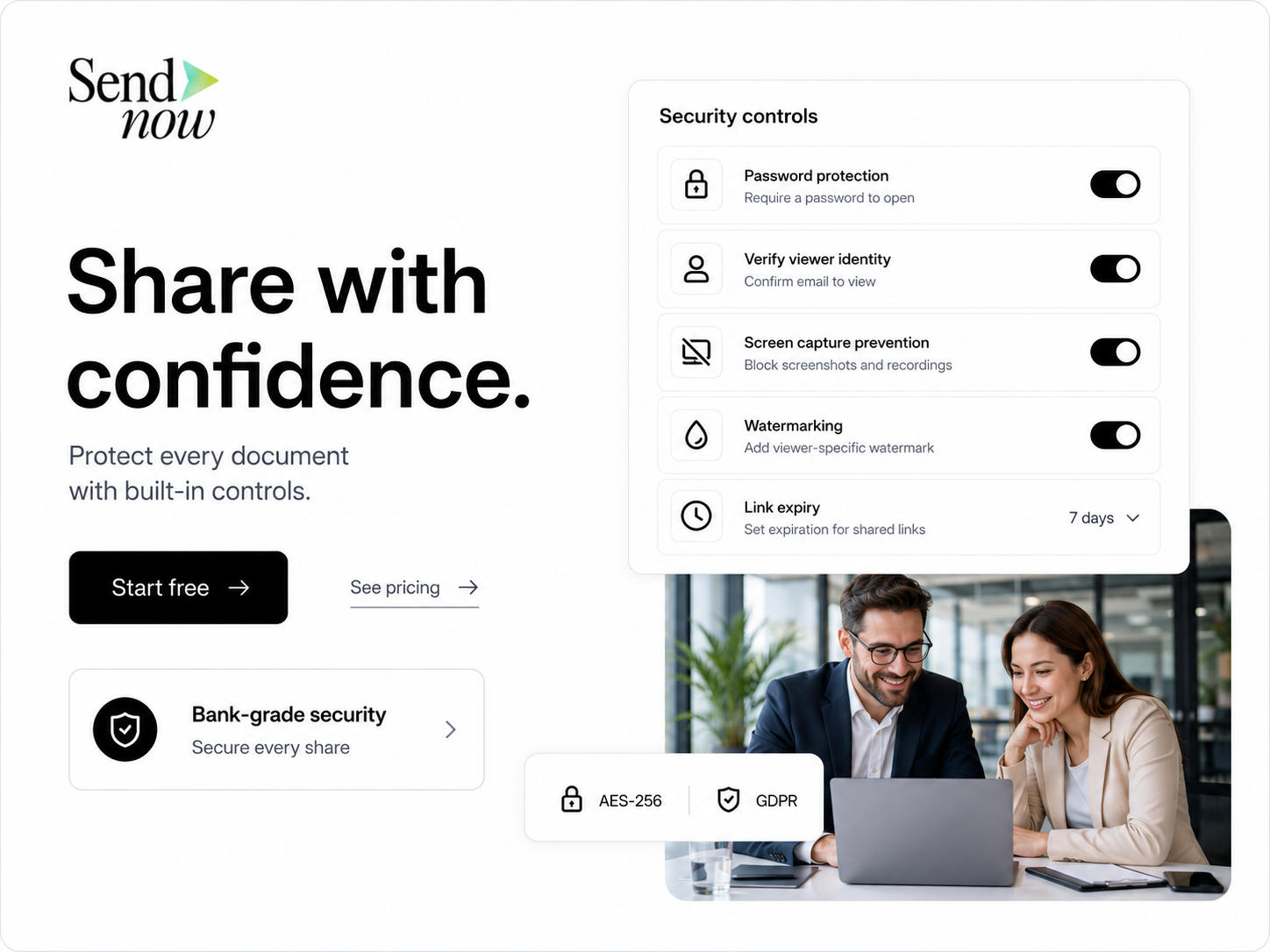
SendNow allows users to add dynamic watermarks to documents, which display the recipient's information. This feature discourages unauthorized sharing and ensures that recipients are aware that the document is confidential.
Screenshot Blocking
One of the most significant risks of sharing sensitive documents is the potential for recipients to take screenshots. SendNow includes screenshot blocking technology, which prevents users from capturing images of the document, further safeguarding your IP.
Email Gates
SendNow requires recipients to verify their email addresses before accessing shared documents. This additional layer of security ensures that only authorized individuals can view sensitive information.
Link Expiry
With SendNow, users can set expiration dates for shared links. This feature limits the time frame in which recipients can access the document, reducing the risk of unauthorized access over time.
NDA Gates
SendNow allows users to require recipients to agree to an NDA before accessing shared documents. This legal agreement provides an extra layer of protection for your intellectual property and reinforces the importance of confidentiality.
For more information about SendNow and its features, visit their official LinkedIn page: SendNow LinkedIn.
Technical Walkthrough
To effectively use SendNow for secure document sharing, follow these step-by-step instructions:
Step 1: Sign Up for SendNow
- Visit the SendNow website and create an account.
- Provide the necessary information and verify your email address.
Step 2: Upload Your Document
- Log in to your SendNow account.
- Click on the "Upload" button to select the document you wish to share.
- Ensure that your document is in a secure format (e.g., PDF) to prevent unauthorized editing.
Step 3: Configure Document Settings
- After uploading, configure the document settings:
- Enable dynamic watermarking.
- Activate screenshot blocking.
- Set an expiration date for the link.
- Require recipients to agree to an NDA.
Step 4: Distribute the Document
- Enter the email addresses of the recipients you wish to share the document with.
- Review the settings to ensure everything is configured correctly.
- Click "Send" to distribute the document securely.
Step 5: Monitor Access
- Use the monitoring tools within SendNow to track who accesses your document and when.
- Regularly review access logs to identify any unauthorized attempts.
By following these steps, startups can securely share their pitch decks and other sensitive documents during seed round diligence, minimizing the risk of IP leaks.
ROI & Business Impact
Investing in secure file-sharing solutions like SendNow can yield significant returns for startups, particularly during critical fundraising phases. Here are some key benefits:
1. Cost-Efficiency
While there may be an initial investment in secure file-sharing solutions, the cost of potential IP leaks can far exceed this expense. By preventing unauthorized access to sensitive information, startups can avoid costly legal battles and loss of competitive advantage.
2. Contract Compliance
Many investors require startups to demonstrate robust security measures before investing. By utilizing secure file-sharing solutions, startups can meet these compliance requirements and build trust with potential investors.
3. Protection Value
The protection of intellectual property is invaluable for startups. By implementing security measures, startups can safeguard their innovations and maintain their competitive edge in the market.
Structured FAQ
1. How can I protect my startup's intellectual property during seed round diligence?
To protect your startup's IP, conduct a risk assessment, use secure file-sharing solutions, implement access controls, and require NDAs from potential investors.
2. Why is email not a secure method for sharing sensitive documents?
Email is vulnerable to interception, misdirection, and unauthorized access. Once an email is sent, the sender loses control over the document, increasing the risk of leaks.
3. What features should I look for in a secure file-sharing solution?
Look for features such as encryption, dynamic watermarking, screenshot blocking, email verification, link expiration, and NDA requirements.
4. How can I monitor who accesses my shared documents?
Secure file-sharing solutions like SendNow provide monitoring tools that allow you to track who accesses your documents and when.
5. What should I do if I suspect an IP leak has occurred?
If you suspect an IP leak, conduct an immediate investigation to identify the source of the leak. Notify affected parties and consider legal action if necessary.
Actionable CTA
Protect your startup's intellectual property during seed round diligence by starting a trial on SendNow today. Experience the benefits of secure file-sharing and safeguard your sensitive information. Visit SendNow to get started!
About the Author: Rifana Hameem
Rifana is the founder of SendNow. She leads the team in building secure, compliant, and analytics-rich document sharing tools for finance and professional teams worldwide.
Connect on LinkedIn