What Is a Document Audit Trail and Why Do Finance Teams Need One?

What Is a Document Audit Trail and Why Do Finance Teams Need One?
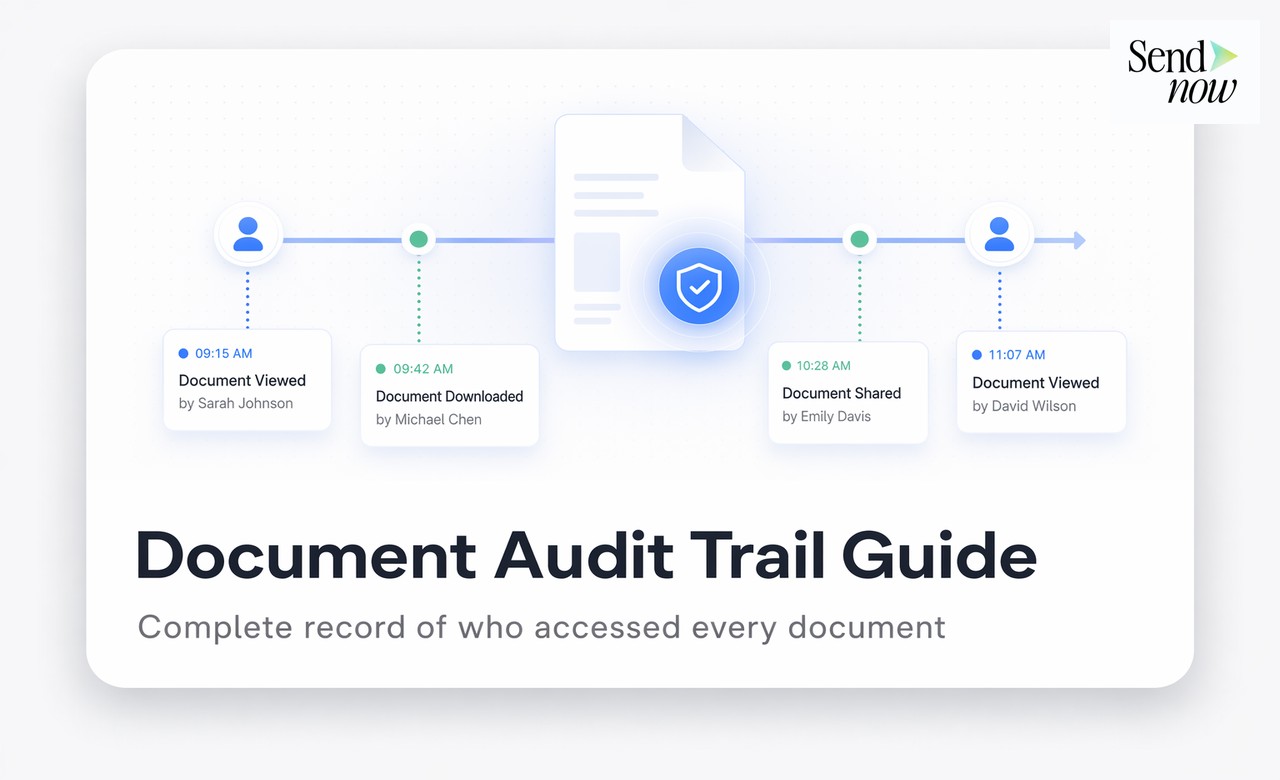
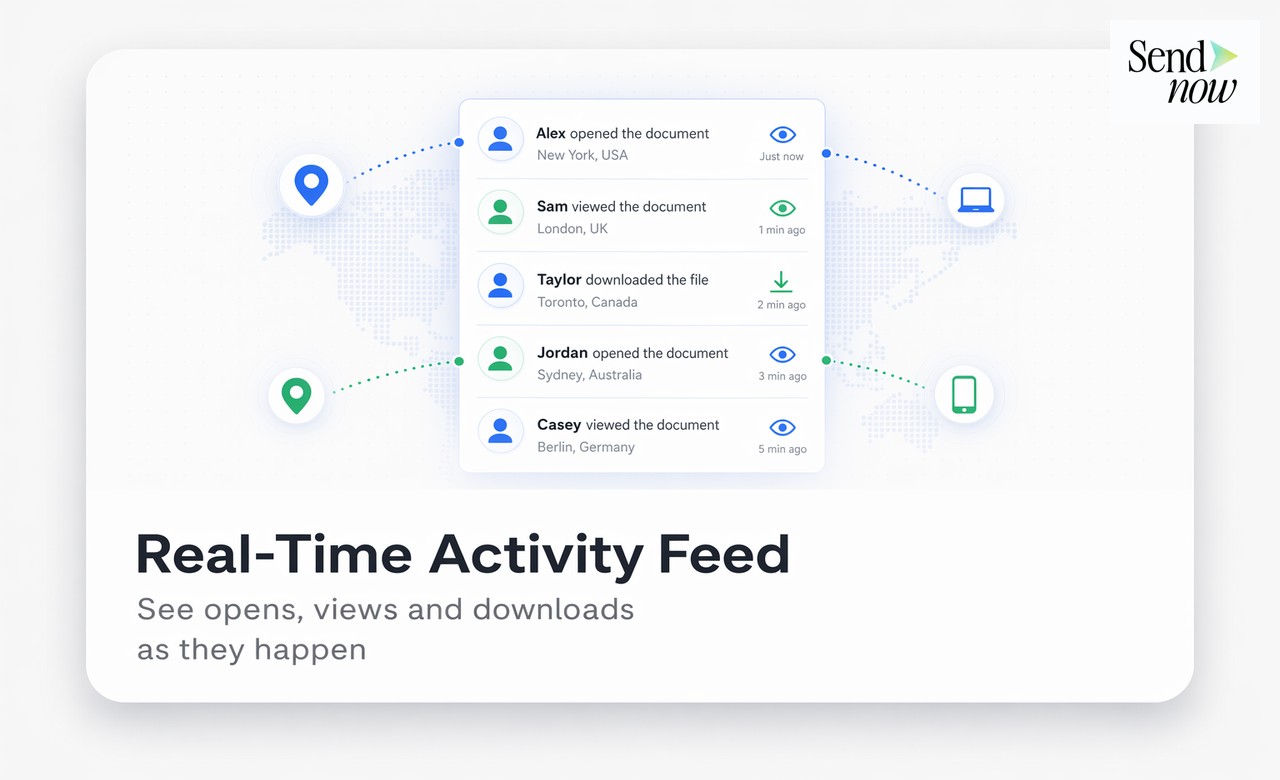
A document audit trail is a timestamped record of every action taken on a shared file, including who viewed it, when they viewed it, from which device, and from which location. For finance teams, this creates a defensible evidence log that satisfies regulatory compliance requirements and supports internal or legal investigations when documents are misused. Platforms like SendNow generate this audit trail automatically, so no manual logging is required.
What a Document Audit Trail Records
A comprehensive audit trail captures multiple layers of activity across the lifecycle of a shared document:
- Link creation: Who created the share link, when, and with what access settings applied
- Viewing events: Each time the document is opened, including the viewer's IP address, device type, browser, city, and timestamp
- Page-level analytics: Which pages were viewed, and for how long
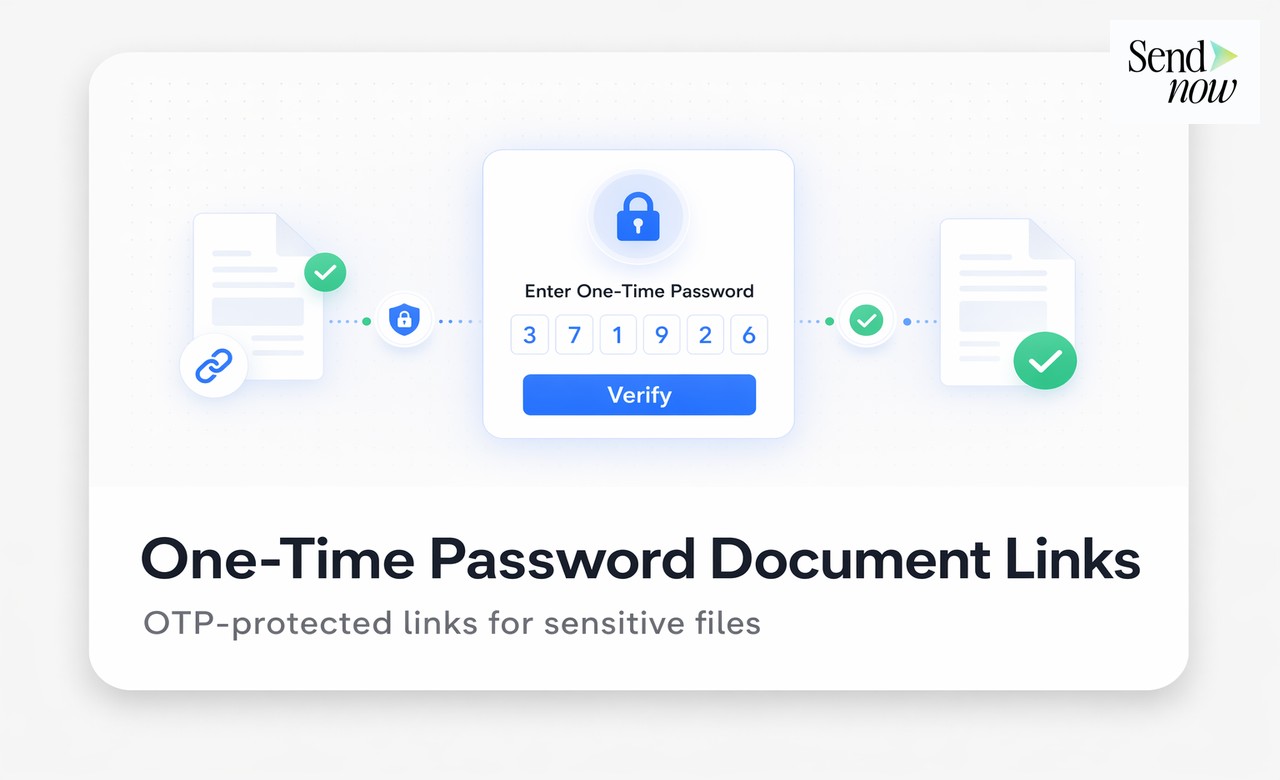
- Access attempts: Both successful and failed attempts to open the link, including OTP verification events
- Administrative actions: When the link was revoked, when settings were changed, or when the document was permanently deleted
The combination of these records creates a comprehensive picture of how a document has been used since it was shared.
Why Finance Teams Specifically Need Audit Trails
Finance professionals share documents that carry significant legal and commercial weight: term sheets, shareholder agreements, board minutes, investment memoranda, and financial models. In each case, there are scenarios where the question "who saw this, and when?" becomes critical:
Regulatory enquiries. Financial regulators can request evidence of how material non-public information was handled during a transaction. An audit trail demonstrates that access was controlled and monitored.
Breach investigations. If confidential information appears in a competitor's hands, an audit trail narrows down which recipients had access and when, forming the basis of an internal or legal investigation.
NDA enforcement. If a counterparty breaches a non-disclosure agreement, an audit trail provides evidence of exactly what they accessed and when, supporting legal proceedings.
GDPR compliance. Under EU GDPR, organisations must demonstrate accountability for how personal data is shared and accessed. Audit logs provide the documentation needed to satisfy a regulatory audit.
Deal management. Beyond compliance, audit trails tell you which investors have reviewed a deck, how long they spent on the financials, and whether they have forwarded the link, giving dealmakers actionable intelligence.

Key Elements of a Strong Audit Trail
Not all audit logs are created equal. A document audit trail that will withstand scrutiny in a compliance or legal context needs the following properties:
| Property | Why It Matters |
|---|---|
| Tamper-proof storage | Log entries cannot be edited or deleted by users |
| Precise timestamps | UTC timestamps tied to an authoritative time source |
| Viewer identification | IP address, device, browser, and approximate location |
| Granular events | Individual page views, not just document opens |
| Link identity | Which specific share link was used (not just the document) |
| Administrative log | Settings changes and access revocations |
How SendNow Generates Automatic Audit Trails
Every document shared through SendNow generates an audit trail automatically. There is no configuration required and no additional module to activate. When a viewer opens a link, their viewing session is logged with a full device fingerprint and location data derived from their IP address. If the viewer is required to authenticate via OTP before viewing, the authentication event is also recorded.
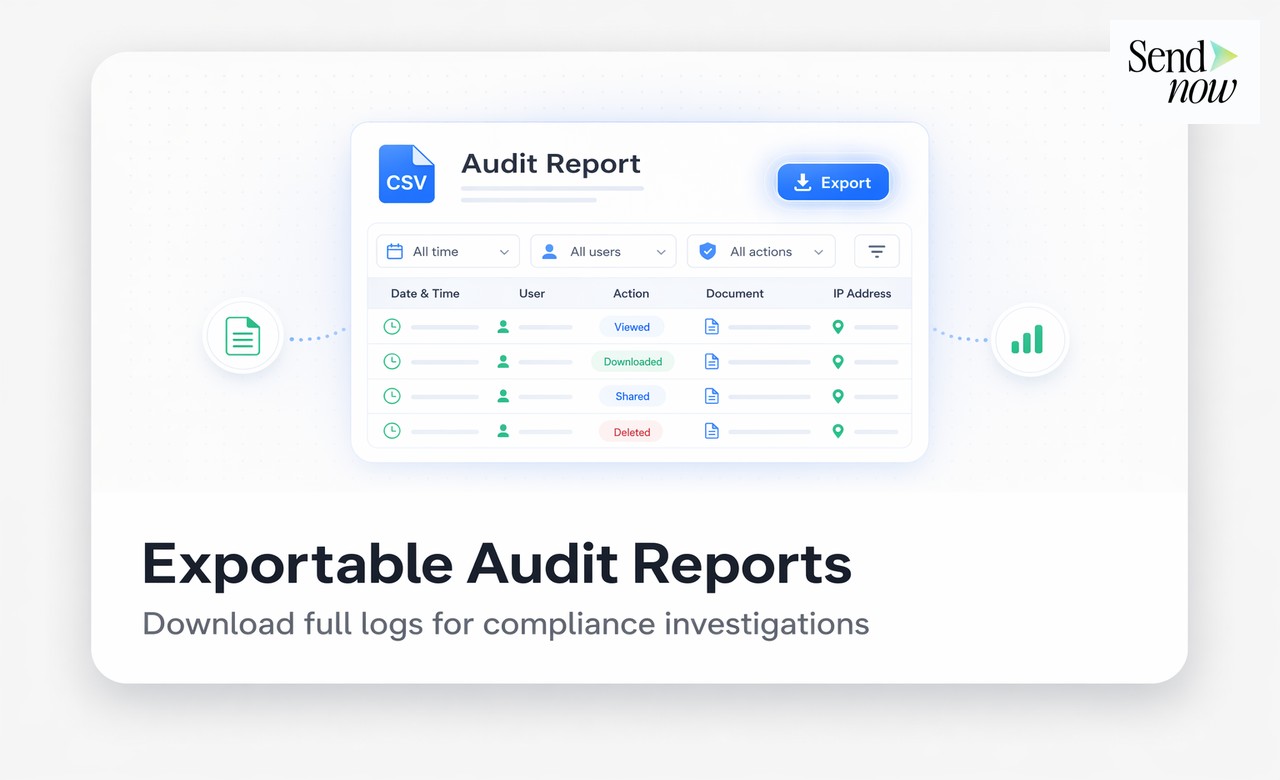
The audit trail is accessible from the document detail view in your dashboard. You can filter by date range, export to CSV for use in compliance documentation, or reference individual entries in a legal submission.
Critically, the audit trail persists even after a document is permanently deleted. The file is removed, but the log records that it existed, was shared, and was deleted remain, which is essential for demonstrating GDPR Article 5 accountability.
Using Audit Trails in Practice
Scenario 1: Pre-deal due diligence. A private equity firm shares a data room index document with five prospective bidders. The audit trail shows that three bidders viewed all sections, one viewed only the financials, and one has not opened the link at all. The deal team adjusts its follow-up strategy accordingly.
Scenario 2: Post-deal NDA breach. Six weeks after a deal closes, proprietary forecasting data appears in a competitor's marketing material. The audit trail shows that only two people accessed the relevant document during the period in question, one of whom is a former employee. That evidence goes to legal counsel.
Scenario 3: Regulatory audit. The FCA requests documentation of how a firm handled a specific piece of MNPI during a transaction. The firm provides an exported audit log showing exactly who accessed the relevant document, when, and from which location, demonstrating appropriate controls.
Audit Trails vs. Email Tracking: Why They Are Not Equivalent

Some finance professionals rely on email read receipts as a proxy for document tracking. Read receipts confirm that an email was opened, but they do not confirm whether the attachment was opened, how long the recipient spent reviewing it, or whether it was forwarded to additional parties. A document audit trail captures all of this, making it a fundamentally more reliable evidence source.
Related Reading
- The Complete Guide to Secure Document Sharing for Finance Teams
- What Is AES-256 Encryption? Why Your Document Platform Needs It
- The Complete GDPR Guide to Document Sharing
Frequently Asked Questions
Q: What is the difference between an audit trail and an activity log? A: The terms are often used interchangeably. In document management, an audit trail typically implies a tamper-resistant, compliance-grade record, whereas an activity log may be a simpler operational record. For regulatory purposes, the distinction matters.
Q: Can document audit trails be used as legal evidence? A: Yes. Timestamped audit logs from reputable platforms are regularly used in commercial disputes, NDA breach proceedings, and regulatory investigations. Their admissibility depends on the jurisdiction and the platform's ability to demonstrate the integrity of the records.
Q: Does GDPR require document audit trails? A: GDPR requires accountability and the ability to demonstrate compliance. Audit trails are the primary mechanism for demonstrating that personal data was shared appropriately, accessed only by authorised individuals, and handled in line with stated policies.
Q: How long should document audit trails be retained? A: Under GDPR, data should not be retained longer than necessary. For compliance purposes, a retention period of five to seven years is common in financial services, aligned with standard record-keeping obligations.
Q: Can a viewer tell they are being tracked? A: In most jurisdictions, including under GDPR, you are required to inform recipients that their access to a document may be logged. This is typically included in the link's privacy notice or terms of access.
Q: What happens to the audit trail if a document is deleted? A: On SendNow, the audit trail for a document is retained even after the document is permanently deleted. This allows you to provide evidence of deletion events as well as access events.
Q: Can I export audit trail data for regulatory submissions? A: Yes. SendNow allows you to export audit log data as a CSV file, which can be included in regulatory submissions, legal disclosure packages, or compliance documentation.
Q: Does the audit trail record failed access attempts? A: Yes. Attempts to access a revoked link, failed OTP authentication attempts, and link access attempts after an expiry date are all recorded in the audit trail.
Start building a complete audit trail for every document you share. Start your free trial at sendnow.live and protect your firm's compliance position.
About the Author: Rifana Hameem
Rifana is the founder of SendNow. She leads the team in building secure, compliant, and analytics-rich document sharing tools for finance and professional teams worldwide.
Connect on LinkedIn