Why Email Attachments Are a Security Risk for Finance Teams

Why Email Attachments Are a Security Risk for Finance Teams
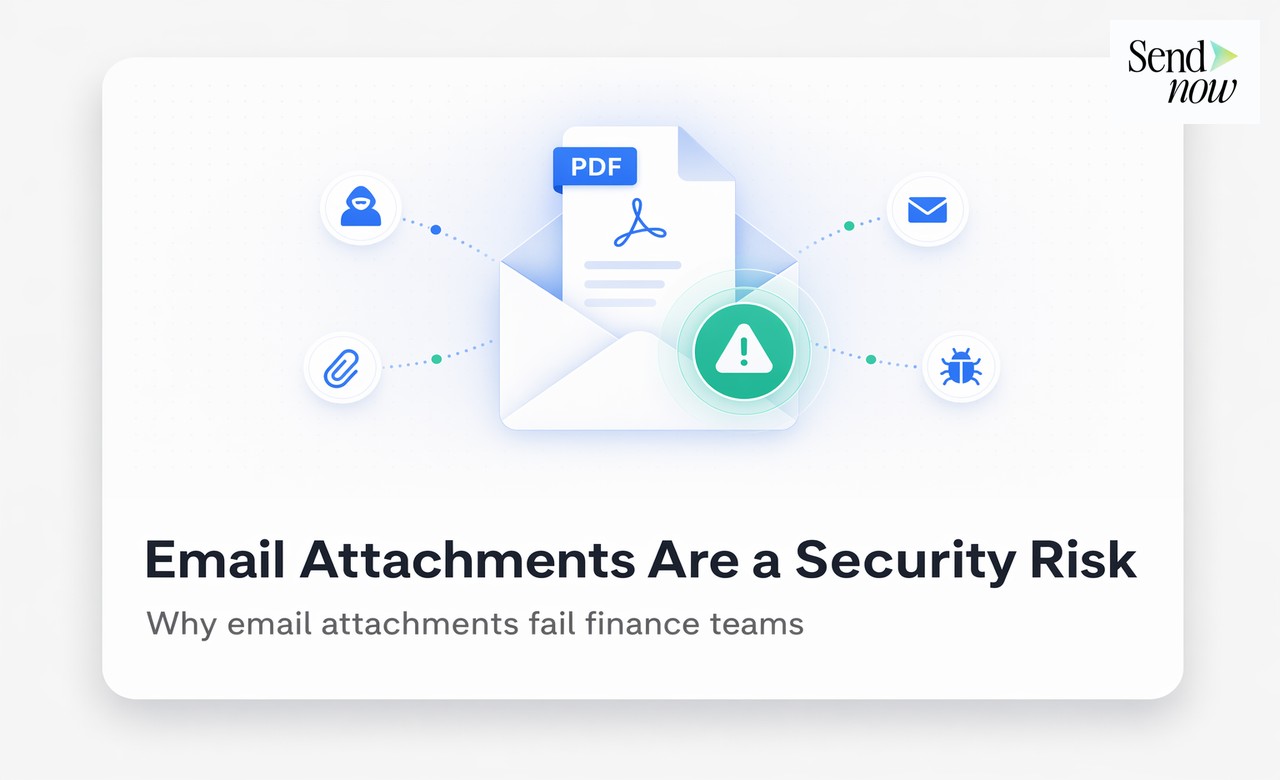
Email attachments are one of the most common causes of data leaks in finance teams, because once a file lands in a recipient's inbox, you have no control over where it goes next. There is no expiry date, no tracking, no ability to revoke access — the attachment simply exists permanently on someone else's system. Finance professionals sharing term sheets, financial models, or due diligence reports need a fundamentally different approach.
The Core Problem: No Control After Sending
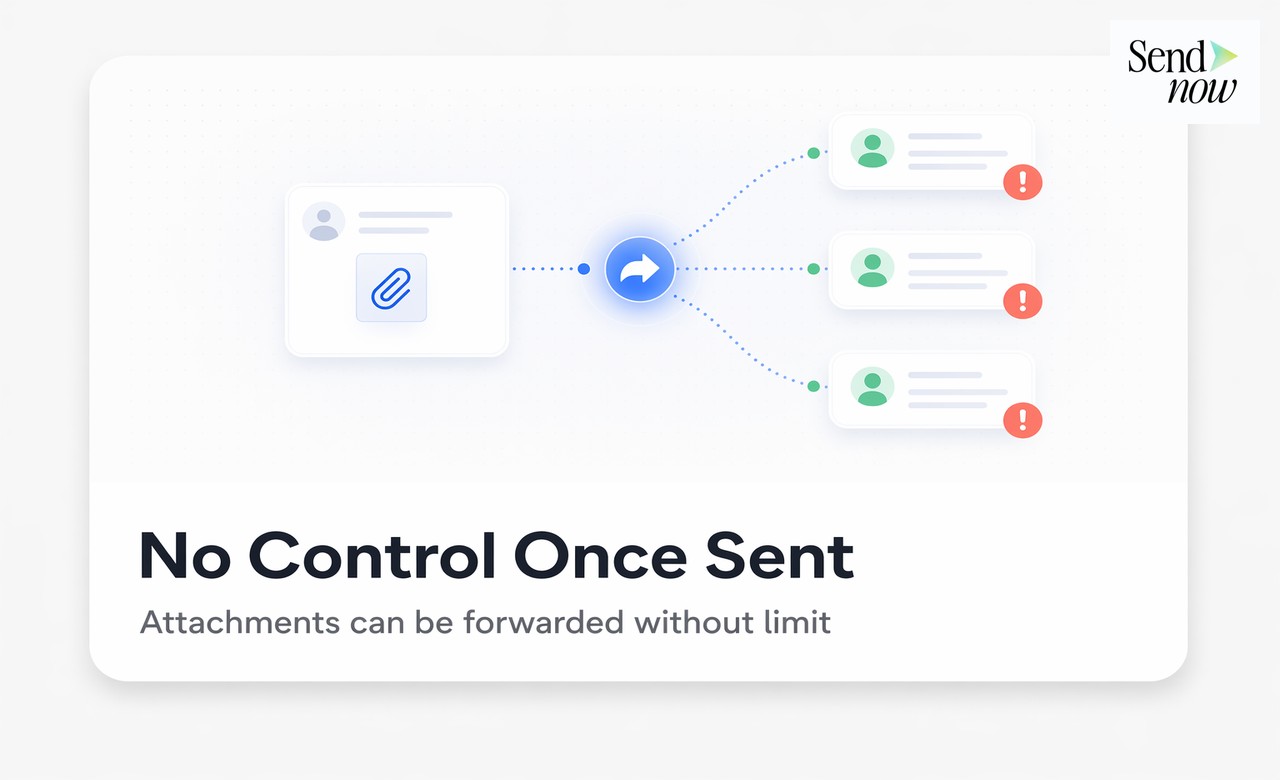
When you attach a PDF or spreadsheet to an email, you are surrendering all control the moment you hit send. Consider what can happen to that file:
- The recipient forwards it to colleagues, partners, or competitors
- It is downloaded to a personal device that lacks endpoint security
- It sits in an inbox that is later compromised in a phishing attack
- It is printed, photographed, or screen-captured without your knowledge
- It remains on email servers for years, even if the recipient "deletes" it
From the sender's perspective, none of these events are visible. You have no idea whether the document was opened, forwarded, downloaded five times, or shared across an organisation. In finance, this opacity carries real legal and commercial consequences.
Seven Specific Security Risks of Email Attachments
1. No access revocation. Once sent, you cannot recall an email attachment from someone's inbox. If circumstances change, such as a deal falling through or a relationship souring, the file remains accessible.
2. No viewing analytics. You cannot tell whether the recipient has opened the document, how long they spent on each page, or whether they shared it internally. This visibility matters for negotiations and deal management.
3. No expiry controls. Email attachments do not expire. A financial model sent in January remains fully accessible in December unless the recipient manually deletes it, which they may have no reason to do.
4. Forwarding risk. Email clients make it trivially easy to forward an attachment to any address. A single accidental forward to a competitor or regulator can have severe consequences.
5. Device security dependency. The security of your document depends entirely on the security of every device it is ever downloaded to. If a recipient's laptop is lost or their email is compromised, your file is exposed.
6. Phishing vector. Finance-targeted phishing attacks often use email attachments as the delivery mechanism for malware. Sending large files as attachments normalises the behaviour, making it harder for recipients to detect malicious attachments when they arrive.
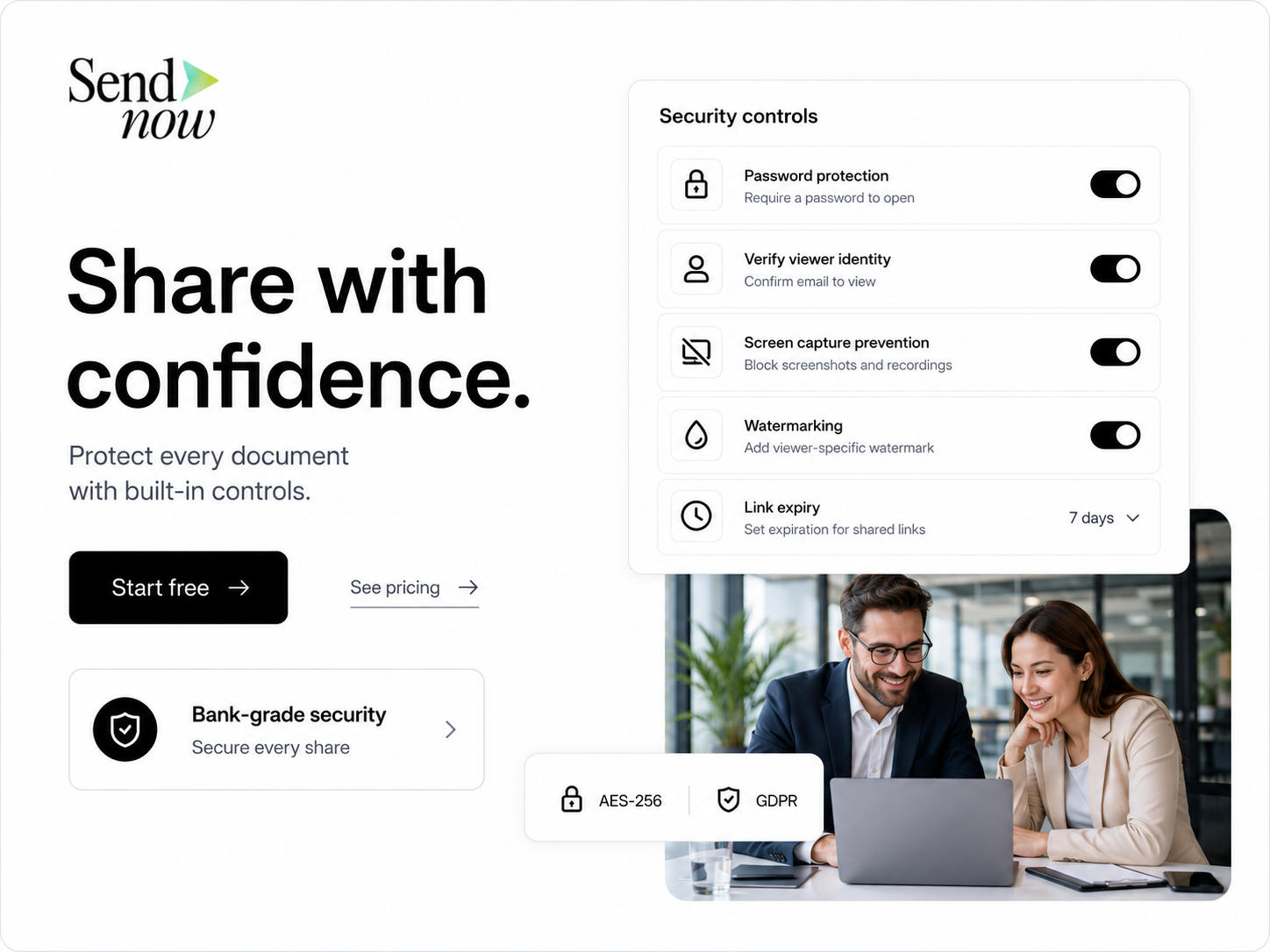
7. GDPR compliance gaps. Under the EU's GDPR, you are responsible for ensuring personal data you share is protected during transmission and storage. Email attachments provide no technical controls to demonstrate that responsibility.
Email Attachment vs. Secure Document Link: A Direct Comparison
| Feature | Email Attachment | SendNow Secure Link |
|---|---|---|
| Access revocation | Not possible | Instant, at any time |
| View tracking | None | Full analytics per page |
| Expiry controls | None | Configurable date/view count |
| Forwarding protection | None | Watermark + access gate |
| Encryption in transit | TLS (email only) | TLS + AES-256 |
| GDPR evidence | None | Full audit log with timestamps |
| Deletion from servers | Not possible | Permanent, CDN-purged |
The Hidden Compliance Risk
Finance teams in the EU operate under a combination of regulatory frameworks that attach specific obligations to how sensitive data is shared: GDPR, MiFID II, and sector-specific regulations from bodies such as the FCA or BaFin. Email attachments satisfy none of these frameworks' technical requirements for controlled data sharing.
GDPR Article 5 requires that personal data be processed with appropriate technical and organisational measures to ensure its security. Sending an untracked PDF via email, with no ability to revoke, audit, or delete it, does not constitute an appropriate technical measure. In the event of a breach or regulatory inquiry, your inability to demonstrate control over that document becomes a compliance liability.
What Finance Teams Should Do Instead
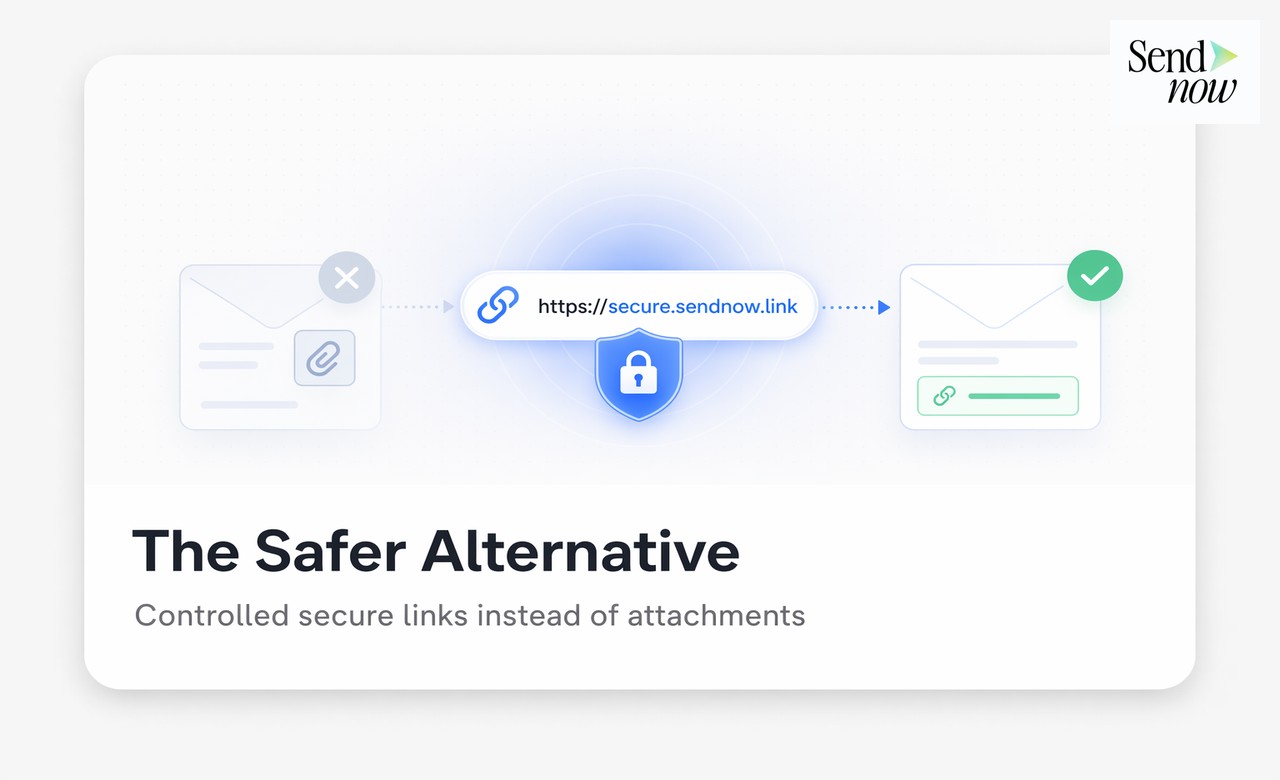
SendNow replaces the email attachment workflow with a secure tracked link that maintains full control on the sender's side. Instead of attaching a file, you upload it to SendNow and generate a share link. The link delivers the document inside a secure, browser-based viewer. The recipient sees the content; you retain control of the file.
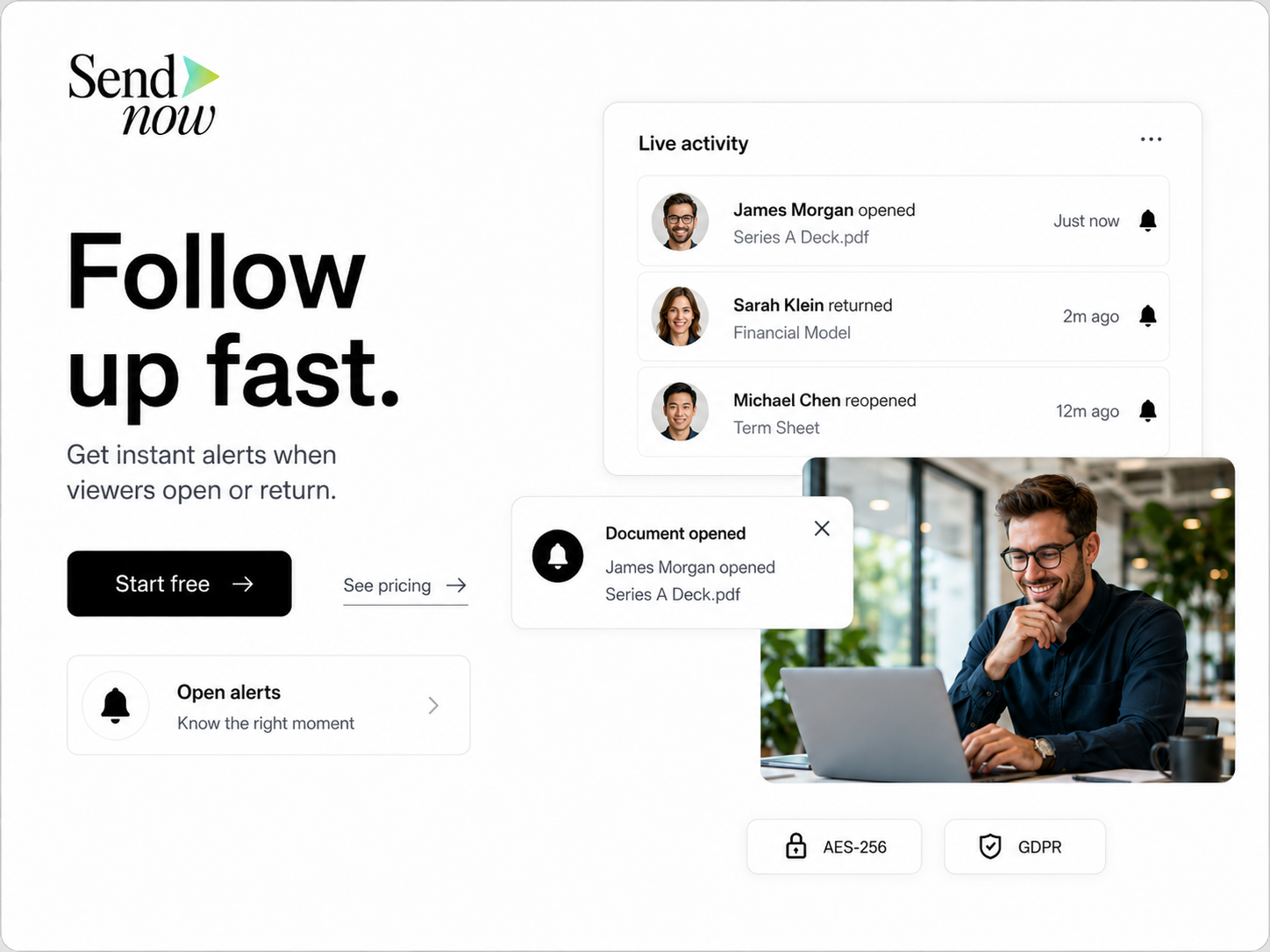
From your dashboard you can see exactly when the link was opened, how long the recipient spent on each page, and whether the document was forwarded to additional viewers. If you need to revoke access, one click kills the link permanently.
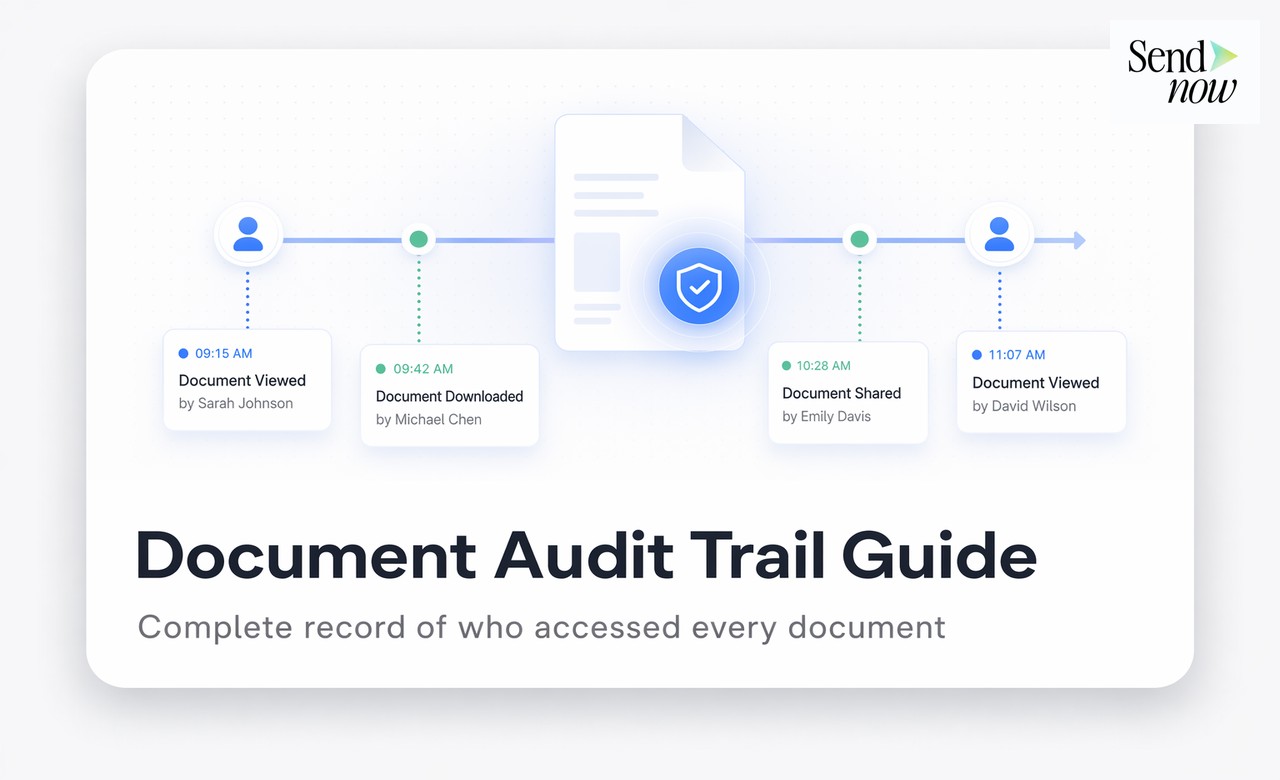
This approach also simplifies audit trail creation for compliance purposes. Every viewing event is timestamped and logged, giving you a verifiable record that demonstrates responsible data sharing practices in the event of a regulatory review.
When Email Attachments Are Unavoidable
There are scenarios where a recipient insists on receiving a file as an email attachment rather than a link, typically due to internal IT policies or legacy systems. In these cases, consider the following mitigations:
- Apply a visible watermark to the document before sending, so any redistribution can be traced back to the specific recipient
- Password-protect the PDF and share the password via a separate channel
- Include a data handling notice within the document itself
- Follow up with a written confirmation that the recipient acknowledges data handling obligations
These measures reduce but do not eliminate the risks inherent in email attachments.
Related Reading
- The Complete Guide to Secure Document Sharing for Finance Teams
- How to Stop Recipients From Downloading Your Shared Documents
Frequently Asked Questions
Q: Are email attachments encrypted? A: Emails are typically encrypted in transit via TLS, but the attachment itself is not encrypted once it arrives in the recipient's inbox. It can be downloaded, forwarded, and stored in an unencrypted state on any device.
Q: Can I recall an email attachment after sending? A: Email recall features exist in some email clients but are unreliable. They only work if the recipient has not yet opened the email, and they do not work across different email providers.
Q: Why is forwarding an email attachment a security risk? A: Forwarding removes any context about the original sharing intent. The file reaches a new recipient who may have no awareness of confidentiality obligations, and the original sender has no visibility or control.
Q: Does GDPR prohibit sending personal data via email attachments? A: GDPR does not explicitly prohibit email attachments, but it does require appropriate technical measures to protect personal data. Email attachments without access controls, encryption at rest, or audit trails are difficult to justify as an appropriate measure for sensitive financial data.
Q: What is a secure document link and how is it different from an attachment? A: A secure document link delivers the file through a controlled viewer rather than delivering the file directly. The sender retains the ability to revoke the link, track views, and delete the file at any time.
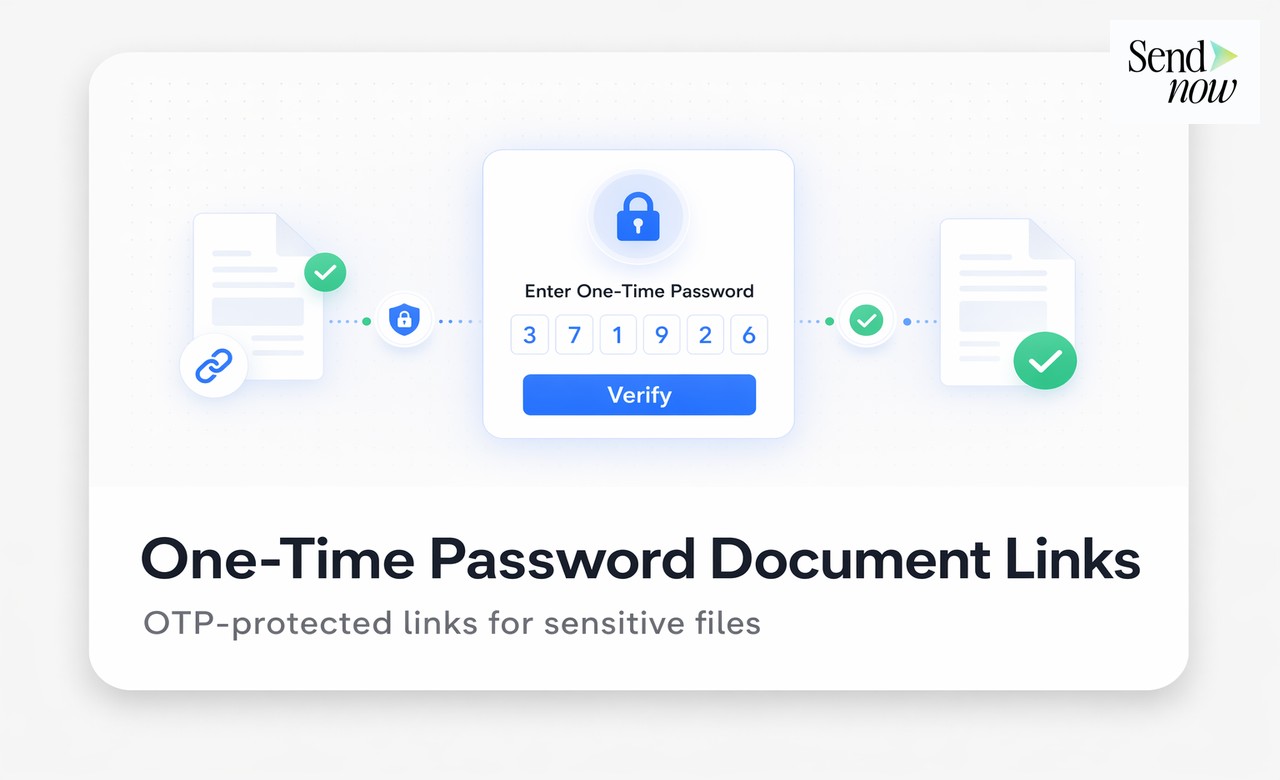
Q: Can secure document links be forwarded? A: Yes, but SendNow provides tools to limit access by email domain, require OTP authentication before viewing, and apply dynamic watermarks that identify every viewer independently, so forwarding is detectable and traceable.
Q: How do I convince colleagues to stop using email attachments? A: Demonstrate the risk concretely: show them that a SendNow link provides view tracking, revocation, and a GDPR-ready audit trail in the same time it takes to attach a file to an email.
Q: Is SendNow suitable for large financial documents like pitch decks and data room files? A: Yes. SendNow supports large file uploads and delivers them through a fast, browser-based viewer that does not require the recipient to download anything.
Stop sending sensitive financial documents as untracked email attachments. Start your free trial at sendnow.live and share with full control.
About the Author: Rifana Hameem
Rifana is the founder of SendNow. She leads the team in building secure, compliant, and analytics-rich document sharing tools for finance and professional teams worldwide.
Connect on LinkedIn