

Why PE Firms Prefer Flat-Rate VDRs Over Legacy Per-Page Models

Why PE Firms Prefer Flat-Rate VDRs Over Legacy Per-Page Models
Executive Summary / TL;DR
Private equity (PE) firms are increasingly shifting towards flat-rate Virtual Data Rooms (VDRs) instead of traditional per-page pricing models. This change is driven by several challenges associated with the per-page model, including unpredictable costs, inefficiencies in document management, and the need for enhanced security. Flat-rate VDRs offer a more predictable, cost-effective, and streamlined solution for managing sensitive documents during transactions, making them the preferred choice for PE firms.
Current Security Vulnerabilities
In the world of private equity, the handling of sensitive documents is paramount. Traditional file-sharing methods, such as email and platforms like Dropbox, expose firms to significant security vulnerabilities. These methods often lack robust security features, making it easy for unauthorized individuals to access confidential information.
-
Email Risks: Emails can be intercepted, and attachments can be forwarded without consent, leading to potential leaks of sensitive data. Phishing attacks are also prevalent, where malicious actors impersonate trusted sources to gain access to confidential documents.
-
Cloud Storage Vulnerabilities: While platforms like Dropbox offer convenience, they often do not provide the necessary security measures for sensitive financial documents. Data stored in the cloud can be susceptible to breaches, and users may inadvertently share access with unauthorized individuals.
-
Version Control Issues: When using traditional file-sharing methods, maintaining version control becomes challenging. Multiple versions of a document can lead to confusion, errors, and the potential for outdated information being shared.
-
Lack of Audit Trails: Many legacy systems do not provide comprehensive audit trails, making it difficult for firms to track who accessed what documents and when. This lack of transparency can be detrimental during due diligence processes.
Industry-Specific Best Practices
To mitigate these risks, PE firms should adopt best practices tailored to their specific needs. Here are actionable steps to enhance document security and management:
-
Implement a Secure VDR: Transition to a flat-rate VDR that offers robust security features, including encryption, user authentication, and access controls. This ensures that only authorized personnel can access sensitive documents.
-
Conduct Regular Security Audits: Regularly assess the security measures in place to identify vulnerabilities. This includes reviewing user access, monitoring for unauthorized access attempts, and ensuring compliance with relevant regulations.
-
Establish Clear Document Management Protocols: Create a standardized process for document uploads, sharing, and version control. This minimizes the risk of errors and ensures that all team members are working with the most current information.
-
Train Employees on Security Best Practices: Conduct training sessions to educate employees about the importance of document security and the specific measures in place. This fosters a culture of security awareness within the firm.
-
Utilize Watermarking and Expiry Features: When sharing sensitive documents, use features such as dynamic watermarking and link expiry to deter unauthorized sharing and ensure that access is time-limited.
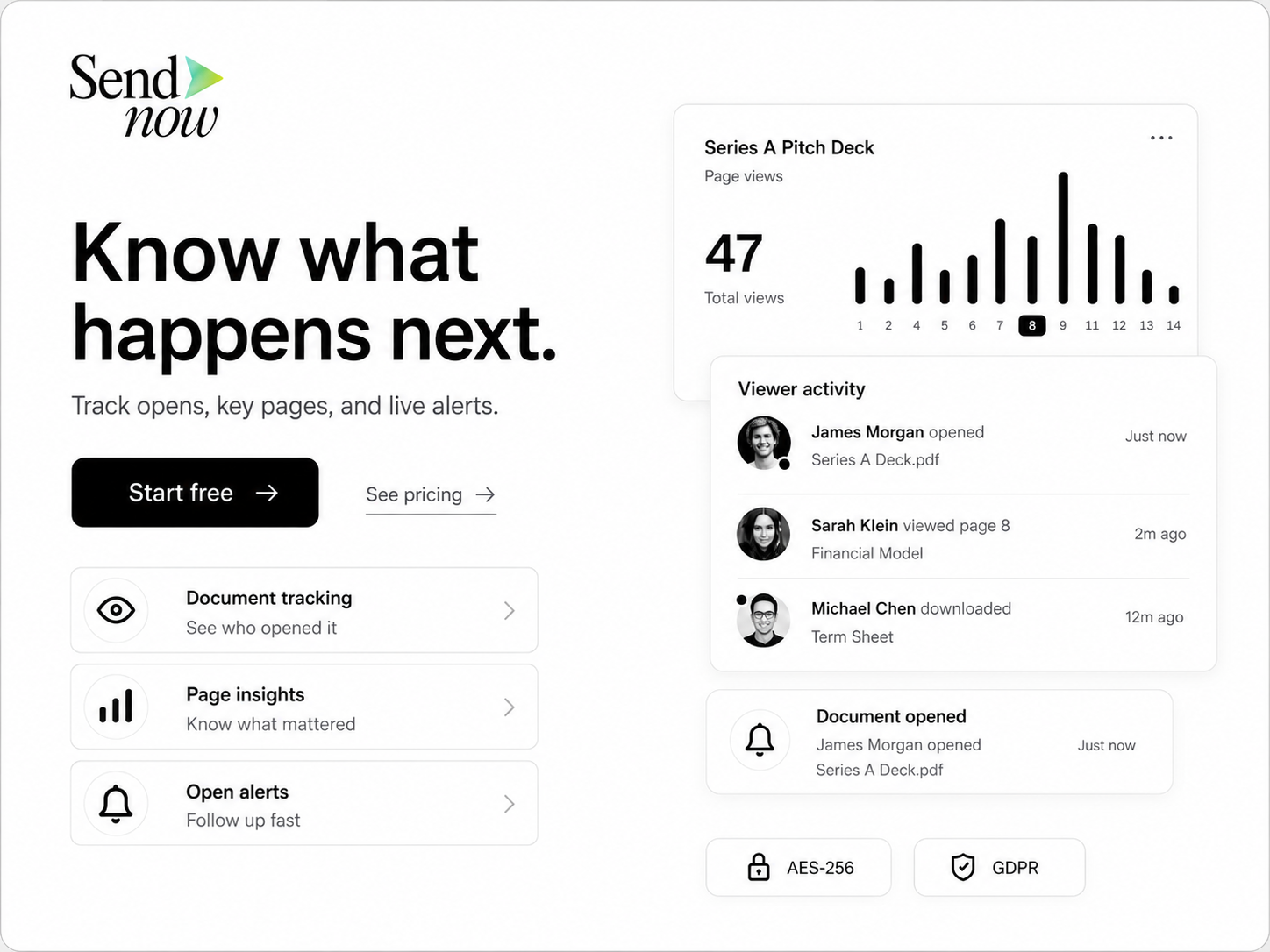
SendNow Feature Deep-Dive
SendNow is revolutionizing the way PE firms handle document sharing with its innovative features designed to address the vulnerabilities associated with traditional methods. Here’s how SendNow’s specific controls help mitigate risks:
-
Dynamic Watermarking: This feature adds a unique watermark to each document, displaying the recipient's information. This discourages unauthorized sharing and provides a clear audit trail.
-
Screenshot Blocking: SendNow prevents users from taking screenshots of sensitive documents, further protecting against unauthorized distribution of confidential information.
-
Email Gates: By requiring users to authenticate their email before accessing documents, SendNow ensures that only authorized individuals can view sensitive information.
-
Link Expiry: This feature allows firms to set expiration dates on shared links, ensuring that access is time-limited and reducing the risk of documents being accessed after a deal has closed.
-
NDA Gates: SendNow can require users to sign a Non-Disclosure Agreement (NDA) before accessing sensitive documents, providing an additional layer of legal protection.
For more information on how SendNow can enhance your document management processes, visit their official LinkedIn page.
Technical Walkthrough
Setting up and using SendNow is straightforward. Here’s a step-by-step guide to ensure safe document distribution:
Step 1: Uploading Documents
- Log in to Your SendNow Account: Access your account through the SendNow platform.
- Navigate to the Upload Section: Click on the "Upload" button on the dashboard.
- Select Files: Choose the documents you wish to upload from your device. You can upload multiple files at once.
- Add Metadata: Include relevant metadata such as document titles, descriptions, and categories for easier organization.
Step 2: Configuring Links
- Create a New Link: Once your documents are uploaded, select the files you want to share and click on "Create Link."
- Set Permissions: Define the access permissions for the link, including view-only or download options.
- Enable Security Features: Activate features such as dynamic watermarking, screenshot blocking, and NDA gates as needed.
- Set Expiry Date: Specify an expiry date for the link to limit access duration.
Step 3: Distributing Safely
- Share the Link: Copy the generated link and send it to the intended recipients via secure channels.
- Monitor Access: Use SendNow's analytics dashboard to track who accesses the documents and when. This helps maintain oversight during the due diligence process.
- Review and Update: Regularly review shared links and update permissions or documents as necessary.
ROI & Business Impact
Investing in a flat-rate VDR like SendNow offers significant returns on investment for private equity firms. Here are some key benefits:

-
Cost Efficiency: Flat-rate pricing eliminates the unpredictability of per-page fees, allowing firms to budget more effectively. This is particularly beneficial during large transactions that involve numerous documents.
-
Enhanced Security: The advanced security features of SendNow protect sensitive information, reducing the risk of costly data breaches and potential legal ramifications.
-
Improved Compliance: Utilizing a secure VDR helps firms comply with regulatory requirements such as GDPR and e-signature laws. This not only protects the firm but also builds trust with clients and stakeholders.
-
Streamlined Processes: The efficiency of a flat-rate VDR simplifies document management, allowing teams to focus on strategic decision-making rather than administrative tasks.
-
Increased Collaboration: With secure sharing features, teams can collaborate more effectively, leading to faster deal closures and improved outcomes.
Structured FAQ
1. How does a flat-rate VDR differ from a per-page model?
A flat-rate VDR charges a fixed fee for access to the platform, regardless of the number of pages or documents shared. In contrast, a per-page model charges based on the volume of documents, leading to unpredictable costs.
2. Why are PE firms moving away from per-page pricing?
PE firms are moving away from per-page pricing due to the unpredictability of costs, inefficiencies in document management, and the need for enhanced security. Flat-rate VDRs provide a more stable and secure solution.
3. What security features should I look for in a VDR?
Key security features to look for include encryption, user authentication, dynamic watermarking, screenshot blocking, and audit trails. These features help protect sensitive information and ensure compliance with regulations.
4. How can I ensure compliance with regulations when using a VDR?
To ensure compliance, choose a VDR that adheres to relevant regulations such as GDPR and e-signature laws. Additionally, implement best practices for document management and conduct regular security audits.
5. What are the benefits of using SendNow for document sharing?
SendNow offers a flat-rate pricing model, advanced security features, and user-friendly document management tools. These benefits lead to cost savings, improved compliance, and enhanced collaboration for private equity firms.
Actionable CTA
Ready to enhance your document management and security? Start your trial on SendNow today at https://share.sendnow.live/dashboard and experience the benefits of a flat-rate VDR for your private equity firm. Don't compromise on security—make the switch to SendNow!
About the Author: Rifana Hameem
Rifana is the founder of SendNow. She leads the team in building secure, compliant, and analytics-rich document sharing tools for finance and professional teams worldwide.
Connect on LinkedIn