NDA Best Practices for Sharing Confidential Financial Documents

- An NDA is a legally binding contract that restricts how recipients use confidential financial information; it must be executed before documents are shared, not after
- Unilateral NDAs bind only the recipient; mutual NDAs bind both parties; choice depends on which direction information flows
- A strong financial NDA precisely defines confidential information, limits the permitted purpose, and specifies remedies for breach
- NDA management software automates distribution, signature collection, and compliance tracking at scale without replacing the legal agreement itself
- Digital NDA gating at the document link level closes the enforcement gap between agreement execution and document access
- M&A NDAs require standstill clauses, non-solicitation provisions, and return-of-materials obligations that standard business NDAs typically lack
- VC and PE firms managing deal flow at scale use standardized templates, embedded gating workflows, and centralized dashboards to manage hundreds of NDAs reliably
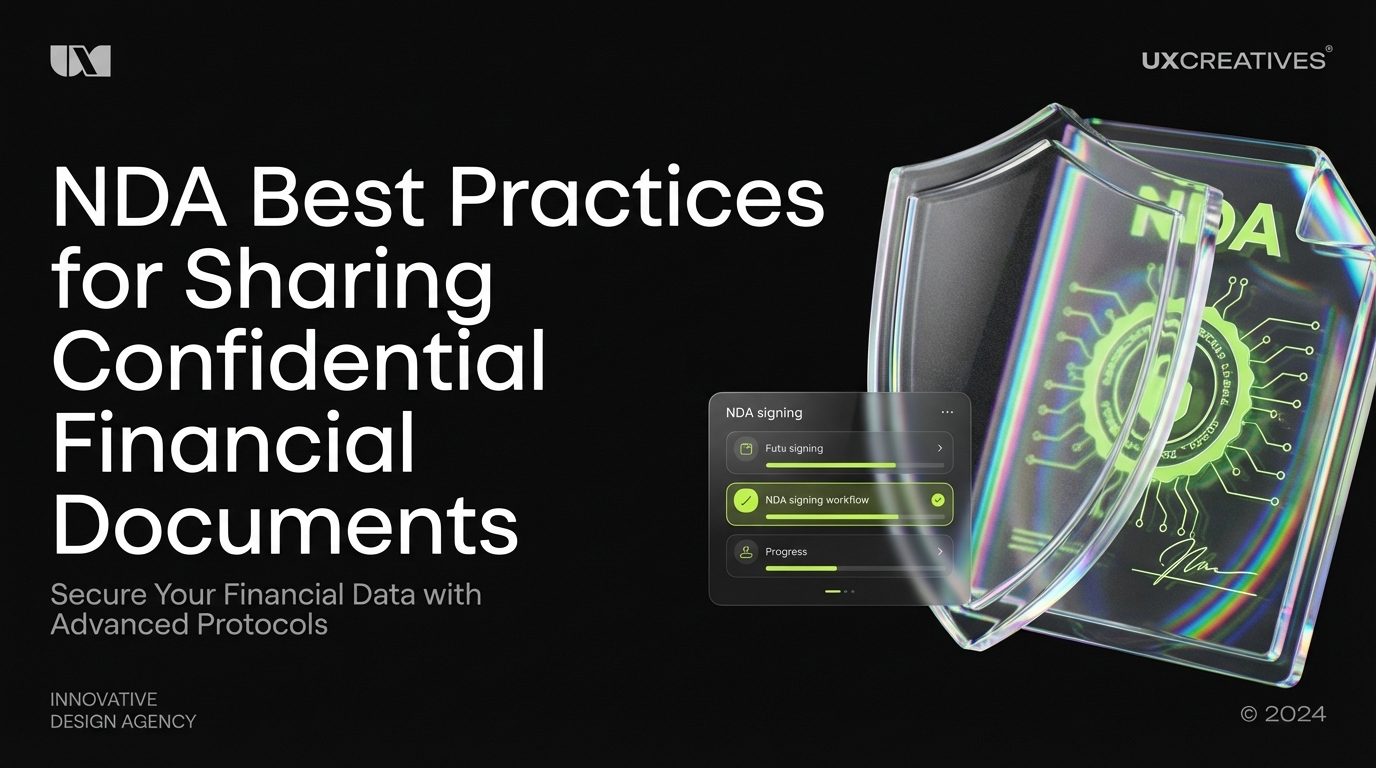
NDA Best Practices for Sharing Confidential Financial Documents
NDA management software is transforming how finance teams protect confidential information during fundraising, M&A, and deal sharing. This guide covers the seven most important questions about NDA best practices for financial document workflows, from drafting and mutual vs. unilateral structures to digital gating, enforcement, and scale management.
Introduction
A handshake offers no legal protection. Neither does a verbal agreement on a call or an implied understanding between counterparties. When finance professionals share pitch decks, financial models, fund performance data, or confidential information memorandums, a non-disclosure agreement is the foundational legal instrument that governs how that information can be used, stored, and shared.
Yet the gap between knowing why NDAs matter and executing them well remains large. Templates get reused across contexts where they do not fit. Parties access documents before NDAs are in place. Signatures get collected via scattered email chains with no audit trail. And when information does surface in the wrong place, the NDA turns out to be drafted too vaguely to enforce.
This guide answers the seven questions finance professionals ask most about NDA best practices for confidential document sharing.
1. What Is an NDA and When Should Finance Professionals Use One?
A non-disclosure agreement (NDA) is a legally binding contract in which one party (or both) agrees to treat specific information as confidential, to use it only for defined purposes, and not to share it outside agreed parameters. In financial transactions, NDAs are the primary instrument protecting proprietary data, trade secrets, and material non-public information from unauthorized disclosure.
Finance professionals use NDAs before sharing:
- Pitch decks and financial projections with prospective investors
- Confidential information memorandums (CIMs) with potential buyers in M&A transactions
- Fund performance data shared with due diligence teams
- Financial models and valuation analysis shared with advisory clients
- Cap table data and term sheet proposals in fundraising rounds
According to Ramp's guide to NDA drafting, "a non-disclosure agreement protects sensitive information you share with employees, contractors, partners, or investors by setting clear legal rules around confidentiality." Ramp
The timing of NDA execution matters as much as the content. Best practice in M&A and fundraising is to have a countersigned NDA in place before any confidential document is shared. Morgan & Westfield's M&A NDA guide identifies a common and costly mistake: sharing early-stage deal information before an NDA is fully executed, which leaves the disclosing party with limited legal recourse if that information later appears in a competitor's hands or in a counterbidder's analysis. Morgan & Westfield
2. What Is the Difference Between a Mutual NDA and a Unilateral NDA?
This distinction shapes which party bears the confidentiality obligation and is critically important in financial transactions where deal structures vary widely.
A unilateral NDA (also called a one-way NDA) binds only the recipient of information. The disclosing party shares data; the receiving party agrees not to use it for unauthorized purposes or disclose it to third parties. This structure is standard when a founder shares a pitch deck with a VC firm, or when a sell-side advisor shares a CIM with a prospective buyer: information flows in one direction at the outset of the process.
A mutual NDA binds both parties symmetrically. Both sides agree to protect each other's confidential information, typically in situations where both parties exchange sensitive data. This structure applies in joint ventures, strategic partnerships, or later-stage M&A discussions where a buyer shares its own integration plans or acquisition financing details in exchange for deeper target company data.
According to ClearlyAcquired's analysis of M&A NDAs: "Unilateral NDAs bind only the recipient of information, commonly used when sellers disclose data early in a transaction. Mutual NDAs require both parties to protect each other's confidential information, often used in complex deals or joint ventures where both sides share strategic details." ClearlyAcquired
Sirion AI's guide to NDA structures notes that "knowing when to use each type and the risks and advantages they carry is critical for ensuring your intellectual property, trade secrets, and competitive advantage remain secure." Sirion
For most early-stage financial document sharing, a well-drafted unilateral NDA is the right instrument. Mutual NDAs add negotiation time and complexity; they are most appropriate when genuinely bilateral information exchange is expected and both sides have material confidential data at stake.
3. What Should an NDA Include When Protecting Financial Information?
A poorly drafted NDA is often worse than no NDA because it creates false confidence. The most common failure mode in financial NDAs is a definition of "Confidential Information" that is either too broad to enforce or too narrow to cover the actual data shared in the transaction.
Sterlington Law identifies ten essential NDA provisions: identifying the parties, defining confidential information precisely, specifying permitted uses, listing exclusions (information already publicly known or independently developed), setting the confidentiality term, and specifying remedies for breach. Sterlington Law
For financial documents specifically, best practice provisions include:
Specific definition of confidential information. Rather than a catch-all clause, list the types of information explicitly: financial projections, customer data, proprietary valuation models, cap table information, deal terms, fund performance data, and any material non-public market information. Sirion AI documents the cost of vagueness: a founder's NDA was ruled unenforceable because the confidentiality definition was written so broadly it effectively covered nothing in particular. Sirion
Purpose limitation. The NDA should specify that confidential information may only be used to evaluate the specific transaction under discussion, not for competitive intelligence, product development, or any other commercial purpose.
Non-solicitation of employees. In M&A contexts, NDAs routinely prevent a potential buyer from approaching key employees or clients of the target business during the evaluation period. JD Supra / Dickinson Wright
Governing law and jurisdiction. Specifying which jurisdiction's law governs the NDA and which courts have enforcement jurisdiction is essential for cross-border financial transactions where counterparties operate in multiple legal systems.
Term and survival clauses. The NDA should specify both how long the confidentiality obligation lasts (typically two to five years for financial transactions) and whether obligations covering trade secrets survive NDA expiration indefinitely.
4. Can NDA Management Software Replace Traditional NDAs?
NDA management software does not replace the NDA itself. It replaces the manual process of distributing, negotiating, signing, and storing NDAs. The legal instrument is unchanged. What changes is operational efficiency, speed, and auditability.
Traditional NDA workflows in financial services involve emailing a Word document to a counterparty, waiting for a redline, negotiating terms over email threads, collecting a wet or electronic signature, and storing the executed agreement in a folder somewhere. This process is slow, error-prone, and generates scattered audit records that are difficult to reconstruct when enforcement becomes necessary.
According to Ontra's analysis of NDA management for fund managers, the most effective tools "combine AI-powered automation, centralized visibility, and industry expertise that enable teams to close deals faster, maintain compliance, and scale without expanding headcount." Ontra
The data-rooms.org analysis of data room NDAs confirms the growing necessity: "While the virtual data room market is growing with a CAGR of 18.1% by 2029 estimated at USD 5.6 billion, a non-disclosure agreement remains an indispensable part of commercial transactions." data-rooms.org
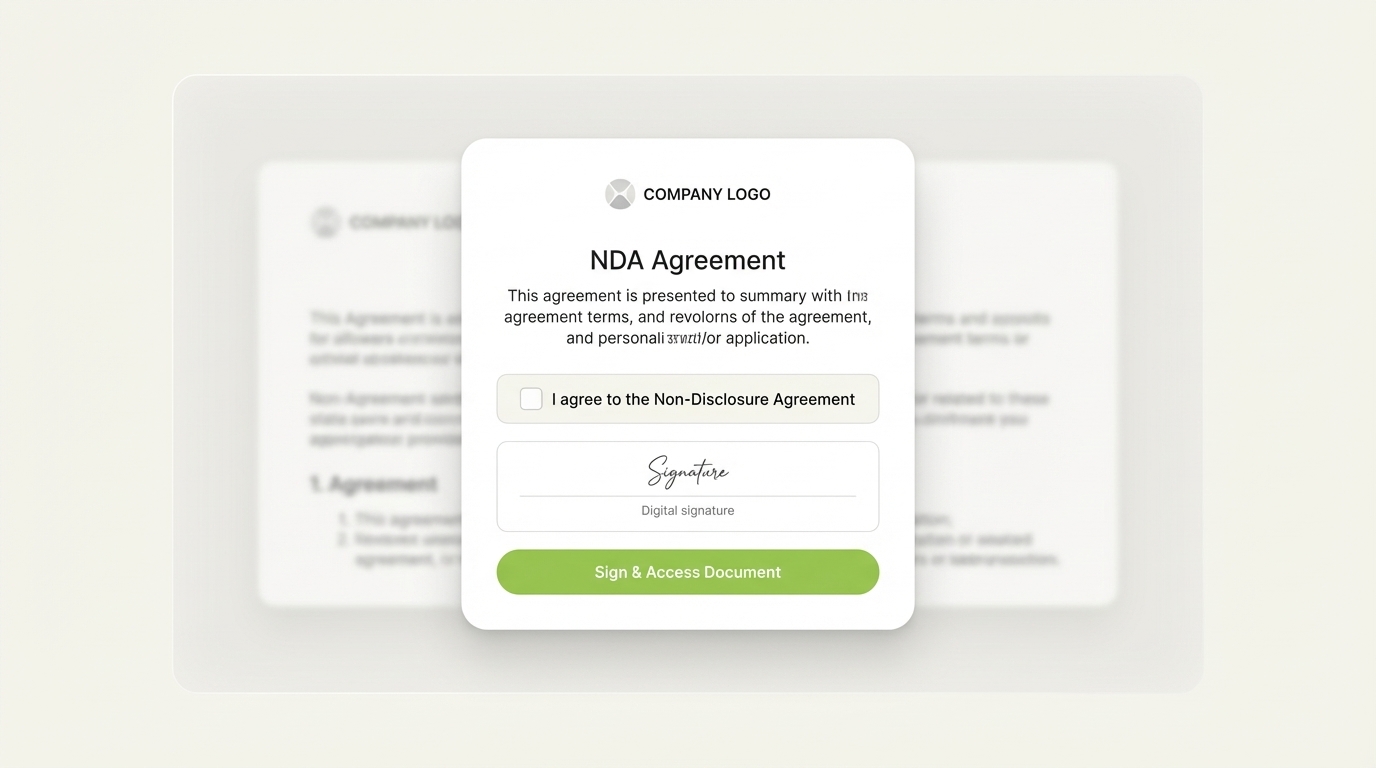
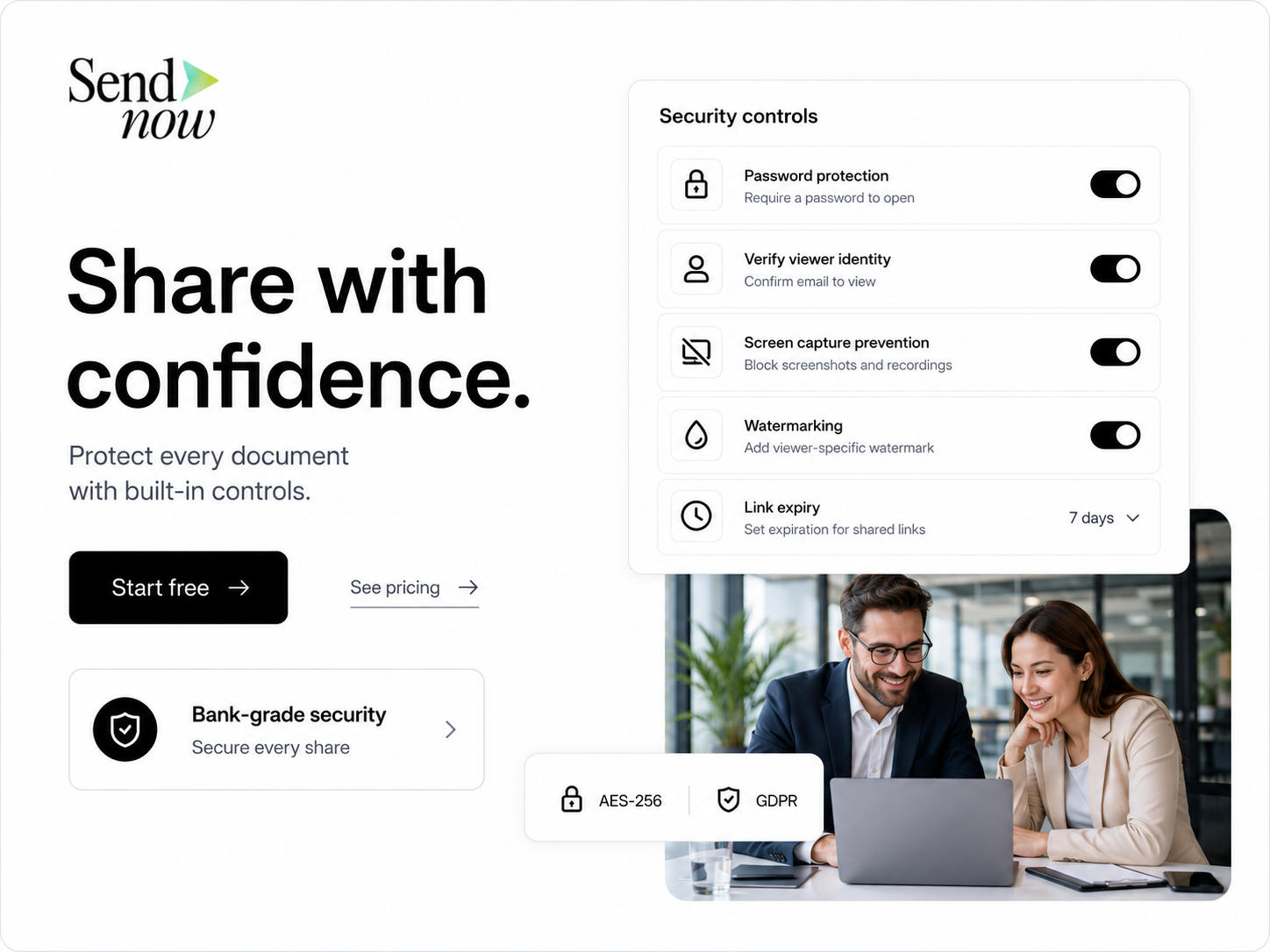
One of the most operationally powerful implementations of NDA software in financial document workflows is document-level NDA gating. Rather than collecting NDA signatures as a separate pre-step, the NDA is embedded directly into the document sharing link. A viewer lands on the link, sees a locked preview, and must read and e-sign the NDA before the content unlocks.
SendNow builds this gating workflow natively into its document sharing flow. The signature is timestamped, logged against the specific viewer, and stored automatically alongside the document access record, creating a legally defensible audit trail tied to the exact moment of access. This is both faster than manual NDA collection and more enforceable than a separately collected signature with no proven link to the documents accessed.
5. How Do You Enforce an NDA If It Is Breached?
NDA enforcement requires two things: a legally sound agreement and documented proof that a breach occurred. In financial transactions, the second element is where most enforcement attempts fail.
"Courts take a dimmer view of broad language in an NDA," according to Holland & Knight's trade secrets guide. Vague definitions of confidential information and weak breach remedies make injunctive relief difficult to obtain, regardless of how obvious the breach appears to the disclosing party. Holland & Knight
For practical enforcement, finance professionals need:
A timestamped record of what was shared. Documentation showing exactly which documents were transmitted, to which counterparty, and when is the first requirement in any enforcement proceeding. If confidential information surfaces in a competitor's product or a counterbidder's offer, you need to prove that specific data was shared with the breaching party under NDA before it appeared elsewhere.
Proof that the NDA was in place before document access. If an NDA was signed after a document was already shared, enforceability is materially compromised. Document-level NDA gating solves this structurally: the signature timestamp in the platform log always precedes the document access record, because the NDA must be accepted before the content unlocks.
Specific breach remedies in the agreement. Courts respond more favorably to injunctive relief applications and damage claims when the NDA explicitly identifies the types of harm covered, the process for seeking relief, and the applicable jurisdiction. Generic templates routinely omit these provisions.
Jurisdiction-appropriate drafting. NDAs governed by New York or Delaware law for U.S. financial transactions, or English law for cross-border European deals, are more thoroughly tested in financial enforcement contexts and give courts clearer precedent to work from.

When a breach occurs in a properly managed digital workflow, you have a complete evidence package: the NDA e-signature with timestamp, the document access log showing which pages were viewed and for how long, the viewer's IP address, the session timestamp, and any forwarding activity captured by the platform. This is materially stronger than an email chain containing a scanned PDF signature and no correlated access record.

6. What Should a Deal Room NDA Include for M&A Transactions?
M&A NDAs, often called confidentiality agreements or CAs in deal contexts, differ from standard business NDAs in several specific provisions that reflect the higher stakes and longer time horizon of transactional finance.
JD Supra's analysis by Dickinson Wright makes this distinction explicit: "When it's time to sell your company or explore a potential acquisition target, one of the first documents you will encounter is the confidentiality agreement. You may have seen hundreds of NDAs before, but the M&A NDA contains provisions that standard business NDAs simply do not include." JD Supra
M&A-specific provisions that belong in a deal room NDA:
Standstill clause. Prevents a potential buyer from making unsolicited public bids for the target company's stock or assets for a defined period, typically 12 to 18 months, after receiving confidential information under the NDA. This protects sellers from opportunistic public approaches triggered by data disclosed in the evaluation process.
Non-solicitation of employees and customers. Restricts the potential buyer from recruiting the target's key management, technical staff, or major client relationships during and after the evaluation period, protecting the target's operational continuity if the deal does not close.
No-deal disclosure restrictions. Prevents either party from disclosing publicly that deal discussions are underway, protecting both sides from market speculation, competitive intelligence, and premature valuation pressure.
Permitted disclosures to advisors. M&A NDAs typically allow disclosure to legal counsel, accountants, and financial advisors on a strict need-to-know basis, provided those advisors are bound by equivalent confidentiality obligations, either under the NDA itself or under separate professional duties.
Return or destruction of materials. Upon deal termination, the receiving party must return or certify destruction of all confidential materials. This provision requires a document access platform that supports link revocation and generates a log confirming when access was disabled and by whom.
Focus Bankers' guide to M&A confidentiality agreements notes how common the oversight is: "It's surprising how many people don't have mutual confidentiality agreements in place when talking with a buyer, exposing customer data, employee information, and proprietary financial information to competitive risk." Focus Bankers
7. How Do VC Firms and Deal Teams Manage NDAs at Scale?
A mid-sized VC firm reviewing 500 inbound decks per quarter and an active investment bank managing 15 simultaneous mandates can accumulate hundreds of executed NDAs annually. Manual management at that volume is both operationally unsustainable and legally risky.
Ontra identifies the core problem in fund management: "Firms can no longer afford slow, manual contract processes that delay deals or expose them to unnecessary risk." Ontra
Finance teams that manage NDAs at scale rely on three operational practices.
Standardized templates by deal type. A VC firm maintains separate NDA templates for inbound pitch review (unilateral, light on standstill provisions, quick to execute), co-investment evaluation (mutual, with return-of-materials clause), and full due diligence (comprehensive M&A-style provisions with all transaction-specific clauses). Templates are reviewed annually by legal counsel and versioned centrally so no team member sends an outdated form.
Document-level NDA gating as default workflow. Rather than collecting NDAs separately before sending documents, the NDA is embedded in the sharing link itself. Every document distributed requires NDA acceptance before access. This creates a systematic, automatic audit trail tied to each specific document and eliminates the operational gap between agreement execution and content access that manual processes routinely produce.
Centralized NDA tracking dashboard. NDA management software provides a single view of every active NDA: counterparty name, execution date, expiry date, status, and the specific documents covered. For a PE firm running a multi-buyer process where five bidders are at different NDA stages, this centralized view is essential for managing deal security and regulatory obligation simultaneously.
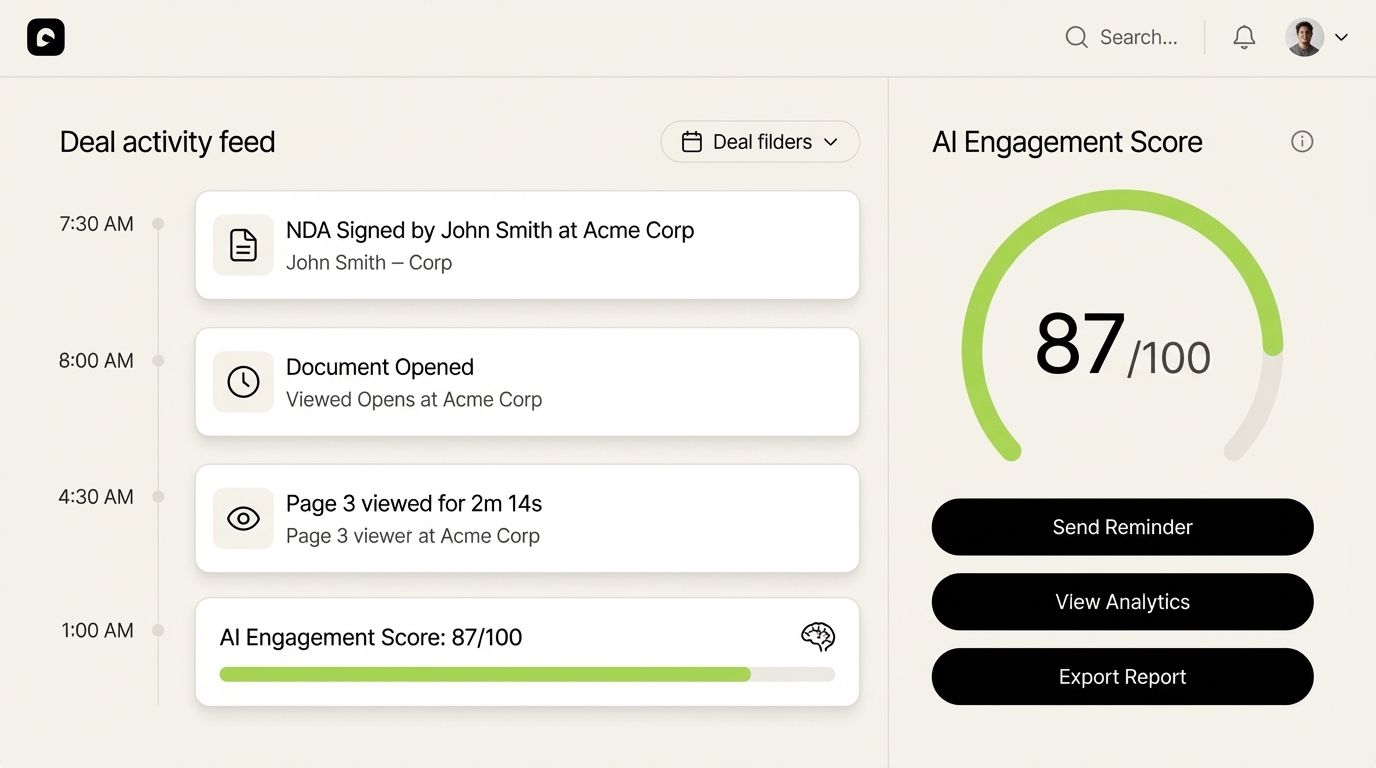
SendNow combines NDA gating with page-by-page engagement analytics and AI engagement scoring, so deal teams see not just who signed and accessed the document, but how engaged each counterparty is based on their actual reading behavior. A counterparty who signed the NDA but spent 14 seconds on a 40-page document scores differently from one who read every page of the financial model three times. This turns NDA management from a purely legal formality into a live deal qualification signal.
Conclusion
NDA management in financial document workflows is simultaneously a legal obligation, a compliance requirement, and a competitive practice tool. Teams that execute it well protect themselves legally, generate a defensible audit trail, and extract deal intelligence from the process that manual workflows simply cannot produce.
The practical checklist: choose the correct NDA type for the information flow (unilateral for one-directional data sharing, mutual for bilateral exchange), define confidential information precisely and by category, execute the NDA before document access rather than after, embed NDA gating directly into your document sharing workflow, include M&A-specific provisions when the stakes warrant them, and maintain a centralized log of every NDA signature tied to the documents it covers.
For finance teams managing deal flow at any scale, SendNow combines NDA gating, document analytics, and AI engagement scoring in a single platform, starting from $9 per month with a free trial and no credit card required. Trusted by 100+ finance teams, it gives VCs, investment bankers, PE firms, and financial advisors the tools to share confidential financial documents with full legal control, automatic audit trails, and the deal intelligence to act on engagement signals the moment they appear.
Keep Reading
About the Author: Rifana Hameem
Rifana is the founder of SendNow. She leads the team in building secure, compliant, and analytics-rich document sharing tools for finance and professional teams worldwide.
Connect on LinkedIn