

AI Tools for Financial Advisors: Research, Analysis, and Client Communication

AI Tools for Financial Advisors: Research, Analysis, and Client Communication
AI is becoming part of everyday knowledge work, and financial advisory teams are no exception. Advisors are experimenting with tools that summarize research, organize meeting notes, help review documents, surface information, and support client communication.
The useful question is not whether an AI tool (see McKinsey's report on AI technology in financial services) can produce impressive output in a demo. The useful question is whether it can save time without creating new risk.
Financial work involves sensitive information, important decisions, and communication that clients may rely on. That means AI should be introduced carefully, with clear boundaries around what the system is allowed to do and what still requires human review.
Start with low-risk, repeatable work
The easiest place to begin is work that consumes time but does not require the system to make a final financial decision.
Examples include:
- Summarizing public research
- Organizing meeting notes
- Drafting internal checklists
- Turning long documents into first-pass summaries
- Preparing questions for a client meeting
- Creating a first draft of a follow-up email
- Categorizing information from documents
- Comparing versions of written material
These tasks can save time while keeping the advisor responsible for the final judgment.
Avoid beginning with a workflow where an incorrect AI answer could immediately become a client recommendation.
Research support
Advisors regularly review market commentary, company information, economic updates, fund material, policy changes, and internal research.
AI can help organize large amounts of text by extracting themes, summarizing long material, or identifying areas that deserve closer reading.
A good research workflow might look like this:
- Collect the approved source material.
- Ask the AI tool for a structured summary.
- Review the summary against the original source.
- Mark any claims that require deeper verification.
- Use the output as a starting point for human analysis.
The tool reduces reading and organization time. It does not replace the advisor's responsibility to understand the source.
Meeting preparation
Client meetings often require reviewing previous notes, open questions, portfolio context, planning tasks, and documents.
AI can help create a meeting-preparation brief by organizing information that already exists in approved systems.
A useful brief might include:
- Last meeting date
- Important topics discussed
- Outstanding client questions
- Documents sent since the last meeting
- Upcoming deadlines
- Decisions that still need confirmation
- Suggested agenda items
This can reduce preparation time, especially when the advisor manages many relationships.
The important control is data handling. Do not copy sensitive client information into a tool unless your firm has approved the way that tool stores and processes data.
Note-taking and meeting summaries
Meeting assistants can reduce the time spent writing notes after calls.
The best use is to create a draft summary that the advisor reviews immediately after the meeting. The human should confirm names, numbers, commitments, dates, and anything that could affect a future recommendation.
A useful final note should separate:
- Facts stated by the client
- Questions that remain open
- Actions assigned to the advisor
- Actions assigned to the client
- Deadlines
- Topics for the next meeting
Do not assume a generated transcript or summary is automatically accurate simply because it looks polished.
Document review and extraction
Financial-advisory work involves many documents: statements, reports, planning forms, disclosures, agreements, and client-provided files.
AI tools (refer to Harvard Business Review on AI's impact on wealth advisory) can help locate specific information or create structured first-pass summaries. This may be especially useful when the task is repetitive, such as identifying the same fields across many documents.
Before using AI for document work, ask:
- Is the document confidential?
- Where is the file processed?
- Is the data retained?
- Can the vendor use the data to improve its models?
- Can access be restricted by role?
- Is there an audit history?
The convenience of faster review should not come at the cost of unclear data handling.
Client communication
AI can help create first drafts of client communication, but the final message should sound like the advisor and match the actual relationship.
Writer (Enterprise Generative AI with Brand and Compliance Controls)
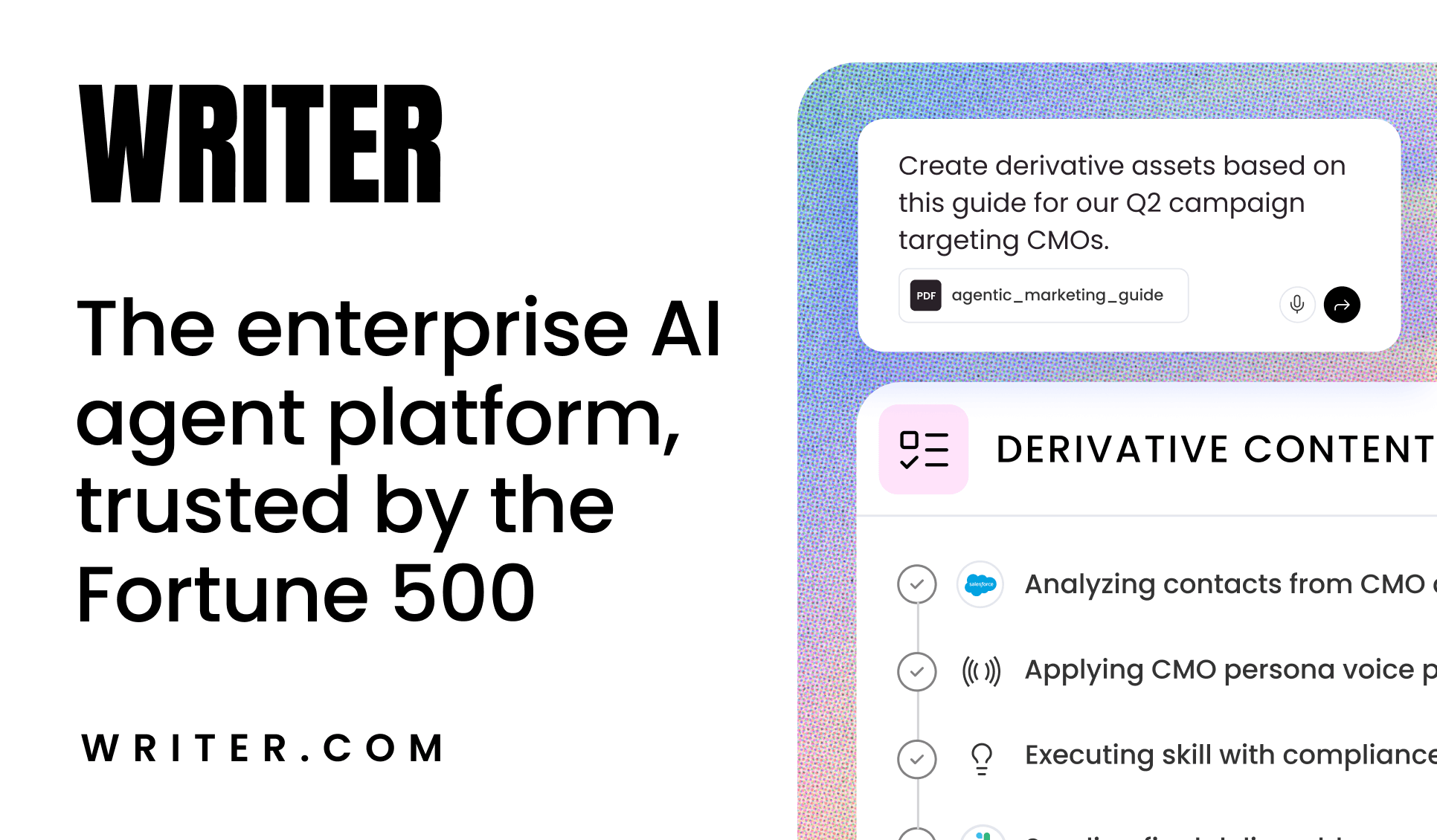
Client communication is where generic AI writing tools become a liability for regulated firms. A model that produces a confident, non-compliant sentence has created work, not saved it. Writer is an enterprise generative AI platform built around that constraint, designed for organisations that cannot ship unreviewed output.
Rather than operating as an open-ended assistant, the platform applies an organisation's own terminology, style rules and approved language to what it generates, so drafts arrive already aligned with how the firm is permitted to speak. For advisory teams producing client updates, meeting summaries and explanatory material at volume, that shifts the human effort from rewriting to reviewing, which is the difference between AI saving time and merely relocating it.
- Enforced style and terminology: Company language rules applied at generation time rather than corrected afterwards.
- Enterprise deployment: Built for organisational rollout with governance over how the platform is used.
- Consistency at volume: The same standards applied whether one person drafts or the whole team does.
Advisory teams weighing AI for client communication can see how those guardrails work at writer.com.
Good uses include:
- Turning meeting notes into a follow-up draft
- Simplifying complex language
- Creating a clear list of next steps
- Rewriting a long explanation in plain language
- Preparing different versions for different audiences
Human review is essential because tone matters. A client receiving difficult market news, discussing retirement, or making a major financial decision should not receive communication that feels automated or careless.
Use AI to reduce the blank-page problem, not to remove the advisor from the relationship.
Market and portfolio analysis
Some AI systems can organize market data, identify patterns, or help users explore investment information. These tools can be useful for research, but teams should be careful about treating generated analysis as a recommendation.
Ask whether the system clearly distinguishes between:
- Source data
- Calculated information
- Generated explanation
- Assumptions
- Opinions or model output
An answer is easier to review when the user can understand where it came from.
Build a review rule for every AI workflow
A simple rule helps prevent accidental over-reliance.
Classify AI-assisted work into three levels:
Level 1: Internal organization
Examples: summarizing a public report, categorizing notes, drafting an agenda.
Review needed: normal human review.
Level 2: Client-facing preparation
Examples: draft email, meeting summary, explanation of a concept.
Review needed: detailed human review before sending.
Level 3: Decision-related output
Examples: portfolio analysis, recommendation support, tax-sensitive interpretation, or anything a client may act on financially.
Review needed: qualified professional review and the firm's normal approval process.
This keeps the role of AI clear.
Evaluate vendors with practical questions
Do not evaluate a financial AI tool only on output quality.
Ask:
- What data is stored?
- How long is it retained?
- Can customer data be used for model training?
- Can access be controlled by employee role?
- Is activity logged?
- Can information be deleted?
- What happens when an employee leaves?
- Can the tool connect to approved systems without manual copying?
- How does the vendor communicate errors or limitations?
The answers may matter more than a flashy demo.
Run a small pilot
Choose one narrow workflow and test it for a few weeks.
For example, use an approved tool to produce first drafts of meeting summaries. Track:
- Time saved
- Corrections required
- Employee adoption
- Common errors
- Client-information risks
- Whether the final notes are actually better
If the workflow creates consistent value, expand carefully. If employees spend as much time correcting output as they previously spent doing the task, the tool may not be useful.
Final takeaway
AI can help financial advisors with research, preparation, note-taking, document review, and communication, but it should be introduced as an assistant rather than an unquestioned decision-maker.
Start with low-risk work. Keep sensitive data inside approved systems. Review client-facing output carefully. Make the source of important information easy to verify. Most importantly, keep professional judgment with the human advisor.
The best AI workflow is not the one that removes people. It is the one that gives professionals more time for the work where human judgment and client trust matter most.
About the Author: Rifana Hameem
Rifana is the founder of SendNow. She leads the team in building secure, compliant, and analytics-rich document sharing tools for finance and professional teams worldwide.
Connect on LinkedIn

