

Creative Testing and Ad Measurement: Finding What Actually Converts

Creative Testing and Ad Measurement: Finding What Actually Converts
Most teams do not have a creative problem. They have a measurement problem that looks like a creative problem.
Ads get swapped, numbers move, and someone declares a winner based on a week of data and four variables changing at once. The next month the winner stops working, nobody knows why, and the cycle restarts.
Creative testing only compounds when the test is designed to produce a reusable answer. This guide covers how to structure that, and how to keep reading the signal after the click.
Test one thing, or learn nothing
The most common failure is changing the headline, the image, the offer and the call to action in the same round, then attributing the result to "the new creative".
You now know that one combination beat another combination. You have learned nothing you can apply to the next campaign.
Isolate a single variable per test:
- The claim being made
- The visual subject
- The offer or incentive
- The format, such as static against video
- The call to action
Run enough variants of that one variable to see a pattern rather than a coin flip. Three to five is usually enough to separate real differences from noise.
Decide the sample size before you look
Calling a test early is how teams convince themselves of things that are not true. A 20% lift on 300 impressions is not a lift.
Agree in advance on two numbers: the minimum conversions per variant before the test is readable, and the maximum runtime before the test is killed regardless. Write them down before the ads go live, because willpower disappears once a variant is ahead.
Also agree what counts as the outcome. Click-through rate measures the ad. Conversion rate measures the ad and the page together. Qualified pipeline measures the ad, the page, the offer and the audience. All three are useful, but only if you say which one you are optimising before you start.
Creative at catalog scale is a different problem
For commerce teams, the hard part is not designing one great ad. It is applying design judgement across thousands of products that change price, stock and availability every day.
A product feed left in its raw state produces plain, undifferentiated ads. Every competitor selling the same catalog produces the same thing.
The way out is to treat the feed as a creative system rather than a data export: decide the design treatment once, apply it across every SKU automatically, and test that treatment the same way you would test a single ad. The variable being tested is the template, not the product.
The landing page is part of the creative
A test that stops at the click measures half the experience.
If the ad promises a specific outcome and the page opens with generic positioning, the drop-off will be read as a creative failure when it is a continuity failure. The message has to survive the transition.
Practical checks:
- Does the page headline echo the ad's claim in recognisable language?
- Is the offer from the ad visible without scrolling?
- Does the page load fast enough on mobile that the click survives?
- Is there one action, or five competing ones?
Respect what attribution cannot tell you
Attribution models allocate credit. They do not discover truth.
Last-click will overstate branded search and retargeting. First-click will overstate top-of-funnel. Multi-touch models will produce confident decimals from incomplete data. None of them see the conversation a buyer had with a colleague, the podcast mention, or the competitor review they read at midnight.
Use attribution to compare like with like inside a single channel over a consistent window. For anything larger, supplement it: holdout tests, geo splits, and a self-reported "how did you hear about us" field on the form, which is unfashionable and frequently more honest than the dashboard.
Keep reading the signal after the form
In B2B especially, the conversion event is the start of the measurable part, not the end of it.
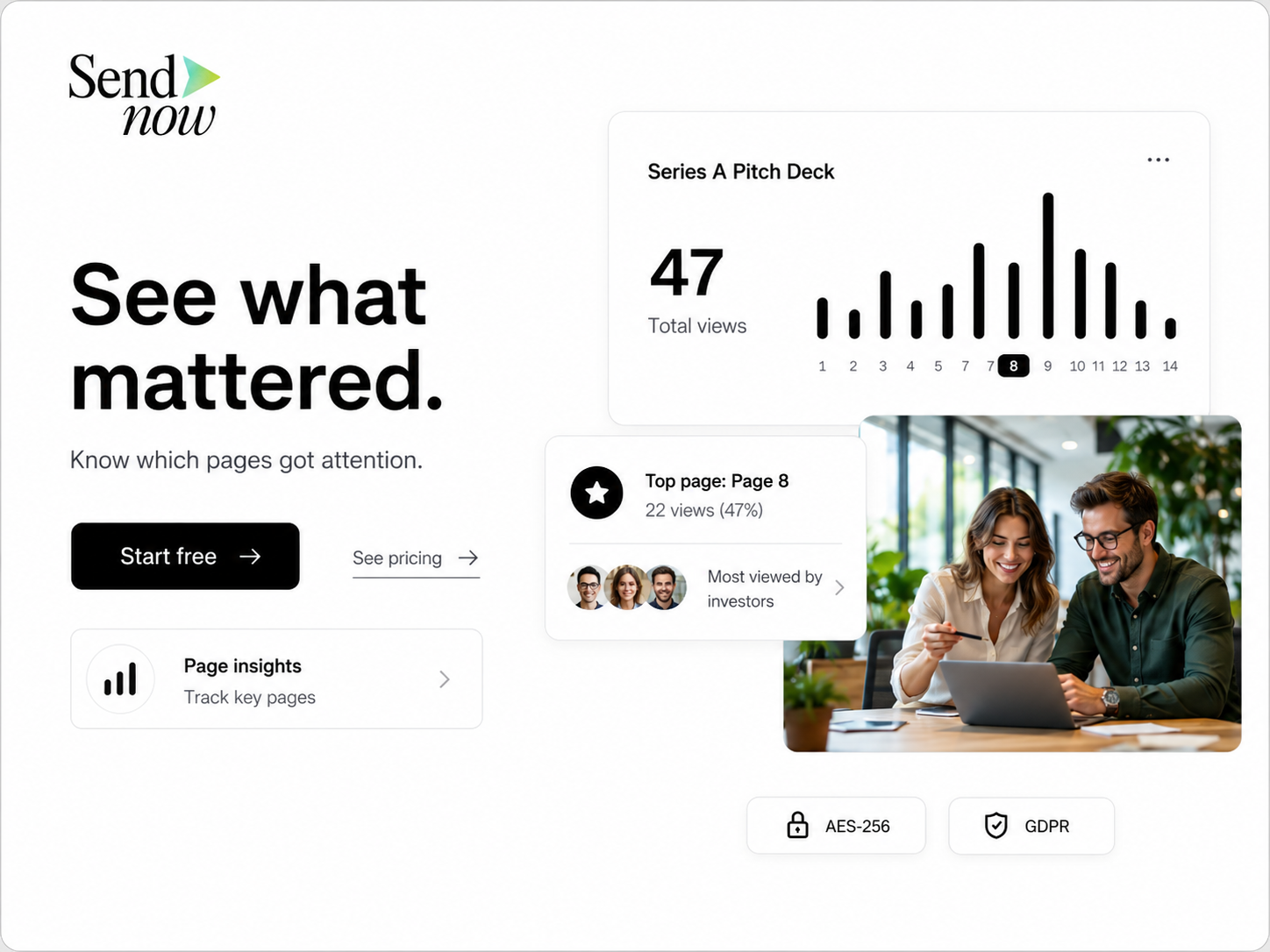
A prospect downloads the comparison guide, requests the pricing breakdown, or receives the proposal. If those go out as email attachments, measurement stops dead at the moment intent is highest.
Sending them as tracked links keeps the signal alive. You see whether the document was opened, which sections held attention, whether it was revisited, and whether it was forwarded to someone new, which is often the clearest sign a deal has moved internally. That is the same reasoning behind tracking document engagement metrics that actually matter and behind how marketers use document tracking to improve campaigns: the asset a campaign delivers is a measurement surface, not a dead end.
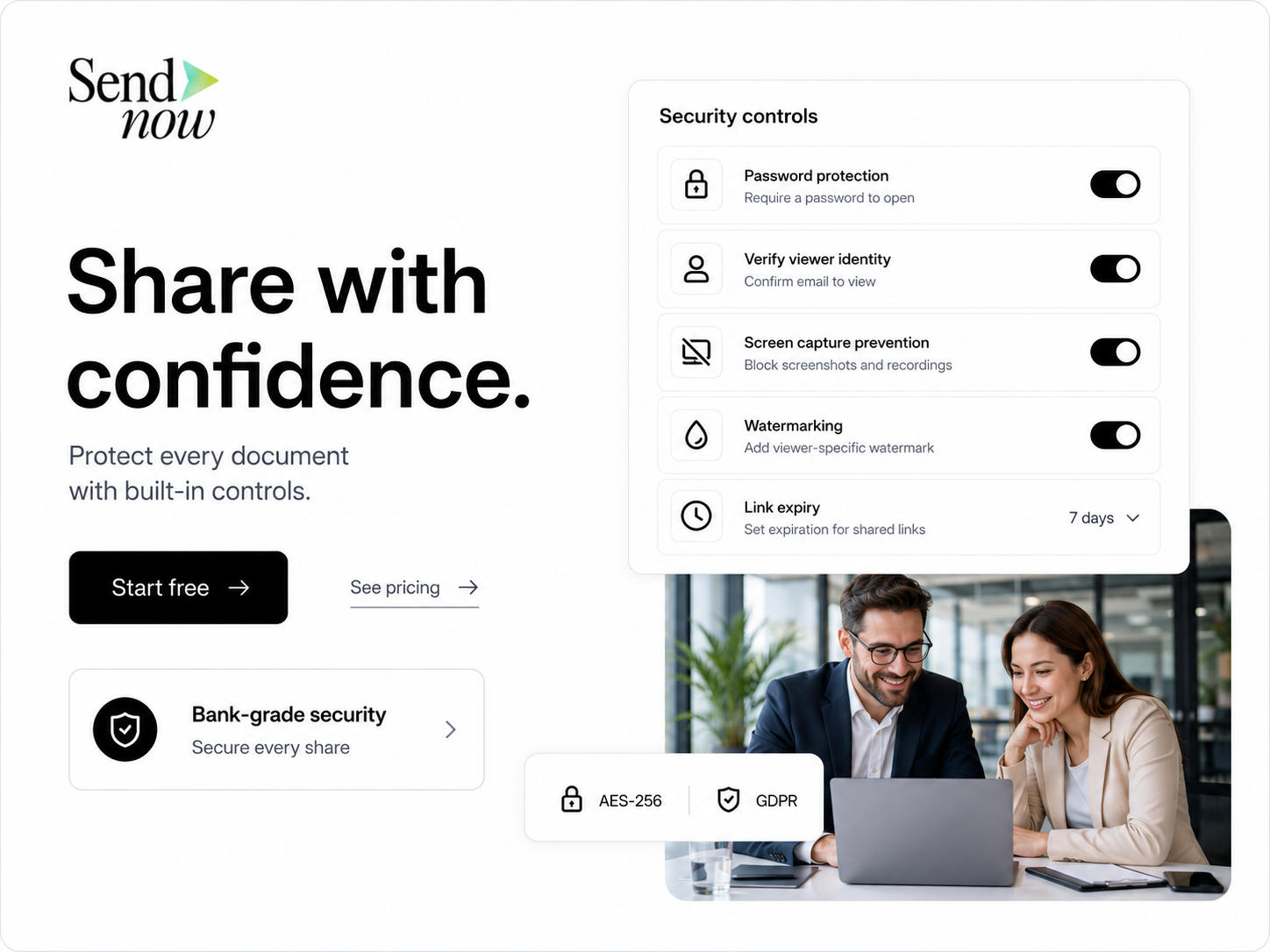
It also feeds back into creative. If the section on security is the one every prospect rereads, that is a finding about your audience, and it belongs in the next round of ads.
A testing cadence that holds up
- Write the hypothesis as a sentence with a predicted direction
- Choose the single variable and the outcome metric
- Set the minimum conversions and maximum runtime in advance
- Launch three to five variants of that variable
- Leave it alone until a threshold is met
- Record the finding, not just the winner
- Feed the finding into the next hypothesis
- Retest the assumption quarterly, because audiences drift
Final takeaway
Creative testing produces compounding returns when each round answers a question you can reuse, and produces nothing when each round just picks a winner.
Isolate one variable. Decide the sample size before emotion gets involved. Treat the landing page and the catalog as part of the creative rather than as neutral infrastructure. Be honest about what attribution can and cannot see.
And keep measuring after the click, because the documents a prospect reads next tell you more about what convinced them than the ad that brought them in.
Related SendNow Resources
- Related SendNow resource
- Related SendNow resource
- Related SendNow resource
- Related SendNow resource
- Related SendNow resource
External References
About the Author: Rifana Hameem
Rifana is the founder of SendNow. She leads the team in building secure, compliant, and analytics-rich document sharing tools for finance and professional teams worldwide.
Connect on LinkedIn

