
How to Share a PowerPoint With Video Without Losing the Video

How to Share a PowerPoint With Video Without Losing the Video
A presentation can look perfect until the moment you try to share it.
This happens frequently with decks containing video.
The founder or sales rep builds a strong PowerPoint, embeds a product demonstration, exports the file to PDF, and suddenly the video is nothing more than a frozen thumbnail.
Nothing is wrong with the original presentation. PDF is simply a static document format.
If the video matters, you need to share the presentation in a way that preserves supported media.
Why PDF removes the experience
PDF is excellent at preserving static text and graphics.
It is not a substitute for a presentation runtime.
When PowerPoint is converted to PDF, the slide can preserve the poster frame or image associated with a video, but not the same embedded playback behavior.
That matters when the video is not decorative.
For example:
- SaaS product demo,
- prototype walkthrough,
- customer testimonial,
- recorded founder explanation,
- technical demonstration.
In those cases, the video may be one of the most persuasive parts of the deck.
Three ways to share the deck
| Method | Video experience | Recipient friction | Tracking |
|---|---|---|---|
| Send PPTX attachment | Usually preserved in original file | Must download/open compatible software | No |
| Export to PDF | Lost as playable PowerPoint media | Very low | No |
| Share PPTX through compatible browser viewer | Supported media can remain playable | Low | Can be available |
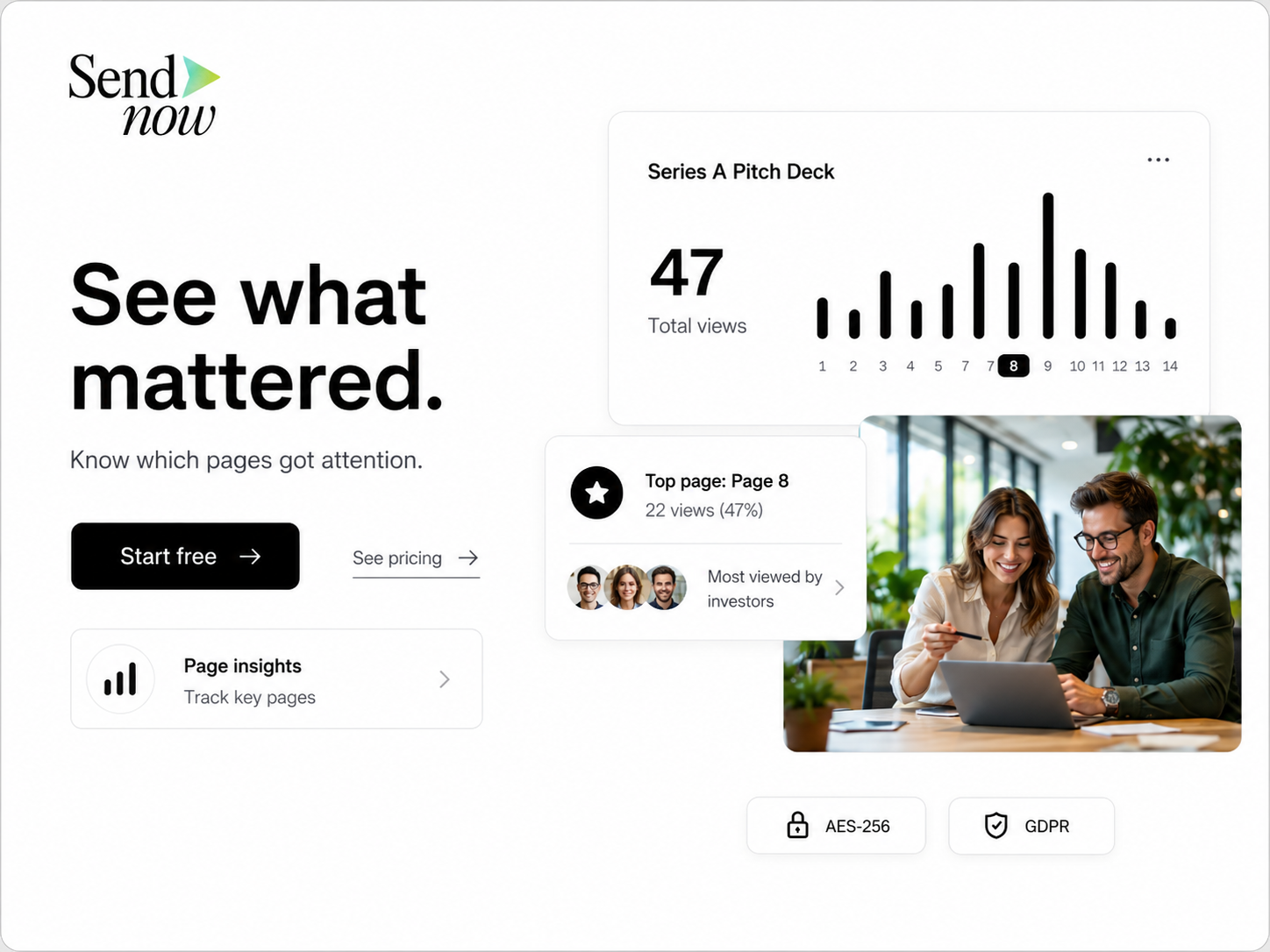
The third workflow is what makes native PPTX sharing interesting.
SendNow's dedicated PowerPoint with video workflow is designed for this situation.
Compatibility still matters
It would be misleading to say every video embedded into every PowerPoint will work everywhere.
Video playback depends on factors such as:
- how the media was embedded,
- the media format,
- codec compatibility,
- browser capabilities,
- how the presentation platform processes PPTX content.
For that reason, I always recommend testing the viewer link before sending it to an important recipient.
Open the link on:
- desktop browser,
- mobile browser,
- ideally a device different from the one used to create the deck.
Why this matters for sales
A salesperson may have only a few minutes of buyer attention.
If a product demo was intentionally built into the deck, forcing the prospect to leave the presentation, download a separate video, or search for another link creates unnecessary friction.
A browser presentation can keep the experience together.
The sales rep can then use engagement analytics as another signal during follow-up.
Why this matters for fundraising
Early-stage founders often use video to explain products that are difficult to understand from screenshots.
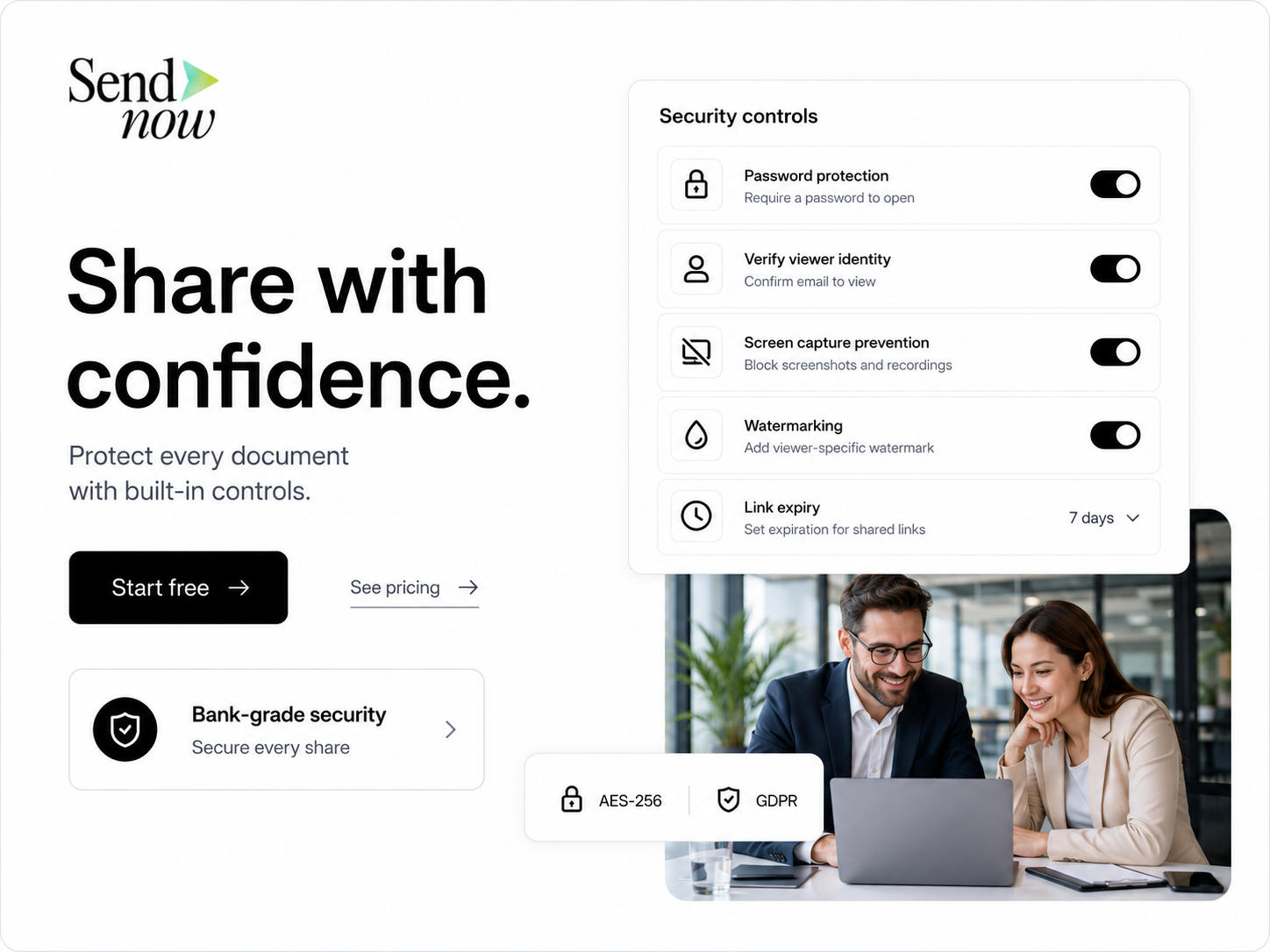
A short product demonstration can show more in thirty seconds than several slides of feature descriptions.
If that demo disappears when the file is flattened into PDF, the investor receives a weaker version of the story.
That does not mean every founder should suddenly send a complex multimedia deck. Simplicity still matters.
But if video is intentional, preserve it.
How I would test a video pitch deck
Before sending:
- Open every video inside the original PowerPoint.
- Confirm the file uses a supported media format.
- Upload the PPTX.
- Open the generated browser link.
- Play each embedded video from beginning to end.
- Test sound.
- Test mobile.
- Check that the surrounding slide still renders correctly.
- Send the link to yourself using the same channel you plan to use with the buyer or investor.
This takes five minutes and can prevent an embarrassing first impression.
FAQ
Why does my PowerPoint video disappear in PDF?
PDF is primarily a static document format and does not reproduce PowerPoint's embedded video playback behavior.
Can I send the PPTX directly?
Yes, but the recipient receives the original file and may need compatible software. A browser link can reduce that friction.
Does SendNow support PowerPoint video?
SendNow supports compatible embedded media in its PPTX viewer. Exact compatibility should be tested with the presentation before an important send.
Should video autoplay?
Usually no. Autoplay can be disruptive. Let the viewer choose when to play the demonstration.
Can I track whether someone watched the video?
Do not assume media-play analytics unless the product explicitly exposes that metric. Presentation-level and slide-level engagement are separate from video-play telemetry.
Conclusion
If the video is part of your pitch, do not accidentally remove it just because “everyone sends PDFs.”
Choose the sharing method that preserves the experience you intentionally designed.
About the Author: Rifana Hameem
Rifana is the founder of SendNow. She leads the team in building secure, compliant, and analytics-rich document sharing tools for finance and professional teams worldwide.
Connect on LinkedIn