

How B2B Buyers Vet Vendors in 2026: Reviews, Security Proof and Diligence

How B2B Buyers Vet Vendors in 2026: Reviews, Security Proof and Diligence
By the time a B2B buyer books a call, most of the evaluation has already happened without you.
They have read reviews written by people who are not your customers. They have asked a peer in a private channel. They have looked for your security documentation and failed to find it. They have asked an AI assistant to compare you against two competitors and received an answer assembled from sources you have never seen.
Understanding that sequence is useful in both directions: it tells buyers where to look, and it tells sellers what evidence to have ready before anyone asks.
The evaluation has four stages, and only one involves you
Most vendor evaluations follow a recognisable path:
- Silent research. Reviews, comparison content, peer opinion, AI-generated summaries. The vendor has no visibility here at all.
- Shortlisting. Two to four names survive. Usually decided on positioning clarity and whether the buyer can find answers.
- Structured evaluation. Demos, trials, security questionnaires, pricing. This is the only stage the seller controls.
- Internal approval. Security, legal, finance and procurement. The champion sells on your behalf, using whatever material you gave them.
Sellers over-invest in stage three and under-invest in the other three. Most lost deals are lost in stage one or stage four.
Stage one: what buyers actually read
Peer opinion outranks vendor claims, and it always has. What has changed is how much of it is machine-readable and therefore how much of it ends up inside an AI-generated comparison.
Buyers look for a few specific things in reviews, and it is worth knowing which:
- Reviews from companies of a similar size, not enterprise reviews when they are a ten-person team
- Complaints, specifically, because a page of five-star reviews reads as manufactured
- Recency, because a strong review from three product versions ago describes a different product
- Whether the vendor responds to criticism, and how
For sellers, the lesson is not to chase five-star averages. It is to respond publicly and specifically to criticism, and to make sure the reviews that exist describe the current product rather than one from two years ago.
Stage two: can they find the answer without asking you?
Shortlisting is mostly an act of elimination, and vendors eliminate themselves.
The common causes: pricing hidden behind a form, no comparison content so the buyer relies entirely on a competitor's version of the comparison, no security page, and a positioning statement vague enough to describe four different products.
If a buyer has to book a call to learn what something costs, many of them will simply book a call with someone else.
Stage three: security review is where deals stall
For anything touching customer data, the security review is the longest pole in the tent. It is also the stage where unprepared vendors lose weeks.
Buyers will ask for some combination of: certification evidence, a data processing agreement, encryption details, access control and audit logging, subprocessor lists, incident history, and retention policy.
The difference between a two-week and a two-month review is almost entirely preparation. Vendors who have assembled this material in advance move fast. Vendors who write each answer from scratch, per deal, do not. It is worth understanding which data room security certifications buyers actually look for before the questionnaire arrives.
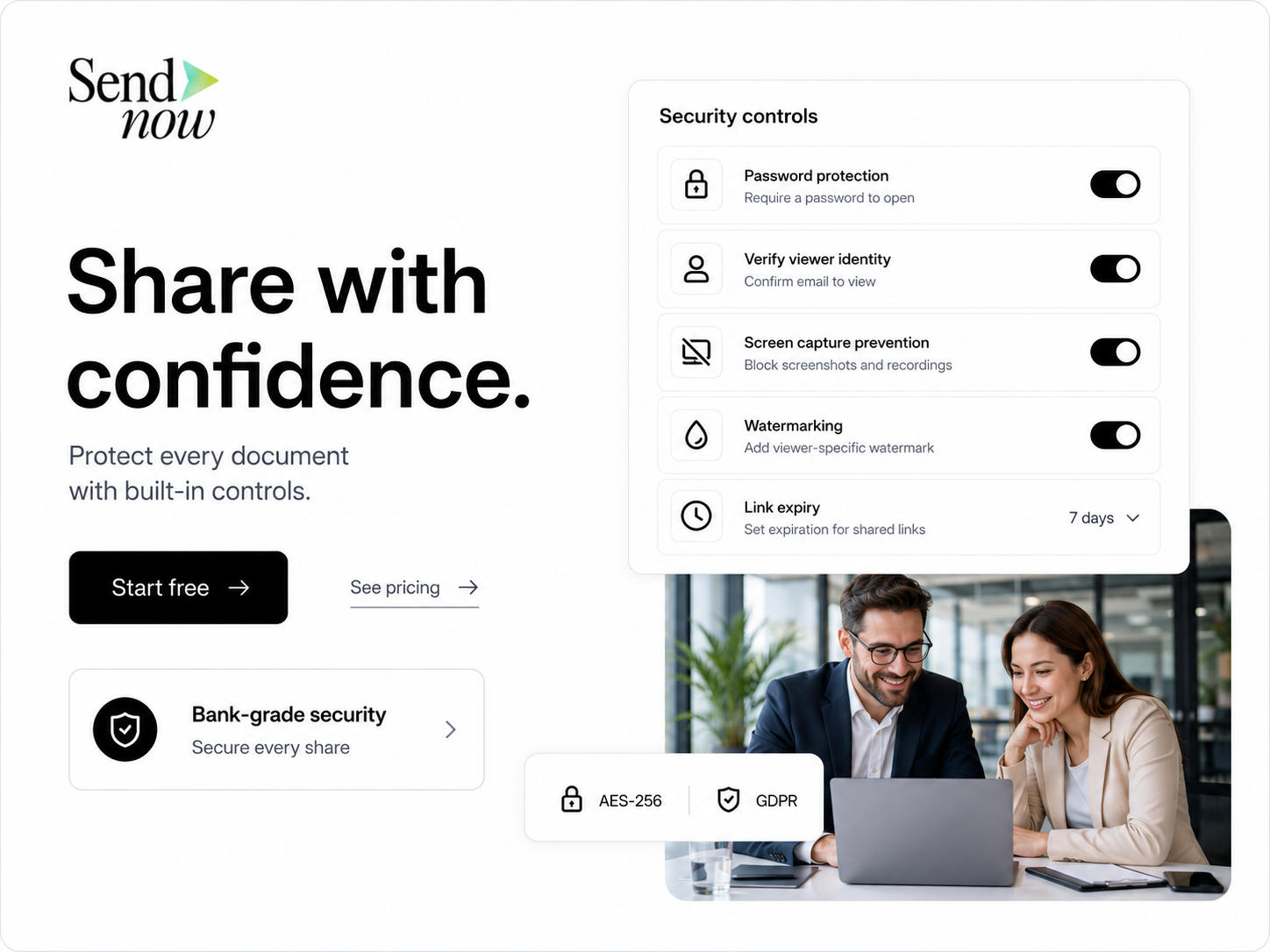
How that material is delivered matters as well. A security pack sent as an email attachment cannot be updated, revoked, or tracked, and it circulates indefinitely inside an organisation you do not control. Sending it as a permissioned, tracked link means it stays current, you can see whether it was read, and access can be withdrawn if the deal dies.
Technical diligence goes deeper than the questionnaire
For larger commitments, and for any transaction involving an acquisition or a significant platform bet, the review extends past a questionnaire into genuine technical assessment: architecture, code quality, scalability, technical debt, dependency risk, and increasingly the question of whether an AI capability is real engineering or a thin wrapper.
Buyers rarely have the internal bandwidth to assess this well, which is why specialist engineering partners are brought in.
Where technical diligence involves sharing source-level material, architecture documentation or operating models, the distribution needs controlling. A software due diligence data room with per-document permissions, watermarking and a complete access log is the standard approach, because the material being reviewed is exactly the material a competitor would most like to see.
Stage four: your champion presents without you
The final stage happens in a room you are not in. Your champion presents the case to security, finance and legal, using whatever you handed them.
Prepare for that explicitly:
- A one-page business case they can forward without editing
- Pricing in a form finance can read
- The security pack, current and complete
- Answers to the three objections you know will be raised
- A reference customer in the same industry, willing to take a call
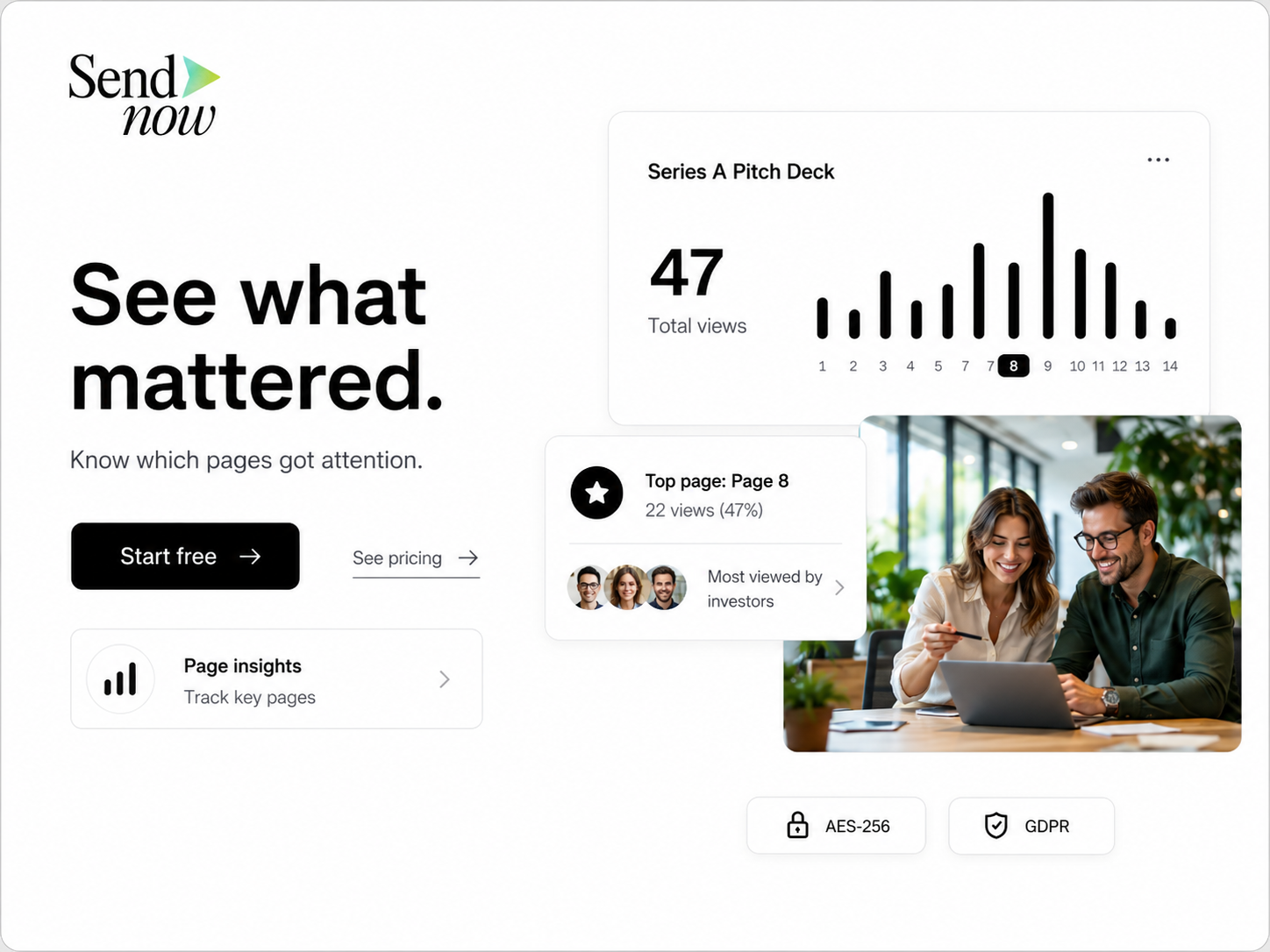
Tracked links help here too. When your champion forwards the business case and a new reader opens it, you learn that the conversation moved upward, and roughly when. That forwarding signal is one of the more reliable indicators available, and it is the reasoning behind using document data to close B2B deals rather than guessing at internal progress.
A checklist for each side
If you are buying: read the one-star reviews, check review recency against the current product version, request the security pack before the demo rather than after, ask for a reference at your company size, and ask directly what the product does badly.
If you are selling: publish pricing, publish a security page, keep your review profiles current, assemble the diligence pack once and maintain it, send everything as tracked links rather than attachments, and give your champion material designed to be forwarded.
Final takeaway
Most of a B2B evaluation happens before the first conversation and after the last one.
Buyers form their view from peer reviews and third-party sources, eliminate vendors who make answers hard to find, stall on security reviews that were never prepared for, and decide internally using material the seller never sees presented.
The vendors who win are rarely the ones with the best demo. They are the ones whose evidence was already assembled, already current, and already easy to pass along.
Related SendNow Resources
- Related SendNow resource
- Related SendNow resource
- Related SendNow resource
- Related SendNow resource
- Related SendNow resource
External References
About the Author: Rifana Hameem
Rifana is the founder of SendNow. She leads the team in building secure, compliant, and analytics-rich document sharing tools for finance and professional teams worldwide.
Connect on LinkedIn