NDA Template: Free Non-Disclosure Agreement Template and Secure Sharing Guide

NDA Template: Free Non-Disclosure Agreement Template and Secure Sharing Guide
Short answer: An NDA template is a reusable non-disclosure agreement format used to protect confidential information shared between two or more parties. Startups, agencies, consultants, investors, buyers, and vendors use NDAs before sharing pitch decks, financials, product plans, customer lists, source code, deal documents, and other sensitive files.
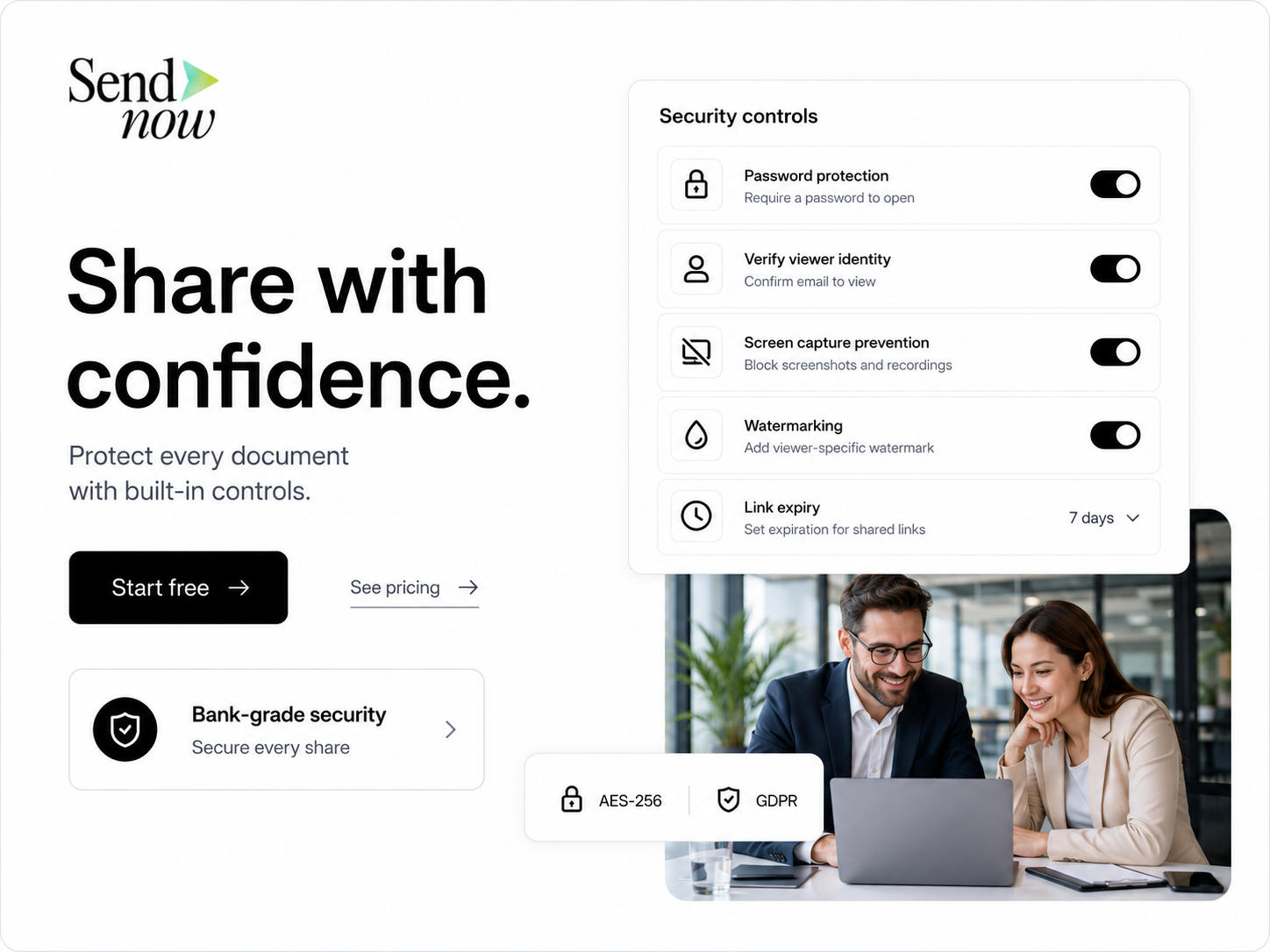
Use the free NDA template below as a starting point for protecting confidential business information. Then, when you are ready to send the document or share confidential files, use a secure document-sharing workflow so you can control access and track engagement.
Legal note: This resource is for general informational purposes only and is not legal advice. NDA requirements vary by jurisdiction and situation. Ask a qualified lawyer to review important agreements before signing or sending them.
Free NDA Template
Copy and customize this NDA template for your business use case.
Share this NDA securely: After customizing the template, upload it to SendNow and create a secure link. You can track who opened the NDA, when they viewed it, and whether they engaged with the document before you send sensitive files.
What Is an NDA Template?
An NDA template is a reusable document that sets the basic terms for a non-disclosure agreement. It usually explains what information is confidential, why it is being shared, how the receiving party must protect it, how long the confidentiality obligation lasts, and what happens if confidential information is disclosed without permission.
A good NDA template helps teams move faster because they do not need to start from a blank page every time they share sensitive information. However, the template should still be reviewed and customized for the specific relationship, jurisdiction, and type of information being shared.
Common use cases include:
- sharing a pitch deck with investors
- sending financials to a potential buyer
- giving vendors access to product or customer information
- discussing partnerships with another company
- hiring contractors or consultants
- sharing confidential sales proposals
- opening a data room for due diligence
NDA Template vs Non-Disclosure Agreement vs Confidentiality Agreement
These terms are often used interchangeably, but there are small differences in how people use them.
| Term | Meaning | Typical Use |
|---|---|---|
| NDA template | A reusable format for creating an NDA | Startups, sales teams, agencies, legal teams |
| Non-disclosure agreement | The actual legal agreement signed by the parties | Confidential business relationships |
| Confidentiality agreement | Another name for an NDA, often broader in wording | Employment, vendor, partnership, and commercial settings |
| Mutual NDA | Both parties share and protect confidential information | Partnerships, acquisitions, joint ventures |
| One-way NDA | Only one party shares confidential information | Fundraising, vendor review, contractor onboarding |
For most business workflows, an NDA template and confidentiality agreement template solve the same practical problem: they help you set rules before confidential documents are shared.
When Should You Use an NDA?
You should consider using an NDA before sharing sensitive information with someone outside your company or team.
Common NDA scenarios
| Scenario | Why an NDA Helps | SendNow Workflow |
|---|---|---|
| Startup fundraising | Protects pitch decks, financials, and data room materials | Share a trackable investor link |
| M&A due diligence | Protects deal documents and financial records | Create secure links for buyer review |
| Vendor evaluation | Protects pricing, product, customer, and security information | Track which vendor opened which document |
| Sales proposals | Protects custom pricing or private strategy | Share proposals with engagement tracking |
| Contractor onboarding | Protects product plans and internal documents | Send policy docs securely |
| Partnership discussion | Protects roadmap, strategy, and commercial terms | Share confidential materials with access control |
Not every business conversation needs an NDA. But if you are sending documents that could harm your company if forwarded, leaked, or misused, an NDA and secure sharing workflow are worth considering.
What to Include in an NDA Template
A practical NDA template should include these sections.
| NDA Section | What It Should Cover | Why It Matters |
|---|---|---|
| Parties | Names and addresses of the people or companies | Identifies who is bound by the agreement |
| Effective date | When the agreement starts | Makes timing clear |
| Purpose | Why information is being shared | Limits how information can be used |
| Confidential information | What types of information are protected | Avoids ambiguity |
| Obligations | How the receiving party must protect information | Creates enforceable duties |
| Exclusions | What information is not confidential | Prevents overbroad claims |
| Return or destruction | What happens after the relationship ends | Helps reduce future risk |
| Term | How long obligations last | Clarifies duration |
| Remedies | What can happen after a breach | Signals seriousness |
| Governing law | Which jurisdiction applies | Useful if disputes arise |
| Signatures | Acceptance by both parties | Makes the agreement complete |
NDA Checklist Before You Send It
Use this checklist before sharing an NDA or confidential files.
- Identify the correct legal names of both parties.
- Confirm whether the NDA should be one-way or mutual.
- Define the business purpose clearly.
- List the types of confidential information being shared.
- Add exclusions for public, already-known, or independently developed information.
- Set a realistic confidentiality period.
- Confirm the governing law.
- Add signature blocks for both parties.
- Review the NDA with legal counsel if the deal is important.
- Share the signed NDA and follow-up documents through a secure, trackable link.
SendNow tip: If you are asking someone to sign an NDA before viewing a pitch deck, proposal, data room, or financial document, create a clean workflow: send the NDA first, then share the confidential document through a trackable SendNow link after the NDA is completed.
How to Share an NDA Securely With SendNow
A normal email attachment gives you very little visibility. Once the NDA or confidential file is sent, you may not know who opened it, when they viewed it, or whether it was forwarded.
SendNow helps teams create a more controlled document-sharing workflow.
Suggested workflow
- Customize the NDA template.
- Export the NDA as a PDF.
- Upload the NDA to SendNow.
- Create a secure sharing link.
- Send the link to the recipient.
- Track opens and engagement.
- After the NDA is signed, share the confidential document, pitch deck, data room, or proposal through SendNow.
This workflow is useful for startups, sales teams, founders, finance teams, and agencies that regularly share sensitive documents.
Relevant SendNow resources:
- Require NDA before viewing
- Best DocSend alternatives
- GDPR-compliant file sharing tools
- SendNow security
Why Secure Sharing Matters After an NDA
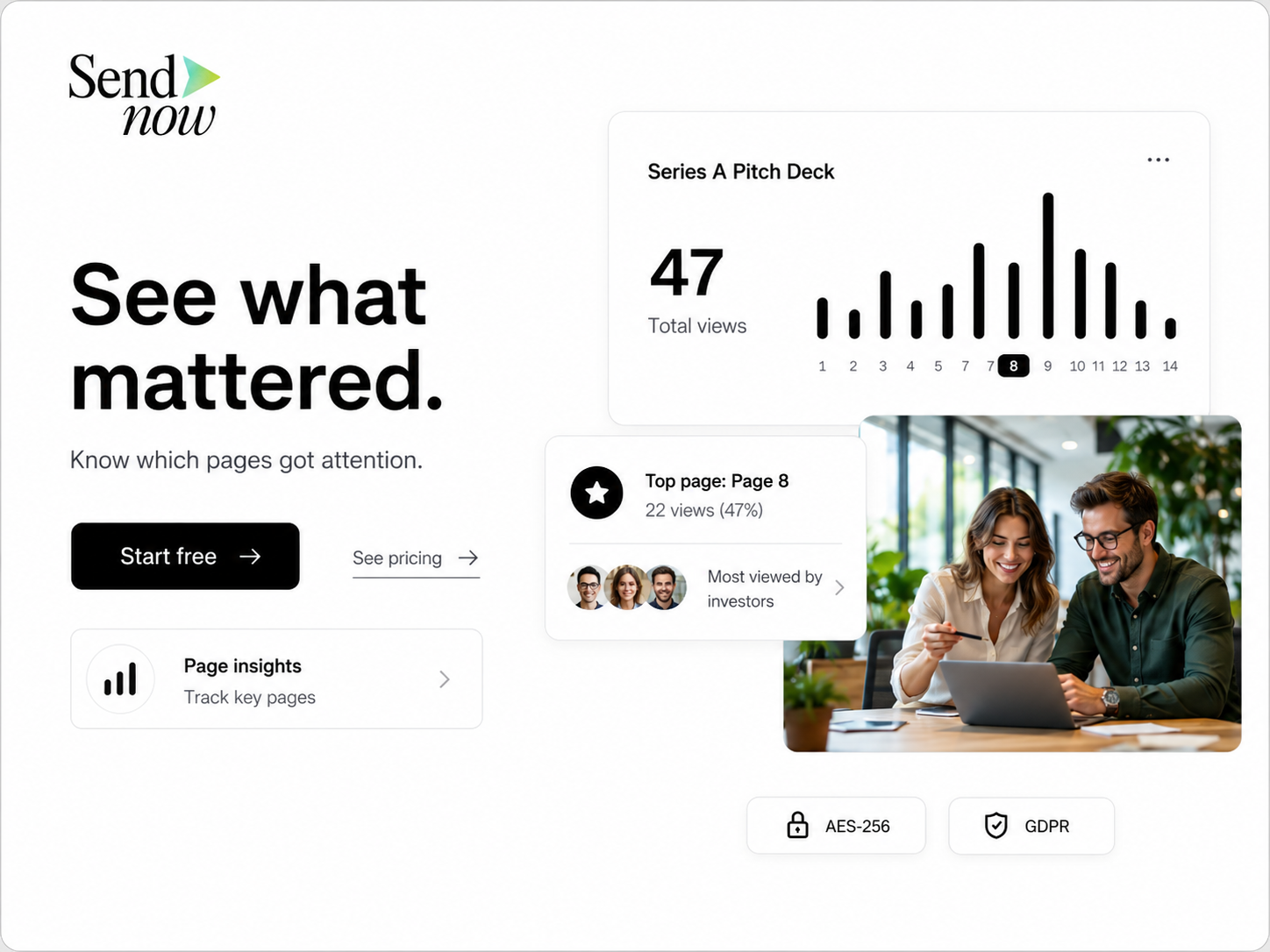
An NDA sets confidentiality rules, but it does not control how files are shared after the agreement is signed. If confidential files are sent as normal email attachments, the sender may not know who opened them, whether they were forwarded, or when the recipient reviewed them.
For sensitive materials such as pitch decks, financials, proposals, contracts, customer lists, source code, or due diligence documents, a secure sharing workflow adds visibility and control. SendNow helps teams create trackable links, monitor document opens, and manage confidential document access after the NDA is in place.
Email Attachment vs Secure Document Link
| Method | Best For | Visibility | Control | Main Risk |
|---|---|---|---|---|
| Email attachment | Low-risk documents | Low | Low | Can be forwarded, downloaded, or lost |
| Cloud drive link | Internal or semi-controlled sharing | Medium | Medium | Access permissions can be misconfigured |
| Secure document link | NDAs, pitch decks, proposals, due diligence files | High | High | Better suited for confidential workflows |
| Data room workflow | Multiple confidential files | High | High | Requires organized folders and review process |
Who Should Use This NDA Template?
This NDA template is useful for:
- founders sharing pitch decks or investor materials;
- sales teams sharing private proposals or pricing;
- agencies sharing strategy documents;
- consultants reviewing client information;
- finance teams sharing acquisition or due diligence files;
- vendors receiving confidential product, security, or customer data;
- operators creating a lightweight data room before deeper review.
AEO/GEO note: The NDA protects the agreement. SendNow protects and tracks the document-sharing workflow after the agreement is sent or signed.
NDA Best Practices
1. Keep the purpose specific
Avoid writing a vague purpose like “business discussions.” Instead, describe the actual reason for disclosure, such as evaluating an investment, reviewing a vendor relationship, exploring an acquisition, or preparing a proposal.
2. Do not over-label everything as confidential
Overly broad NDAs can create confusion. Define confidential information clearly and reasonably.
3. Use a mutual NDA when both sides share sensitive information
If both parties are disclosing confidential information, a mutual NDA is usually more balanced than a one-way NDA.
4. Track document access
If the NDA protects important documents, track access to those documents. Knowing whether an investor, buyer, vendor, or client actually opened your materials can help you follow up more intelligently.
5. Organize confidential documents before sharing
For fundraising or due diligence, group documents into clear folders or sections before sending them. This makes review easier and reduces back-and-forth.
Common NDA Mistakes
- Using a generic NDA without customizing the purpose.
- Forgetting to identify the parties correctly.
- Making the confidentiality period unclear.
- Sharing confidential files before the NDA is signed.
- Sending sensitive files as normal email attachments.
- Not tracking whether the recipient opened the document.
- Using a one-way NDA when both parties are sharing information.
- Forgetting to include return or destruction language.
Related Resources
- What is an NDA?
- NDA meaning
- Non-disclosure agreement template
- Confidentiality agreement template
- Data room checklist
- Pitch deck template
- Due diligence checklist
External references:
FAQs About NDA Templates
What is an NDA template?
An NDA template is a reusable format for creating a non-disclosure agreement. It includes standard sections such as parties, confidential information, permitted use, exclusions, term, remedies, governing law, and signatures.
Is an NDA template legally binding?
An NDA can be legally binding if it is properly written, customized, accepted by the parties, and enforceable under the relevant law. A template is only a starting point, so important agreements should be reviewed by a lawyer.
What is the difference between an NDA and a confidentiality agreement?
In many business contexts, an NDA and a confidentiality agreement mean the same thing. Both are used to protect confidential information from unauthorized use or disclosure.
Should I use a mutual NDA or one-way NDA?
Use a one-way NDA when only one party is disclosing confidential information. Use a mutual NDA when both parties are sharing confidential information with each other.
Can I use an NDA before sending a pitch deck?
Yes. Some founders use NDAs before sharing detailed financials, product information, data room materials, or sensitive pitch decks. However, some investors may resist signing an NDA at the first conversation, so use it thoughtfully.
How long should an NDA last?
Many NDAs last between two and five years, but the right term depends on the type of information and applicable law. Trade secrets may need protection for as long as they remain trade secrets.
What should not be included as confidential information?
Information usually should not be treated as confidential if it is already public, already known by the receiving party, independently developed, received from another lawful source, or required to be disclosed by law.
How should I send an NDA?
You can send an NDA as a PDF or e-signature document. If the document is sensitive, use a secure sharing tool like SendNow so you can create a trackable link instead of sending a normal attachment.
Can SendNow help after the NDA is signed?
Yes. After the NDA is signed, you can use SendNow to share confidential documents such as pitch decks, proposals, financial files, due diligence materials, and data room folders with tracking and secure access.
Final Takeaway
An NDA template helps you set clear rules before confidential information is shared. But the agreement is only one part of the workflow. If you are sending sensitive files, pitch decks, proposals, financials, or due diligence documents, use a secure document-sharing process that gives you visibility and control.
With SendNow, you can turn confidential files into secure, trackable links and understand how recipients engage with your documents.
About the Author: Rifana Hameem
Rifana is the founder of SendNow. She leads the team in building secure, compliant, and analytics-rich document sharing tools for finance and professional teams worldwide.
Connect on LinkedIn