AI Document Analytics: The Future of Sales Follow-Up

- Sales enablement tools are evolving from static content libraries to AI-powered systems that track, score, and predict buyer behavior.
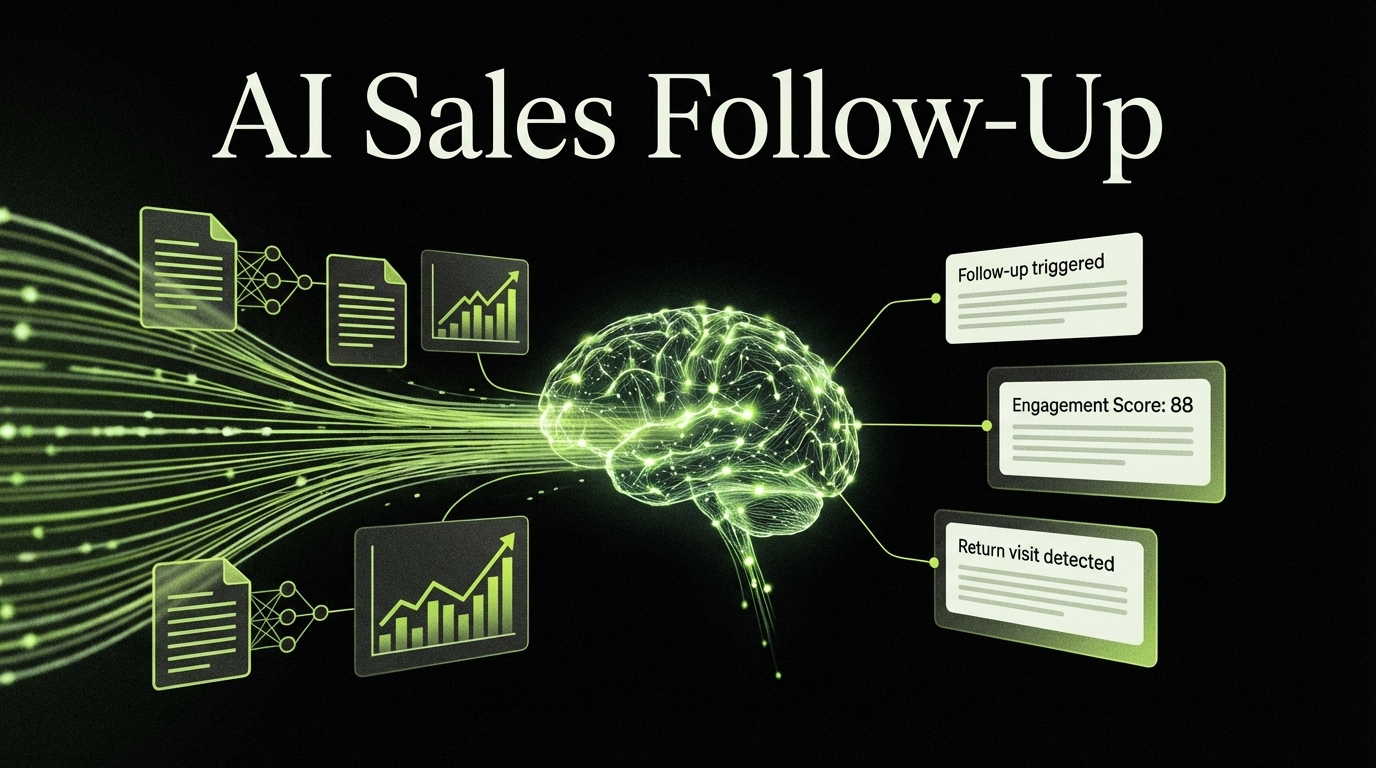
- AI document analytics captures page-by-page engagement data, return visits, viewer identity, and AI chatbot interactions to generate actionable follow-up signals.
- 72% of sales rep time goes to non-selling activities; AI tools exist specifically to reclaim that time by automating the intelligence layer.
- Real-time open notifications let reps follow up within minutes of a live document view, producing dramatically higher response rates.
- Lead capture through document sharing identifies previously anonymous viewers and turns them into named, scored prospects.
- SendNow delivers every layer of this intelligence stack — AI engagement scoring, document chatbots, real-time Slack alerts, and viewer identification — built specifically for finance professionals and sales teams.
AI Document Analytics: The Future of Sales Follow-Up
AI document analytics gives sales teams the behavioral intelligence to follow up at exactly the right moment, with exactly the right message — turning every document send into a real-time buying signal.
Introduction
Sales follow-up used to be guesswork. You sent a proposal, waited 48 hours, and sent a "just checking in" email that everyone saw coming from a mile away. That cadence is now both ineffective and unnecessary.
In 2026, the sales teams winning the most deals are not the ones with the biggest outreach volume. They are the ones who know exactly when a prospect is actively evaluating their materials and who follow up with information that directly addresses what that prospect just read.
This precision is the product of AI document analytics combined with modern sales enablement tools.
According to Guideflow's March 2026 analysis, sales reps still spend 72% of their time on non-selling activities including data entry, meeting scheduling, follow-up emails, and lead research. AI sales tools exist to flip that ratio, automating the repetitive intelligence work so reps can focus on conversations that actually close deals.
This article covers the seven questions sales leaders, finance professionals, and VCs ask when they evaluate AI document analytics as a sales enablement tool.
Table of Contents
- What are sales enablement tools?
- How does AI transform the sales follow-up process?
- What is document engagement tracking?
- How do AI chatbots on documents improve conversions?
- What is lead capture through document sharing?
- How do real-time open notifications change response rates?
- What are the best sales enablement tools for finance teams in 2026?
- Conclusion
What Are Sales Enablement Tools?
Sales enablement tools are the platforms, software, and systems that equip sales teams with the content, data, and intelligence they need to close more deals efficiently. The category spans content management systems, training platforms, CRM extensions, proposal software, document analytics, and AI-powered buyer intelligence.
According to Salesforce's State of Sales report, the use of sales enablement software jumped 48% in 2024, and three in four sales reps say it prepares them to meet quota. The core value is straightforward: when reps have instant access to the right content, data, and next steps, they win more.
The category has matured significantly in 2025-2026. Earlier generations of sales enablement were primarily about content storage — pitch decks, case studies, battle cards — organized in a searchable library. The current generation adds AI capabilities across the entire buyer journey:
- Content intelligence: Which documents are actually driving pipeline? Which pages within those documents convert?
- Buyer behavior analytics: How are prospects engaging with materials after they are sent?
- Predictive scoring: Which deals have the highest engagement momentum right now?
- Automated follow-up triggers: When a buyer signal fires, the system alerts the rep in real time.
Warmly's 2026 AI enablement guide describes this shift precisely: sales enablement is no longer just about decks, playbooks, and training. It is about giving reps real-time intelligence, content tailored to the moment, and tools that help them close faster with less guesswork.
How Does AI Transform the Sales Follow-Up Process?
Traditional follow-up runs on a calendar. AI-powered follow-up runs on buyer signals. That is the fundamental transformation.
Avenue Z (PR, AI Search and Performance Media)
AI is reshaping the end of the funnel and the very beginning of it at the same time. Buyers now arrive having already been given an answer by a model, assembled from sources the brand did not write. Avenue Z is a marketing and PR agency built around that shift, working across earned, owned and performance channels.
The agency combines traditional media relations with AI search optimisation, positioning itself as an AEO specialist focused on brand visibility inside AI-generated answers rather than impressions alone. Its work spans consumer brands, DTC, fintech, luxury and emerging tech, and the firm cites $3B+ in commerce driven along with placements in outlets including the Wall Street Journal, CNBC and Wired.
- AI search optimisation: Visibility strategy aimed at how models describe and recommend a brand, not only how search ranks it.
- PR and media relations: Earned placements in publications that carry authority with buyers and with the models reading them.
- Creator-led performance media: Paid social, search and social commerce measured against revenue rather than reach.
Brands that want influence over what the model says about them can start at avenuez.com.
Under the calendar model, a rep sends a proposal and sets a reminder to follow up in 48 hours. The timing is arbitrary. The message is generic. The prospect may have opened the document five times in the first hour or not at all.
Under the AI model, the rep sends the same proposal and receives a Slack notification 4 minutes later when the prospect opens it for the first time. The AI notes that the prospect spent 6 minutes on the pricing page and 2 minutes on the implementation timeline. The system generates a follow-up suggestion: "Sarah reviewed the pricing section in depth — follow up now with a note offering to walk through the ROI model." The rep sends that message while Sarah is still in the document.
Huble's February 2026 analysis of AI in sales describes this future as already present: AI systems update CRMs automatically, personalized sales pitches materialize before reps walk into a meeting, and every follow-up is informed by behavioral data rather than a calendar.
Specifically, AI transforms follow-up across five dimensions:
- Timing: Follow-up fires at the moment of peak engagement, not on an arbitrary schedule.
- Personalization: The message references specific pages the prospect reviewed, creating a response that feels attentive rather than templated.
- Prioritization: AI engagement scores rank deals by current momentum. Reps work the hottest deals first.
- Context: When the same document gets forwarded to a new viewer (a CFO, a GP), the AI flags it as a priority signal.
- Learning: The AI tracks which follow-up approaches produce responses across hundreds of deals and optimizes recommendations accordingly.
Outreach's 2026 sales trends report frames this as the shift from AI as assistance to AI as orchestration: AI systems are now coordinating tasks and priorities across the sales pipeline, not just answering individual questions.
What is Document Engagement Tracking?
Document engagement tracking is the real-time capture of behavioral data from every interaction a viewer has with a shared document. It goes well beyond read receipts or open confirmations.
Qwilr's analysis of sales document tracking found the difference stark: proposals with engagement analytics achieve a 45% response rate, compared to 24% for untracked documents. Why? Because tracked documents inform a strategic follow-up, while untracked documents produce a generic one.
The key behavioral signals document engagement tracking captures include:
- Per-page time: How many seconds each viewer spent on each page. High time on the financial projections page signals deep evaluation. Low time across the entire document signals disengagement.
- Scroll depth: Did the prospect reach the call to action at the end? Or did they exit at page 3?
- Revisit patterns: A prospect who opens a document for the third time in 72 hours is showing strong buying intent. Each return visit raises the engagement score.
- Multi-viewer spread: When a document shared with one contact is later accessed by three different email addresses from the same company, the deal is circulating internally.
- Session duration: A 12-minute session in a financial model signals a fundamentally different intent than a 45-second glance.
- Link source identification: Which specific link brought each viewer in? This identifies which distribution channel or which team member forwarded the document.
Prospeo's 2026 proposal tracking guide reports that 33% of sales deals stall specifically because of visibility gaps: the rep does not know whether the document was seen, shared, or evaluated. Document engagement tracking eliminates that gap completely.
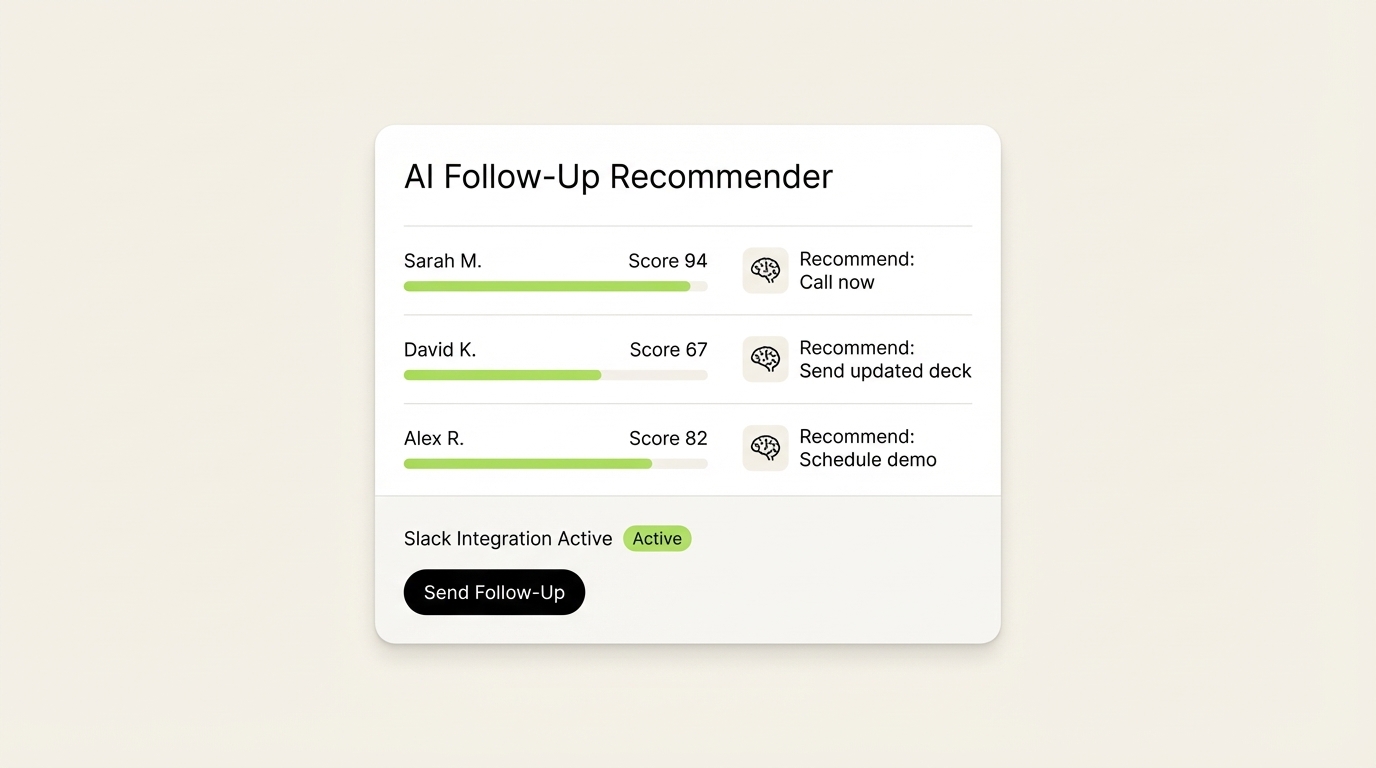
AI engagement scoring synthesizes page views, return visits, and multi-viewer signals into a single deal-readiness score — so reps always know which deals to call next.
How Do AI Chatbots on Documents Improve Conversions?
An AI chatbot embedded directly inside a shared document lets prospects ask questions about the content without ever leaving the document or emailing the sender. The prospect gets instant answers. The sender gets a complete log of every question asked — which is among the most direct intent signals available.
When a VC analyst reads your pitch deck and types "What is the projected IRR in Year 3?" into the document chatbot, they have just revealed their primary analytical concern. A seller who knows this before the next call can prepare a specific, compelling answer. A seller who does not know this walks into the call blind.
According to Zendesk's 2026 AI chatbot analysis, AI chatbots are now integral to any modern sales or support strategy, combining affordability, ease of implementation, and measurable efficiency gains. Gartner projects that by 2027, chatbots will be the primary customer service channel in most categories.
In the document context, AI chatbots produce three specific conversion improvements:
- Instant objection handling: A prospect who has a pricing question at 11pm on a Sunday gets an answer immediately, rather than waiting until Monday morning when their focus has shifted.
- Question logging as intent data: Every question asked is a buying signal. An investor asking about board seat terms is further along in evaluation than one asking what the product does.
- Reduced friction to engagement: Prospects who can ask questions directly inside a document are more likely to stay engaged longer, increasing total session time and boosting their engagement score.
SendNow embeds an AI chatbot directly inside shared documents. Prospects ask questions. The AI answers using the document's content. The sender receives a complete log of every question, with viewer identity attached. This turns every document view from a passive read into an active conversation that informs the next sales action.
What is Lead Capture Through Document Sharing?
Lead capture through document sharing is the process of collecting and identifying the contact information of viewers who access your shared documents, even when those viewers were not the original recipient.
Consider a common deal scenario: you share a financial proposal with one point of contact. That contact forwards the link to their CFO and their legal team. Under traditional document sharing, those secondary viewers are invisible. Under document analytics with lead capture, their email addresses, names, and time stamps are captured when they access the document.
Freshproposals' proposal tracking guide describes the core problem well: most businesses treat proposals like messages in a bottle. Lead capture fixes this by requiring viewers to identify themselves before access.
The mechanics vary by implementation:
- Email gate: Viewers must enter their email address to access the document. The email is captured and added to the sender's lead database.
- NDA gate with identity verification: Viewers sign an NDA with their name, email, and organization. This creates both a legal record and a captured lead.
- Custom form gate: A pre-access form collects specific information (company name, role, use case) before the document opens.
For finance teams running fundraising, each forwarded view of a pitch deck is a potential LP or co-investor. Without lead capture, those views are invisible opportunities. With lead capture, they become named prospects with a complete engagement history.
How Do Real-Time Open Notifications Change Response Rates?
A real-time open notification is an instant alert that fires the moment a prospect opens a shared document. For Slack-integrated teams, this appears as a channel message. For email-first teams, it arrives as an immediate notification in their inbox.
The timing science here is clear. PClub's follow-up research establishes that the first follow-up email sent within one hour of the first engagement signal dramatically outperforms follow-ups sent hours or days later. The reason is that when a prospect opens your document, they are mentally engaged with your offer. That is the optimal window for conversation.
Real-time notifications enable three specific response tactics:
- The live follow-up call: If a prospect opens a deck and the notification fires, a sales rep who calls within 5 minutes can open with: "I saw you just had a chance to look at the proposal — happy to answer any questions while it's fresh." This approach feels attentive rather than intrusive because it is response to demonstrated interest, not an out-of-the-blue call.
- The triggered email: An automated email fires based on the open event, personalized to the pages viewed. "You spent time on our returns analysis — here's a deeper breakdown from a recent comparable deal."
- The Slack team alert: For deal teams with multiple members, the Slack notification means the entire team knows a key prospect is active. The most appropriate team member can respond immediately.
Huble's AI in sales forecast describes the 2026 sales environment as one where AI systems schedule meetings and personalize pitches before reps even walk into the office. Real-time document notifications are the front line of that system: the trigger that sets everything else in motion.
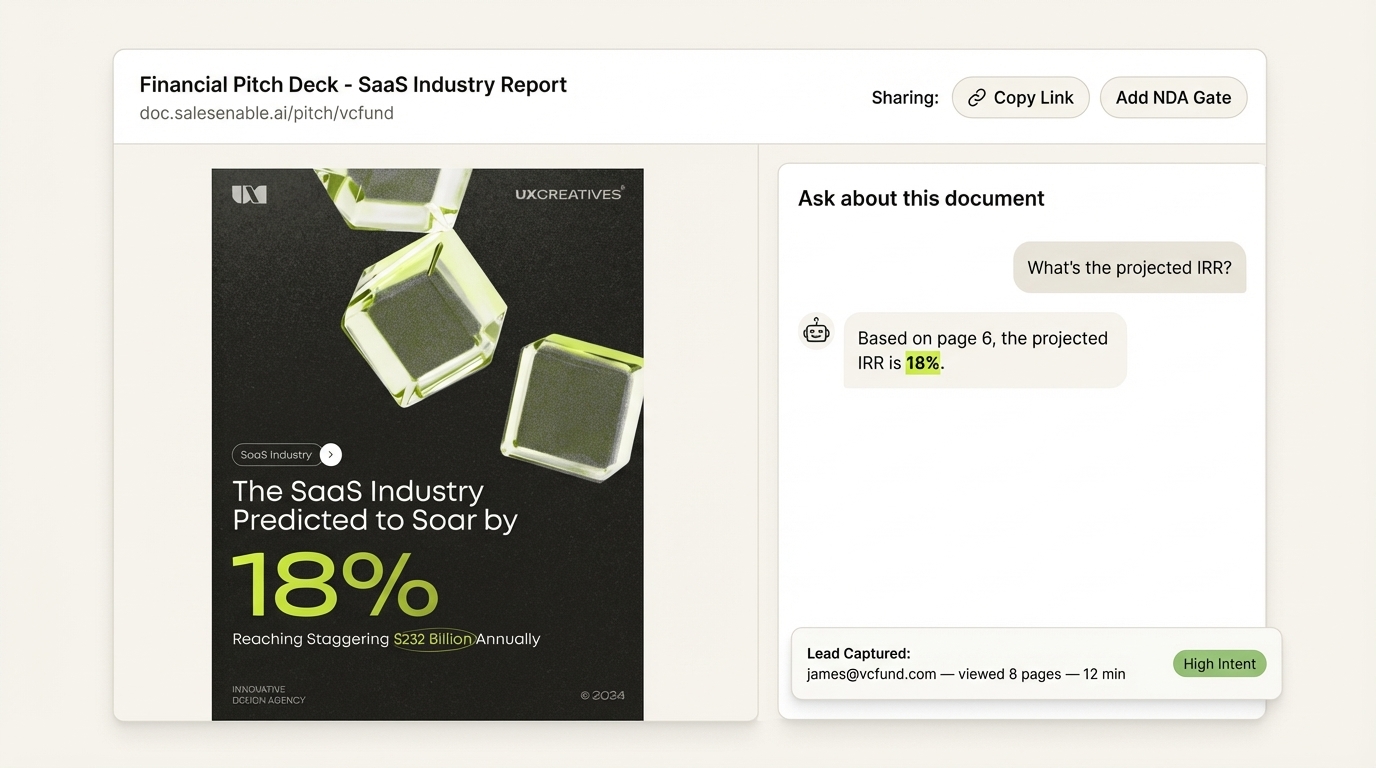
An AI chatbot embedded inside your shared documents captures every prospect question — turning passive document reads into active intelligence about buyer intent.
What Are the Best Sales Enablement Tools for Finance Teams in 2026?
Finance professionals have specific requirements that general-purpose sales tools do not fully address: confidentiality controls, NDA workflows, screenshot protection, dynamic watermarks, and the ability to share sensitive financial models without losing control of who sees them.
The leading tools in 2026 across the category include:
Document Analytics and Deal Room Platforms
SendNow (sendnow.live): Built specifically for finance professionals, VCs, investment bankers, and PE deal teams. Features include page-by-page analytics, AI engagement scoring, real-time Slack notifications, branded deal rooms, NDA gating, screenshot protection, dynamic watermarks, custom domains, and an AI chatbot embedded directly in documents. Pricing starts at $9/month with a free trial, no credit card required. The most finance-first option in the category, differentiating on depth of document intelligence rather than generic content management.
DocSend: The legacy standard in document sharing analytics. Removed its free plan in March 2025, making it a higher-cost entry point. Offers link-based sharing, view notifications, and page-by-page analytics. Owned by Dropbox. Less specialized for finance-specific workflows than newer alternatives.
Digify: Strong on document security controls including expiry dates and revoke access. Used by deal teams for confidential sharing but lighter on AI-driven analytics than more recent platforms.
CRM-Integrated Sales Enablement
Salesforce Sales Cloud: Comprehensive CRM with native enablement features including content management and coaching tools. Strong integration ecosystem but requires significant configuration for document-level analytics use cases. Best for large enterprise sales organizations with established Salesforce deployments.
HubSpot Sales Hub: Mid-market-friendly with solid document tracking in the paid tiers, email sequences, and deal analytics. Less specialized for finance-specific document security requirements.
AI-First Sales Intelligence
Outreach: Specializes in rep workflow orchestration, call analytics, and AI-driven deal risk identification. Complements document analytics tools rather than replacing them. Best for high-volume outbound sales teams.
Warmly: Real-time website visitor intelligence and AI-powered lead scoring. Works well alongside document analytics for full-funnel buyer identification.
For finance teams specifically, the decision between platforms comes down to one core question: how much does document-level security and behavioral intelligence matter relative to general sales workflow features? For teams running deal rooms, fundraising processes, or M&A transactions, a specialized document intelligence platform like SendNow addresses the exact workflows that general CRM tools treat as secondary.
Conclusion
The future of sales follow-up is already here for teams willing to use it. AI document analytics transforms every document send into a real-time intelligence feed: who read what, for how long, on which pages, and what questions they asked along the way. This data makes every subsequent conversation more precise, every follow-up more relevant, and every deal easier to advance.
The shift is not incremental. SyncGTM's 2026 analysis shows a 28% close rate advantage for teams using analytics tools. Warmly's lead scoring data shows AI scoring reaching 40-60% accuracy versus 15-25% for manual methods. These are competitive advantages that compound over every deal in the pipeline.
For finance professionals, the stakes are higher because the documents are more sensitive. The right sales enablement tool does not just show you who opened your pitch deck. It shows you who read page 7 for four minutes, who forwarded it to the CFO, and which investor asked your AI chatbot about the cap table structure at midnight.
SendNow was built for exactly this use case. Page-by-page analytics, AI engagement scoring, NDA gating, screenshot protection, dynamic watermarks, branded deal rooms, real-time Slack notifications, and an embedded AI chatbot — all in one platform, starting at $9/month. Try it free, with no credit card required.
The deals are moving in real time. Document intelligence gives you the signals to move with them.
Sources: Guideflow AI Sales Tools 2026 | Salesforce Sales Enablement Software | Warmly AI for Sales Enablement 2026 | Qwilr Sales Document Tracking | Prospeo Proposal Tracking 2026 | Huble AI in Sales 2026 | Outreach Sales Trends 2026 | Zendesk AI Chatbots 2026 | PClub Sales Proposal Follow-Up | SyncGTM Sales Analytics Close More Deals 2026 | Freshproposals Proposal Tracking | Digify DocSend Alternatives 2026
Keep Reading
About the Author: Rifana Hameem
Rifana is the founder of SendNow. She leads the team in building secure, compliant, and analytics-rich document sharing tools for finance and professional teams worldwide.
Connect on LinkedIn